Smart scales can be useful for tracking body-composition trends, but their body-fat and muscle readings are estimates rather than direct measurements. The best choice is a scale that gives consistent readings, stores data reliably, and fits your routine—not necessarily the one with the longest list of metrics.
Most smart body-composition scales use bioelectrical impedance analysis, or BIA. That makes them convenient for home use, but hydration, food, exercise, skin temperature, and measurement technique can all affect the result. This guide explains what to evaluate before buying and how to use the numbers without giving them more authority than they deserve.
1. Decide what you actually need to track
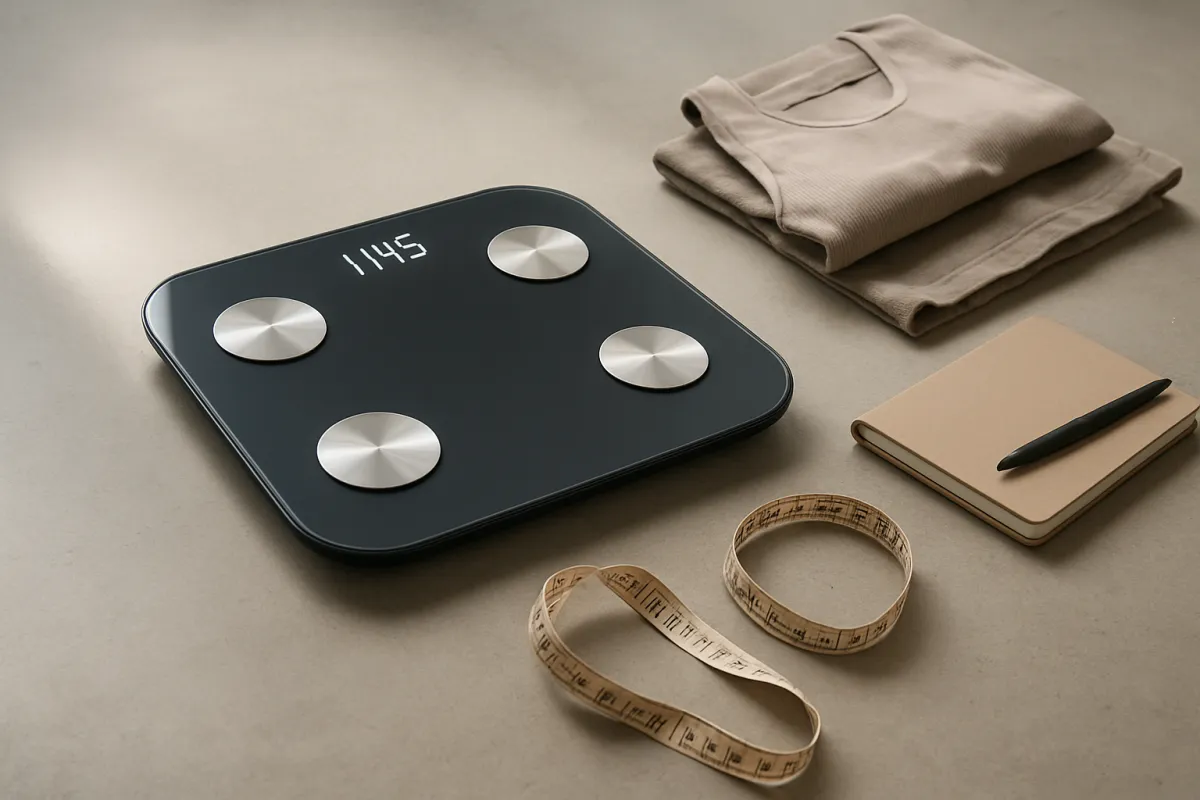
Before comparing apps, sensors, and subscription plans, identify the main purpose of the scale. For many people, body weight and a simple trend line are enough to support a fat-loss or muscle-building plan. The additional metrics may be useful for context, but more data does not automatically mean better guidance.
- Weight management: prioritize reliable weight readings, clear graphs, and easy data export.
- Strength or muscle gain: combine body weight with training performance, waist measurements, photos, and recovery.
- General health tracking: look for a simple app and multiple user profiles rather than an overwhelming dashboard.
- Clinical monitoring: ask a qualified healthcare professional which measurements are appropriate. A consumer smart scale should not replace medical assessment.
A scale is most valuable when it helps you follow a decision-making process. For example, someone following a progressive training plan may use weekly weight trends and waist measurements to judge whether nutrition needs adjusting. You can also pair scale data with a progressive overload plan for muscle gain rather than judging progress from estimated muscle mass alone.
2. Understand how smart scales estimate body composition
BIA scales send a small electrical current through the body and use the measured impedance, along with information such as height, age, sex, and weight, to estimate body compartments. Lean tissue generally contains more water than fat tissue, which is part of the reason the method can produce an estimate of body composition. The American Council on Exercise explains the basic principle of BIA.
The important word is estimate. A foot-to-foot bathroom scale measures through the lower body, while models with hand grips use additional contact points and may collect a different electrical pathway. Neither design should be treated as a direct scan of your fat or muscle tissue.
Research reviews describe BIA as quick, noninvasive, and practical, but also note that interpretation can be affected by hydration and the equations used by the device. The National Library of Medicine review of BIA provides useful background on both its convenience and limitations.
For that reason, a smart scale is generally better at showing a pattern under consistent conditions than proving your exact body-fat percentage. If a reading changes sharply overnight, water and measurement conditions are often more plausible explanations than a sudden change in fat or muscle tissue.
3. Compare the features that affect everyday usefulness
Features matter when they improve consistency or reduce friction. They matter less when they simply add another number to the app.
Use this comparison when evaluating a model:
| What to look for | Why it matters | Warning sign |
|---|---|---|
| Stable weight platform | Helps produce repeatable weight readings on a hard, level floor | The scale rocks, shifts, or gives noticeably different results in the same spot |
| Clear measurement schedule | Consistent timing makes trend comparisons more meaningful | The app encourages you to interpret every daily fluctuation |
| Reliable app synchronization | Automatic history reduces manual logging and missing data | Frequent connection failures or unclear ownership of your data |
| Multiple user profiles | Useful for households, provided the scale identifies users correctly | Unclear privacy controls or frequent mix-ups between profiles |
| Metric explanations | Definitions help you understand what is measured and what is modeled | Precise-looking scores without methodology or limitations |
| Non-slip surface and suitable weight range | Improves practical safety and compatibility | Small platform, slippery finish, or specifications that do not fit your needs |
App quality and data ownership
A good app should show long-term trends, allow corrections, and make it possible to review or export your records. Check what permissions the app requests, whether an account is mandatory, and whether important functions depend on a paid membership. These details can matter more than a scale’s headline metric count.
4. Use repeatable conditions to improve the signal
You cannot remove all uncertainty from BIA, but you can reduce avoidable variation. Place the scale on a hard, level surface and use it at a similar time of day. Many users choose the morning after using the bathroom and before eating, drinking, or exercising, although the key factor is repeating the same routine.
- Stand still with bare, dry feet if the manufacturer requires foot contact.
- Use the same scale and the same floor location.
- Avoid comparing readings taken after different levels of exercise, food, alcohol, or fluid intake.
- Review weekly or monthly trends instead of focusing on one result.
- Record waist circumference and training performance alongside scale data.
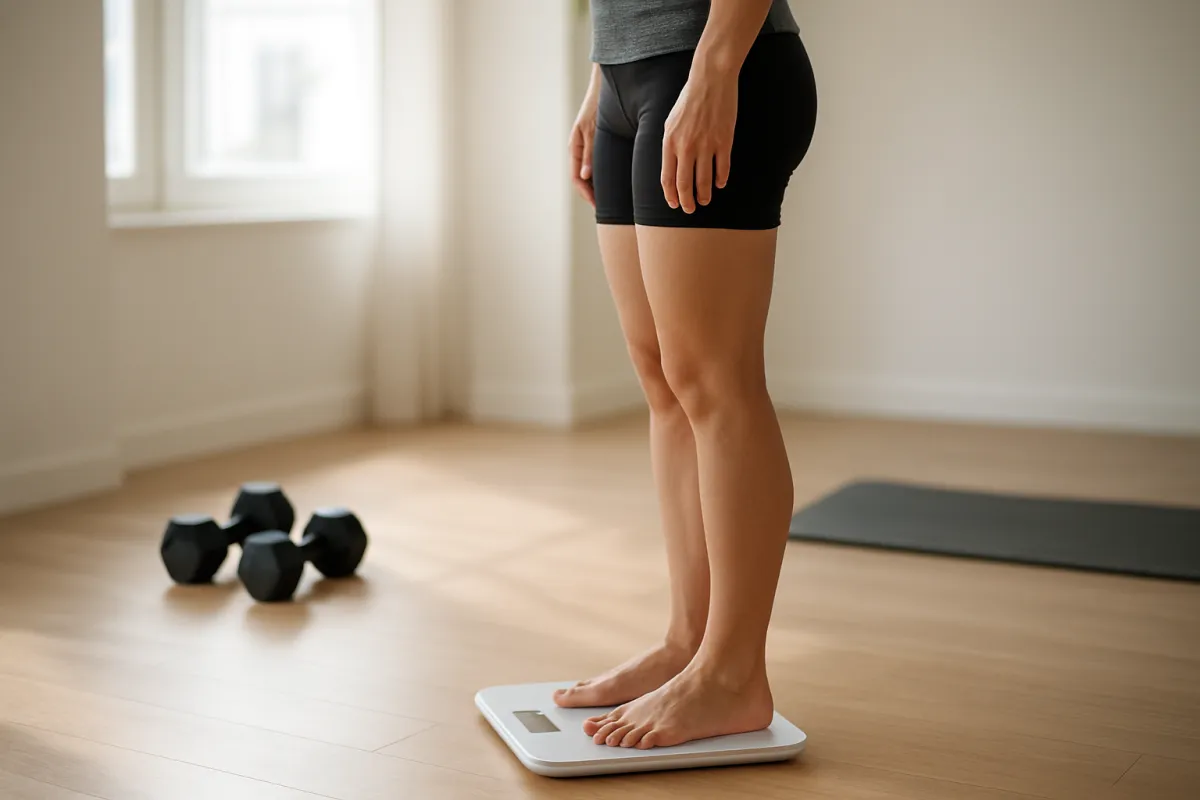
If your goal is improving fitness rather than simply reducing body weight, use several indicators. For example, better running performance may be more meaningful than a small change in estimated body fat. LaokFitness also covers practical options such as cycling versus running for weight loss and mobility exercises for tight hips.
5. Know the limitations and safety considerations
Smart-scale readings can vary with hydration, recent exercise, meal timing, skin contact, and body position. Device algorithms may also produce different results even when the same person measures under similar conditions. A number presented to one decimal place can look highly precise while still being an estimate.
Do not use body-composition readings to diagnose illness, determine whether you are adequately hydrated, or make major nutrition changes without appropriate professional advice. FDA-cleared body-composition devices have specified intended-use populations and warnings; one FDA filing, for example, describes BIA estimates for generally healthy adults and identifies conditions such as pregnancy or altered hydration as relevant limitations. You can review an example in the FDA device documentation for a BIA body scale.
People with implanted electronic medical devices should follow the device manufacturer’s instructions and ask their clinician before using a scale that sends an electrical current. Also use caution if balance, foot sensation, or stepping onto a glass platform is a concern.
6. Consider alternatives before you buy
A smart scale is not the only way to monitor progress. A basic digital scale may be the better option if you only need body weight and want fewer privacy or app concerns. A tape measure, progress photographs, and clothing fit can add useful information at very low cost.
For more formal body-composition assessment, a trained professional may use skinfold measurements, a laboratory method, or another validated protocol. These options can still have limitations, but they may be more appropriate when accurate assessment is important for a medical, athletic, or research purpose.
7. Avoid these common buying mistakes
- Choosing the most metrics: extra readings are not automatically more accurate or more actionable.
- Confusing FDA clearance with perfect accuracy: regulatory status does not mean every estimate is equally reliable for every user or purpose.
- Ignoring the app: poor synchronization, intrusive permissions, or unclear data controls can make a technically capable scale frustrating.
- Comparing brands as if percentages are interchangeable: different algorithms may produce different estimates.
- Expecting daily body-fat changes to reflect daily fat loss: short-term movement is often dominated by fluid and measurement conditions.
- Buying without checking the platform and weight range: comfort and stability affect whether you will use the scale consistently.
8. What if the readings look wrong?
The weight reading changes dramatically
Check the batteries, floor surface, scale position, and whether the platform is touching a wall or uneven object. Weigh again under the same conditions. If the scale remains inconsistent, return it or contact the manufacturer rather than trying to interpret the body-composition metrics.
Body fat rises after a hard workout
Do not assume you gained fat. Exercise changes fluid distribution and can affect BIA estimates. Wait for your normal measurement routine and evaluate the trend over several readings.
The app reports an implausible metric
Review your profile details, measurement mode, and the manufacturer’s definitions. If the result remains concerning, stop using it as a basis for health decisions and discuss the issue with a qualified professional.
9. Smart-scale buying checklist
- Define whether your priority is weight, trends, or broader body-composition context.
- Confirm the platform size, weight capacity, and intended user population.
- Check whether the app works with your phone and preferred health platform.
- Review privacy settings, account requirements, and subscription terms.
- Look for explanations of each metric and any stated limitations.
- Plan to measure under repeatable conditions.
- Use waist measurements, photos, performance, and how you feel as supporting evidence.
10. Next actions before making a decision
Write down the two or three measurements you will actually use. Then compare scales on stability, app reliability, data controls, and ease of consistent use. If you are building a home gym, the scale should support your wider routine rather than replace training logs, nutrition records, or sensible progress checks.
Final verdict on a smart scales review for tracking body composition
A smart scale is a reasonable purchase when you want convenient weight tracking and a rough view of longer-term body-composition trends. It is a poor choice if you expect exact body-fat measurements, diagnostic information, or a single device to explain every change in your physique.
For most home exercisers, prioritize repeatability, a usable app, transparent data practices, and a measurement routine you can maintain. Used that way, a smart scale can support your fitness decisions—but the most trustworthy verdict will come from several signals considered together.