The best mobility exercises for tight hips are 90/90 switches, half-kneeling hip-flexor stretches, adductor rock-backs, and controlled hip rotations. Use dynamic drills before training and slower stretches after training or during breaks from sitting.
Hip tightness can come from prolonged sitting, repetitive training, limited strength, or simply spending too little time moving through different hip positions. The right routine should not force a deep stretch. It should help you move with better control while keeping pain and compensation under control.
This guide ranks seven exercises by usefulness, accessibility, range of motion, and how easily you can add them to a normal workout. For general stretching guidance, see the Mayo Clinic stretching guide and the NHS collection of flexibility exercises.
1. How to choose the best mobility exercises for tight hips
A useful hip routine should include more than one type of movement. The hip can flex, extend, rotate, and move away from or toward the center of the body, so a routine that only stretches the front of the hip may leave other limitations unaddressed.
- Controlled range: You should be able to move slowly without twisting through your lower back.
- Useful position: Choose drills that relate to your activities, such as squatting, running, cycling, or sitting.
- Comfort: Mild tension is acceptable, but sharp, pinching, burning, or worsening pain is a reason to stop.
- Repeatability: The best exercise is one you can perform regularly with little equipment.
The rankings below are practical recommendations, not a diagnosis or a promise that one exercise will solve every cause of hip stiffness.
Use this table to match the exercise to your main limitation.
| Exercise | Best for | What to look for | Warning sign |
|---|---|---|---|
| 90/90 switches | Hip rotation | Torso stays tall as the knees move side to side | Forcing the knees or collapsing through the spine |
| Half-kneeling hip-flexor stretch | Front-of-hip tightness | Ribs stay stacked over the pelvis | Arching the lower back to move farther |
| Adductor rock-backs | Inner-thigh mobility | Hips move backward without rounding aggressively | Groin pain or a sudden pulling sensation |
| Glute bridges | Hip extension and support | Glutes finish the movement without lumbar overextension | Cramping or pressure in the lower back |
| Supported deep squat hold | Squat comfort | Heels supported and knees track with toes | Pinching at the front of the hip |
2. The 7 best mobility exercises for tight hips
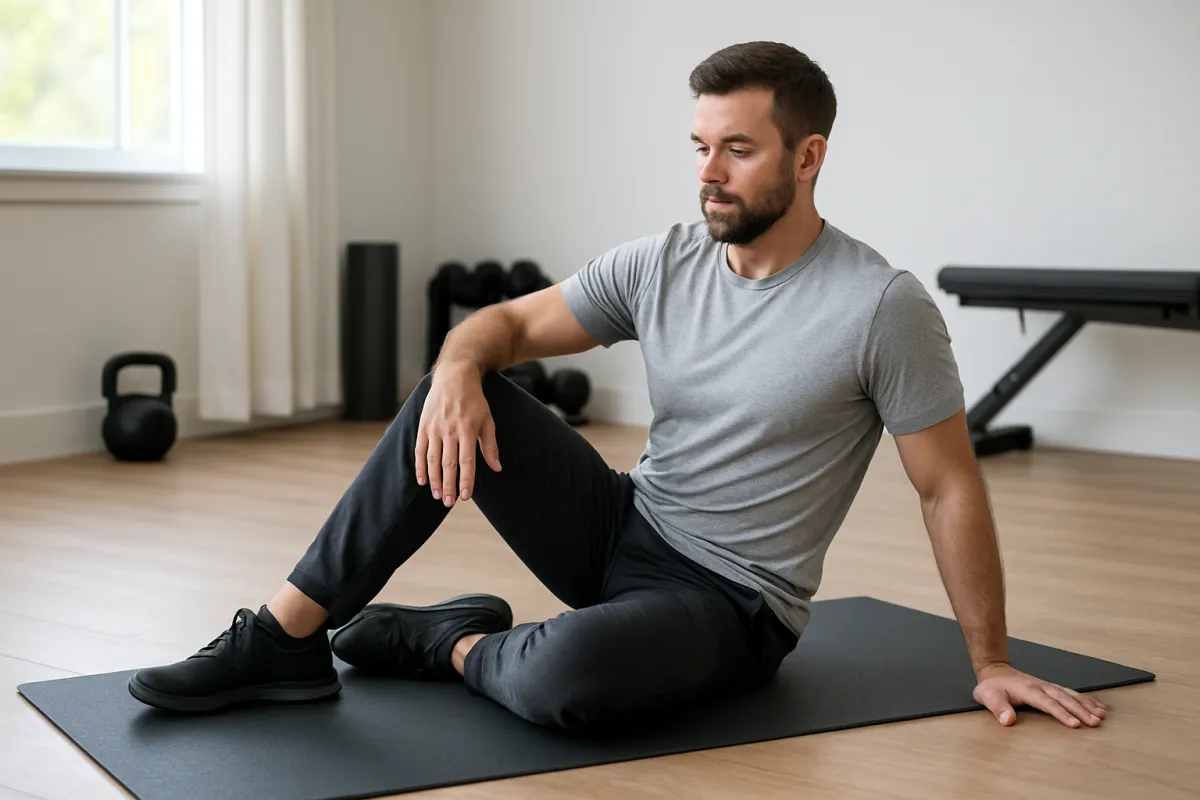
1. 90/90 hip switches
Best for: improving internal and external hip rotation.
Sit with both knees bent and your feet wider than hip-width. Let both knees fall to one side, then sweep them through the middle to the other side. Keep the movement slow and use your hands behind you if needed.
Begin with 6–10 controlled repetitions per side. Do not treat this as a race or push the knees down with your hands. The goal is to explore rotation while keeping the movement smooth.
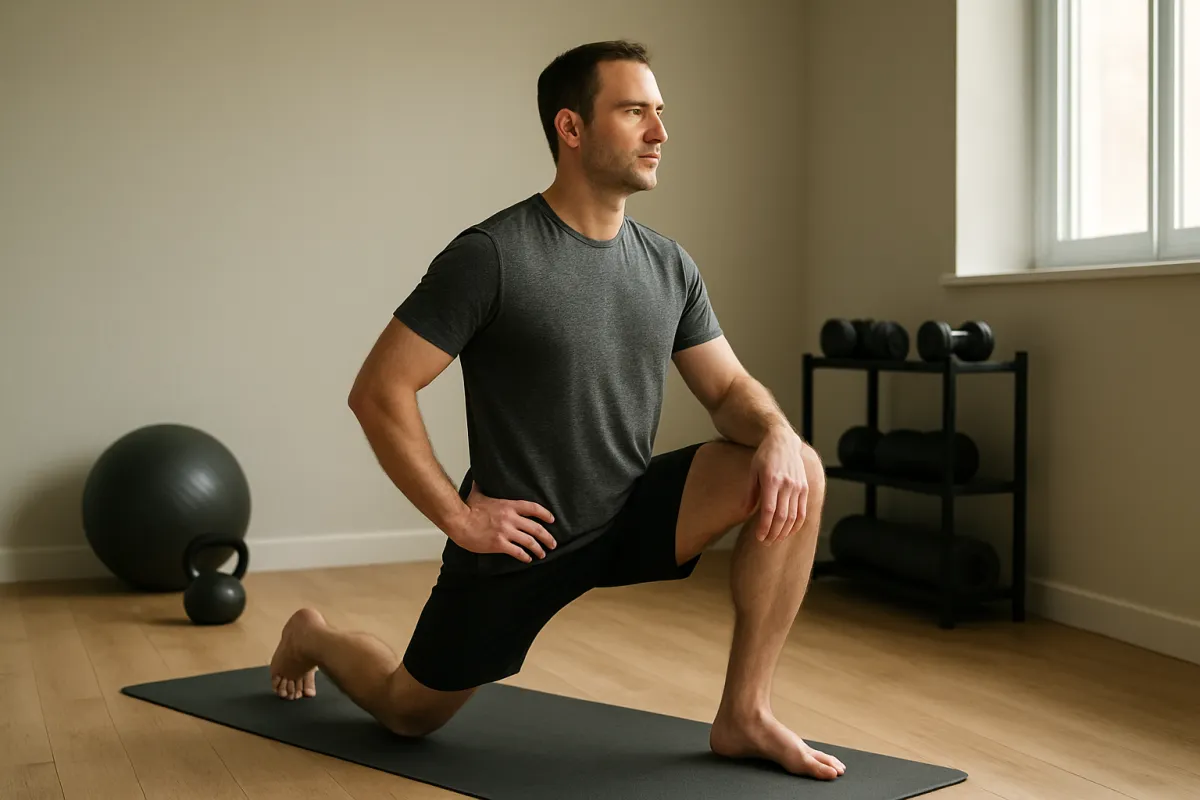
2. Half-kneeling hip-flexor stretch
Best for: people who feel stiffness at the front of the hip after sitting.
Kneel with one foot in front and gently tuck the pelvis so the belt line moves slightly upward. Shift forward only until you feel a stretch in the rear leg’s hip flexor. Keep your ribs down instead of leaning back.
Hold for 20–40 seconds on each side for one or two rounds. A folded towel under the knee can make the position more comfortable. HSS also recommends regular position changes during the day because staying seated for long periods may contribute to hip-flexor tightness; see its guide to hip-flexor stretches.
3. Adductor rock-backs
Best for: inner-thigh mobility and preparing for lateral movement.
Start on your hands and knees. Extend one leg out to the side with the foot flat, then slowly push your hips backward and return to the starting position. Keep the extended knee straight but do not force the range.
Perform 8–12 repetitions per side. This is usually more comfortable than holding a wide-leg stretch because you remain in motion and can adjust the range easily.
4. Quadruped hip circles
Best for: gentle active movement before a workout.
From hands and knees, lift one knee slightly and draw small circles with it. Keep your pelvis as still as possible, then gradually make the circles larger if the movement remains controlled.
Complete 5–8 circles in each direction per side. Smaller circles are often better when the hip feels stiff or pinchy. This exercise should feel like controlled practice, not an aggressive stretch.
5. Glute bridges
Best for: building active hip extension and reinforcing the range you have gained.
Lie on your back with your knees bent and feet planted. Brace lightly, press through the feet, and lift your hips until your body forms a comfortable line from shoulders to knees. Pause briefly, then lower with control.
Try 2–3 sets of 8–15 repetitions. If you feel the movement mostly in your lower back, reduce the height and focus on a gentle pelvic tuck. For more home-based lower-body work, compare this with the best glute exercises for building strength at home.
6. Supported deep squat hold
Best for: practicing a comfortable squat position.
Hold a sturdy doorframe, rack, or post and lower into a squat while keeping your heels supported if necessary. Let the knees move in line with the toes, breathe slowly, and use the support to stay relaxed.
Hold for 15–30 seconds, then stand. Repeat two or three times. If the hips pinch at the bottom, raise your position, widen or narrow your stance slightly, or switch to squat-to-stand repetitions.
7. Figure-four stretch
Best for: a gentle stretch around the outer hip and glute area.
Lie on your back, cross one ankle over the opposite thigh, and draw the supporting leg toward you. Keep the head and shoulders relaxed and stop when you feel a manageable stretch around the outer hip.
Hold for 20–40 seconds per side. Avoid pulling aggressively on the knee. If this position causes symptoms that travel down the leg, stop and choose a different movement.
3. How to use these exercises in a weekly routine
For a warm-up, choose active drills rather than long static holds. A simple sequence is 90/90 switches, quadruped hip circles, adductor rock-backs, and glute bridges for one or two rounds.
After training or during a break from sitting, use the half-kneeling hip-flexor stretch and figure-four stretch. You can practice mobility several days per week, but keep the intensity moderate enough that the hips feel normal afterward.
- Before lower-body training: 5–8 minutes of controlled movement.
- After sitting: 1–2 minutes of hip-flexor and rotation work.
- After training: Gentle stretches, breathing normally, without forcing end range.
- For strength goals: Pair mobility with progressive lower-body training rather than replacing it.
If you are building a structured strength routine, the guide to creating a progressive overload plan can help you organize the strength portion.
4. Common mistakes that limit progress
- Stretching only the front of the hips: Rotation, adductors, glutes, and active control also matter.
- Using the lower back to create range: Keep the ribs and pelvis reasonably aligned.
- Chasing an intense sensation: More discomfort does not automatically mean better mobility.
- Changing exercises every day: Repeat a small routine long enough to notice whether it helps.
- Ignoring strength: Bridges, split squats, and controlled squats help you use the available range.
5. What if the exercises cause discomfort?
Stop any movement that causes sharp pain, catching, sudden weakness, numbness, or symptoms that travel down the leg. Reduce the range, slow the tempo, or choose a supported version if the sensation is only mild tension.
Persistent pain, pain after an injury, significant loss of movement, night pain, or difficulty bearing weight warrants assessment by a qualified healthcare professional or physical therapist. Exercise advice for general stiffness is not a substitute for evaluating an injury or joint condition. The Cambridge University Hospitals guide also emphasizes maintaining a neutral spine during hip stretches; review its hip stretching instructions for additional form cues.
6. A practical checklist for your next session
- Warm up with five minutes of easy walking or cycling.
- Perform 90/90 switches and adductor rock-backs slowly.
- Add one hip-flexor stretch per side.
- Use glute bridges to reinforce hip extension.
- Keep every movement below sharp pain or pinching.
- Note which position feels limited and repeat the routine consistently for several weeks.
7. Final recommendation by scenario
For general stiffness: Start with 90/90 switches, adductor rock-backs, and glute bridges.
For desk workers: Use the half-kneeling hip-flexor stretch and brief movement breaks throughout the day.
For squatters and lifters: Practice 90/90 switches, supported squat holds, and bridges before progressing to loaded work.
For runners and cyclists: Combine hip-flexor mobility with glute strengthening rather than stretching alone.
For painful or one-sided symptoms: Do not rely on a generic list. Get individualized guidance before pushing range.
The best mobility exercises for tight hips are the ones that improve comfortable movement without creating new symptoms. Choose two active drills, one gentle stretch, and one strengthening exercise, then make consistency—not intensity—the main goal.