Quick verdict: Running usually burns more calories per minute, while cycling is often easier to sustain and gentler on your joints. For weight loss, choose the option you can perform consistently without excessive pain, fatigue, or skipped sessions.
The question of cycling vs running for weight loss sounds like a calorie-burn contest, but that is only one part of the decision. Your results will also depend on workout duration, intensity, recovery, eating habits, injury history, and whether you genuinely prefer one activity.
This guide compares both options using practical criteria, then shows how to choose a starting plan for your schedule and fitness level. It also explains when combining cycling and running may be more useful than choosing only one.

1. Compare the factors that actually affect weight loss
Weight loss occurs when your average energy expenditure and food intake create a sustained calorie deficit. Exercise can help create that deficit, but calorie estimates from watches, bikes, and treadmills are only approximations and should not be treated as exact measurements.
The CDC explains that physical activity supports weight management, while the broader public-health target for adults is at least 150 minutes of moderate-intensity aerobic activity each week, or 75 minutes of vigorous activity, plus muscle-strengthening work on at least two days.
For a fair comparison, assess each activity by:
- How hard you can exercise safely
- How long you can continue before stopping
- How often you can recover and train again
- Whether pain or inconvenience makes you skip sessions
- Whether you can maintain normal eating and sleep habits
2. Cycling vs running for weight loss: side-by-side comparison
The table below describes common patterns, not guarantees. A fast cyclist may expend more energy than a slow jogger, and an experienced runner may tolerate a longer session than a beginner.
Use these differences to match the activity to your body and lifestyle:
| Factor | Running | Cycling | What to consider |
|---|---|---|---|
| Calorie burn per minute | Often high because it is weight-bearing | Can be high, especially with hills or resistance | Intensity, body size, terrain, and duration matter more than the label |
| Joint impact | Higher impact from repeated foot strikes | Lower impact, although knees may still be stressed | Cycling may be preferable with impact sensitivity |
| Equipment | Usually requires only suitable shoes | Requires a bike, safe riding area, or indoor setup | Convenience affects consistency |
| Workout duration | Often easier to keep sessions short | Many people can ride longer at a manageable effort | Longer sessions may offset lower intensity |
| Recovery demand | Impact can increase soreness and recovery needs | Typically easier on the legs, but hard rides still require recovery | Do not increase volume too quickly |
| Muscle stimulus | Strengthens lower-body tissues through impact and propulsion | Emphasizes repeated leg contractions without impact | Neither replaces a complete strength program |
| Weather and access | Can be done in many locations with minimal setup | May require traffic planning, storage, or an indoor trainer | Choose the option with fewer practical barriers |
3. When running is the better choice
Running may suit you if you want a time-efficient workout, have access to safe routes, and can tolerate impact without recurring pain. It also makes intensity easy to adjust: you can walk, jog, run, or use short intervals without needing special equipment.
Running is often best for:
- People who prefer short sessions and simple planning
- Those training outdoors without access to a bike
- Runners who enjoy intervals, hills, or event-based goals
- People who can recover well between sessions
A cautious starting structure could be three sessions per week using alternating walking and jogging. Keep the effort controlled enough that you could speak in short sentences, then increase either time or running intervals gradually—not both at once.
Running is not automatically superior for fat loss. If shin, knee, hip, or foot pain causes you to stop for several days, a lower-impact option may produce better results over several months.
4. When cycling is the better choice
Cycling is often a practical choice when you want aerobic training with less impact. It may allow you to accumulate more weekly minutes, especially if running causes soreness or you enjoy longer steady sessions.
Cycling is often best for:
- People returning to exercise after a break
- Those who are sensitive to impact or repetitive foot strikes
- Anyone who enjoys longer, steady workouts
- People who want to train more often while managing soreness
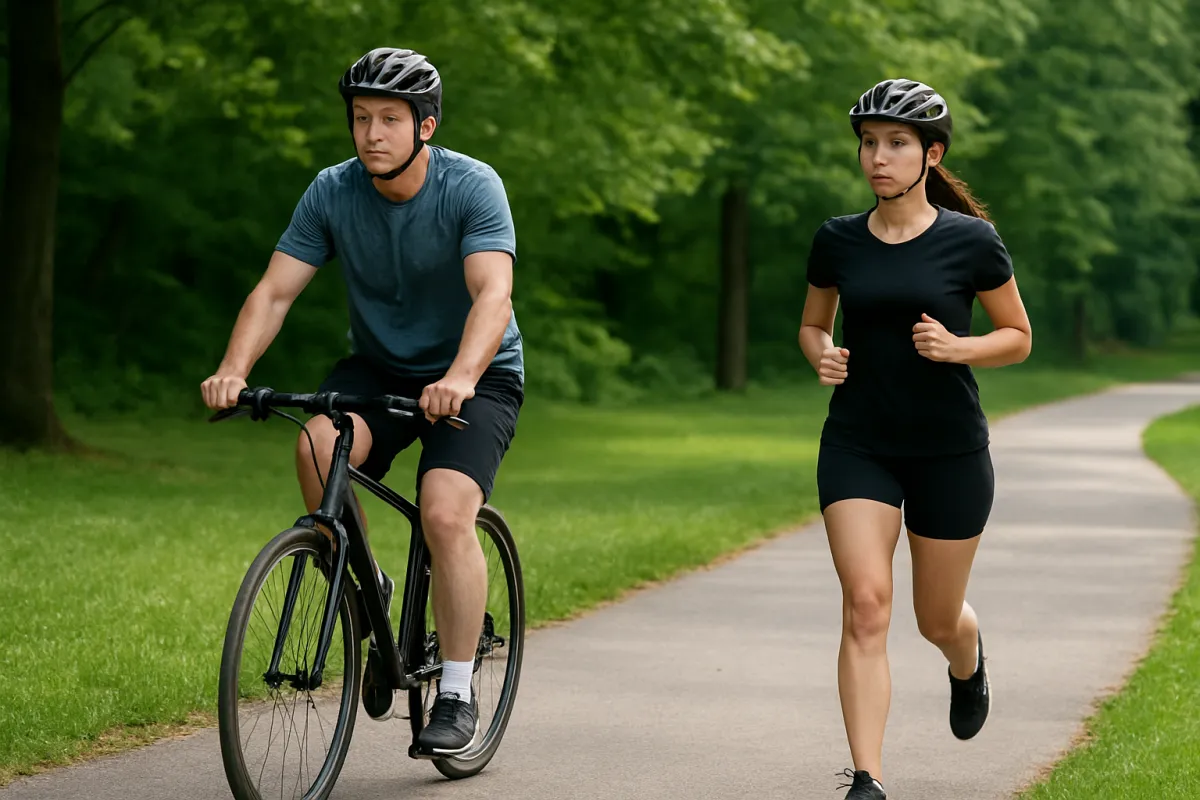
Bike setup matters. A poorly adjusted seat, excessive resistance, or high gearing can create avoidable knee, hip, neck, or lower-back discomfort. Begin with light-to-moderate resistance and a cadence that feels smooth rather than grinding through every pedal stroke.
Indoor cycling can also reduce weather and traffic barriers. If you already own a walking pad or home cardio setup, compare which option is easier to start on busy days; convenience is a meaningful part of adherence.
5. Choose based on your body, schedule, and preferences
The best activity is usually the one that fits your current limitations and remains realistic after the initial motivation fades. Use the following decision rules rather than choosing solely from calorie-burn claims.
- Choose running if you are pain-free, prefer short workouts, and can recover between sessions.
- Choose cycling if you need lower-impact exercise, prefer longer sessions, or want to train more frequently.
- Choose both if variety helps you stay consistent and neither activity causes persistent pain.
- Choose brisk walking first if both running and cycling feel too demanding right now.
For general health, the CDC adult activity guidelines recommend combining aerobic activity with muscle strengthening. A balanced week could include two or three cardio sessions, two strength sessions, and at least one easier recovery day.
Strength work can help you maintain muscle while losing weight. For ideas, see our guides to creating a progressive overload plan and glute exercises at home.
6. Build a sustainable weight-loss routine
Start below your maximum capacity. For example, perform 20 to 30 minutes of easy-to-moderate cycling two or three times weekly, or use walk-run intervals for a similar duration. After two or three weeks without unusual soreness, add a small amount of time to one or two sessions.
Use effort as a guide. Moderate exercise should feel purposeful but controlled; vigorous exercise makes conversation difficult and should not be the default for every workout. The current Physical Activity Guidelines information provides the broader framework, but your starting point should reflect your current conditioning.
Support the routine with regular meals, adequate protein, sleep, and a modest calorie deficit rather than trying to compensate for overeating with punishing workouts. If weight, appetite, or training fatigue becomes difficult to manage, a registered dietitian or qualified healthcare professional can help personalize the plan.
7. Common mistakes that slow progress
- Comparing only calories per minute: A workout you repeat four times weekly may outperform a harder workout you avoid.
- Increasing volume too quickly: Sudden jumps in running mileage or cycling resistance can create avoidable soreness.
- Ignoring strength training: Cardio supports energy expenditure, but a complete plan should also challenge major muscle groups.
- Trusting device calorie estimates: Treat them as rough feedback, not permission to eat back every displayed calorie.
- Using pain as proof of effectiveness: Muscle effort is normal; sharp, worsening, or persistent joint pain is a reason to stop and reassess.
- Making the diet overly restrictive: Extreme restriction can undermine energy, recovery, and long-term adherence.
8. What if one option does not work?
If running hurts: switch temporarily to cycling, walking, or a run-walk format. Check footwear, terrain, training frequency, and recent increases in volume. Seek professional assessment for pain that is severe, changes your gait, persists despite rest, or keeps returning.
If cycling causes knee discomfort: reduce resistance, check saddle height and fore-aft position, and avoid forcing a heavy gear. Persistent pain should be evaluated by a healthcare professional or qualified physical therapist.
If progress stalls: review your weekly activity, food portions, sleep, and non-exercise movement before adding more intense sessions. Weight can fluctuate for reasons unrelated to fat loss, so assess trends over several weeks rather than individual weigh-ins.
9. Your practical decision checklist
- Can you perform the activity without significant pain?
- Can you realistically complete it two to four times each week?
- Do you have the required equipment and a safe place to train?
- Can you recover before your next planned session?
- Will you also include strength training and easier days?
- Can you follow the routine without creating extreme hunger or exhaustion?
Next action: choose one activity and schedule three manageable sessions over the next seven days. Record duration, perceived effort, and any pain—not just calories. After two weeks, keep the option that feels repeatable, then progress gradually.
Final verdict: For cycling vs running for weight loss, running has a time-efficiency advantage for many people, while cycling often has a consistency and impact advantage. Choose running when your joints tolerate it and you value simplicity; choose cycling when you need longer, lower-impact sessions. If both fit your body and schedule, alternating them may be the most sustainable approach.