To train for your first 5K at home, combine three progressive walk-run workouts each week with low-impact cardio, basic strength training, and regular recovery. You do not need to run continuously from the beginning. Start with short running intervals, build gradually, and use a treadmill, indoor track, or safe outdoor route when you need more space.
A first 5K is mainly an endurance project, not a speed test. This guide explains how to set up your training area, choose the right starting level, progress without rushing, and adjust the plan when your schedule, fitness, or joints need extra consideration.
1. Prepare your home training setup
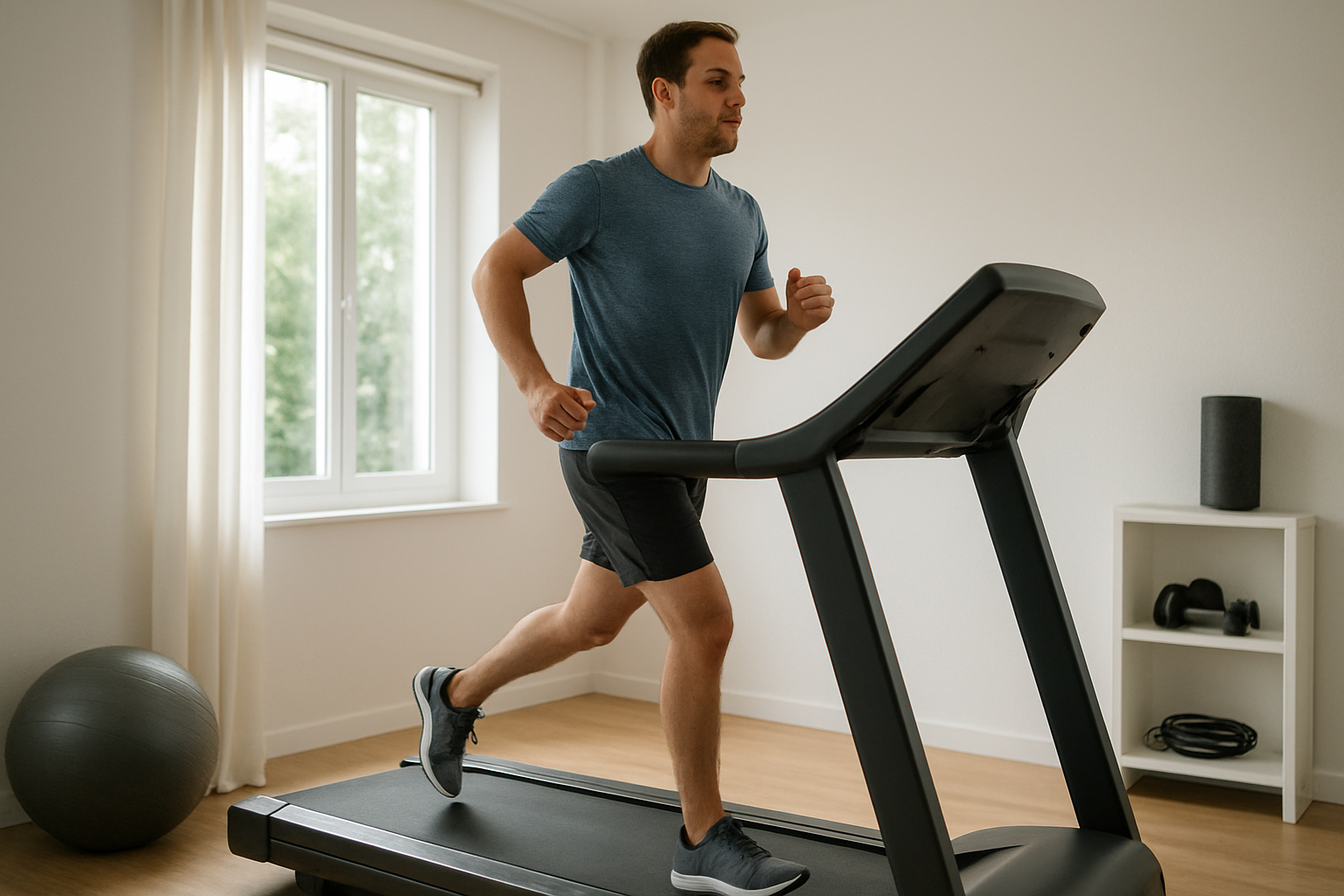
Choose the most practical space you can use consistently. A treadmill is useful for controlled pacing, but it is not essential. You can also march, jog in place, use stairs carefully, or complete short shuttle runs in a clear room. If you run indoors, remove loose rugs and furniture, improve ventilation, and wear supportive shoes rather than training barefoot on a hard floor.
Before the first workout, decide which three days you will train. Leave at least one easier or rest day between running sessions. The NHS Couch to 5K plan also uses three weekly runs with rest days between them, which is a useful structure for beginners.
- Set aside 25–40 minutes, including warm-up and cool-down.
- Keep water nearby, especially in a warm indoor room.
- Use a timer or beginner running app to manage intervals.
- Record time, intervals, effort, and any pain after each session.
Choose a sensible starting point
If you can walk briskly for 30 minutes without unusual pain or excessive breathlessness, start with the beginner plan below. If that is difficult, spend one or two weeks doing brisk walking first. If you already run comfortably for 15–20 minutes, begin at a later stage rather than repeating the earliest intervals.
2. Warm up and learn the right effort
Begin every session with five minutes of easy walking or marching. Add gentle ankle circles, leg swings, and hip movements if they feel comfortable; avoid forcing a deep stretch before running. A warm-up should make you feel prepared, not tired.
Your easy running pace should allow you to speak in short sentences. If you are gasping, gripping the treadmill rails, or losing control of your stride, slow down or walk. For beginners, controlling intensity is usually more valuable than chasing a particular pace or distance.
Cool down with five minutes of easy walking. You can follow this with relaxed mobility work, especially for the calves, ankles, hips, and hamstrings. For additional ideas, see our guide to mobility exercises for tight hips.
3. Follow a gradual 5K training schedule
The schedule below is a flexible eight-week framework. Complete three sessions per week, such as Monday, Wednesday, and Saturday. The running portions should remain easy; if a week feels too difficult, repeat it before progressing.
Each session includes a five-minute warm-up and cool-down. “Run” means a gentle jog, not a sprint.
| Weeks | Main workout | What to look for | Warning sign |
|---|---|---|---|
| 1–2 | Run 1 minute, walk 2 minutes for 8–10 rounds | Breathing settles during each walk | You cannot recover before the next interval |
| 3–4 | Run 2 minutes, walk 2 minutes for 6–8 rounds | Relaxed shoulders and quiet footfalls | Increasing joint pain during or after training |
| 5–6 | Run 4 minutes, walk 2 minutes for 5–6 rounds | You finish feeling challenged but controlled | Needing several extra recovery days |
| 7 | Run 8 minutes, walk 2 minutes for 3–4 rounds | Steady effort without pace surges | Form breaks down late in every interval |
| 8 | Run 20–30 minutes continuously, or use short walk breaks | Complete the distance at an even effort | Trying to race the full 5K before you are ready |
Do not treat the schedule as a deadline. The NHS beginner plan can also be completed in nine weeks or longer, depending on your starting point and recovery needs. The goal is to build repeatable training habits rather than force a specific calendar.
4. Add low-impact cardio and strength work
On one or two non-running days, perform 20–40 minutes of low-impact cardio. Options include brisk walking, stationary cycling, marching intervals, or an easy elliptical session. These workouts can improve your general aerobic base without adding as much running impact.
Add two short strength sessions each week, preferably after an easy cardio day or separate from your hardest run. Keep the exercises controlled and stop several repetitions before your form deteriorates.
- Bodyweight squats: 2–3 sets of 8–12 repetitions.
- Reverse lunges or supported split squats: 2 sets of 6–10 per side.
- Calf raises: 2–3 sets of 12–20.
- Glute bridges: 2–3 sets of 10–15.
- Plank or dead bug: 2–3 controlled sets.
If you train at home with weights, gradual progression matters more than constantly changing exercises. Our guide on creating a progressive overload plan explains how to increase training demands in a measured way.
5. Check your progress before increasing the workload
Use three checkpoints before moving to the next stage. First, you should complete the current workout without needing to stop unexpectedly. Second, your breathing should return close to normal within a few minutes. Third, you should not have worsening pain, limping, or unusual soreness that affects normal movement the next day.
Increase only one factor at a time: either add a little running, reduce a walking break, or extend the total session. Do not simultaneously add speed, hills, distance, and extra strength work. The CDC’s adult activity guidance emphasizes that some activity is better than none, so a reduced session still counts as useful training.
6. Troubleshoot common problems
What if you cannot run continuously?
Keep the walk breaks. A 5K can be completed with a run-walk strategy, and walking briefly may help you maintain a more consistent effort. Repeat the same interval pattern for another week before attempting longer runs.
What if your knees or shins hurt?
Stop increasing the workload and switch temporarily to walking or cycling if those activities are comfortable. Check whether your shoes are worn, whether your indoor surface is slippery or excessively hard, and whether you increased training too quickly. Pain that persists, changes your gait, causes swelling, or worsens with everyday movement should be assessed by a qualified healthcare professional.
What if you miss a week?
Do not restart from zero, but do return to the last workout you completed comfortably. After illness, significant pain, or a long interruption, use a more conservative week and rebuild gradually.
7. Avoid these beginner mistakes
- Running every day: More frequent impact does not automatically produce faster progress.
- Starting too fast: Early workouts should feel easier than your maximum effort.
- Testing your 5K every week: Frequent all-out efforts create fatigue without replacing structured training.
- Ignoring strength and mobility: Running is repetitive, so general movement quality and leg strength matter.
- Changing the plan too often: Keep the same basic structure long enough to judge how your body responds.
- Using pain as a progress marker: Mild effort-related fatigue is different from sharp, localized, or worsening pain.
8. Use advanced adjustments when needed
If indoor space is limited, use timed circuits instead of trying to imitate outdoor distance. For example, alternate two minutes of marching, one minute of easy jogging in place, and one minute of low-impact step-ups. Keep the landing soft and avoid rapid turns on polished floors.
If you have a treadmill, use a pace that feels natural and avoid holding the handrails. You can add a small incline later, but first establish consistent easy running on a flat setting. If you are training for a specific race, practice outdoors occasionally before race day so changes in surface, weather, and route do not come as a surprise.
For general health, adults are advised to work toward at least 150 minutes of moderate-intensity activity weekly, plus muscle-strengthening activity on two days, but your 5K plan does not need to reach that target immediately. Build toward it as your tolerance improves.
9. Complete this first-5K checklist
- Choose three weekly training days.
- Prepare a clear, well-ventilated training area.
- Start with a walk-run session that feels manageable.
- Warm up and cool down every time.
- Record effort, intervals, and recovery.
- Include low-impact cardio and two brief strength sessions.
- Repeat difficult weeks instead of forcing progression.
- Plan your race-day shoes, route, hydration, and warm-up in advance.
10. Know when to stop and get help
Exercise discomfort and heavy breathing can be normal, but stop immediately if you experience chest pressure or pain, fainting, severe dizziness, unexplained severe shortness of breath, or symptoms that feel unusual for you. The American Heart Association lists chest discomfort, upper-body discomfort, shortness of breath, nausea, sweating, and lightheadedness among possible heart-attack warning signs; call emergency services for concerning symptoms rather than trying to finish the workout.
If you have a known heart, lung, metabolic, or orthopedic condition, are returning after surgery, or are unsure whether running is appropriate, ask a healthcare professional for individualized guidance before beginning. This article provides general training information, not a personal medical clearance.
Next actions for this week
Put three sessions on your calendar, complete a 25–30-minute walk-run workout, and write down how you felt during the final interval and the following morning. If recovery is good, repeat the workout twice more next week. If it is not, reduce the running time and keep building consistency.
When you know how to train for your first 5K at home, the most important decision is not how fast you can run today. It is choosing a manageable starting level, progressing only when your body is ready, and making the plan simple enough to follow for several weeks.