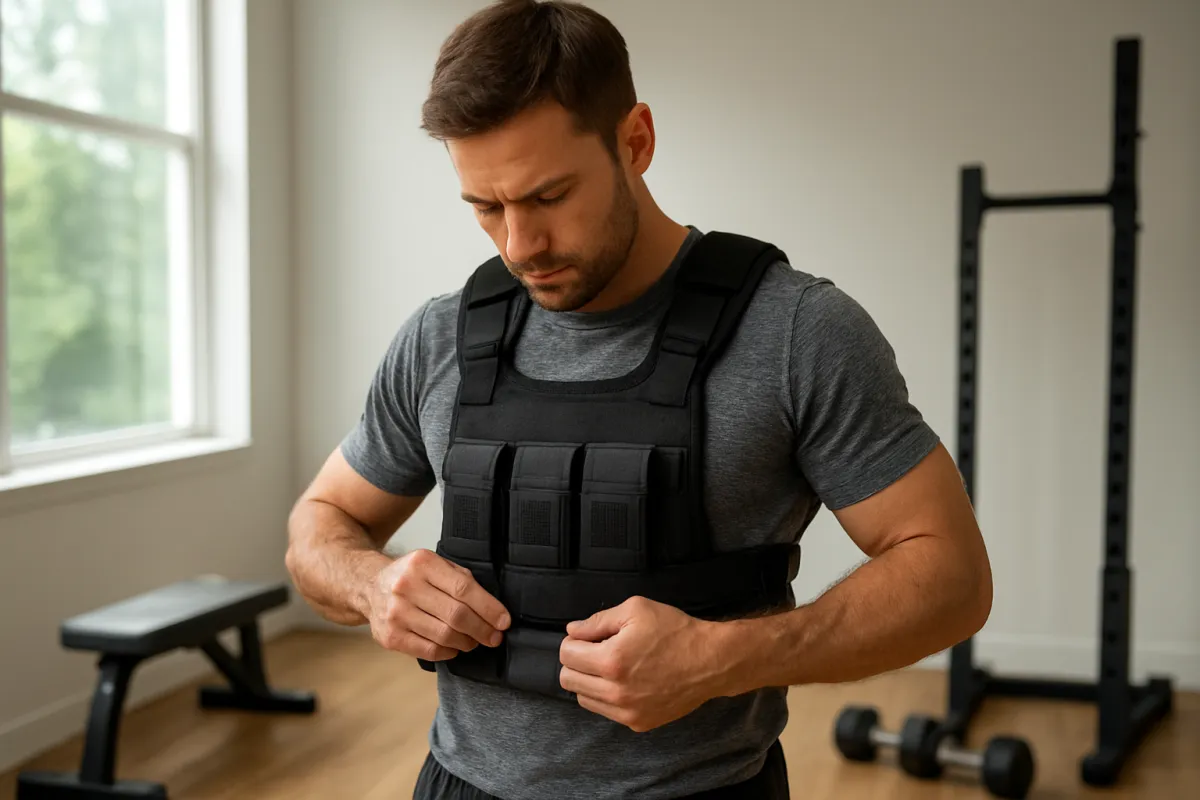
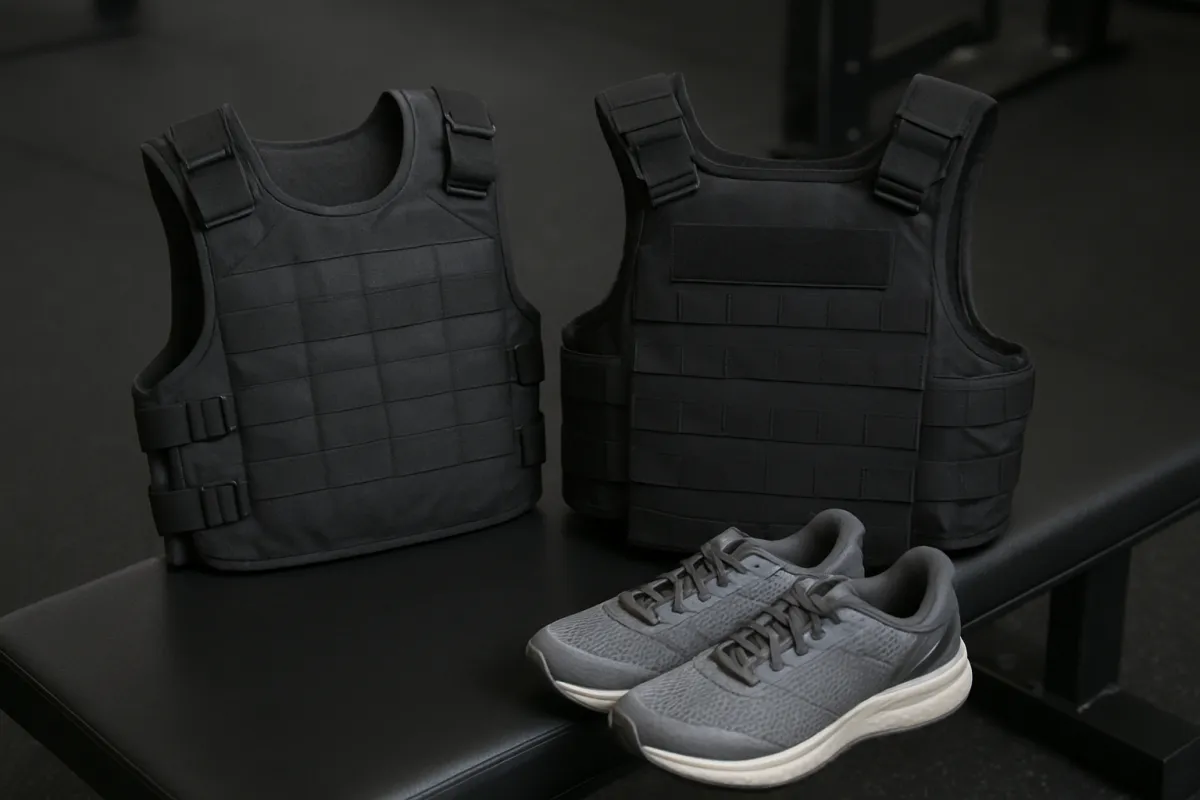
The best weighted vest for running is light, secure, adjustable, and designed to stay close to your torso without restricting breathing or arm movement. For most runners, a low-profile vest that starts at roughly 5% of body weight—or less—is a more sensible choice than a heavy tactical-style carrier.
Weighted vests can make familiar movement more demanding, but they also magnify poor fit, inefficient form, and existing joint problems. This guide uses current manufacturer specifications, sports-medicine guidance, and independent review criteria rather than personal product testing. You will learn how to compare running vests, when a vest may be useful, what limitations to expect, and how to introduce extra load without turning every run into a high-impact workout.

1. Decide whether a weighted vest belongs in your running plan
A weighted vest is an overload tool, not a shortcut to faster running or automatic fat loss. Adding external load increases the work required to move your body, but the practical benefit depends on how well you can preserve normal posture, foot strike, breathing, and cadence.
The American College of Sports Medicine’s guidance on weighted vests emphasizes gradual progression and matching the load to the activity. Cleveland Clinic also advises caution with higher-impact exercise and recommends stopping when pain or abnormal movement appears.
When a vest may be useful
- Short, controlled conditioning sessions when ordinary running has become easy.
- Run-walk training, hill walking, stair work, or brief intervals.
- Strength circuits involving movements such as squats, step-ups, push-ups, and carries.
- Runners who want a compact way to add resistance without holding dumbbells.
When another tool may be better
If your main goal is to improve running speed, structured intervals, hills, strength training, and recovery management are usually more directly targeted. If you want to carry equipment over a longer distance, a properly fitted running pack or rucksack may distribute supplies more conveniently than a vest.
A weighted vest is a poor choice for you if it causes chest compression, shoulder pain, repeated rubbing, balance changes, or a limp. Anyone with current or previous bone, joint, back, cardiovascular, or balance concerns should ask a qualified healthcare professional before adding load to running.
2. Compare the features that matter most for running
Many products are marketed as general workout vests, but running places stricter demands on fit and movement. A vest that feels acceptable during push-ups may bounce, chafe, or interfere with arm swing after several minutes of running.
Use the table below as a screening tool before comparing colors, maximum capacity, or promotional claims.
| What to look for | Why it matters for running | Warning sign |
|---|---|---|
| Adjustable load in small increments | Lets you start conservatively and progress without large jumps. | The vest is fixed at a heavy weight or only changes in large plate increments. |
| Close, stable torso fit | Reduces bouncing and helps preserve a natural stride. | The vest shifts when you jog, even after tightening the straps. |
| Front and/or waist adjustment | Helps accommodate different layers and body shapes. | Only one loose strap controls the entire fit. |
| Even weight distribution | Limits concentrated pressure on the shoulders, neck, or lower back. | Most of the load hangs from narrow shoulder straps. |
| Breathable or ventilated construction | Reduces heat buildup during outdoor training. | Thick, non-breathable padding covers most of your torso. |
| Reflective details | Can improve visibility during dawn, dusk, or poorly lit routes. | The vest is dark and has no reflective panels or trim. |
| Secure weight pockets or plates | Prevents rattling and uneven movement. | Weights slide, clank, or are difficult to check before a run. |
Adjustable versus fixed-weight designs
Adjustability is one of the strongest reasons to choose a particular vest for running. You can begin with a minimal load, test the fit, and remove weight for longer sessions. Fixed-weight vests can be simpler and less expensive, but they give you less control over progression and fatigue.
Micro-load systems are especially useful when small changes affect your stride. For example, the Hyper Vest ELITE uses thin steel weights that can be added or removed in small increments, while its manufacturer lists size-specific capacities and reflective details. These are published product specifications, not independent performance results, so confirm the current fit guide and included accessories before buying.
Soft vests versus plate carriers
Soft, close-fitting vests are generally the more natural starting point for running. They tend to sit close to the body and may offer finer weight adjustment.
Plate carriers are more appropriate when you also train for loaded calisthenics, tactical-style conditioning, or heavier strength circuits. The Rogue Plate Carrier, for example, is built around separate plates and a stabilized carrier design. Plates are sold separately, and a carrier that works well for short strength sessions may feel too rigid or warm for regular distance running.
3. Review the leading vest categories
Rather than treating one product as universally “best,” compare each style with your intended use. Product availability, sizes, included weights, and prices can change, so check the current manufacturer page before ordering.
Best for low-profile running: slim adjustable soft vests
These are the most logical category for runners who prioritize reduced bounce, a close fit, and normal arm movement. Look for stretch fabric, side adjustment, a front closure that does not rub, and weight pockets positioned evenly around the torso.
The Hyper Vest ELITE is an example of this category. Its published specifications include a front zipper, adjustable side lacing, reflective strips, and small steel weights. Its capacity varies by size, which makes sizing more important than simply choosing the largest available load.
Best for mixed running and strength work: adjustable training vests
A broader adjustable vest can work well if your week includes walking, bodyweight exercises, step-ups, and short conditioning circuits. The compromise is that a design with more padding, larger pockets, or higher capacity may feel bulkier during faster running.
Choose this category when versatility matters more than the smallest possible profile. You should still be able to breathe freely, swing your arms, and rotate your torso without the vest cutting into your ribs.
Best for heavier training: plate carriers
Plate carriers offer a structured fit and make it easy to use standardized plates. They are useful for people training toward specific loaded-workout standards or combining running with pull-ups, push-ups, squats, and carries.
They are not automatically better for everyday running. The separate plate cost, rigid shape, heavier empty weight, and extra heat can make them excessive for beginners or long easy runs.
4. Choose the starting weight and progression
There is no single safe load for every runner. Body size, training history, terrain, footwear, joint tolerance, and the vest’s design all affect how much stress the added weight creates.
A conservative starting point is about 5% of body weight or less, particularly if you plan to jog rather than walk. Some manufacturers and fitness organizations discuss progressing toward approximately 10% for suitable users, but that is a ceiling to approach gradually—not a target you must reach.
- Start with a brisk walk or easy run-walk session.
- Use a shorter duration than your normal workout.
- Keep the first few sessions on a flat, predictable surface.
- Increase only one variable at a time: load, duration, speed, or hills.
- Remove weight if your stride becomes shortened, heavy, or uneven.
The Nike guide to running with a weighted vest also recommends introducing the load gradually. The goal is to create a manageable training stimulus, not to prove that you can tolerate the heaviest vest.
5. Fit the vest before you run
Put the vest on over the clothing you normally wear for training. Tighten it until the load remains stable during a gentle jog, but not so tightly that it restricts rib movement or makes breathing uncomfortable.
Fit checks you can perform at home
- Walk, jog in place, and perform a few bodyweight squats.
- Check that the bottom edge does not dig into your ribs or hips.
- Raise both arms and confirm that shoulder movement remains free.
- Bend forward slightly and make sure the vest does not slide toward your neck.
- Shake the torso gently; the weight should not swing independently of your body.
- Inspect every pocket, plate, buckle, zipper, and strap before use.
Wear a thin technical shirt beneath the vest if the fabric rubs. Do not assume that tightening harder solves every movement problem; persistent bounce may indicate the wrong size, unsuitable weight distribution, or a design that does not match your body.
6. Use a weighted vest without compromising running form
Keep your steps controlled and your torso tall. Avoid leaning sharply forward, overstriding, holding your breath, or forcing your usual pace when the added load changes how you move.
For a first session, try five to ten minutes of easy running separated by walking. If the vest remains comfortable during the session and your joints feel normal later that day and the following morning, repeat the same load before considering a small progression.
Do not combine a new vest with maximal sprints, steep downhill running, jumping, or long technical trails. The extra load can make mistakes more consequential and may increase fatigue before you notice that your form has deteriorated.
7. Understand the limitations and buying costs
Weighted vests can increase exercise difficulty, but they do not replace a complete training plan. Claims about dramatically increasing calorie burn, improving bone density, or transforming running performance should be treated cautiously unless they are supported by research that matches your age, activity, and the specific use case.
Also consider the total cost. A low purchase price may become less attractive if the vest cannot be adjusted, the included weight is too heavy, the size is wrong, or compatible plates must be bought separately. Premium soft vests may cost more because they use specialized fabrics or smaller weight increments, while plate carriers may require a separate investment in plates.
Alternatives worth comparing
- Hill walking: Adds challenge without placing an external load on your torso.
- Incline treadmill work: Makes intensity easy to control and stop.
- Strength training: Exercises such as Romanian deadlifts and Bulgarian split squats can build useful lower-body capacity without wearing a vest.
- Running pack: Better when you need to carry water, clothing, or other equipment.
- Ankle weights: Usually a poor substitute for running because they alter the mechanics of each leg swing; see our guide to ankle weights for walking for safer use cases.
8. Avoid these common buying mistakes
- Buying the maximum capacity first: More capacity is not useful if you cannot run comfortably with a light load.
- Choosing by appearance alone: Tactical styling does not prove that a vest will be stable or breathable.
- Ignoring measurements: Compare chest, waist, torso, and layer measurements rather than relying on small, medium, or large labels.
- Forgetting the empty vest weight: A carrier may already add meaningful load before plates are installed.
- Overlooking plate compatibility: Check dimensions and whether plates are included.
- Using a fixed heavy vest for every workout: You need the option to reduce load for recovery runs or longer sessions.
- Skipping the return policy: Fit is difficult to judge until you walk and jog in the vest.
9. What if the vest causes a problem?
What if it bounces?
Remove weight, retighten the adjustment points evenly, and test again at walking speed. If it still moves, try a different size or a lower-profile design rather than simply tightening until your breathing is restricted.
What if your shoulders or neck hurt?
Stop the session and inspect how the weight is distributed. Pain may indicate that the load is too high, the vest is too long or short, or the shoulder straps are carrying more pressure than your body tolerates. Persistent or sharp pain deserves professional assessment.
What if your knees, hips, or back hurt?
Do not run through altered mechanics. Return to unloaded training and consider whether hills, speed, duration, or footwear are also contributing. Seek medical or physical-therapy advice for pain that persists, worsens, or affects normal walking.
10. Weighted vest running checklist
- Choose a vest designed for movement rather than only for heavy strength work.
- Confirm the size using actual body measurements.
- Prefer adjustable weight for gradual progression.
- Start at 5% of body weight or less, or follow individualized professional guidance.
- Test the vest with walking before running.
- Check for bounce, rubbing, heat, and breathing restriction.
- Use reflective details when training in low light.
- Keep early sessions short and flat.
- Do not increase weight and running volume at the same time.
- Stop when pain, dizziness, chest discomfort, unusual shortness of breath, or a major form change appears.
11. Next actions before you buy
First, write down your main use: easy run-walk sessions, short intervals, mixed strength work, or heavier loaded training. Next, decide whether you need fine weight changes or only one light setting. Finally, compare the vest’s fit system, empty weight, included weights, plate compatibility, ventilation, reflectivity, warranty, and return terms.
For additional training context, you can pair a carefully introduced vest with the form guidance in our articles on dumbbell Romanian deadlifts and Bulgarian split squats at home. These exercises can build lower-body strength without requiring you to add load to every run.
Bottom line: The best weighted vests for running reviews should be judged by stability, adjustability, breathing room, weight distribution, and your actual training purpose—not by maximum capacity or marketing language. A light, adjustable soft vest is usually the best starting point; choose a plate carrier only when its structure and loading system solve a specific training need.
Evidence basis: This guide draws on current guidance from the American College of Sports Medicine, Cleveland Clinic, Nike, and published manufacturer specifications from Hyperwear and Rogue Fitness. Product details and prices can change, so verify them on the linked pages before purchasing.