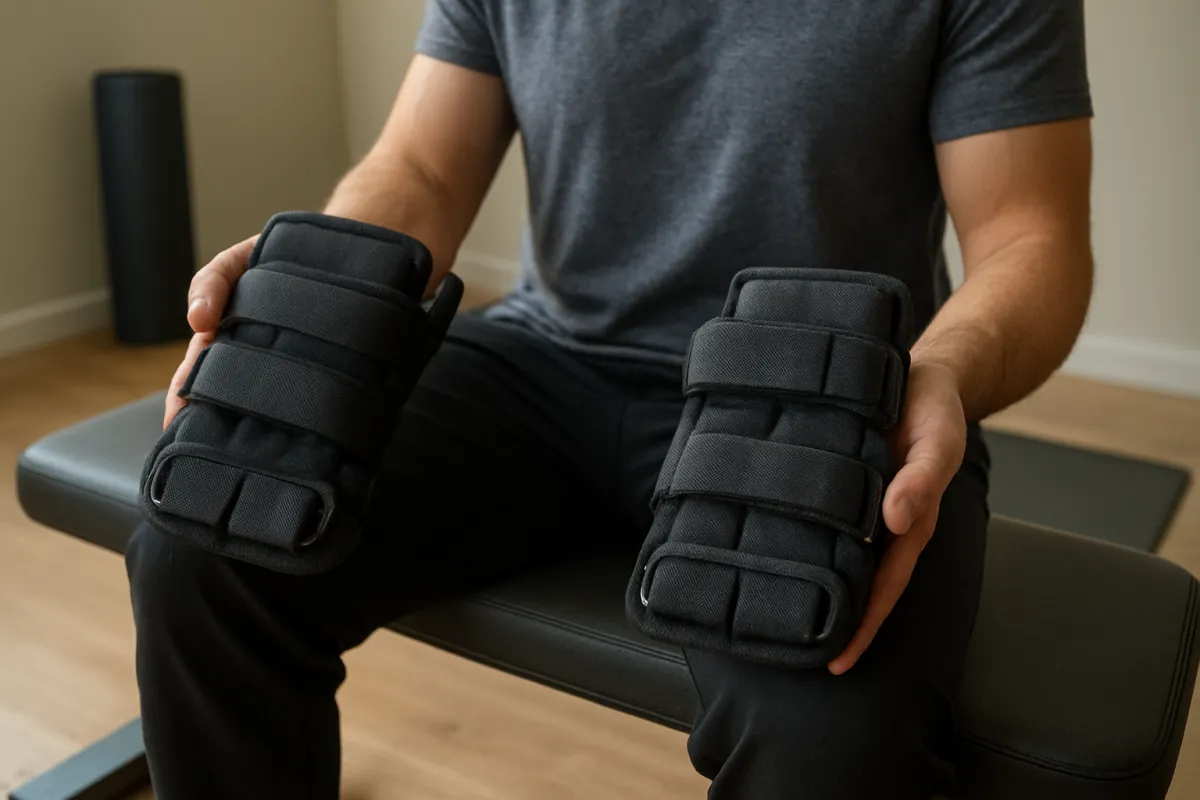
The best ankle weights for walking are usually light, secure, adjustable, and comfortable enough to preserve your normal stride. For most people, ankle weights are better suited to short, controlled sessions than long daily walks because attaching mass near the feet can change how your hips, knees, and ankles work.
This guide explains how to compare ankle-weight designs, choose a sensible starting load, avoid common buying mistakes, and decide whether ankle weights are appropriate for your specific walking goal.
1. Decide whether ankle weights match your walking goal
Ankle weights can add resistance to leg movement, but they do not simply make ordinary walking “better.” A research-based biomechanical analysis found that ankle-applied resistance affects joint moments and muscle activation differently from resistance placed at the pelvis or trunk. In particular, ankle weights can increase demands on the hamstrings during the end of the swing phase. The published biomechanical analysis is useful because it shows why placement matters.
They may be reasonable for:
- Short, easy walks used as a gradual conditioning exercise.
- Controlled leg-lift, marching, or rehabilitation movements prescribed by a professional.
- Light resistance work when you can maintain a normal, pain-free walking pattern.
They are less suitable when your main aim is simply to walk farther, improve cardiovascular fitness, or burn more calories. A brisk unweighted walk, hills, intervals, or a separate strength routine may provide a clearer progression.
2. Compare the features that affect comfort and control
The label weight is only one part of the buying decision. A pair that shifts, pinches, or swings during each step may be less useful than a lighter model that stays in place.
Use this comparison table before choosing a pair.
| What to look for | Why it matters | Warning sign |
|---|---|---|
| Adjustable loading | Lets you begin lightly and progress gradually. | The entire weight is fixed and too heavy for your current fitness level. |
| Wide, secure fastening | Helps limit movement around the lower leg. | The strap loosens, digs into the skin, or rotates during walking. |
| Low-profile shape | Reduces interference with shoes and the opposite leg. | Bulky padding changes your foot clearance or rubs your shoe. |
| Balanced weight distribution | Can feel more predictable through the walking cycle. | Loose sand or shifting inserts move noticeably from step to step. |
| Washable, durable exterior | Useful when worn against skin or during warm-weather walks. | Cracked seams, leaking filler, or material that retains heavy moisture. |
| Clear weight labeling | Allows you to track the load on each ankle. | The package does not state whether the weight is per pair or per ankle. |
Adjustability is usually more valuable than maximum load
Adjustable models allow you to remove sections or inserts as needed. This is helpful because ankle resistance can feel disproportionately difficult compared with holding the same amount of weight in your hands or wearing it close to your torso.
Do not assume that the heaviest available pair is the best value. If you cannot walk naturally with it, much of the advertised capacity may go unused.
3. Choose a conservative starting weight
There is no single ankle-weight load that is correct for every adult. Your body mass, footwear, walking speed, terrain, injury history, and training experience all affect how the added resistance feels.
A practical approach is to begin with the lightest setting that creates a noticeable but manageable challenge. Use a short trial on level ground, then assess whether you can maintain:
- Your usual step length and walking rhythm.
- Normal foot clearance without dragging or catching your toes.
- An upright posture without leaning forward or swinging the legs.
- Comfort around the ankles, knees, hips, and lower back.
Research on adults without current symptoms has examined ankle loads equivalent to 1% and 2% of body weight, but that study evaluated walking factors under specific laboratory conditions rather than establishing a universal training prescription. Treat those values as research context, not as a personal target. Read the walking study here.
Increase either walking duration or resistance first—not both at the same time. If your stride becomes shorter, noisier, or less controlled, reduce the load or remove the weights.
4. Use ankle weights without disrupting your gait
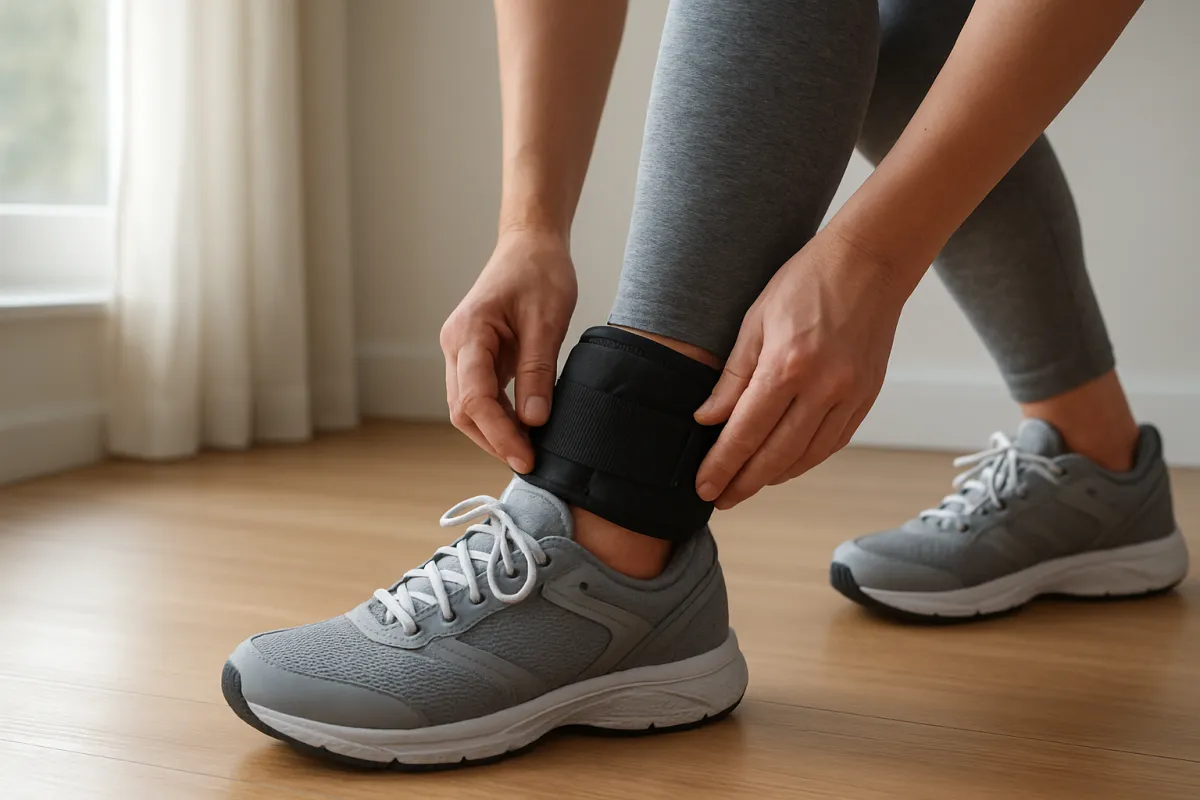
Fit each weight snugly above the ankle joint rather than directly over the ankle bones. It should not slide toward the foot, restrict circulation, or create pressure points. Wear the shoes you normally use for walking and check the fit before leaving home.
Start with a warm-up without the weights. Then walk slowly for several minutes and observe your movement. The Mayo Clinic’s guidance on resistance training technique emphasizes warming up, controlled movement, suitable footwear, and stopping when an exercise causes pain.
For a first session, keep the route flat and close to home. Avoid stairs, uneven trails, steep hills, and fast walking until you know how the added load affects your balance and foot clearance.
5. Recognize the main limitations and safety concerns
Walking already places substantial mechanical demands on the ankle. The ankle complex supports body weight, helps absorb impact, and contributes to propulsion, so adding mass at the end of the leg can alter the timing and effort of movement. A review of ankle biomechanics explains these roles in normal walking. See the ankle biomechanics overview.
Stop the session if you notice sharp pain, persistent joint pain, limping, numbness, unusual swelling, or repeated toe catching. People with a recent ankle, knee, hip, or foot injury, balance problems, significant joint disease, or a neurological condition should ask a clinician or physical therapist before using ankle weights for walking.
Do not use ankle weights to push through pain. Discomfort that changes your movement is a reason to reduce the load, change the exercise, or seek professional guidance—not evidence that the workout is effective.
6. Consider alternatives that may fit better
If your goal is general conditioning, alternatives may distribute resistance more predictably.
- Weighted vest: Keeps added mass closer to your center of mass, although it still increases overall loading and may not suit everyone.
- Resistance bands: Useful for separate hip, glute, and leg exercises with adjustable tension.
- Incline walking: Adds a cardiovascular and muscular challenge without attaching weight to the feet.
- Strength exercises: Squats to a chair, step-ups, calf raises, and hip exercises let you control repetitions and technique.
- Walking intervals: Alternating comfortable and brisk periods can progress fitness without external load.
For compact home training ideas, see best home gym equipment for small spaces and resistance bands versus suspension trainers.
7. Use this buying checklist
- Is the stated weight clearly listed per ankle or per pair?
- Can you start lighter than the maximum load?
- Does the strap stay secure without pinching?
- Will the shape fit comfortably with your walking shoes?
- Can the material be cleaned and dried easily?
- Is the return policy clear if the fit is unsuitable?
- Does the product support your actual goal, rather than only promising a harder workout?
8. Common mistakes to avoid
- Starting too heavy: A difficult first session can encourage compensatory movement.
- Wearing them for every walk: Rotate resistance sessions with normal walking while you assess tolerance.
- Ignoring fit: Sliding weights can create friction and change your stride.
- Using them on uneven ground immediately: Added foot mass may make balance and clearance more demanding.
- Judging success by soreness: Muscle soreness is not a reliable measure of a safe or effective walking program.
- Confusing walking resistance with strength training: Ankle weights may challenge movement, but they do not replace a structured strength program.
9. What if ankle weights do not feel right?
What if my knees or hips hurt?
Remove the weights and return to unweighted walking once symptoms settle. If pain returns, persists, or affects daily movement, consult a healthcare professional rather than continuing to experiment with heavier loads.
What if the weights keep slipping?
Check whether they are positioned above the ankle and tightened evenly. If they still rotate, choose a wider or more adjustable design instead of tightening until circulation or comfort is affected.
What if I want a harder workout?
First increase walking time, pace, terrain, or intervals one variable at a time. You can also add separate lower-body strength sessions; this home-workout progression guide outlines a more systematic approach.
10. Next actions before you buy
- Write down whether your priority is endurance, leg strength, rehabilitation, or variety.
- Measure the space around your lower leg and check the manufacturer’s fit guidance.
- Select an adjustable pair with the lightest useful setting.
- Test it indoors or on a short, flat route before committing to longer walks.
- Record comfort, gait quality, and any symptoms after each session.
Bottom line: The best ankle weights for walking reviews should focus less on maximum weight and more on secure fit, adjustability, gait control, and appropriate use. Choose a light, stable pair only if you can walk naturally and pain-free; otherwise, unweighted walking, interval training, a carefully selected vest, or separate strength exercises may be the better option.