Pull-ups are usually the better choice for developing relative strength and practicing a real bodyweight skill, while lat pulldowns are easier to adjust, learn, and load progressively. For many lifters, the most effective answer is to use pulldowns to build capacity and pull-ups to apply it.
The choice between pull-ups vs lat pulldowns is not simply a contest between a “hard” exercise and an “easy” one. Your body weight, current pulling strength, equipment, shoulder comfort, and training goal all affect which movement makes more sense.
This guide compares the two exercises using practical criteria so you can choose a starting point, build a balanced back routine, and avoid forcing an exercise that does not currently match your ability.
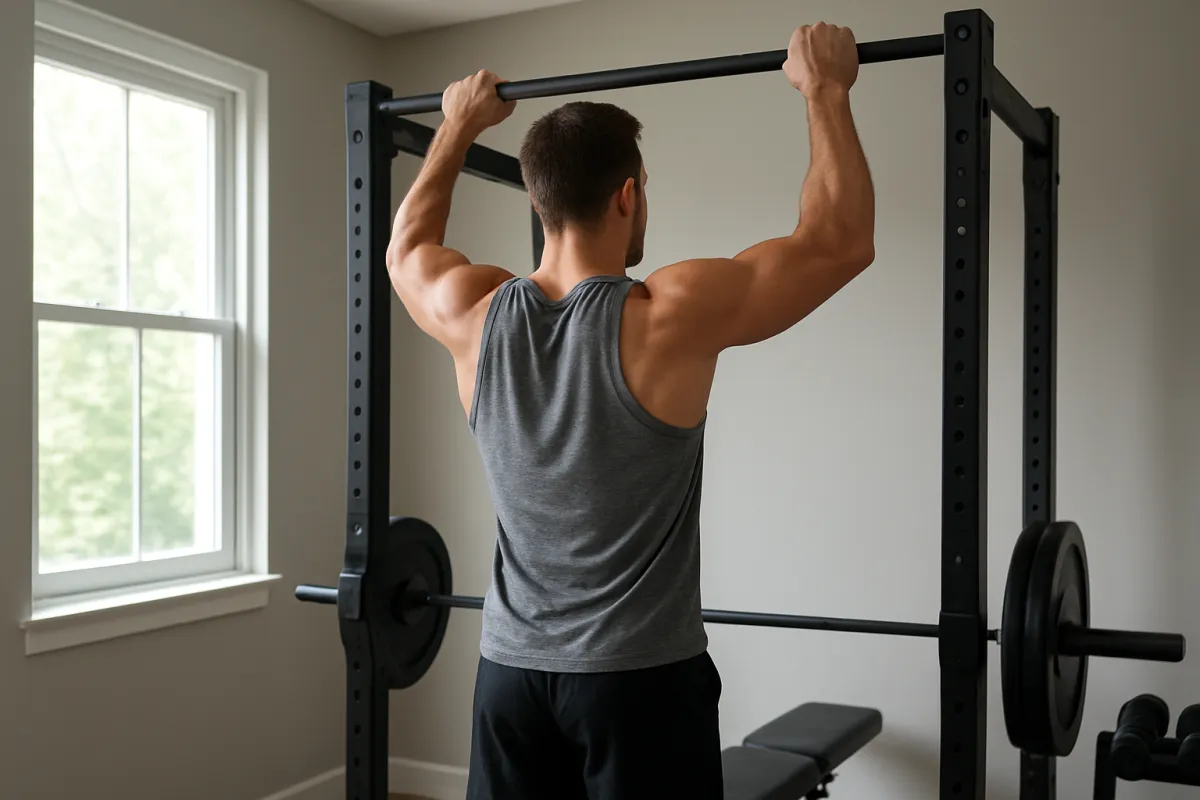
1. Start with the movement demands
Both exercises involve pulling your upper arms down toward your torso. The latissimus dorsi, biceps, forearms, upper back, and muscles that help control the shoulder blades all contribute. However, the resistance is applied differently.
In a pull-up, you move your body toward a fixed bar. The load is largely your body weight, although leverage changes depending on body size, grip, range of motion, and technique. In a lat pulldown, you remain seated and pull a selected weight toward your upper chest while the machine provides a more stable setup.
That difference changes how easily you can control intensity. A pulldown stack may let you make small increases, whereas a pull-up can become substantially harder with even a modest change in body weight or added external weight.
What to evaluate before choosing
- Current ability: Can you complete a full-range pull-up without kicking or losing shoulder control?
- Goal: Are you prioritizing bodyweight strength, muscle growth, general fitness, or skill practice?
- Equipment: Do you have a secure bar, assisted pull-up machine, cable station, or resistance bands?
- Joint tolerance: Does one grip or range of motion feel more comfortable for your shoulders and elbows?
- Progression: Can you increase difficulty in small, repeatable steps?
2. Compare pull-ups vs lat pulldowns side by side
The table below summarizes the main tradeoffs. These are general training characteristics, not guarantees that one exercise will produce the same result for every person.
| Criterion | Pull-ups | Lat pulldowns |
|---|---|---|
| Resistance | Primarily body weight; added weight can increase difficulty | Adjustable machine or cable resistance |
| Learning curve | Higher; requires coordinated whole-body control | Lower; seated position reduces balance demands |
| Progression | Can be difficult between one repetition level and the next | Usually easier to increase or decrease load gradually |
| Skill emphasis | High; grip, bracing, scapular control, and body position matter | Moderate; technique still matters, but setup is more stable |
| Home-gym practicality | Excellent if you have a safe, properly installed bar | Requires a cable machine or suitable pulley system |
| Best starting point | Lifters who can already control their body weight | Beginners, returning lifters, or anyone needing adjustable resistance |
| Common warning sign | Swinging, partial repetitions, or painful shoulder positions | Leaning far backward, pulling behind the neck, or using momentum |
3. Choose pull-ups for relative strength and skill
Pull-ups are a strong option when your goal includes moving your own body efficiently. They challenge your grip, trunk position, shoulder-blade control, and pulling strength at the same time. That makes them useful for calisthenics, obstacle-course preparation, climbing-related fitness, and general bodyweight training.
They also provide a clear performance target: more controlled repetitions, a slower eccentric phase, or eventually a weighted repetition. However, that clarity can make progression frustrating. If you can perform two repetitions but not three, the next step is not always obvious.
Use assistance when needed rather than repeatedly attempting failed repetitions. A band, assisted machine, or low box can help you practice the same general pattern while keeping the movement controlled. Negative repetitions—starting at the top and lowering slowly—may also help, but they should not replace all pulling volume.
4. Choose lat pulldowns for adjustable training volume
Lat pulldowns are often the more practical tool for building a base of vertical pulling strength. You can select a load that allows consistent repetitions, adjust the grip, and stop the set when technique begins to deteriorate. This makes the exercise useful for beginners and for lifters who want predictable back-training volume.
The machine also reduces some balance and bracing demands. That does not make pulldowns automatically easier for the back muscles; it simply makes the overall task more stable and measurable. You still need to keep your ribs and pelvis reasonably controlled, avoid jerking the bar, and allow the shoulder blades to move naturally.
For muscle growth, the exercise can fit well into a program because load and repetitions are relatively easy to track. The American College of Sports Medicine’s resistance-training guidance emphasizes matching load and volume to the goal and choosing a routine you can perform consistently. ([acsm.org](https://acsm.org/resistance-training-guidelines-update-2026/?nocache=1775154200&utm_source=openai))
5. Match the exercise to your training goal
For your first pull-up
Begin with pulldowns, assisted pull-ups, dead hangs if comfortable, and controlled scapular movements. Keep some practice specific to the pull-up pattern so you learn to coordinate your body rather than only increasing a pulldown number.
For back muscle growth
Either exercise can contribute if you use a suitable range of motion, control the eccentric phase, and accumulate enough challenging work over time. Pulldowns often make it easier to add volume; pull-ups can be highly effective when you can perform them without technique breakdown.
For maximum pulling strength
Use the movement that allows you to train hard while maintaining consistent form. Pull-ups are valuable for bodyweight strength, while heavy pulldowns can help develop pulling capacity without requiring you to move your full body weight.

For home workouts
A pull-up bar is usually the simpler option if your doorway, wall, or rack can support a properly installed bar. If you are building a compact setup, compare it with other space-efficient options in this small-space home gym guide. Resistance bands can also provide assisted pull-ups or pulldown-style movements; see resistance bands vs suspension trainers for equipment tradeoffs.
6. Use safer technique and sensible progression
For pull-ups, begin from a stable hang or a consistent starting position, brace gently, and pull your chest toward the bar without kicking. Lower under control. You do not need to force your chin over the bar if doing so causes you to crane your neck or lose shoulder position.
For pulldowns, adjust the thigh pad so your legs are secure without being compressed. Pull the bar toward the upper chest, keep the motion smooth, and avoid pulling it behind your neck. A slight torso angle is normal, but excessive leaning turns the exercise into a momentum-driven row.
Progress when you can complete all planned repetitions with similar technique. Possible progressions include:
- Adding one controlled repetition per set.
- Reducing assistance on pull-ups.
- Increasing pulldown load by a small amount.
- Adding a pause near the strongest part of the pull.
- Using a slower lowering phase.
Training does not need to be complicated to work. ACSM’s current guidance notes that bodyweight exercises, bands, and home-based routines can all be effective when used consistently and adjusted to the person’s goal. ([acsm.org](https://acsm.org/resistance-training-guidelines-update-2026/?nocache=1775154200&utm_source=openai))
7. Avoid common decision mistakes
- Comparing machine weight directly with body weight: Pulldown stack numbers are not a precise equivalent to your body weight on a pull-up.
- Choosing the hardest variation automatically: A difficult exercise is not useful if every repetition involves swinging or shortened range of motion.
- Ignoring grip comfort: A neutral or slightly different grip may feel better than a very wide overhand grip.
- Training only vertical pulls: Add horizontal pulling, such as rows, to develop a more balanced back routine.
- Testing pull-ups every session: Frequent failure attempts can create fatigue without providing enough quality training volume.
- Changing exercises too quickly: Keep a variation long enough to evaluate performance, comfort, and progression.
8. What if neither exercise feels right?
If pull-ups are too difficult, try assisted pull-ups, band-assisted repetitions, eccentric work, or pulldowns. If pulldowns irritate your shoulder, experiment with a neutral grip, a slightly narrower grip, a lighter load, or a pain-free range rather than forcing the bar lower.
Sharp pain, sudden weakness, numbness, or pain after a significant injury is not a normal training challenge. NHS shoulder guidance recommends prompt medical assessment after major trauma when you cannot lift the arm, or when there is sudden loss of power or feeling. Ongoing or worsening symptoms also warrant professional advice. ([uhcw.nhs.uk](https://www.uhcw.nhs.uk/self-care/shoulder/?utm_source=openai))
9. A simple checklist for your decision
- Can you perform at least one controlled pull-up with a comfortable grip?
- Do you want bodyweight skill, adjustable muscle-building volume, or both?
- Can your equipment support the movement safely?
- Does the exercise allow a smooth range of motion without pain?
- Can you record repetitions, assistance, load, and technique?
- Would alternating the two exercises make your program more practical?
10. A practical next step
If you are a beginner, start with lat pulldowns for two or three controlled sets and add assisted pull-up practice. If you can already perform several clean pull-ups, make them the first exercise on one workout day and use pulldowns afterward for additional volume.
You can also alternate emphasis across the week: pull-ups on one session and pulldowns on another. Pair either movement with a row variation, and review this guide to progressing a home workout when you need a structured way to increase difficulty.
Pull-ups vs lat pulldowns: the conditional verdict
Pull-ups are the better choice if you specifically want bodyweight pulling strength and can perform them with reliable control. Lat pulldowns are the better choice if you need adjustable resistance, are still building the strength for pull-ups, or want to accumulate back-training volume with less technical difficulty.
For most people, there is no need to choose permanently. Use pulldowns to build capacity, pull-ups to practice bodyweight strength, and let comfort, progression, and consistency determine which receives more emphasis.
Frequently asked questions
Are pull-ups better than lat pulldowns for your lats?
Not automatically. Both can train the latissimus dorsi, and the better option is the one you can perform consistently with a suitable range of motion and progressive challenge.
Can lat pulldowns replace pull-ups?
They can build related pulling strength, but they do not fully reproduce the balance, grip, and body-control demands of moving your body to a bar. Keep some assisted or full pull-up practice if that skill is a goal.
Should you do pull-ups before pulldowns?
Place the exercise that best matches your priority first. If pull-up performance matters most, do pull-ups early; if quality back volume is the priority, pulldowns may be the more dependable main exercise.