HIIT is usually better when your priority is improving fitness in less time, while steady-state cardio is often better for building an easier, repeatable routine. For most people, the best choice is not either-or: use steady-state sessions as your foundation and add HIIT when your fitness, schedule, and recovery allow it.
The difference between HIIT vs steady-state cardio is mainly how the effort is organized. HIIT alternates short, challenging work intervals with easier recovery periods. Steady-state cardio keeps your effort relatively consistent for a continuous period, such as a brisk walk, easy run, bike ride, or swim.
This guide compares both methods using practical criteria: intensity, time efficiency, cardiovascular development, calorie expenditure, joint impact, recovery, accessibility, and long-term consistency. You will also find a simple way to choose between them and examples of how to combine both without making your training unnecessarily difficult.
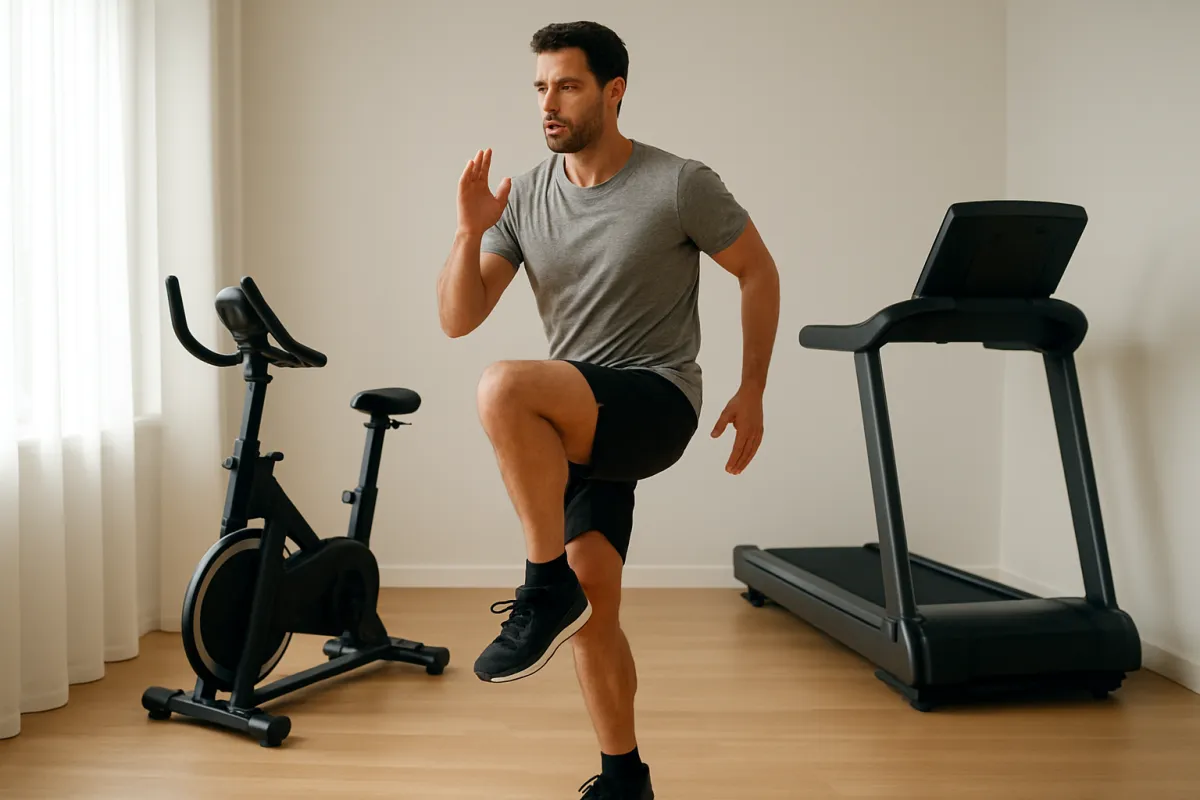
1. Understand what each cardio method involves
What counts as HIIT?
High-intensity interval training uses repeated work periods that feel hard, followed by planned recovery. A simple example is cycling hard for 30 seconds, moving easily for 90 seconds, and repeating the pattern several times.
HIIT does not require sprinting or advanced equipment. You can use a stationary bike, rower, treadmill, hill, jump rope, or bodyweight movements. The important feature is the change in effort, not a specific exercise.
A hard interval should feel challenging but controlled. You may be breathing heavily and unable to speak in full sentences, but you should still be able to maintain safe technique. Beginners should not treat every interval as an all-out sprint.
What counts as steady-state cardio?
Steady-state cardio means sustaining a relatively even intensity. Examples include walking on an incline, jogging at a conversational pace, cycling outdoors, using an elliptical, swimming continuously, or climbing stairs at a consistent effort.
The pace can be easy, moderate, or moderately hard. “Steady-state” does not automatically mean low intensity; it simply means that the effort is not arranged as repeated hard and easy intervals.
For general health, moderate activity is often described as about 5 or 6 on a 0-to-10 effort scale, while vigorous activity begins around 7 or 8. The Physical Activity Guidelines for Americans explain that adults can use moderate activity, vigorous activity, or a combination of both to meet weekly aerobic targets. ([cdc.gov](https://www.cdc.gov/physical-activity/media/pdfs/Physical_Activity_Guidelines_2nd_edition.pdf?utm_source=openai))

2. Compare HIIT vs steady-state cardio by the criteria that matter
The right cardio method depends on more than which one appears harder. Consider how much time you have, how well you recover, whether your joints tolerate impact, and whether you can perform the workout consistently.
Use this table as a starting point rather than a universal ranking. Your training history and health status can change the answer.
HIIT vs steady-state cardio: practical comparison
| Criteria | HIIT | Steady-state cardio | What to look for | Warning sign |
|---|---|---|---|---|
| Workout length | Can provide a strong stimulus in a shorter session | Usually requires more continuous time | Whether your schedule supports regular sessions | Using intensity to compensate for having no sustainable plan |
| Effort | Repeated hard intervals with recovery | Mostly even effort from start to finish | A pace you can control with good form | Every interval becomes an uncontrolled maximum effort |
| Recovery | Often creates more local and overall fatigue | Usually easier to recover from, especially at an easy pace | How your next workout feels | Soreness, poor sleep, or declining performance |
| Beginner suitability | Best introduced gradually | Usually easier to scale and repeat | Start with walking, cycling, or similar low-impact work | Starting with sprinting before learning basic movement control |
| Joint impact | Depends heavily on the exercise and surface | Can be low-impact when performed on a bike, elliptical, or in water | Choose equipment that feels comfortable during and after training | Persistent joint pain or worsening symptoms |
| Fitness focus | Useful for challenging speed, power, and high-end aerobic capacity | Useful for building aerobic volume and pacing skill | Match the method to your sport or daily-life goal | Assuming the hardest workout is automatically the most useful |
| Convenience | Can be adapted to small spaces and short sessions | Often simple to perform with walking or basic machines | Which option is easiest to begin without complicated setup | Choosing a format you dislike and quickly abandon |
3. Decide which method fits your main goal
For improving cardiovascular fitness
HIIT can be an efficient way to expose your body to vigorous efforts, especially when you already exercise regularly. It may help you practice working at faster speeds or higher resistance than you would normally use during an easy continuous session.
Steady-state cardio remains valuable because it builds the ability to sustain movement and accumulate training time. It also gives you a way to improve fitness without making every workout highly stressful.
If your goal is general cardiovascular health, you do not need to choose only the most intense option. The American Heart Association recommends at least 150 minutes of moderate-intensity aerobic activity per week, 75 minutes of vigorous activity, or a combination. It also recommends gradually increasing time and intensity as your body adapts. See the American Heart Association’s adult activity guidance. ([heart.org](https://www.heart.org/en/healthy-living/exercise-and-physical-activity/?utm_source=openai))
For weight management
Both approaches can support weight management, but neither method overrides food intake, total daily movement, sleep, or adherence. HIIT may burn substantial energy in a short workout, while steady-state cardio may make it easier to accumulate more total weekly activity.
Do not compare workouts only by the number shown on a fitness tracker or cardio machine. Those estimates can be imprecise, and a harder workout may also make you move less later in the day or feel too fatigued to train consistently.
For many people, the practical choice is the one they can perform frequently without excessive hunger, soreness, or disruption to strength training. A brisk walk on several days may contribute more to a long-term plan than one punishing interval session followed by several inactive days.
For saving time
HIIT has the advantage when your available workout window is short. A warm-up, several work intervals, and a cool-down can fit into a compact session.
However, “short” does not mean “skip the warm-up.” Begin with several minutes of easy movement, then increase intensity gradually. Finish with easy movement rather than stopping abruptly after the final hard interval.
For beginners
Steady-state cardio is usually the more approachable starting point. It helps you learn how your breathing, heart rate, feet, and joints respond to exercise before you add repeated high-effort work.
A beginner can still use gentle intervals. For example, alternate one minute of comfortable walking with one minute of slightly faster walking for 15 to 20 minutes. This introduces variation without requiring maximal intensity.
If you are returning after a long period of inactivity, have a chronic condition, or are unsure whether vigorous exercise is appropriate, consider discussing your plan with a qualified health professional. Stop and seek medical advice for concerning symptoms such as chest pressure, fainting, unusual severe shortness of breath, or unexplained palpitations.
4. Match intensity to your current fitness and recovery
The same treadmill speed can be easy for one person and vigorous for another. Use perceived effort, breathing, and technique rather than copying someone else’s pace.
- Easy effort: You can speak comfortably and could continue for a long time.
- Moderate effort: You can talk in short sentences but would not want to sing.
- Hard interval effort: You can say only a few words, but you remain in control of your movement.
Heart-rate zones can provide another reference, but they are estimates rather than exact instructions. The American Heart Association describes moderate intensity as roughly 50% to 70% of age-predicted maximum heart rate and vigorous activity as roughly 70% to 85%, while noting that individual ranges vary. Use heart-rate guidance as a starting point, not a rigid target. ([heart.org](https://www.heart.org/en/healthy-living/exercise-and-physical-activity?utm_source=openai))
Recovery is a key part of the comparison. If your legs feel heavy for multiple days, your strength workouts suffer, or your usual pace declines, reduce interval frequency or make the work periods less intense.
5. Build a balanced weekly cardio plan
You do not need to perform HIIT every time you train. A balanced week often includes mostly easy or moderate movement, with a limited amount of hard work.
Here are three practical starting options:
- New to cardio: Three 15-to-30-minute steady-state sessions, such as brisk walking or easy cycling.
- Regular exerciser: Two or three steady-state sessions plus one interval session with controlled work periods.
- Strength-focused trainee: Two easy cardio sessions placed away from demanding leg workouts, with optional short intervals once recovery is reliable.
For a beginner-friendly interval session, warm up for five to eight minutes. Then perform six rounds of 30 seconds at a hard but controlled effort followed by 90 seconds of easy movement. Cool down for five minutes.
You can make the same structure easier by shortening the work interval, slowing the pace, or choosing a low-impact machine. You can make it harder later by adding one or two rounds or slightly increasing resistance, but change only one variable at a time.
If you enjoy walking, the stair climber vs treadmill comparison can help you choose equipment for continuous cardio or incline-based work. For at-home variety, you may also find the guide to the best jump ropes for beginners useful, although jumping rope can be more demanding on the calves and feet than walking.

6. Avoid the most common cardio decision mistakes
Mistake 1: Treating HIIT as the default
HIIT is demanding by design. More intensity is not automatically better if it prevents you from training consistently or completing your strength sessions with quality.
Mistake 2: Calling every faster session “HIIT”
A few changes in pace do not need to be dramatic to be useful, but true HIIT involves clearly challenging intervals and meaningful recovery. If the work is only slightly faster than your normal pace, call it a progression run, fartlek, or interval session rather than assuming it must be maximal.
Mistake 3: Ignoring impact and exercise selection
Running sprints, jump squats, and jump rope can create a different stress profile from cycling or rowing intervals. If your joints or tendons are sensitive, begin with a low-impact option and monitor how you feel later that day and the next morning.
Mistake 4: Using calorie estimates as the only score
Calories are only one possible outcome, and machine estimates are not precise enough to determine whether a workout was successful. Track broader indicators such as consistency, pace at a comfortable effort, recovery, and whether you can progress gradually.
Mistake 5: Increasing volume and intensity together
Adding more minutes and harder intervals in the same week makes it difficult to identify what caused fatigue. Increase duration first, intensity first, or frequency first—not all three at once.
7. What if you are unsure which cardio style to choose?
What if you have only 20 minutes?
Use a short steady-state session if you are tired, new to exercise, or training after a demanding strength workout. Use intervals if you are recovered and already accustomed to vigorous activity. In both cases, reserve time for a warm-up and cool-down.
What if you dislike running?
There is no requirement to run. Try cycling, rowing, swimming, incline walking, an elliptical, or controlled bodyweight intervals. The best method is one that raises your breathing and heart rate without creating pain or making you dread the next session.
What if you want to preserve strength and muscle?
Keep most cardio easy enough that it does not interfere with resistance training. Place hard intervals away from heavy lower-body sessions when possible, and avoid adding high-impact intervals immediately after a demanding leg workout.
What if you are using a fitness tracker?
Use it to observe trends rather than to chase a perfect number. The guide to fitness trackers for beginners may help you choose features for monitoring heart rate, workout duration, and consistency. Perceived effort and how you recover still matter.
8. A simple checklist before choosing HIIT or steady-state cardio
- What is your main goal: general health, endurance, time efficiency, sport performance, or weight management?
- How many minutes can you realistically train each week?
- Can you complete hard intervals with stable technique?
- Do your knees, hips, ankles, feet, or back tolerate the chosen exercise?
- How did you recover from your last demanding workout?
- Will this method interfere with strength training, work, sleep, or daily movement?
- Can you imagine continuing it for at least several months?
If several answers point toward caution, choose steady-state cardio first. After two to four weeks of consistent training, reassess your energy, comfort, and performance before adding intervals.
9. Next actions for your cardio routine
- Choose one low-friction cardio activity you can perform safely.
- Schedule two or three manageable sessions for the coming week.
- Keep the first sessions easy enough to finish feeling capable rather than depleted.
- If recovery is good, add one controlled interval workout instead of replacing all steady-state work.
- Record duration, effort, and next-day recovery for three to four weeks.
- Adjust only one training variable at a time.
For additional home-training ideas, browse the LaokFitness homepage, or pair cardio with strength movements such as the Bulgarian split squat and a gradual push-up progression.
Frequently asked questions
Is HIIT better than steady-state cardio for fat loss?
Not automatically. HIIT may save time, but steady-state cardio may be easier to perform often and recover from. Your overall activity, nutrition, sleep, and consistency are more important than choosing the most intense format.
Can I do HIIT every day?
Most people do not need daily HIIT. Repeated high-effort sessions can create more fatigue than you can productively recover from, especially when combined with lower-body strength training. Use easy movement or steady-state cardio between harder sessions.
How often should a beginner do HIIT?
Start with no more than one short interval session per week, and use low-impact equipment if needed. Build a consistent base of easy or moderate cardio first, then increase gradually if your body responds well.
Does walking count as steady-state cardio?
Yes. Brisk walking can be moderate-intensity aerobic activity for many people, and easier walking still contributes to daily movement. Increase speed, incline, or duration only when the current level feels comfortable.
Should I do HIIT before or after lifting weights?
If strength or muscle gain is your priority, place demanding intervals after lifting or on a separate day when practical. An easy warm-up before lifting is different from a fatiguing HIIT workout. Your schedule, exercise choice, and recovery determine the best arrangement.
The conditional verdict on HIIT vs steady-state cardio
Choose HIIT when you have limited time, already tolerate regular exercise, and want a focused challenge for high-intensity fitness. Choose steady-state cardio when you are building consistency, prefer lower-impact training, need more weekly aerobic volume, or want cardio that fits comfortably around strength work.
For most general fitness plans, steady-state cardio should form the reliable base, with HIIT added selectively rather than treated as a replacement for all other movement. The best answer in the HIIT vs steady-state cardio debate is the method—or combination—you can perform safely, recover from, and repeat long enough to make progress.