For most people, a treadmill is the better all-purpose cardio machine because it supports walking, jogging, running, and structured progression. Choose a stair climber instead if you specifically want a more demanding climbing workout with greater emphasis on the glutes and thighs.
The better choice is not simply the machine that feels harder during a short session. It is the one that matches your fitness level, joint tolerance, training goals, available space, and willingness to use it regularly. This stair climber vs treadmill comparison looks at the practical tradeoffs so you can make a useful decision before buying or joining a gym.
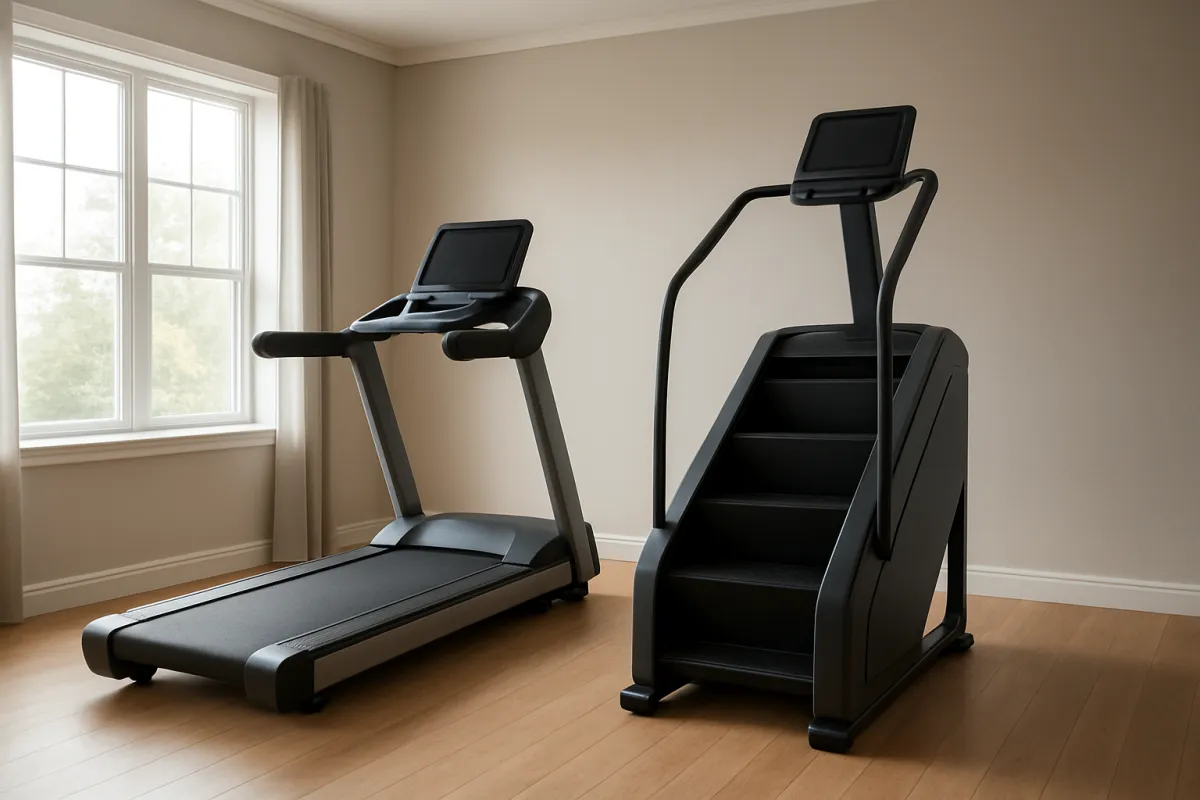
1. Start with the goal you want the machine to serve
Both machines can provide aerobic exercise, but they create different movement demands. A treadmill moves a belt beneath you, while a stair climber requires you to repeatedly lift your body upward against resistance.
Adults are generally advised to accumulate at least 150 minutes of moderate-intensity aerobic activity each week, or an equivalent amount of vigorous activity, alongside muscle-strengthening work on two or more days. The machine that helps you meet that recommendation consistently is usually more valuable than one that produces a harder but less sustainable workout. See the CDC overview of adult activity guidelines for the current general targets.
- General fitness: A treadmill gives you more ways to vary speed, incline, duration, and intensity.
- Walking or running: The treadmill is the clear fit, especially if you want to practice a specific pace.
- Lower-body endurance: A stair climber offers a direct climbing pattern that challenges the legs quickly.
- Weight-management support: Either can help increase energy expenditure, but consistency, duration, nutrition, and total activity matter more than the machine label.
- Short workouts: A stair climber can make a brief session feel demanding, although that may also limit how long you can continue.
2. Compare the movement and muscle demands
How a treadmill feels
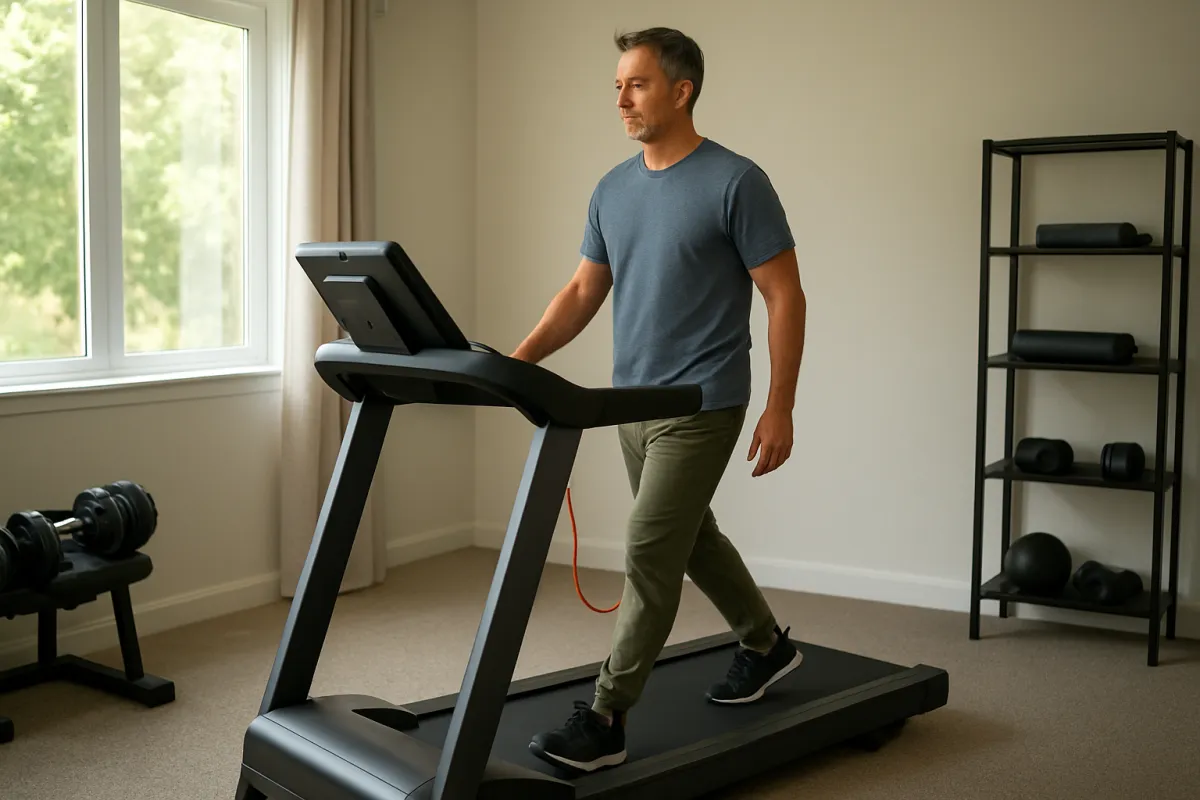
A treadmill can reproduce level walking, uphill walking, jogging, or running. At low speeds, the movement is familiar and easy to control. Increasing speed raises the cardiovascular demand, while increasing incline can make walking more challenging without requiring you to run.
Walking and running on a treadmill primarily involve the calves, quadriceps, hamstrings, glutes, and hip muscles. The exact demand changes with speed, incline, stride, and technique. Running also creates repeated impact, so a comfortable pace and suitable footwear are important.
How a stair climber feels
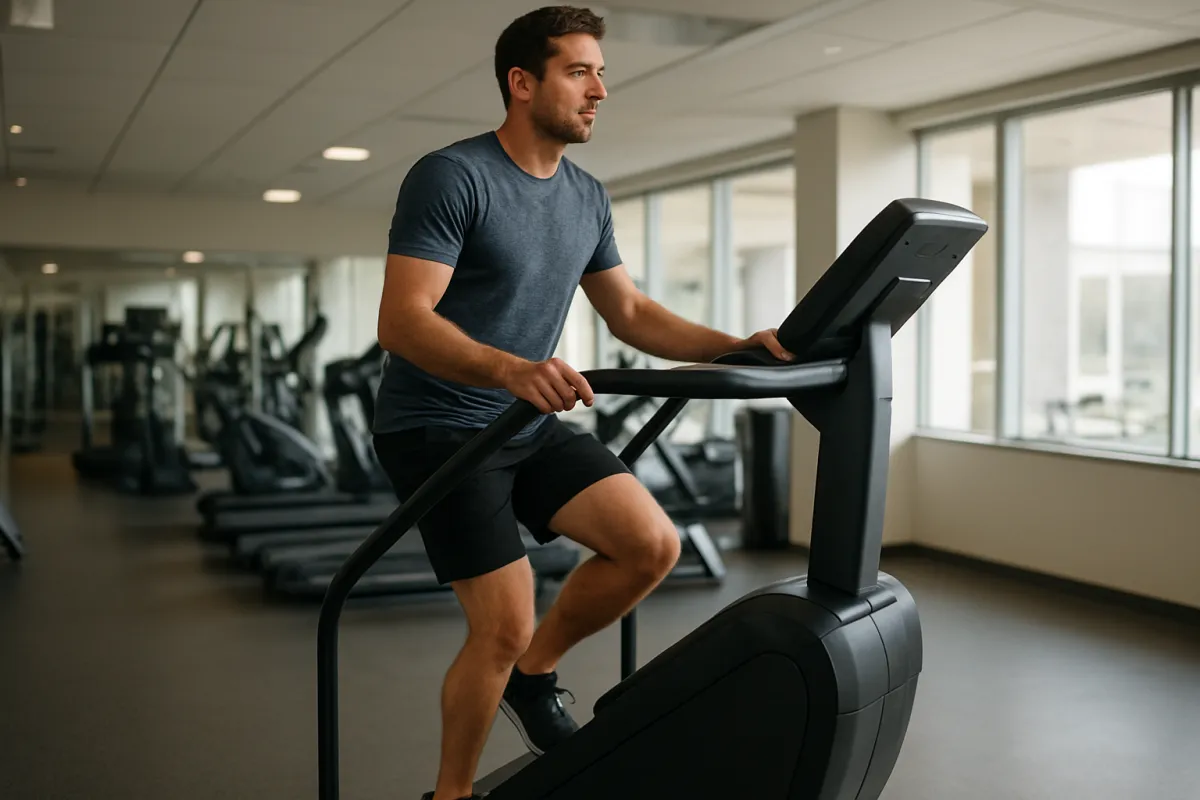
A stair climber keeps you stepping upward, usually with continuous resistance. The quadriceps, glutes, hamstrings, and calves work to lift and stabilize your body. Many users feel local leg fatigue before they reach their maximum cardiovascular effort.
The handrails can make a major difference. Lightly touching them for balance is not the same as leaning heavily on them and unloading your legs. If you need to support much of your body weight with your arms, reduce the resistance or step rate rather than treating the displayed setting as an accurate measure of effort.
Neither machine replaces dedicated strength training. A challenging cardio session may fatigue your legs, but it is not the same as a complete program for building strength across all major muscle groups.
3. Evaluate intensity, impact, and joint comfort
A treadmill is not automatically high-impact. Slow walking is relatively accessible for many people, while running produces considerably more repetitive impact. Incline walking can raise the challenge while allowing you to remain at a walking speed.
A stair climber avoids the repeated foot strikes associated with running, but it is not effortless on the joints or connective tissues. The deep, repeated knee and hip flexion may feel uncomfortable if you already have knee, hip, or lower-back symptoms. The continuous stepping pattern can also expose weaknesses in balance or leg control.
Use comfort as a screening tool, not as proof that one machine is universally safer. Stop if you experience sharp pain, worsening joint pain, unusual swelling, dizziness, chest discomfort, or severe shortness of breath. If you have a diagnosed joint condition, cardiovascular condition, recent injury, or significant exercise limitation, ask a qualified healthcare professional how to begin safely.
For general planning, the Physical Activity Guidelines for Americans provide broader guidance on aerobic and muscle-strengthening activity rather than recommending one specific cardio machine.
4. Use this side-by-side comparison
The following table summarizes the main decision points. It describes typical tendencies rather than guarantees; machine design, settings, technique, and your fitness level can change the experience.
| Decision factor | Stair climber | Treadmill | What to look for | Warning sign |
|---|---|---|---|---|
| Primary movement | Continuous step-up pattern | Walking, jogging, or running | A motion you can perform with controlled posture | You change technique to survive the setting |
| Workout intensity | Often feels hard quickly | Easy to scale from gentle walking to hard running | Several usable intensity levels | The lowest setting is already uncomfortable |
| Lower-body emphasis | Strong emphasis on thighs, glutes, and calves | Varies with speed, incline, and gait | Whether leg fatigue matches your goal | Persistent pain rather than normal fatigue |
| Training variety | Intervals, steady climbing, cadence changes | Walking, running, incline work, intervals, pace practice | Programs you will realistically use | Features that look impressive but remain unused |
| Walking access | Limited | Excellent | A stable speed and comfortable handrail position | You must hold on continuously to stay balanced |
| Running practice | Not suitable for running mechanics | Directly supports running practice | Deck length, stability, and speed range | A short or unstable running surface |
| Space and cost considerations | Often has a smaller footprint but can be heavy | May require more floor length and clearance | Measured footprint, transport path, and storage | Buying before checking ceiling, doorway, or floor space |
| Ease of progression | Increase step rate or resistance | Increase duration, speed, incline, or intervals | Small adjustments that do not force a large jump | Only a few settings feel usable |
5. Choose based on your training scenario
Choose a treadmill if you want maximum versatility
A treadmill is the more flexible option for a household with different users. One person can walk while another runs, and the same user can alternate easy sessions, incline walks, tempo work, and intervals.
It is also the better choice if you want to train for outdoor walking or running. The belt does not perfectly reproduce outdoor conditions, but it lets you practice pace, duration, and running consistency in a controlled environment.
Choose a stair climber if you prefer challenging lower-body sessions
A stair climber may suit you if you enjoy the sensation of climbing and want a compact workout that quickly raises your breathing rate. It can be useful for people who dislike running but still want a demanding cardio option.
However, do not choose it only because it looks harder. If the machine leaves you too fatigued to maintain good posture or use it regularly, the theoretical advantage does not matter.
For beginners or people returning after a break
A treadmill is usually easier to introduce because you can begin with slow walking and short sessions. A simple starting format is five minutes of easy movement, followed by 10 to 20 minutes at a conversational effort, then a gradual cooldown.
On a stair climber, begin with a low step rate and brief intervals. For example, use one or two minutes of easy stepping followed by a minute of rest or very light movement. Increase total work gradually rather than jumping straight into a long continuous climb.
For people with limited exercise time
A stair climber can make a 15-minute workout feel productive, but a treadmill can also support efficient intervals. The best choice depends on whether you prefer short, intense work or a wider range of moderate sessions.
For older adults or people concerned about balance
A treadmill set to a comfortable walking speed may be easier to control than a stair climber, but neither should be used while distracted or without understanding the emergency-stop system. Older adults may also benefit from balance and strength work in addition to aerobic exercise.
6. Check the machine before committing
If you can test the equipment, do not judge it from the first 30 seconds. Spend enough time to assess whether your body remains comfortable as the session continues.
- Walk or climb at the lowest practical setting first.
- Check whether you can maintain an upright posture without gripping the rails tightly.
- Notice whether your knees, hips, feet, and lower back feel comfortable during and after the test.
- Try at least one small increase in speed, resistance, or incline.
- Confirm that the emergency stop is easy to reach and understand.
- For home equipment, measure the machine, delivery path, ceiling height, and space around it.
- Consider noise, vibration, maintenance access, and whether other household members can use it safely.
Do not rely on calorie displays to decide which machine is superior. These estimates are based on assumptions and may not reflect your actual energy expenditure. Use perceived effort, heart-rate trends if appropriate, workout duration, and progression over time as more practical guides.
7. Avoid these common decision mistakes
Buying the hardest machine instead of the most usable one
A machine that produces intense discomfort may look efficient, but it can reduce workout frequency. Choose the equipment that lets you recover and return for the next session.
Assuming less impact means no joint stress
Stair climbing removes the repeated running impact of a treadmill, but the stepping pattern still loads the knees, hips, ankles, and lower back. A lower-impact movement can still be unsuitable if the range of motion or resistance is poorly matched to you.
Ignoring the handrails
Holding on heavily changes the exercise and can reduce the load placed on the legs. Use the rails for balance, not as a way to pull yourself through every step.
Comparing machines only by calorie burn
Calorie estimates are not a reliable basis for choosing between two machines. A slightly less demanding workout performed four times per week may be more useful than a very hard workout performed once.
Forgetting the rest of your program
Cardio machines do not cover every fitness quality. Include resistance training, mobility work, and enjoyable outdoor activity when they fit your goals. LaokFitness also covers options such as rowing machines for home gyms, exercise bikes for home workouts, and treadmill versus elliptical training.
8. What if one machine causes discomfort?
First, lower the intensity and review your technique. On a treadmill, reduce speed or incline and check that you are not overstriding. On a stair climber, lower the step rate, keep your weight centered, and avoid pushing down forcefully through the handrails.
If discomfort continues, try a shorter session or another form of cardio such as cycling, rowing, swimming, or level walking. Pain that is sharp, persistent, worsening, associated with swelling, or accompanied by systemic symptoms deserves professional assessment rather than repeated experimentation.
If you feel light-headed, faint, unusually breathless, or experience chest pressure, stop exercising and seek appropriate medical help. People with known medical conditions should follow individualized advice from their healthcare team.
9. A practical decision checklist
Before choosing between a stair climber and treadmill, answer these questions:
- Do you mainly want walking, running, climbing, or general cardio?
- Can you use the machine without pain or loss of control?
- Will you exercise mostly for 15 minutes, 30 minutes, or longer?
- Do you need several workout styles, or do you prefer one focused movement?
- Would other people in your household use the machine?
- Do you have enough room for safe access, maintenance, and storage?
- Can you progress in small, manageable steps?
- Will you still want to use it after the novelty wears off?
10. Next actions before you buy
- Write down your primary goal and the minimum weekly schedule you can maintain.
- Test both machines at an easy setting if possible.
- Compare comfort after several minutes, not just the initial impression.
- Measure your available space and check electrical, noise, and delivery requirements.
- Choose a simple progression plan for the first four weeks.
- Keep at least two weekly sessions easy enough to support recovery.
Stair climber vs treadmill: the final decision
Choose a treadmill if you want the broadest range of workouts, reliable walking access, running practice, or an easier starting point. Choose a stair climber if you specifically enjoy climbing, want strong lower-body endurance demands, and can use it without knee, hip, balance, or back problems.
There is no universal winner in the stair climber vs treadmill question. The better machine is the one that fits your body, space, schedule, and goals well enough that you can use it consistently and progress without ignoring warning signs.