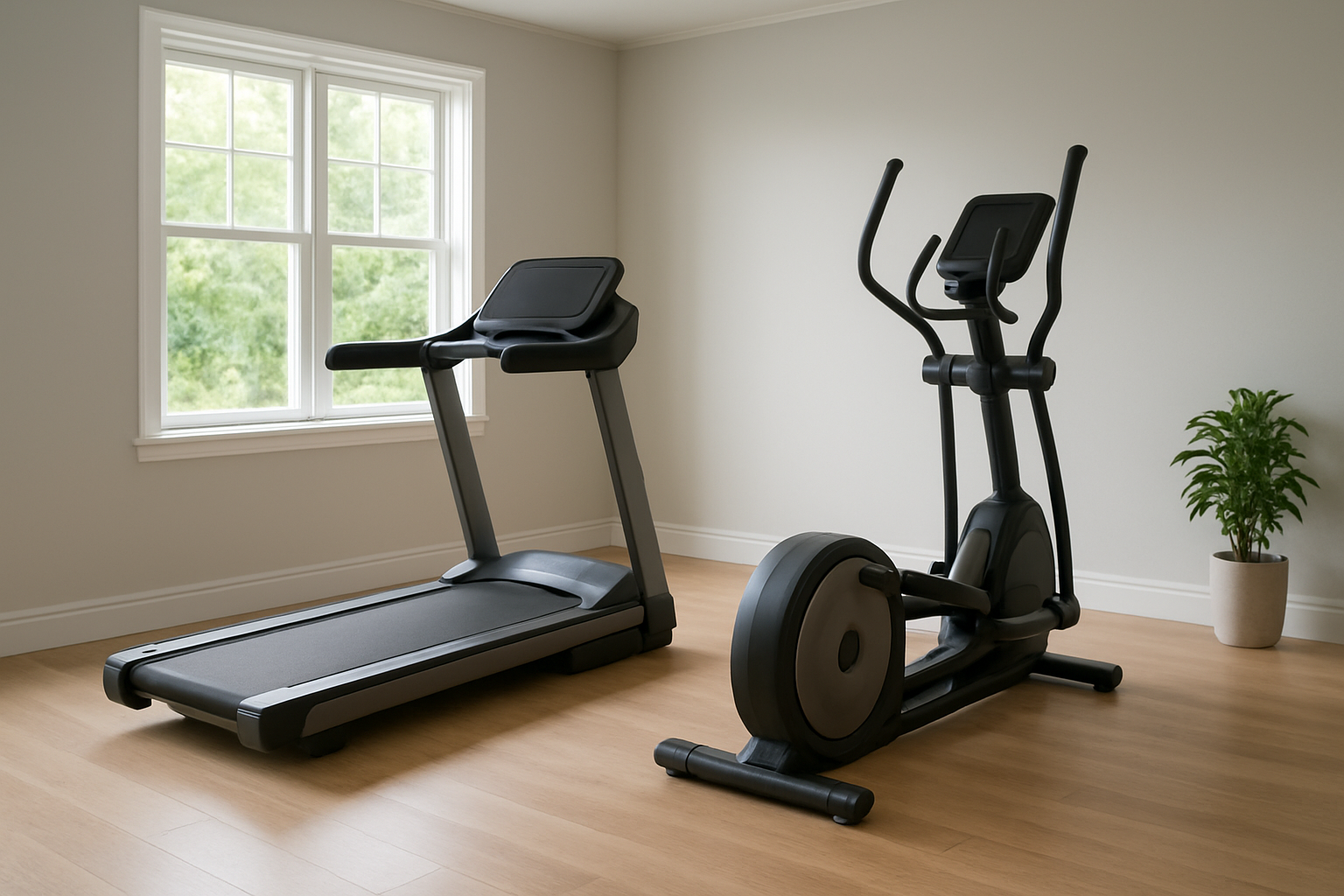
Quick verdict: Choose a treadmill if walking or running performance is your priority. Choose an elliptical if you want a lower-impact cardio option that trains both your arms and legs. Neither machine is automatically better for everyone; the better choice is the one that matches your joints, goals, available space, and preferred training style.
This treadmill vs elliptical comparison explains the main tradeoffs without treating calorie displays or preset programs as the deciding factor. You will see how each machine feels, what to check before buying, which users each option suits best, and how to avoid common selection mistakes.
Quick answer: Pick the treadmill for walking, jogging, running, incline work, and straightforward progression. Pick the elliptical for a smoother, low-impact motion, upper- and lower-body involvement, or indoor cardio that feels less repetitive on sensitive joints. If you are unsure, try both for 10–15 minutes at an easy-to-moderate effort and compare comfort, breathing, posture, and whether you would willingly use the machine several times per week.
1. Start with the criteria that actually matter
Before comparing screens, speakers, or workout libraries, define what “better” means for you. A cardio machine should support a routine you can perform safely and repeatably.
- Primary goal: general fitness, weight management, running preparation, endurance, or active recovery.
- Joint comfort: consider how your knees, hips, ankles, and back respond to repeated impact or a fixed movement path.
- Training preference: decide whether you prefer walking and running mechanics or a gliding motion with moving handles.
- Space and noise: measure the usable floor area, ceiling height, storage route, and the surface beneath the machine.
- Consistency: the machine you enjoy and can access easily usually beats the machine with more theoretical advantages.
For general health, the CDC’s adult activity guidance emphasizes accumulating moderate or vigorous aerobic activity each week, along with muscle-strengthening work. The exact machine matters less than reaching an appropriate effort regularly. ([cdc.gov](https://www.cdc.gov/physical-activity-basics/adding-adults/what-counts.html?utm_source=openai))
2. Compare treadmill vs elliptical movement
| Factor | Treadmill | Elliptical |
|---|---|---|
| Movement | Walking, jogging, or running on a moving belt | Gliding steps on foot pedals, often with moving handles |
| Impact | Usually more impact, especially during jogging and running | Typically lower impact because your feet remain supported |
| Main muscles | Legs, hips, calves, and core for posture and control | Legs and hips, with additional arm involvement when handles are used |
| Skill transfer | Directly supports walking and running practice | Less specific to outdoor running mechanics |
| Intensity options | Speed and incline are easy to understand and progress | Resistance, stride rate, and incline settings vary by model |
| Common warning sign | Holding the rails, overstriding, or using excessive speed | Leaning heavily on the handles or forcing an awkward stride |
A treadmill makes the training demand easy to interpret: increase speed, increase incline, or extend the duration. An elliptical can also provide challenging intervals, but the feel differs between machines, so resistance numbers are not always comparable from one model to another.
3. Choose based on impact and comfort
When a treadmill may be comfortable enough
A treadmill can be a practical choice if you already tolerate brisk walking, jogging, or running well. It also lets you begin with low-impact walking and increase intensity gradually rather than starting with running.
However, the belt does not remove impact altogether. If you develop persistent pain, swelling, numbness, dizziness, chest discomfort, or unusual shortness of breath, stop the session and seek appropriate medical advice. A clinician or physical therapist can help determine whether a specific movement is suitable for your condition.
When an elliptical may be the better starting point
The elliptical keeps your feet in contact with the pedals, which many people find more comfortable than repeated foot strikes. That can be useful for people who want cardio while limiting impact, although “low impact” does not mean “risk-free.” A poorly adjusted stride, excessive resistance, or leaning on the handles can still aggravate the hips, knees, or back.
Try to maintain an upright posture, keep your knees tracking in line with your feet, and use a resistance level that allows smooth control. If your machine has adjustable stride length, choose a setting that feels natural rather than automatically selecting the longest option.
4. Match the machine to your main goal
For walking or running improvement
The treadmill is the clearer choice. It allows you to practice pace, incline walking, run-walk intervals, tempo segments, and continuous running in a controlled environment. If your goal is an outdoor race, the movement pattern is also more closely related to the task you are preparing for.
For general cardiovascular fitness
Either machine can work. Use the talk test for exercise intensity: during moderate effort, you should be able to talk but not sing; vigorous effort makes conversation difficult. This is more useful than trusting a machine’s calorie estimate, which is only an approximation. ([cdc.gov](https://www.cdc.gov/physical-activity-basics/measuring/index.html?utm_source=openai))
For low-impact cross-training
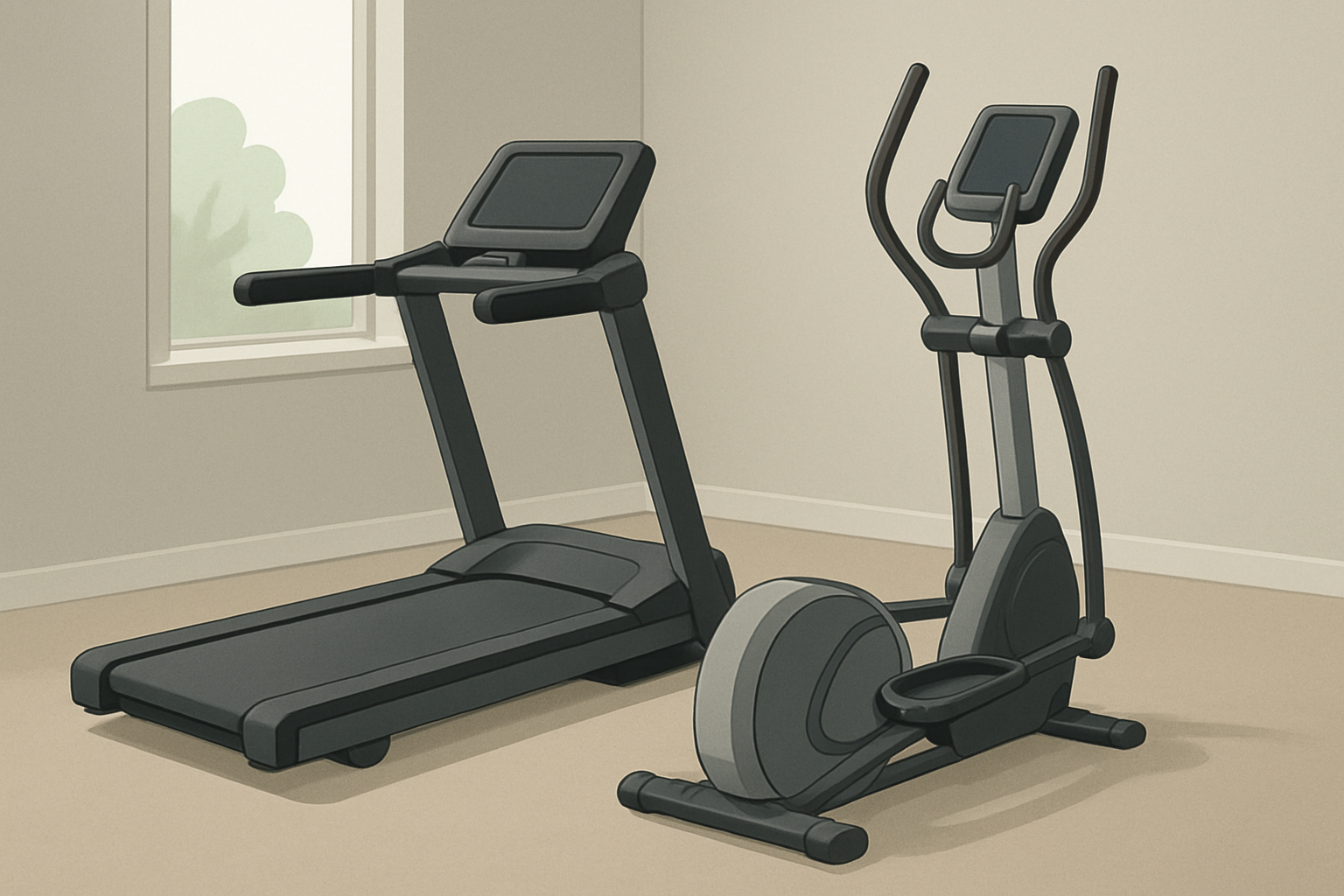
The elliptical often has the advantage, particularly if you want a break from running or prefer to keep your feet supported. It can also add arm movement when you actively push and pull the handles. That upper-body contribution is useful, but it should not be mistaken for a complete strength workout.
For weight management
Neither machine guarantees greater fat loss. Weight change depends on overall energy balance, food intake, activity, sleep, and consistency. Choose the machine that helps you accumulate regular sessions without pain or excessive fatigue, then combine cardio with strength training. The CDC’s weight and physical activity guidance explains why activity supports health and weight management but should not be judged by a single workout’s calorie number. ([cdc.gov](https://www.cdc.gov/healthy-weight-growth/physical-activity/index.html?utm_source=openai))
5. Check the practical differences before buying
Measure more than the machine’s footprint. Leave room to step on and off safely, open a treadmill’s folding deck if applicable, and move around the equipment for cleaning and maintenance.
- Treadmill checks: belt length, maximum user weight, handrail position, incline range, emergency stop, deck cushioning, and noise at your intended speed.
- Elliptical checks: stride length, pedal spacing, handle position, reverse motion, stability, step-up height, and whether your heels stay comfortable.
- For either machine: warranty terms, service access, delivery route, power requirements, and return conditions.
Do not assume a larger display makes a machine better. A stable frame, smooth motion, usable controls, and a comfortable fit affect your training far more than entertainment features.
6. Avoid these common decision mistakes
- Choosing by calorie display: treat the number as a rough estimate, not a measurement of workout quality.
- Buying for an idealized version of yourself: a treadmill bought for future running will not help if you currently prefer walking or dislike impact.
- Ignoring fit: short treadmill decks, cramped elliptical pedals, or awkward handle positions can make regular use unpleasant.
- Using support incorrectly: hanging on treadmill rails or resting your weight on elliptical handles changes posture and may reduce the training challenge.
- Skipping strength work: cardio machines are not substitutes for resistance training. You can complement them with strength training at home without a bench.
- Progressing too quickly: increase one variable at a time—duration, speed, incline, or resistance—rather than changing everything in one week.
7. Use this treadmill or elliptical checklist
Before making your decision, answer these questions:
- Can I maintain good posture and smooth movement for at least 10 minutes?
- Does either machine cause pain during the session or later that day?
- Can I fit it safely in the planned room?
- Will I use it at the times I actually have available?
- Does it support my main goal without requiring advanced settings?
- Can I progress gradually for at least the next three months?
If you are setting up a compact training area, compare the machine with other equipment needs in this guide to the best home gym equipment for small spaces. A machine that consumes the entire room may reduce the space available for warm-ups, strength training, and mobility work.
8. What if you still cannot decide?
Use a two-session trial. On the first session, perform 10 minutes at an easy pace and 10 minutes at a moderate pace. On the second, repeat the test with the other machine and record comfort, perceived effort, noise, and how your body feels several hours afterward.
If both feel equally good, select the one that supports your priority: treadmill for walking or running specificity, elliptical for lower-impact cross-training. You can also alternate if you have access to both; variety may make it easier to maintain a routine.
9. Best choice by scenario
- Choose a treadmill if: you want to improve walking or running, use incline intervals, or prefer simple speed-based progression.
- Choose an elliptical if: you want supported foot contact, a gliding motion, or optional arm involvement.
- Consider alternating if: you train frequently, enjoy variety, or need to reduce repetitive stress from one movement pattern.
- Ask a professional first if: you have unexplained exercise pain, a recent injury, significant balance problems, or a medical condition that affects exertion.
Final verdict: treadmill vs elliptical
In the treadmill vs elliptical decision, the treadmill wins for walking and running practice, while the elliptical is usually the more appealing option for low-impact cardio and cross-training. The best purchase is conditional: choose the machine that fits your body, your room, and the workouts you will genuinely repeat.
Whichever you select, begin below your maximum effort, build duration gradually, and keep at least two weekly strength sessions in your broader plan. For a balanced routine, you can also review how to progress a home workout and how to warm up before strength training.