The best exercise bike for home workouts is the one that matches how you will actually train. For most people, that means choosing between a quiet upright bike, a subscription-focused studio bike, a performance-oriented indoor cycle, or a recumbent model with extra back support.
This guide explains how to compare the leading categories without treating one model as universally best. It focuses on observable buying criteria, current product positioning, ongoing costs, and the situations in which each type makes sense. Regular cycling can contribute to the aerobic activity recommended for adults, but an exercise bike should complement—not replace—strength training and other movement.
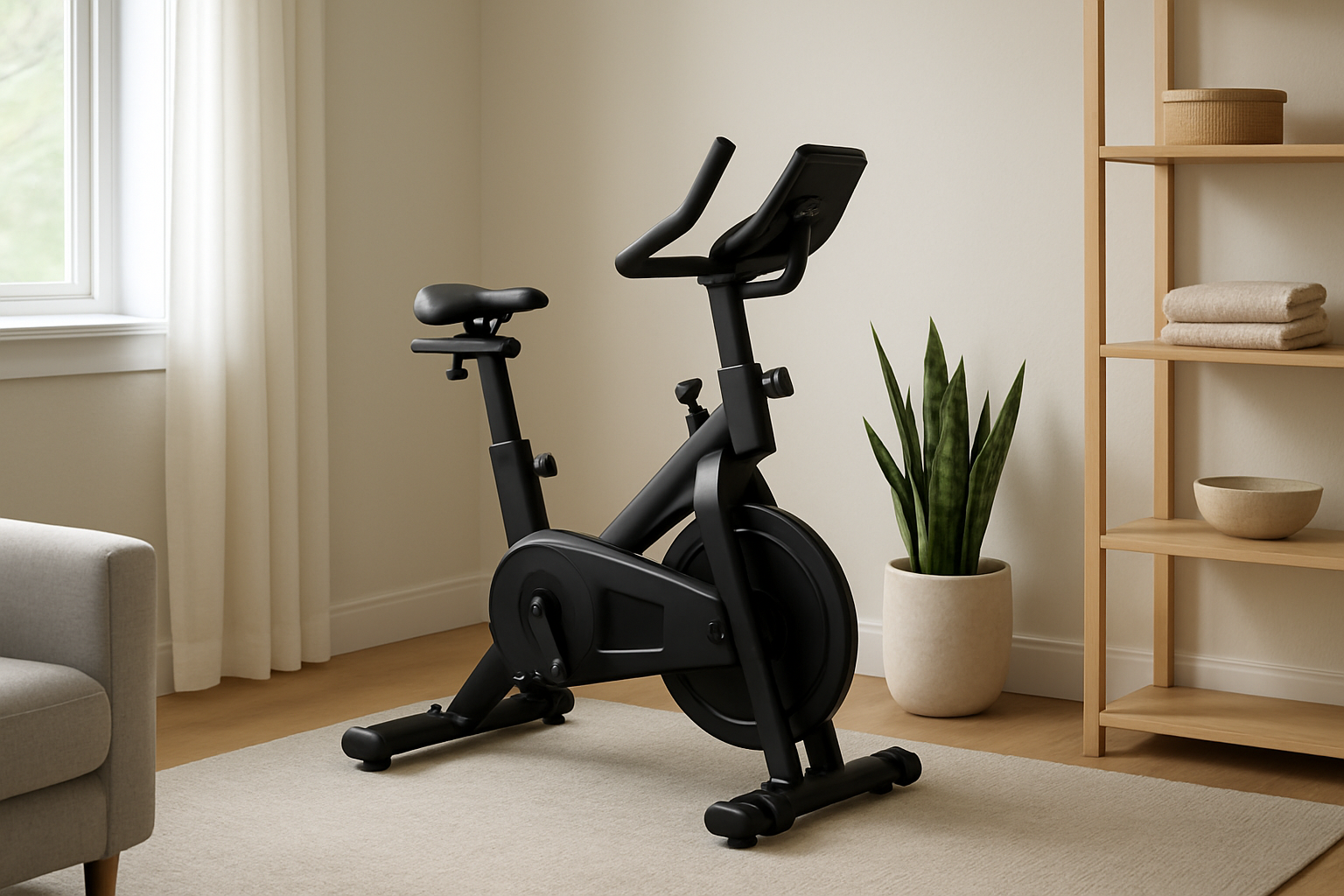
1. Decide what “best” needs to mean for your workouts
Before comparing screens, flywheels, or app ecosystems, define the job the bike must perform. A bike used for 20-minute moderate rides has different requirements from one used for high-intensity intervals, structured cycling training, or rehabilitation-style movement.
- General fitness: prioritize comfort, easy resistance changes, quiet operation, and simple maintenance.
- Weight-management support: look for a bike you can use regularly, then combine cycling with a sustainable eating pattern and strength work. Exercise contributes to energy expenditure, but it does not guarantee weight loss.
- Performance training: prioritize reliable cadence and power information, a stable frame, multiple riding positions, and compatibility with your preferred training platform.
- Low-impact access: consider a step-through or recumbent frame, especially if mounting a tall spin bike is awkward.
The CDC recommends that adults accumulate at least 150 minutes of moderate-intensity aerobic activity weekly, or an equivalent amount of vigorous activity, plus muscle-strengthening activity on at least two days. Use that as a planning target rather than assuming a more expensive bike automatically produces better results. The CDC’s adult activity guidance provides the full context.
2. Match the bike type to your space and training style
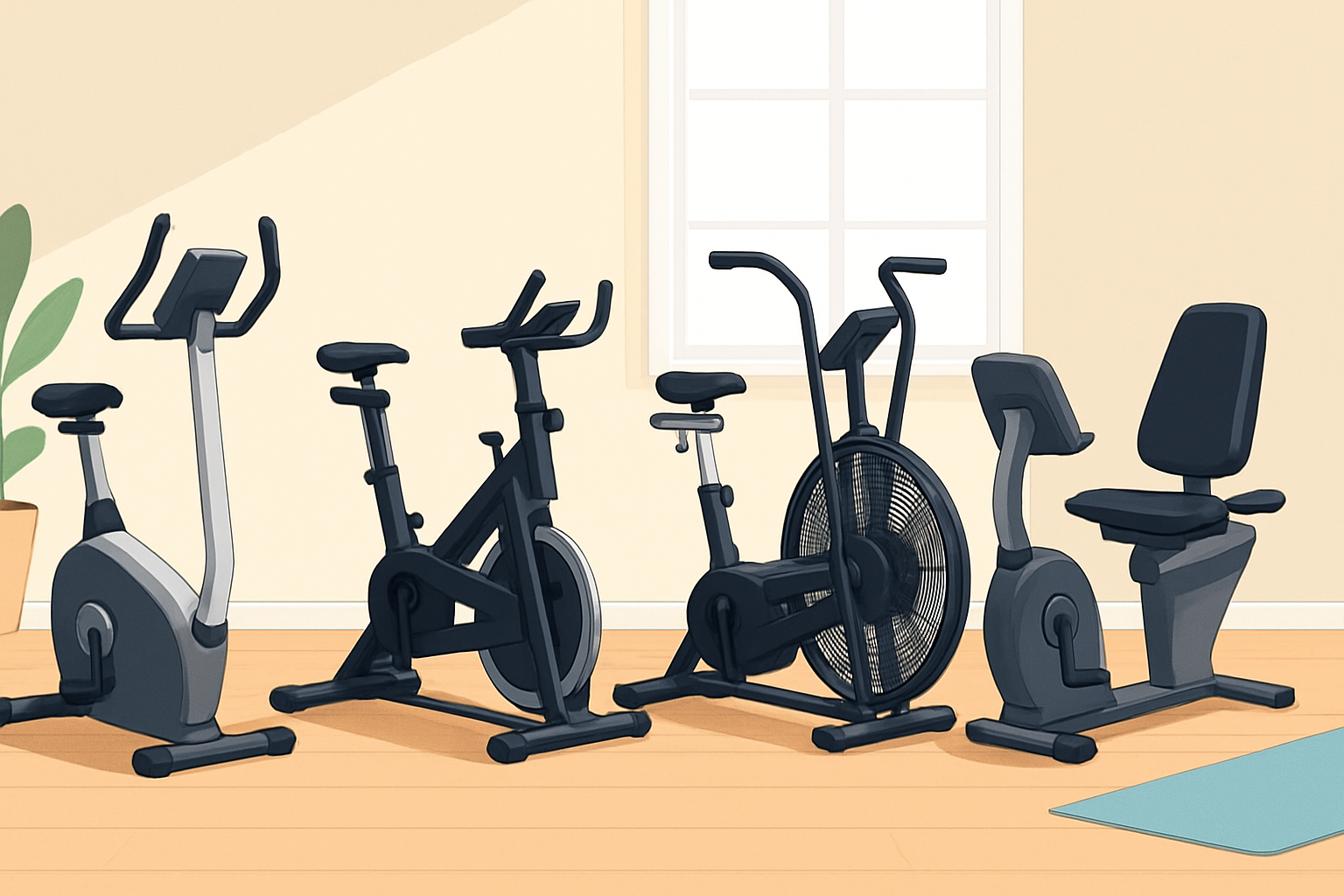
| Bike type | What to look for | Warning sign | Best fit |
|---|---|---|---|
| Upright bike | Adjustable seat, stable pedals, clear resistance controls | Fixed handlebars or limited seat range | Everyday cardio and shared household use |
| Indoor cycling bike | Secure frame, smooth magnetic resistance, multiple adjustment points | Fit cannot be tailored to your height or reach | Intervals, cycling classes, and harder rides |
| Connected studio bike | Reliable display, useful metrics, transparent membership terms | Core functions depend on an ongoing subscription | People motivated by coached classes |
| Air bike | Strong fan, durable handles, easy-to-read interval display | Noise is unacceptable in your room or apartment | Short, demanding intervals and conditioning |
| Recumbent bike | Step-through access, supportive backrest, adjustable seat distance | Seat position leaves your knees too bent or overextended | Accessible, supported low-impact exercise |
There is no single “best exercise bike” category. A connected bike may be excellent for accountability but poor value if you do not want classes. An air bike can provide intense conditioning but may be unpleasant for steady, quiet rides. Your room, schedule, and preferred workout style should narrow the field before brand comparisons begin.
3. Compare resistance, fit, and ride comfort
Magnetic, friction, and air resistance
Magnetic resistance is generally attractive for home use because it can change smoothly and quietly. Friction systems can feel direct and may cost less, but the contact parts can require more attention over time. Air resistance responds to how hard you pedal: it is useful for intervals, but the fan noise rises with effort.
Do not judge resistance by the number of advertised levels alone. Check whether the control is reachable while riding, whether the lowest setting is genuinely easy, and whether the highest setting provides enough challenge for your current ability. If the bike will be used by several people, easy adjustment matters more than a complicated resistance display.
Fit is a performance and comfort issue
A bike should allow you to set saddle height, fore-aft position, and handlebar position so your knees and hips move comfortably. The exact setup depends on your body and riding style, but a seat that cannot be adjusted sufficiently is a practical reason to reject an otherwise attractive model.
- Measure your available floor area, including space to step on and off.
- Check the manufacturer’s height and weight guidance rather than guessing.
- Allow room for handlebar movement, ventilation, and safe dismounting.
- Look for transport wheels if you will regularly move the bike.
4. Evaluate technology without paying for features you will ignore
Exercise bikes now range from basic consoles to full-screen platforms with live or on-demand classes. Technology is useful when it improves consistency, feedback, or enjoyment. It is less useful when it adds a monthly obligation to a bike you would happily use with a timer and a podcast.
Check exactly what works without a subscription. Some bikes display cadence, resistance, time, and distance independently, while advanced metrics or classes may require an app membership. Also verify whether the bike supports Bluetooth heart-rate accessories, third-party apps, screen casting, or only the manufacturer’s ecosystem.
For a more neutral evaluation, compare the product specifications with independent testing rather than relying only on marketing language. Reviews from outlets such as OutdoorGearLab’s exercise-bike comparison can help identify practical differences in stability, noise, and usability, while current editorial roundups can reveal how models are positioned across budgets.
5. Consider price as total ownership cost
The purchase price is only one part of the decision. Add delivery, assembly, cycling shoes or pedals if required, a floor mat, replacement wear parts, and any required digital membership. A cheaper bike that needs frequent upgrades may not be cheaper for your particular use.
Subscription pricing and included trials can change, so verify the current terms directly before buying. Treat promotional access as temporary unless the company clearly states otherwise. If you prefer flexibility, a bike with independent resistance controls and a basic console may offer better long-term value than a locked-in platform.
Warranty coverage also deserves careful reading. Look for separate terms for the frame, electronics, labor, and wearable components. A long frame warranty does not necessarily mean that the console, pedals, or resistance mechanism receives the same coverage.
6. Know which alternatives may suit you better
An exercise bike is convenient, but it is not automatically the most complete home-cardio choice. A treadmill may be preferable if walking or running is your main activity; an elliptical may provide a standing, low-impact movement pattern with upper- and lower-body involvement. Compare those options in Treadmill vs Elliptical: Which Cardio Machine Is Better for You?
If space is very limited, a compact bike can still compete with smaller equipment, but it should not crowd out the resistance tools you are more likely to use. Our guide to home gym equipment for small spaces may help you plan the whole setup rather than buying one large machine in isolation.
7. Avoid these common buying mistakes
- Choosing by screen size: a large display cannot correct poor fit or an unstable frame.
- Ignoring noise: fan and friction bikes may be unsuitable near bedrooms, shared walls, or video-call areas.
- Assuming “low impact” means risk-free: poor setup, excessive resistance, or abrupt training increases can still cause discomfort.
- Buying a spin bike for gentle access: a tall frame and aggressive riding position may be a poor match for limited mobility.
- Forgetting strength training: cycling mainly addresses cardiovascular work. Pair it with a balanced plan, such as strength training at home without a bench.
8. Troubleshooting: what if the bike does not feel right?
What if your knees hurt?
Stop and check saddle height, reach, resistance, and cadence rather than simply pushing through. Persistent or sharp pain, swelling, numbness, chest discomfort, unusual shortness of breath, or dizziness warrants medical advice. If you have a chronic condition or are returning after a significant health event, ask a qualified clinician how to resume exercise safely.
What if motivation fades?
Use a smaller commitment: two or three short rides per week, a consistent time of day, and one measurable target such as minutes completed. Progress gradually with the approach outlined in How to Progress a Home Workout, rather than increasing duration and intensity at the same time.
9. A practical buying checklist
- Measure the room and confirm a safe dismount area.
- Match the frame type to your mobility and preferred posture.
- Verify adjustment ranges for every intended user.
- Choose magnetic resistance for quiet versatility or air resistance for intense intervals.
- Confirm what metrics and workouts work without a subscription.
- Calculate delivery, accessories, memberships, and likely replacement costs.
- Read warranty exclusions and return conditions before ordering.
- Plan how the bike will fit alongside strength and mobility work.
10. Final decision: which exercise bike should you buy?
The best exercise bikes for home workouts reviews should lead to a conditional choice, not a universal winner. Select a quiet upright or magnetic indoor cycle for flexible everyday cardio, a connected studio model when coaching is central to your consistency, an air bike for demanding intervals, or a recumbent bike when supported access matters most.
Before purchasing, test your decision against three questions: Will the bike fit the room and the rider? Can you use it comfortably without unnecessary subscriptions? And does it support a routine you can repeat each week? If the answer is yes, that model is a stronger choice than a more expensive bike whose features do not match your actual workouts.