The best foldable treadmill for an apartment is not necessarily the smallest or cheapest model. Prioritize a stable walking surface, manageable noise, safe storage, and controls that match the way you actually exercise.
This foldable treadmills review for apartment workouts is based on practical buying criteria and manufacturer specifications that should be checked for each model. It does not claim hands-on testing, fixed prices, or performance results. Use the guidance below to narrow your options, then confirm the current dimensions, weight limits, warranty, and return policy before ordering.
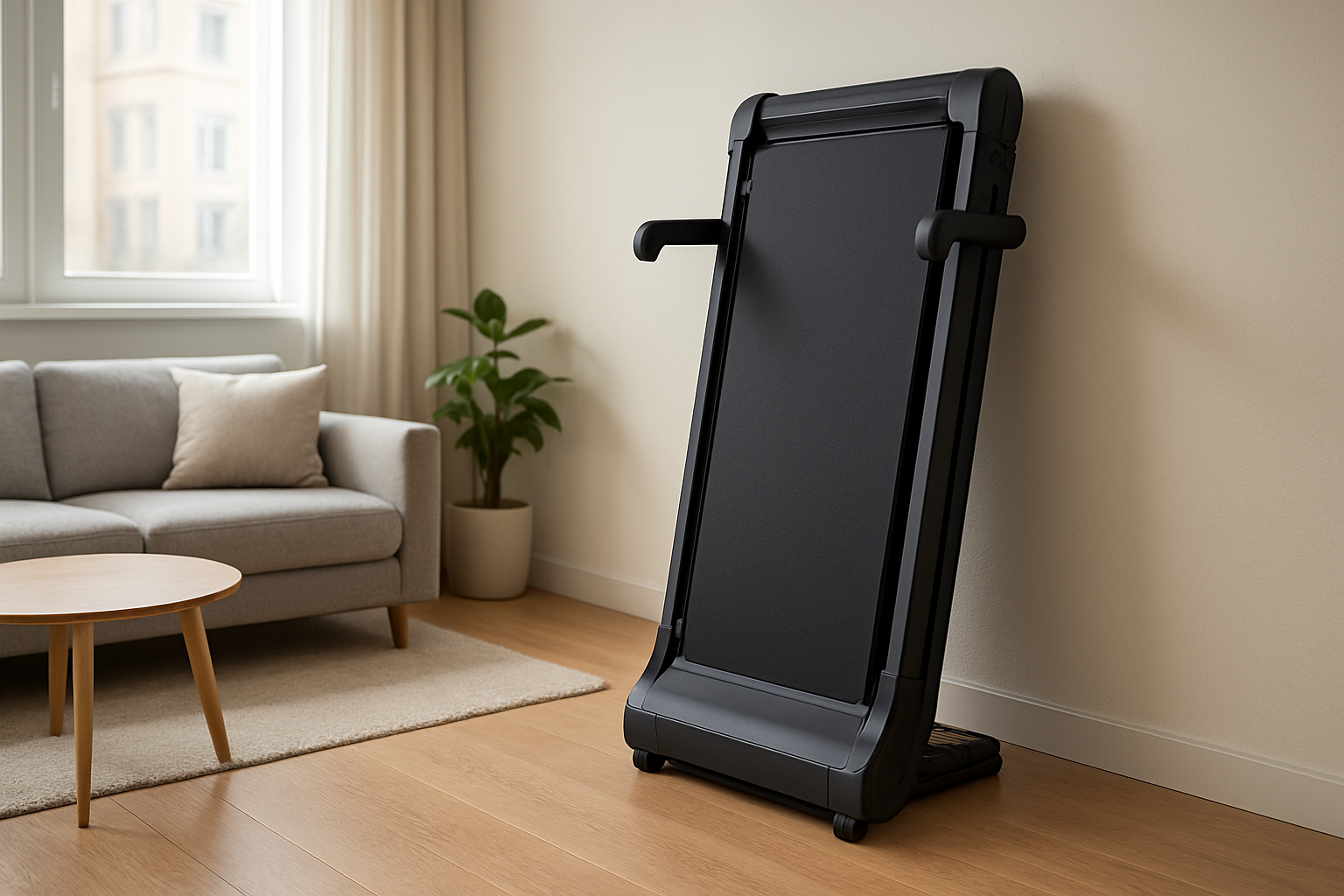
1. Define the workout you need the treadmill to support
“Foldable treadmill” can describe several different designs. Some are low-profile walking pads intended for desks or light walking, while others have side rails, a console, incline options, and enough speed for jogging. Treating them as interchangeable is one of the easiest ways to make a poor purchase.
Start by writing down your normal session. Include your intended pace, session length, whether you will jog, and whether more than one person will use the machine. If fat loss is your goal, consistency and total activity matter more than a particular treadmill mode; you may also find the comparison in Walking vs Jogging for Fat Loss useful.
- Walking: a lower-profile model may be sufficient if it has suitable rails or a stable operating position.
- Jogging: look for a longer, wider belt and a frame that does not feel difficult to control at speed.
- Shared use: compare the specifications against the heaviest and tallest intended user, not the average user.
- Desk use: check whether the device is designed for low-speed walking and whether the controls remain accessible.
2. Compare the running surface, frame, and user fit
The belt is the part of the treadmill that most directly affects comfort and confidence. A short or narrow deck may be acceptable for a small user walking slowly, but it can feel restrictive when your stride length or speed increases. Product descriptions should give the belt dimensions; if they do not, treat that missing information as a buying warning.
Frame stability also matters in a small room. Folding saves floor space, but hinges and moving joints must still lock securely in the operating position. Look for clear instructions about unfolding, locking, and moving the treadmill, along with a stated maximum user weight.
Do not choose a machine solely because its folded dimensions fit a closet. Measure the full operating footprint and leave enough room to step onto the belt, reach the emergency stop, and get off safely. The ceiling height, nearby furniture, and route to the storage area are part of the fit calculation.
Use this comparison checklist when reading product pages:
| What to look for | Why it matters | Warning sign |
|---|---|---|
| Clear belt length and width | Helps you judge stride room and intended use | Only the outer machine dimensions are listed |
| Maximum user weight | Provides a basic suitability check for every user | No limit is stated or the figure is difficult to verify |
| Firm handrails and an emergency stop | Improves access to controls and stopping ability | Controls are remote-only or rails appear optional for your use |
| Secure folding lock or support | Reduces the risk of movement while stored or unfolded | The folding process is unclear in the instructions |
| Transport wheels and manageable weight | Makes regular storage more realistic | The folded unit fits on paper but cannot be moved safely alone |
3. Evaluate noise without trusting vague labels
Apartment treadmill noise comes from more than the motor. Footfalls, belt movement, frame vibration, and contact with the floor can all be audible in the room below or next door. A label such as “quiet” is not enough evidence by itself, particularly when no test conditions are provided.
Ask what type of floor you have and when you plan to exercise. A stable floor mat can help protect the surface and may reduce vibration, but it cannot make an unsuitable treadmill silent. If you live above another apartment, walking at a moderate pace may be more considerate than jogging, and scheduling matters as much as equipment choice.
Check the manual for maintenance requirements. A belt that needs alignment or lubrication can become noisier when neglected. Follow the manufacturer’s instructions rather than applying a random lubricant or adjusting tension without guidance.
4. Check storage, setup, and everyday usability
Folding mechanisms are useful only when you will actually use them. Before buying, measure the storage height and depth, including skirting boards, door clearance, and the space needed to pull the treadmill out. Consider whether you can move the folded unit without twisting your back or blocking an exit.
Controls should be easy to read and reach during a workout. Useful basics may include speed adjustment, a start-and-stop control, elapsed time, and an emergency safety feature. Extra programs can be convenient, but they should not compensate for a poor belt fit or unstable frame.
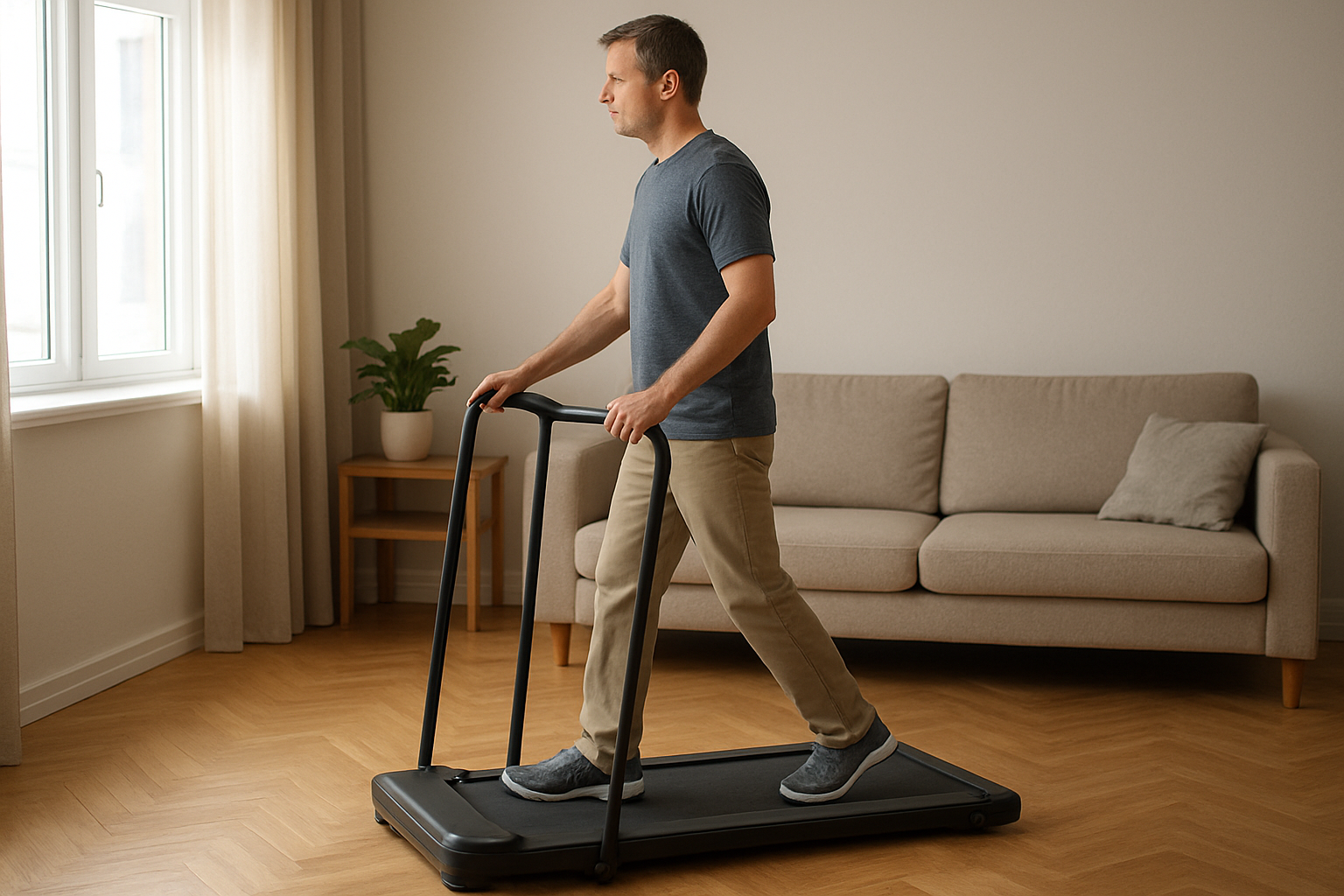
Incline can add training variety, but confirm whether it is manual or powered and whether changing it requires leaving the belt. A feature that looks useful in a specification list may be less practical in a narrow apartment workout area.
5. Consider price, warranty, and the evidence behind the listing
Prices change by seller, region, promotions, and included accessories, so this review does not assign a fixed “best value” price. Compare the complete purchase cost instead: delivery, assembly, floor protection, possible accessories, and any service or return charges.
Read the warranty conditions carefully. Check which parts are covered, how long coverage lasts, who handles transport, and whether home use is defined separately from commercial use. A low listed price becomes less attractive if returning a heavy machine would be difficult.
Product specifications are useful evidence, but they are not the same as independent testing. Treat unusually broad claims about silence, durability, or calorie burn cautiously unless the testing method is explained. Calories shown on a treadmill are estimates and should not be treated as precise body-composition measurements; for a broader view of tracking limitations, see Smart Scales Review for Tracking Body Composition.
6. Match the treadmill to the right apartment scenario
For steady walking and limited storage
A low-profile walking treadmill may suit someone who wants short, regular sessions and has a reliable place to store it. Confirm that the operating position is stable and that the speed range matches your natural walking pace. If balance is a concern, a model with usable handrails may be preferable to the thinnest design.
For walking and occasional jogging
Choose the longer and more stable option that your room allows. Jogging increases the importance of belt room, frame stability, shock management, and a clearly accessible stop function. Do not assume that a machine marketed for walking is suitable for running simply because it displays a higher top speed.
For a broader home routine
A treadmill can provide steady cardiovascular work, but it does not replace strength training. Combine it with appropriate home exercises, such as the knee-friendly leg movements in Best Leg Exercises for Knee-Friendly Workouts or the shoulder options in Best Shoulder Exercises for Building Muscle at Home.
7. Avoid common buying mistakes
- Buying from the folded dimensions without measuring the unfolded workout space.
- Choosing a walking pad for jogging because its advertised speed seems sufficient.
- Ignoring belt dimensions, user weight limits, or the height of the tallest user.
- Assuming a mat will solve all vibration and neighbor-noise problems.
- Paying for app features before checking basic controls and safety hardware.
- Forgetting that a heavy folded treadmill still needs to be moved regularly.
- Using calorie displays as exact measurements of fat loss.
8. Troubleshoot the “what if” scenarios
What if the treadmill feels too loud?
Stop and check whether the belt is centered, the surface is level, and maintenance is current. Reduce speed and inspect for unusual rubbing or vibration. If the noise is sudden, metallic, or accompanied by belt hesitation, stop using the machine and contact the manufacturer or a qualified service provider.
What if you cannot store it safely?
Do not lean a heavy unit where it can fall into a walkway or block an exit. Return it within the applicable policy if the storage plan is unrealistic. A slightly larger treadmill that remains permanently safe may be better than a compact model that is repeatedly moved awkwardly.
What if walking causes pain?
Reduce intensity and stop if pain is sharp, worsening, or associated with dizziness, chest discomfort, unusual shortness of breath, or loss of balance. Seek appropriate medical advice before resuming exercise, especially if you have a known condition or have been advised to limit activity.
9. Use this buying checklist before ordering
- Measure the complete operating and storage areas.
- Confirm belt dimensions, speed range, user-weight limit, and machine weight.
- Decide whether you need rails, incline, jogging capacity, or only walking.
- Check emergency-stop access and the folding-lock procedure.
- Review noise expectations, floor protection, and maintenance instructions.
- Verify warranty, returns, delivery, assembly, and current total cost.
- Read the manual or specification sheet when the product page is vague.
10. Next actions and conditional verdict
First, measure your room and define your fastest intended pace. Next, remove any model that lacks clear belt dimensions, a user-weight limit, safety information, or a realistic storage plan. Finally, compare the remaining options using warranty terms and total ownership practicality rather than headline features alone.
A foldable treadmill is a sensible apartment choice when you will use it consistently, can store it safely, and select a deck and frame suited to your pace. A compact walking pad is better for limited-space walking; a rail-equipped folding treadmill is the safer direction when you need jogging room, easier controls, or more support. If neither can operate without disturbing neighbors or blocking your living space, a quieter outdoor walking routine or another form of home training may be the more practical answer.
For a complete home-fitness plan, you can also browse the LaokFitness homepage and compare treadmill work with bodyweight or resistance-based options such as calisthenics versus weight training for beginners.