Quick verdict: For most beginners, calisthenics is the easiest place to start, while weight training usually makes progressive muscle and strength gains easier to measure. If you can combine both, you may get the most flexible and complete beginner program.
The better choice depends less on which method is theoretically superior and more on whether you can perform the exercises safely, increase the challenge gradually, and train consistently. This guide compares calisthenics and weight training for beginners using practical criteria, including accessibility, progression, muscle development, skill demands, cost, and injury considerations.
1. Define what you want your training to do
Before choosing a method, identify the result you care about most. A beginner training for general fitness may need a different starting point from someone focused on muscle size, lifting performance, or learning skills such as pull-ups.
- General strength: Either method can work if the exercises become gradually more challenging.
- Muscle growth: Both can help, but weights often make it simpler to adjust resistance for individual muscles.
- Movement control: Calisthenics places more emphasis on coordinating your body through space.
- Convenience: Bodyweight training can be easier to perform at home, although a pull-up bar or resistance bands can expand your options.
- Long-term lifting goals: Weight training provides a direct route to exercises such as squats, presses, rows, and deadlifts.
Adults are generally advised to include muscle-strengthening activity on at least two days each week. The method is flexible; the important practical step is choosing resistance work you can perform regularly. See the CDC’s adult activity guidance for the broader weekly framework. ([cdc.gov](https://www.cdc.gov/physical-activity-basics/guidelines/adults.html))
2. Compare calisthenics and weight training directly
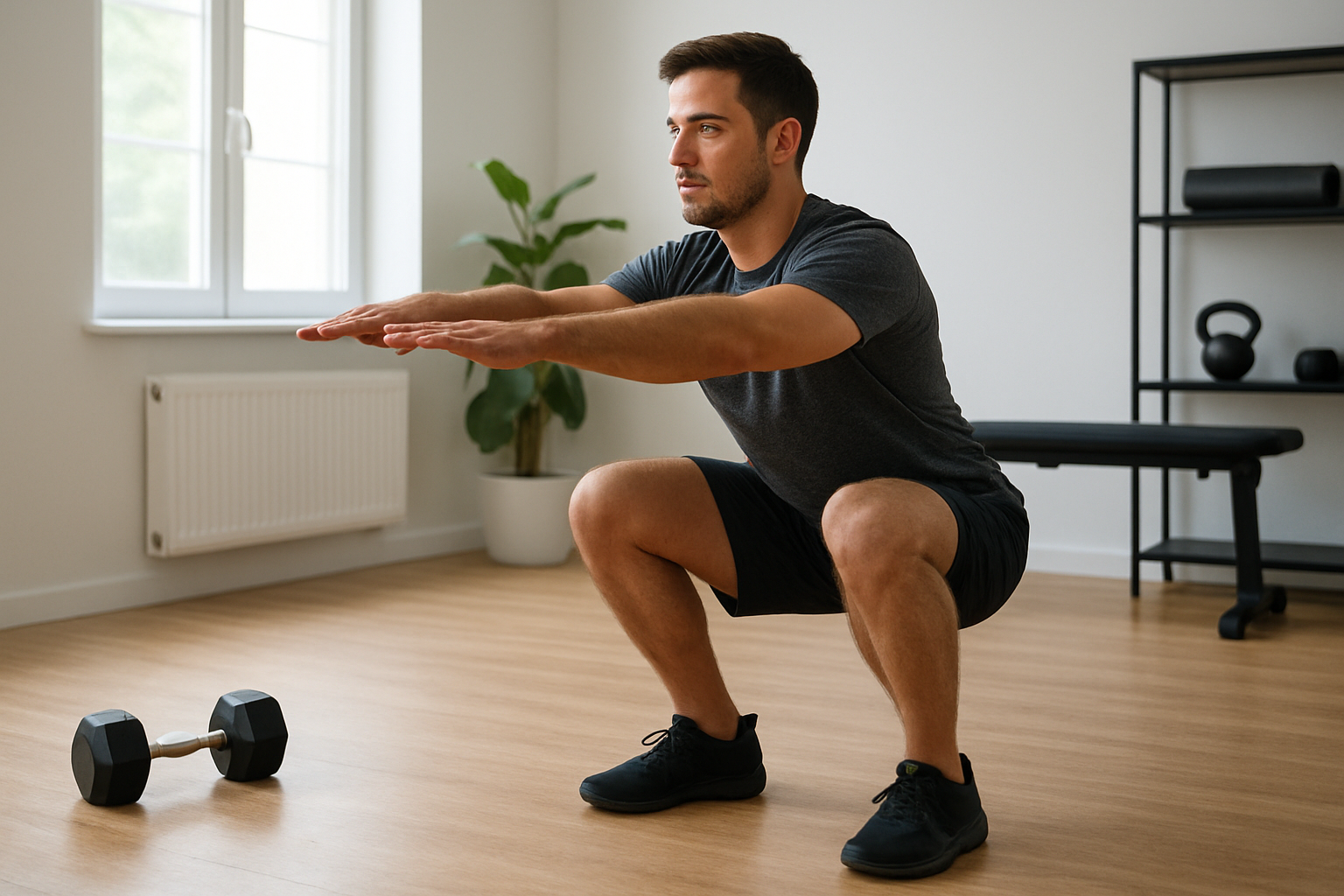
Calisthenics uses your body as the primary source of resistance. Common beginner movements include incline push-ups, bodyweight squats, split squats, glute bridges, planks, assisted rows, and assisted pull-ups.
Weight training uses external resistance such as dumbbells, barbells, kettlebells, cables, or machines. You can begin with light weights and choose exercises that match your current control and range of motion.
The table below summarizes the main differences without treating either approach as universally better.
Calisthenics vs weight training for beginners: practical comparison
| Criteria | Calisthenics | Weight training | Warning sign |
|---|---|---|---|
| Equipment | Minimal; often bodyweight, a mat, or a bar | Requires access to weights or machines | You choose a method you cannot use consistently |
| Progression | Change leverage, range of motion, tempo, or repetitions | Add small amounts of weight, repetitions, or sets | You increase difficulty before technique is reliable |
| Muscle targeting | Compound movements dominate; isolation can be limited | More direct control over individual muscles | A painful joint is repeatedly loaded to “force” progress |
| Skill demand | Some movements become highly technical as difficulty rises | Basic movements are accessible, but form still matters | You chase advanced skills before building basics |
| Progress tracking | Can be less exact because body position changes resistance | Usually straightforward through load and repetitions | You record numbers without judging effort or form |
| Home suitability | Very convenient for small spaces | Dumbbells, bands, or a rack improve options | Equipment creates clutter or safety problems |
3. Understand how beginners progress
Progressing with calisthenics
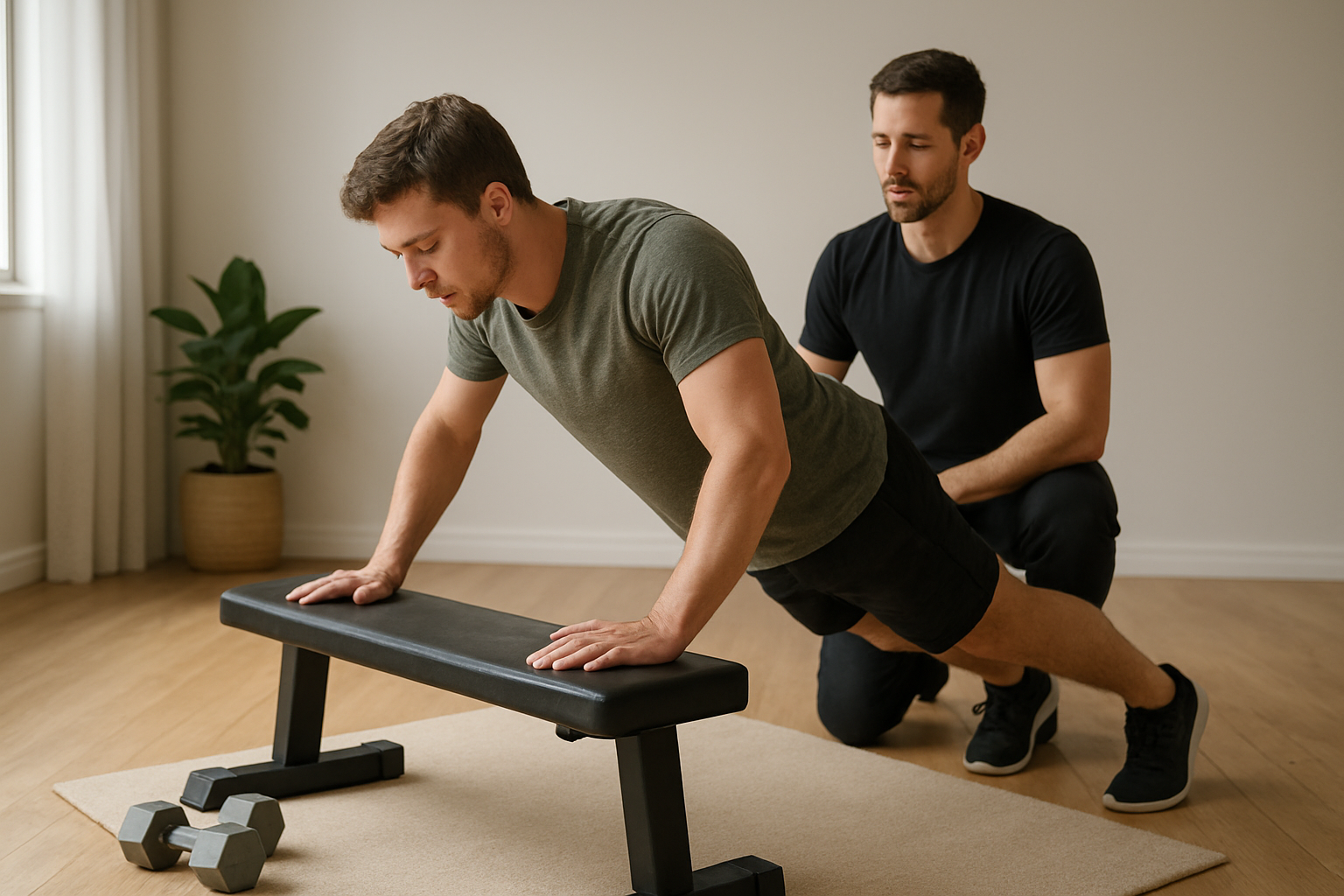
Bodyweight exercise is not automatically easy. A push-up, for example, becomes more demanding when you move from a wall to a bench, then to a low support, and finally to the floor. You can also increase repetitions, slow the lowering phase, pause at the hardest point, or use a more challenging variation.
For lower-body exercises, progression may involve moving from a chair squat to a bodyweight squat, split squat, reverse lunge, or single-leg variation. For pulling strength, use a stable row setup, resistance band assistance, or controlled negative repetitions rather than repeatedly attempting an unsupported pull-up.
Progressing with weights
Weight training makes progression more visible. Once you can complete your planned repetitions with stable technique and still have some control left, you can add a small amount of resistance, perform another repetition, or add a set.
This does not mean heavier is always better. A useful beginner rule is to increase only one main variable at a time and keep the movement repeatable. ACSM’s resistance-training guidance also emphasizes selecting a manageable plan and progressing it rather than relying on complicated programming. Read the ACSM resistance-training overview for general programming principles. ([acsm.org](https://www.acsm.org/effective-resistance-training-program-infographic/))
4. Weigh the real tradeoffs
Why calisthenics may suit you
- You want to train at home, while traveling, or with very little equipment.
- You enjoy learning coordination, balance, and control.
- You prefer short workouts with simple setup.
- You are willing to use gradual variations instead of expecting advanced exercises immediately.
The main limitation is that some muscles and movement patterns can be difficult to load precisely. Leg training may eventually require harder single-leg variations or added resistance, and back training can be restricted without a secure bar, rings, bands, or row setup.
Why weight training may suit you
- You want an easy-to-measure progression system.
- You prefer machines or supported exercises while learning technique.
- You want to emphasize specific muscles or address strength imbalances.
- You have a clear interest in barbell, dumbbell, or kettlebell training.
The tradeoff is that equipment costs money, takes space, and introduces additional safety responsibilities. If you train with a barbell at home, learn the setup and safety requirements before working near your limit. Our guide to performing barbell squats safely covers the basic preparation.
5. Choose the better starting point for your scenario
Choose calisthenics first if…
You are new to exercise, have no equipment, or need the lowest-friction option. Begin with incline push-ups, squats to a comfortable depth, hip bridges, step-ups, dead bugs, and supported rows if available. NHS guidance includes accessible home strength exercises and stresses using stable equipment when a chair is involved. ([nhs.uk](https://www.nhs.uk/live-well/exercise/strength-exercises/))
Choose weights first if…
You have access to a well-equipped gym, want to build muscle efficiently, or prefer clear records of the resistance used. Machines can be useful while you learn basic patterns, while dumbbells offer a practical home option without requiring a full rack.
Use a hybrid plan if…
You want the convenience of bodyweight training plus the precision of external resistance. For example, you might use goblet squats, dumbbell rows, and dumbbell presses alongside push-ups, split squats, planks, and assisted pull-ups.
A simple weekly structure could be two full-body sessions, with at least one rest day between them:
- One squat or lunge pattern
- One push pattern
- One pull pattern
- One hip-hinge or glute exercise
- One trunk exercise
Perform controlled sets that leave you able to repeat the movement without losing position. If you want more lower-body options with less impact, review these knee-friendly leg exercises.
6. Avoid common beginner mistakes
- Picking the method based on identity: You do not need to be exclusively a “calisthenics person” or a “weight lifter.”
- Starting too hard: Advanced pull-ups, deep split squats, or heavy barbell lifts are not prerequisites for progress.
- Ignoring pulling movements: Balance pushing exercises with rows, band pulls, or assisted pull-ups.
- Changing workouts constantly: Keep a basic routine long enough to see whether your technique and performance improve.
- Measuring only soreness: Muscle soreness is not a dependable scorecard for workout quality.
- Using poor equipment: Do not perform rows, dips, or inverted movements from unstable furniture.
7. What if one method feels uncomfortable?
Normal effort can include fatigue, muscle burning, and a temporary loss of speed. Sharp pain, increasing joint pain, numbness, unusual swelling, dizziness, chest pain, or pain that changes your movement is a reason to stop and reassess.
Modify the range of motion, reduce resistance, choose a supported variation, or take more recovery time. If symptoms persist, recur, or concern you, seek advice from a qualified healthcare professional before continuing. A previous injury or medical condition may require individualized exercise selection.
8. Beginner checklist and next actions
Use this checklist before committing to a program:
- Can you train with this method at least twice per week?
- Do you have a safe space and stable equipment?
- Can you name an easier and harder version of each exercise?
- Will you record repetitions, resistance, sets, or exercise variations?
- Can you keep one or two repetitions in reserve rather than forcing failure every set?
- Does the plan include pushing, pulling, legs, hips, and trunk work?
Next, select four or five movements and practice them for two weeks. Record what you did, how controlled it felt, and whether recovery was adequate. Then progress one variable modestly: add a repetition, choose a slightly harder variation, add a set, or increase the weight.
Final verdict: calisthenics or weight training for beginners?
Calisthenics is usually the better first choice when convenience, low cost, and body control matter most. Weight training is often the better choice when measurable loading, muscle targeting, and future lifting goals are your priorities.
For many beginners, the conditional answer is best: start with the method you can perform safely and repeat consistently, then add the other when it solves a limitation. In the debate over calisthenics vs weight training for beginners, the winning approach is the one that gives you clear progression without making regular training unnecessarily difficult.