For most beginners, a weightlifting belt is optional rather than essential. Choose one only after you can perform your main lifts with consistent technique, and use it as a bracing aid—not as protection from poor form or excessive loading.
A belt can make heavy squats, deadlifts, and similar compound lifts feel more supported, but it cannot replace progressive training, sensible load selection, or coaching. This weightlifting belts review for beginners focuses on the practical buying decision: whether you need one, what type to choose, how it should fit, and when to leave it off.
1. Decide whether a weightlifting belt fits your training
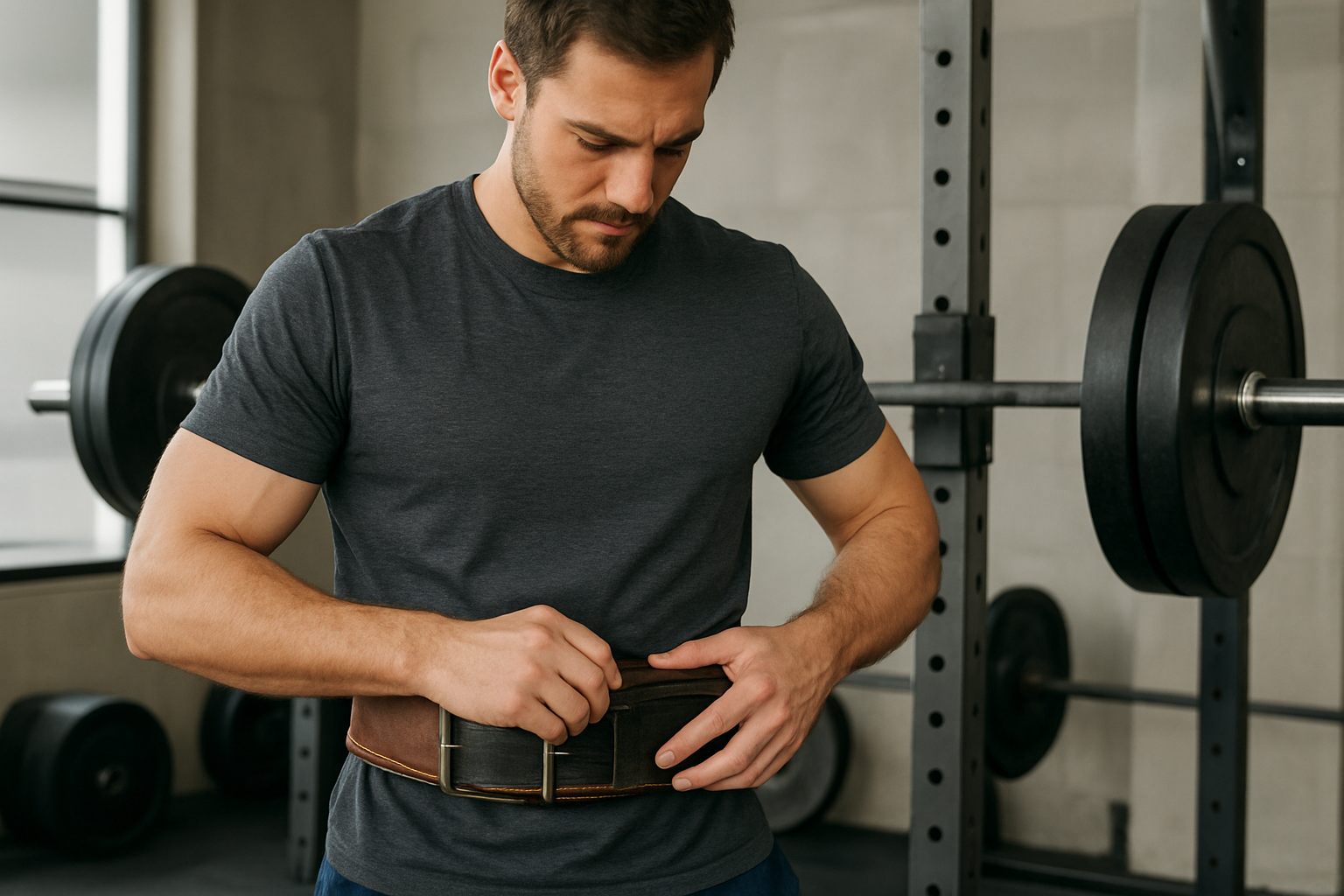
A belt is most relevant when your program includes challenging sets of squats, deadlifts, presses, or Olympic lifting movements. It gives your trunk something firm to brace against, which may help you create and maintain pressure during demanding repetitions. That does not mean it automatically prevents injury or guarantees better performance.
The American College of Sports Medicine’s resistance-training position stand emphasizes individualized programming, gradual progression, and adherence rather than relying on a single piece of equipment. For a new lifter, learning movement mechanics and controlling the weight should come before adding accessories. ([pmc.ncbi.nlm.nih.gov](https://pmc.ncbi.nlm.nih.gov/articles/PMC12965823/?utm_source=openai))
A belt may be useful if you:
- Train regularly with barbell squats, deadlifts, or similar compound lifts.
- Have already practiced bracing and can maintain a neutral, controlled position.
- Want additional external feedback when preparing for heavier sets.
- Train for strength and expect to lift near the upper end of your current working loads.
You may not need one yet if you:
- Mostly use machines, light dumbbells, or moderate loads.
- Are still changing your squat or deadlift technique every session.
- Feel that the belt prevents you from breathing or moving naturally.
- Are buying one because you believe it will compensate for back pain or unsafe programming.
2. Understand the main belt types
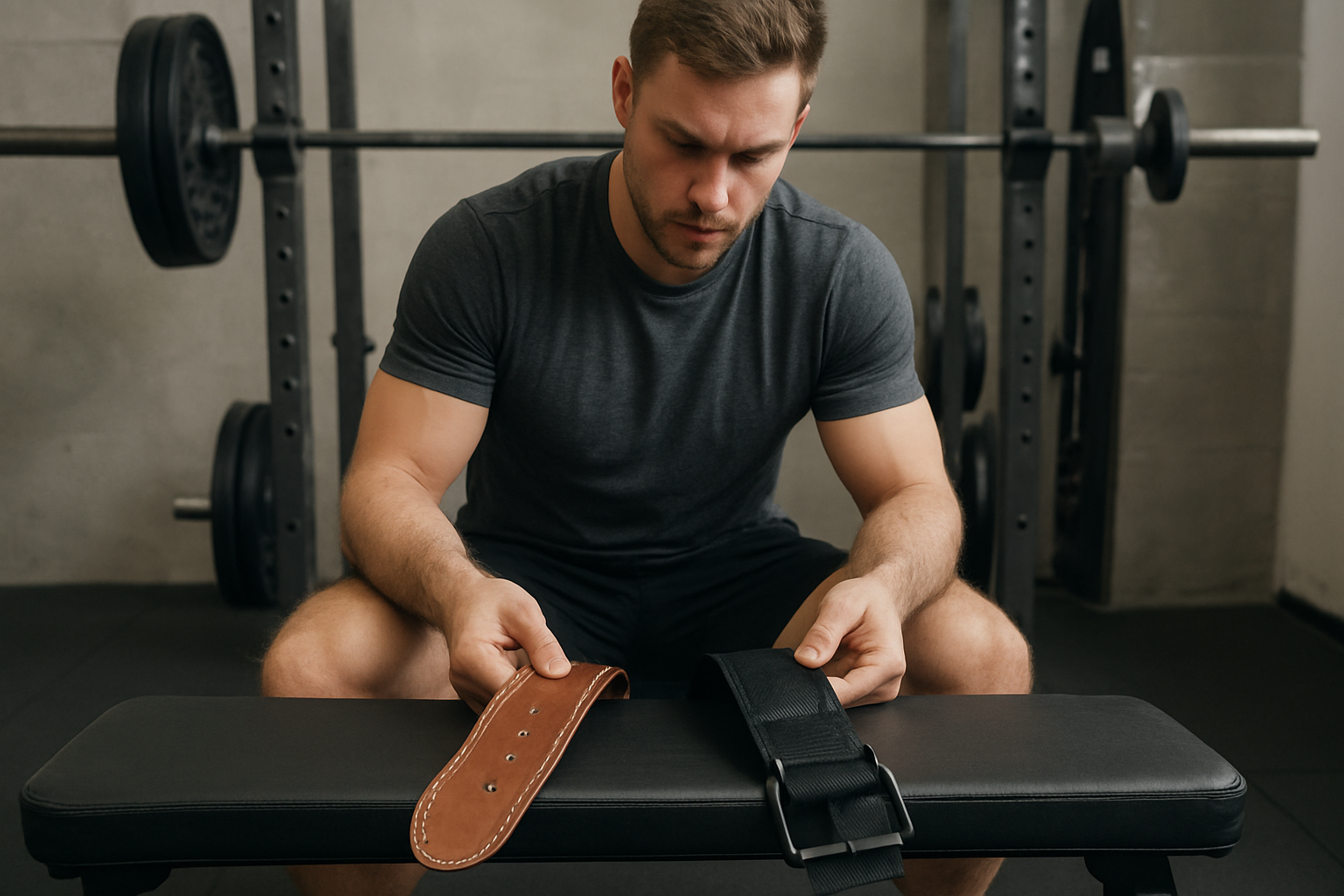
Beginner belts generally fall into three practical categories: leather powerlifting belts, tapered weightlifting belts, and flexible nylon belts. Each design makes a different compromise between rigidity, mobility, comfort, and ease of adjustment.
The International Weightlifting Federation describes the traditional weightlifting belt as wider at the back and narrower toward the front. This tapered shape can allow more freedom around the hips and torso during cleans, snatches, and other movements that require mobility. ([iwf.sport](https://iwf.sport/2017/12/13/weightlifting-equipment/?utm_source=openai))
Use the table below as a buying filter rather than assuming that the stiffest belt is automatically the best choice.
Weightlifting belt types compared
| Type | What to look for | Strengths | Warning sign |
|---|---|---|---|
| Leather powerlifting belt | Even width, firm construction, secure buckle or lever | Strong support and predictable bracing | Too rigid or uncomfortable for dynamic lifts |
| Tapered leather belt | Wider back section with a narrower front | Good compromise between support and movement | Front edge digs into the ribs or hip crease |
| Nylon belt | Adjustable closure, firm inner lining, smooth edges | Lightweight, adaptable, often easier for beginners | Closure slips or the belt folds under pressure |
| Very soft fabric belt | Stable fastening and enough structure to brace against | Comfortable for general gym work | Feels like clothing rather than a supportive brace |
3. Check the features that matter most
Width and shape
A uniform-width belt can feel stable for squats and deadlifts, while a tapered belt may be easier to use during movements that demand hip and torso mobility. Beginners should prioritize a shape that does not restrict breathing, pinch the abdomen, or interfere with the bottom position of a squat.
There is no universal width that suits every body. Torso length, hip structure, exercise selection, and personal comfort all matter. If possible, compare the belt while standing, bracing, squatting, and hinging rather than judging it from its dimensions alone.
Fastening system
Prong belts are straightforward and provide several adjustment positions, but changing tightness between sets can take time. Lever belts are quick to close and can feel secure, although they require accurate sizing and tools or hardware adjustments if your body size changes.
Velcro or ratchet-style nylon belts are usually simpler for beginners who want to change the fit during a workout. The trade-off is that the closure and stitching need to remain secure under repeated tension.
Material and edge comfort
Leather can be durable and firm, but new leather may feel stiff until it breaks in. Nylon is generally lighter and more flexible. Regardless of material, inspect the edges, stitching, buckle, and interior surface for anything likely to rub your ribs or hip bones.
4. Get the fit right before judging the belt
Measure around the area where the belt will sit according to the manufacturer’s instructions. Do not rely only on your trouser size, because belt sizing systems differ and the belt may sit above the hips rather than at the narrowest part of your waist.
A correctly fitted belt should feel firm when you brace, but it should not make normal breathing impossible. You should be able to take a controlled breath, expand your abdomen and sides, and maintain your lifting position without sharp pressure or numbness.
- Place the belt consistently for each exercise.
- Start with moderate tension rather than fastening it as tightly as possible.
- Practice breathing and bracing before attempting heavy sets.
- Stop if you feel pain, tingling, dizziness, or unusual pressure.
A belt should not be treated as personal protective equipment for general lifting or manual handling. Workplace safety guidance does not generally recommend back belts as a way to prevent lifting injuries, which is a useful reminder that equipment cannot replace safer movement and load management. ([ontario.ca](https://www.ontario.ca/document/manual-materials-handling/back-belts?utm_source=openai))
5. Learn how to use it without becoming dependent
Use the belt selectively. Many lifters wear it for their heaviest working sets while completing warm-ups and lighter accessory work without it. This approach lets you practice trunk control across a range of loads while still using the belt when the training goal calls for additional bracing feedback.
Begin with an unloaded or lightly loaded movement. Take a breath into your abdomen and sides, brace as though preparing for contact, and keep that pressure during the most demanding part of the repetition. Avoid pulling the belt so tight that you can only breathe into your upper chest.
Research on belts and deadlift performance is limited and does not justify treating them as universally necessary. One controlled study of recreational weightlifters examined belts and wrist straps during deadlifts, but its findings should not be interpreted as proof that every beginner needs a belt for every exercise. ([doi.org](https://doi.org/10.1097/md.0000000000028918?utm_source=openai))
6. Avoid the most common beginner buying mistakes
- Buying the stiffest belt available: Maximum rigidity can reduce comfort and movement quality if you are not training specifically for maximal strength.
- Using the belt to hide technique problems: If your back position, depth, or bar path is inconsistent, reduce the load and address the movement first.
- Wearing it for every exercise: A belt is usually unnecessary for curls, most machine exercises, light rows, and many warm-up sets.
- Ignoring the return policy: Fit is difficult to judge from a size chart alone, especially with thick leather models.
- Choosing based only on appearance: Stitching, closure security, edge finish, and comfort matter more than color or branding.
7. What if the belt feels uncomfortable?
If it pinches your ribs
Try a slightly different position, reduce the tension, or consider a tapered design. Persistent rib pressure may indicate that the belt is too wide for your torso or that the size is incorrect.
If it restricts your squat
Check whether the belt is pressing into your hip crease at the bottom of the movement. A different width or shape may help, but do not force the exercise around the belt. Your movement should remain controlled and pain-free.
If you feel back pain
Remove the belt and stop the painful set. Back pain can have many causes, and a belt is not a diagnosis or treatment. Seek advice from a qualified healthcare professional if pain is severe, persistent, associated with weakness or numbness, or affecting daily activities.
8. Beginner checklist before you buy
- Can you perform your main lifts with repeatable technique?
- Do you know where the belt will sit for each exercise?
- Have you measured yourself using the seller’s instructions?
- Do you prefer maximum rigidity or easier movement?
- Can the closure be adjusted securely between sets?
- Does the seller provide clear material details and a usable return policy?
- Are you buying it for a specific training purpose rather than fear of injury?
9. Best alternatives and next actions
If you are not ready for a belt, spend the same attention on progressive programming, warm-up sets, breathing practice, and coaching feedback. You can also build a balanced routine with resources such as full-body dumbbell exercises and guidance on choosing appropriate dumbbell weights.
For recovery planning, see the practical guide to relieving delayed-onset muscle soreness naturally. A belt will not improve an overloaded program, insufficient recovery, or poor exercise selection.
Final verdict on weightlifting belts for beginners
The best weightlifting belt for a beginner is not necessarily the thickest, most expensive, or most rigid model. Choose one only when your training gives you a clear reason to use it, then prioritize secure adjustment, comfortable bracing, suitable width, and freedom of movement.
If you are still learning the basics, continue lifting without a belt and build technique gradually. If you are progressing toward heavier compound lifts, a well-fitted belt may be a useful optional tool—but it should support sound training, never substitute for it.