To relieve delayed onset muscle soreness naturally, use gentle movement, drink enough fluid, eat a balanced meal with protein, sleep well, and avoid hard training for the same muscles until the soreness is clearly improving. DOMS usually appears 12 to 72 hours after an unfamiliar or demanding workout and gradually settles as your muscles recover.
This guide will help you distinguish ordinary post-workout soreness from a possible injury, choose practical home-care steps, and return to training without repeatedly overloading the same tissues.
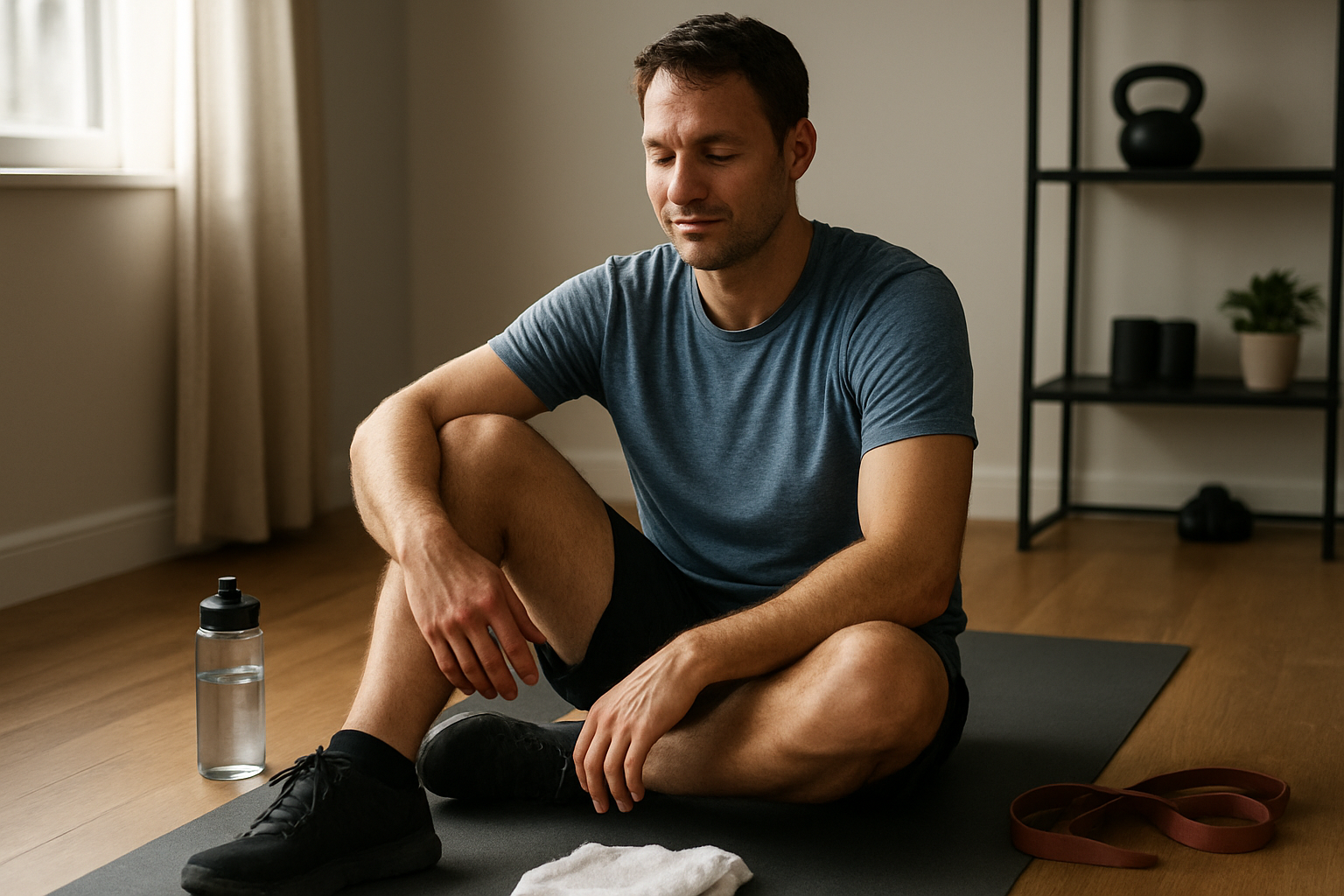
1. Confirm that the soreness is probably DOMS
Delayed onset muscle soreness is most likely when discomfort develops gradually after a new exercise, heavier workload, more repetitions, hill running, jumping, or a workout with a lot of lowering or lengthening movements. It commonly affects the specific muscles you trained and may cause tenderness, stiffness, temporary weakness, or reduced range of motion.
DOMS is different from pain that begins suddenly during a repetition. A sharp pain, a popping sensation, visible bruising, or pain focused around a joint may indicate a strain or another injury rather than routine soreness. For a helpful medical overview, see the Cleveland Clinic guide to DOMS.
Checkpoint: If your discomfort is mild to moderate, appeared after exercise, and is gradually easing each day, home recovery is usually reasonable. If it is getting worse, changing your movement, or preventing normal use of the limb, reduce activity and consider professional advice.
2. Use easy movement instead of complete inactivity
Gentle activity can reduce the feeling of stiffness without adding another demanding training session. The goal is circulation and comfortable range of motion, not a second workout.
- Walk easily for 10 to 20 minutes.
- Use a stationary bike at low resistance if leg movement feels comfortable.
- Perform slow, controlled joint movements through a pain-free range.
- Try gentle stretching without forcing the end position.
Keep the intensity low enough that your movement becomes easier rather than more painful. If soreness increases during the activity or remains noticeably worse afterward, stop and give the area more recovery time. The American College of Sports Medicine lists active recovery, hydration, nutrition, and sleep among the main parts of a sensible recovery routine.
3. Support recovery with fluids and normal meals
Hydration will not instantly remove DOMS, but replacing fluids lost through sweat supports normal body function during recovery. Drink regularly throughout the day and pay attention to thirst and urine color rather than forcing excessive amounts of water.
After a challenging session, build meals around ordinary foods that provide protein, carbohydrates, and micronutrients. Examples include yogurt with fruit and oats, eggs with whole-grain toast, tofu with rice and vegetables, or beans with potatoes and salad.
Protein supplies amino acids used in tissue maintenance, while carbohydrates help restore energy for future training. Electrolyte drinks may be useful after prolonged, hot, or very sweaty exercise, but they are not automatically necessary for a typical short workout. For more context, read our guide to what matters in electrolyte powders for endurance workouts.
4. Choose heat, cold, or massage based on the symptom
There is no single natural treatment that reliably eliminates DOMS for everyone. Use the option that makes the area feel more comfortable, and treat symptom relief as support for recovery rather than proof that the muscle is ready for heavy training.
Warmth may be more useful when stiffness is the main problem. A warm shower, heating pad on a comfortable setting, or brief warm bath can help you move more easily. Cold may temporarily reduce the sensation of pain after a particularly uncomfortable session, although it does not replace rest, food, or sleep.
Gentle self-massage or foam rolling can also make tight muscles feel less restricted. Use slow pressure and avoid repeatedly pressing directly on a sharply painful spot, a swollen area, a bruise, or a suspected injury.
Use this comparison as a practical starting point:

| Situation | What to try | What to avoid | Warning sign |
|---|---|---|---|
| General stiffness | Warm shower and easy mobility | Forcing deep stretches | Sharp pain with normal movement |
| Mild, widespread soreness | Short walk and light massage | Repeating the same hard workout | Symptoms worsen after easy activity |
| Localized tenderness | Gentle surrounding movement | Heavy pressure directly on the spot | Bruising, marked swelling, or weakness |
| Post-workout fatigue | Fluids, food, and sleep | Using stimulants to train through it | Dizziness, faintness, or unusual exhaustion |
5. Prioritize sleep and protect the sore muscle
Sleep gives your body time to carry out repair and helps regulate how hard training feels. Keep your usual sleep schedule, make the room comfortable, and avoid treating a poor night of sleep as a reason to increase training intensity the next day.
You do not necessarily need to stop all exercise. Instead, train a different muscle group or choose a lower-impact session while the sore area recovers. For example, if your legs are very sore after squats, an easy upper-body session may be more suitable than sprinting or another heavy leg workout.
Avoid using pain relief to hide symptoms so you can continue a demanding session. If you frequently need medication to get through workouts, discuss the pattern with a healthcare professional.
6. Return to training gradually
Wait until everyday movement is comfortable and your range of motion is close to normal before returning to hard work for the same muscles. Your first session back should be easier than the workout that caused the soreness.
- Reduce the weight, distance, speed, or number of sets.
- Use a longer warm-up with easy movement.
- Keep several repetitions in reserve instead of training to failure.
- Increase only one training variable at a time.
- Record what changed before the soreness appeared.
For strength training, review our guides to choosing an appropriate dumbbell weight and building a full-body dumbbell workout. Gradual progression is usually more sustainable than alternating between very hard sessions and long recovery periods.
7. Avoid common mistakes that prolong soreness
- Training hard because soreness feels like progress: DOMS is not required for strength or muscle gain.
- Stretching aggressively: A forceful stretch can irritate already sensitive tissue.
- Using supplements as a shortcut: No powder or capsule replaces appropriate training, food, fluids, and sleep.
- Ignoring technique changes: New exercises, deeper ranges, downhill running, and faster repetitions can all increase muscle stress.
- Returning at full intensity: Reduced strength and altered movement can increase injury risk.
8. Troubleshoot persistent or unusual soreness
What if soreness lasts longer than expected?
DOMS often improves within several days. If pain lasts about a week, repeatedly follows ordinary workouts, or does not gradually improve with rest, arrange a medical or physiotherapy assessment. The issue may be a strain, training-load problem, technique issue, or another condition.
What if the muscle is swollen or very weak?
Stop intense exercise and seek medical advice, particularly if swelling is significant, the limb is difficult to use, or weakness is out of proportion to the workout. Do not massage a severely swollen area while waiting for assessment.
What if urine is dark or cola-colored?
Dark, red, or cola-colored urine after extreme exercise, especially with severe muscle pain, swelling, weakness, or reduced urination, can be a warning sign of rhabdomyolysis. This requires prompt medical attention; consult MedlinePlus information on rhabdomyolysis and contact urgent medical services.
9. Use this recovery checklist
- Identify whether the pain developed gradually after exercise.
- Take a short, easy walk or perform comfortable mobility work.
- Drink normally and eat a balanced meal with protein and carbohydrates.
- Use warmth, gentle massage, or cold only for symptom comfort.
- Sleep well and avoid hard exercise for the sore muscle group.
- Return with less volume or intensity once movement feels normal.
- Seek help for severe pain, swelling, weakness, dark urine, bruising, or symptoms that are not improving.
10. Your next actions
Today, rate the soreness from 0 to 10, note which movements are limited, and take an easy walk if it feels comfortable. Prepare a normal meal, drink to thirst, and plan an earlier bedtime. Tomorrow, reassess whether movement is easier; if it is not, postpone intense training and consider professional guidance.
The most reliable way to relieve delayed onset muscle soreness naturally is not one special remedy. It is a combination of light movement, adequate recovery resources, and sensible progression. If the soreness behaves like ordinary DOMS, these steps can make the next few days more manageable; if it behaves like an injury or includes dark urine or major weakness, treat it as a medical concern rather than something to push through.