The best stretches after leg day for flexibility are gentle, controlled holds for the major lower-body muscle groups: hip flexors, quads, hamstrings, glutes, adductors, and calves. Use a short routine of about 8–12 minutes after your workout, stopping at mild tension rather than pain.
Post-leg-day stretching can help you work on range of motion while your muscles are warm, but it is not a substitute for recovery, good training technique, or medical care. This guide ranks practical stretches by usefulness, ease, and how well they target common leg-day areas so you can build a routine that fits your body and training.
1. Use the right criteria for choosing post-leg-day stretches
A useful post-workout stretch should target a muscle involved in your session, allow you to control your position, and create a clear but manageable feeling of tension. The goal is not to force the deepest possible range. Consistency and relaxed breathing matter more than intensity.
Stretching after exercise is often convenient because the body is already warm. Guidance from Mayo Clinic’s basic stretching guide recommends slow movements, no bouncing, and stopping if you feel pain. Static stretching may improve flexibility, but it should not be presented as a guaranteed way to eliminate delayed-onset muscle soreness.
For this ranking, the most important factors are:
- Target: how directly the stretch addresses a common leg-day muscle.
- Control: whether you can adjust the range without forcing a joint.
- Practicality: whether you can perform it at home or in a gym without special equipment.
- Flexibility value: whether regular practice can help you gradually access more comfortable range of motion.
2. The best stretches after leg day for flexibility, ranked
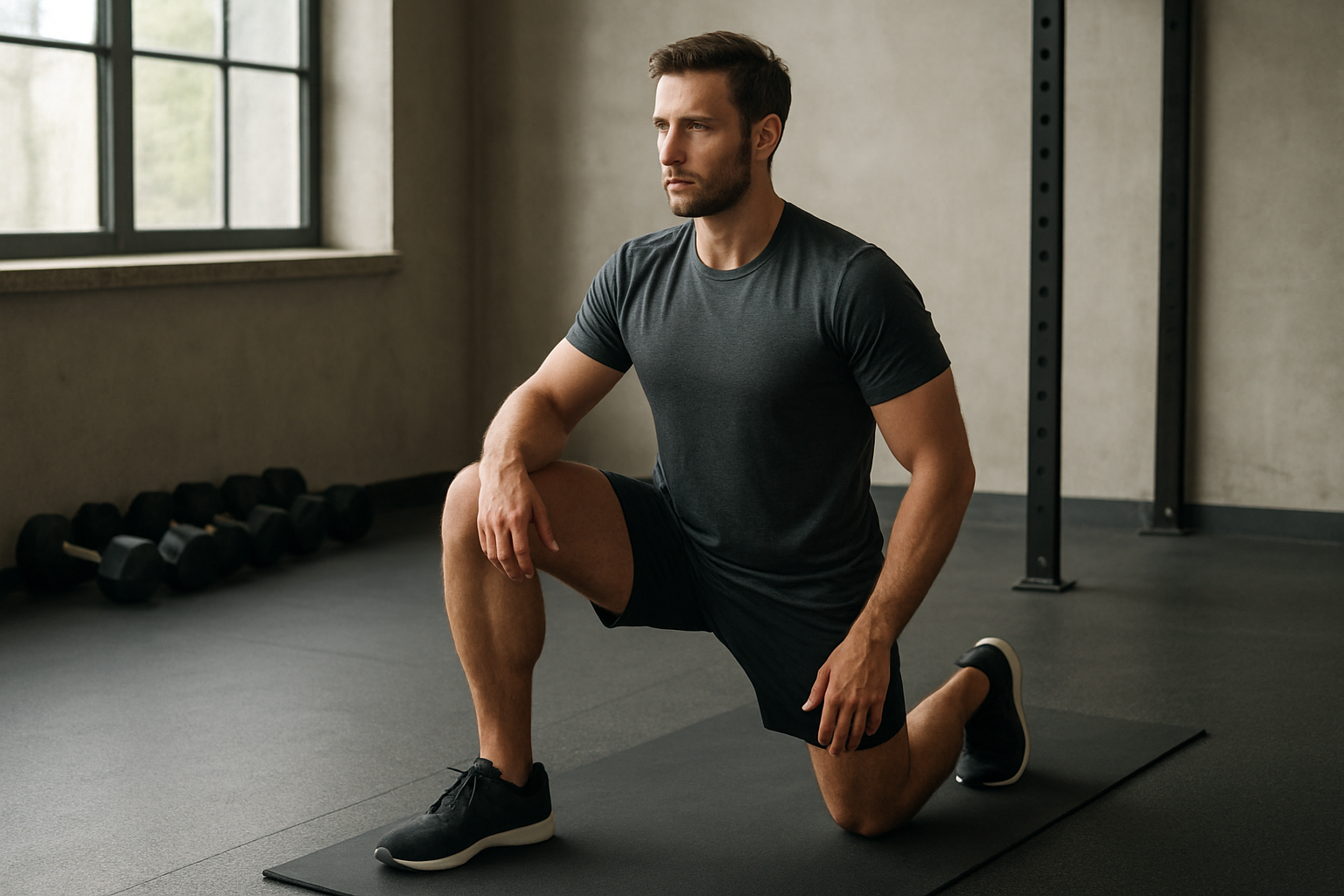
1. Half-kneeling hip-flexor stretch
Best for: Tight hip flexors after squats, lunges, cycling, or prolonged sitting.
Kneel on one knee with the other foot forward. Keep your ribs stacked over your hips, gently tighten the back-side glute, and shift your pelvis forward without arching your lower back. You should feel the stretch at the front of the kneeling hip, not in the lumbar spine.
Hold: 20–30 seconds per side, for 1–2 rounds.
2. Standing quad stretch
Best for: Quadriceps after squats, leg presses, step-ups, and split squats.
Stand near a wall or rack for balance. Bend one knee, bring your heel toward your seat, and hold the ankle or pant leg. Keep your knees relatively close and avoid pulling the foot aggressively toward you. If balancing is difficult, perform the stretch lying on your side.
Hold: 20–30 seconds per side.
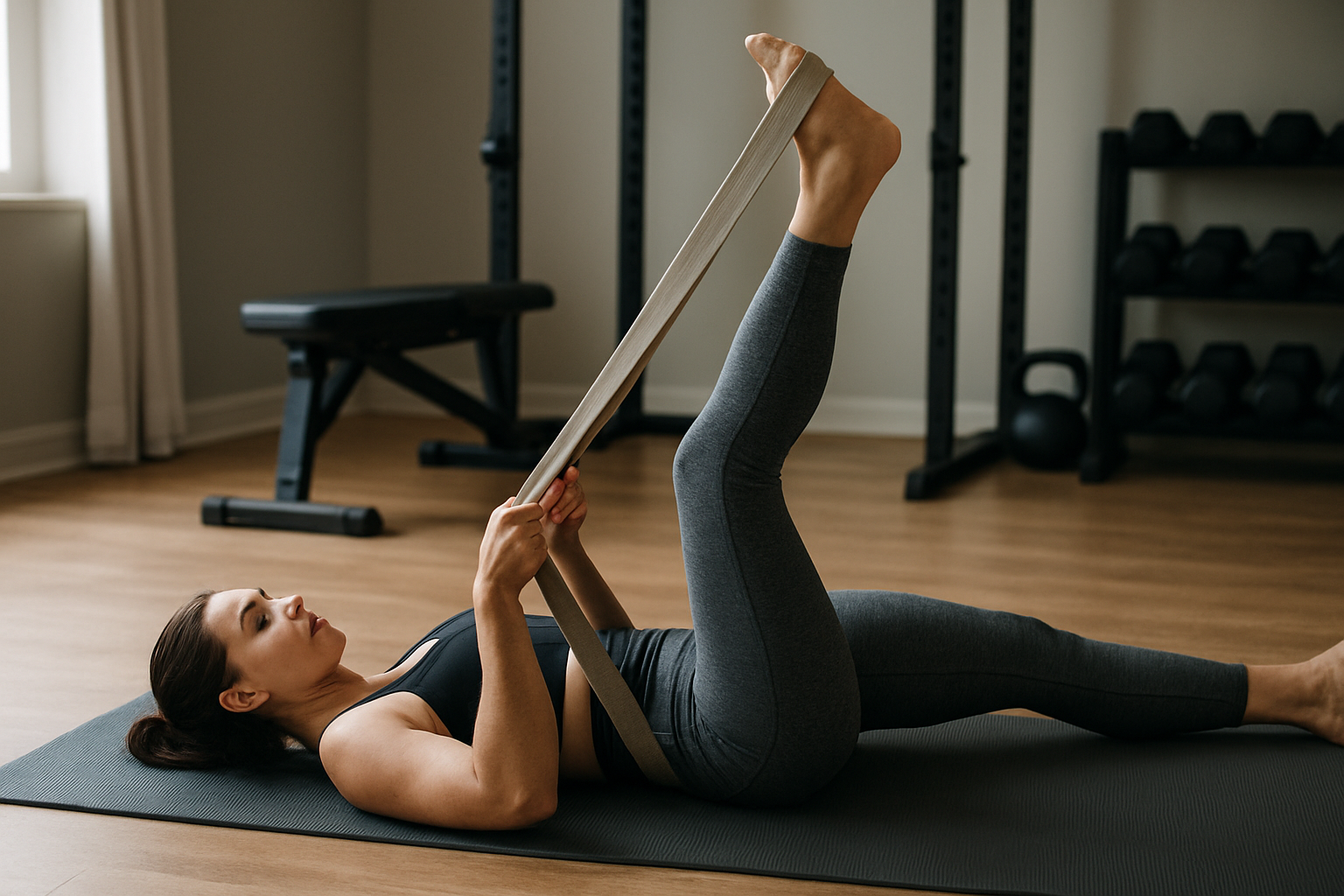
3. Supine hamstring stretch with a strap
Best for: Hamstring flexibility with less pressure on your lower back.
Lie on your back and raise one leg with the knee slightly soft. Place a strap or towel around the foot and draw the leg toward you until you feel tension behind the thigh. Keep the opposite leg relaxed and avoid pulling the raised leg into a painful position.
Hold: 20–30 seconds per side. This is often easier to control than a standing toe-touch.
4. Figure-four glute stretch
Best for: Glutes and the back of the hip after deadlifts, squats, and single-leg work.
Lie on your back, cross one ankle over the opposite thigh, and draw the uncrossed leg toward your chest. Keep the head and shoulders relaxed. Adjust the distance between your legs to make the stretch gentler or stronger.
Hold: 20–30 seconds per side.
5. Kneeling adductor rock-back
Best for: Inner-thigh mobility after wide-stance squats, lateral lunges, or change-of-direction training.
Start on your hands and knees, extend one leg out to the side with the foot flat or the toes forward, then slowly shift your hips back. Return to the starting position without forcing the range. This controlled movement is useful when a long static inner-thigh stretch feels too intense.
Do: 6–10 slow repetitions per side, or hold the end position for 15–20 seconds.
6. Wall calf stretch with a straight knee
Best for: The gastrocnemius, especially after running, jumping, calf raises, or sled work.
Place both hands on a wall, step one foot back, and keep the back heel down with the knee mostly straight. Bend the front knee and lean forward while keeping the back foot pointed ahead. Turn the rear foot inward or outward as little as possible.
Hold: 20–30 seconds per side.
7. Bent-knee calf stretch
Best for: The deeper calf muscles that may not be fully addressed by a straight-knee variation.
Use the same wall position, but gently bend the rear knee while keeping the heel connected to the floor. Keep the movement small and controlled. If the heel lifts, reduce the range.
Hold: 20–30 seconds per side.
8. Supported child’s pose with a wide-knee position
Best for: A low-intensity combination of hip, inner-thigh, and back-body relaxation.
From a kneeling position, widen the knees slightly, sit the hips back, and reach the arms forward. Place a cushion under the hips or chest if needed. This should feel restorative rather than demanding.
Hold: 30–45 seconds, provided the knees and hips feel comfortable.
9. Seated hamstring stretch
Best for: A simple no-equipment option when you cannot lie down.
Sit with one leg extended and the other leg bent comfortably. Hinge forward from the hips while keeping the spine long, stopping well before you need to round aggressively. Rest your hands on the thigh or shin rather than reaching for the toes.
Hold: 20–30 seconds per side.
10. Gentle standing hip-and-thigh flow
Best for: A brief cooldown when you prefer movement instead of long holds.
Alternate between a small reverse lunge, a relaxed standing quad stretch, and a supported hip hinge. Keep each position easy and move slowly. This is useful when you feel stiff but not ready for deeper static stretching.
Do: 4–6 controlled rounds per side.
3. Compare the main options before building your routine
The table below can help you select stretches according to the muscles you trained and the amount of control you need.
| Stretch | Main target | What to look for | Warning sign |
|---|---|---|---|
| Half-kneeling hip-flexor stretch | Hip flexors | Front-of-hip tension with glute lightly engaged | Lower-back arching or pinching |
| Standing quad stretch | Quadriceps | Knees stay fairly close and torso remains tall | Knee pain or strong pressure at the kneecap |
| Supine hamstring stretch | Hamstrings | Steady tension behind the thigh | Numbness, tingling, or forced knee lock |
| Figure-four stretch | Glutes and outer hip | Comfortable stretch in the back or side of the hip | Sharp groin or knee discomfort |
| Adductor rock-back | Inner thighs | Controlled hip movement with relaxed breathing | Sudden groin pain or pulling sensation |
| Wall calf stretch | Calves and ankle range | Heel stays down and foot points forward | Achilles pain or cramping |
4. Build a simple 10-minute routine after leg day
You do not need to perform all ten stretches. Choose one or two for each area that received the most work. A balanced routine could look like this:
- Walk slowly or cycle easily for 3–5 minutes.
- Half-kneeling hip-flexor stretch: 25 seconds per side.
- Standing quad stretch: 25 seconds per side.
- Supine hamstring stretch: 25 seconds per side.
- Figure-four glute stretch: 25 seconds per side.
- Wall calf stretch: 25 seconds with a straight knee and 20 seconds with a bent knee per side.
- Finish with relaxed breathing for about one minute.
For general flexibility, regular practice matters more than one long session. Mayo Clinic’s flexibility guidance notes that stretching can improve range of motion, while also emphasizing that stretching does not reliably remove post-exercise soreness. For recovery strategies beyond stretching, see LaokFitness’s guide to relieving delayed-onset muscle soreness naturally.
5. Avoid these common post-leg-day stretching mistakes
- Stretching cold, tired muscles aggressively: Do a brief cooldown first and reduce the range when fatigue affects your control.
- Bouncing to get deeper: Use slow movement and steady breathing instead.
- Confusing pain with progress: Mild tension is acceptable; sharp, burning, electric, or joint pain is not.
- Forcing symmetry: One side may be naturally tighter. Work within each side’s controllable range.
- Using stretching to cover a programming problem: Persistent tightness may relate to technique, load, recovery, or insufficient movement variety.
- Expecting stretching to cure soreness: Stretching can support mobility, but it is not a guaranteed DOMS treatment.
6. What if your legs are very sore or you have limited mobility?
If your legs are highly sore, use shorter holds and a smaller range. A relaxed walk, gentle cycling, or easy mobility movements may be more appropriate than trying to reach a deep stretch. Avoid stretching directly into bruising, swelling, acute pain, or a suspected strain.
If a stretch repeatedly causes joint pain, numbness, weakness, or symptoms that travel down the leg, stop and seek advice from a qualified healthcare professional. If you have a recent injury, surgery, significant joint condition, or a medical condition affecting movement, ask a physical therapist or clinician which exercises are appropriate. Hospital for Special Surgery’s overview of static and dynamic stretching also distinguishes the roles of movement-based stretching and longer holds.
7. Final checklist for choosing the best stretches after leg day
- Identify the two or three muscle groups trained hardest.
- Choose one controlled stretch for each priority area.
- Warm down before deeper static holds.
- Hold most stretches for roughly 20–30 seconds without bouncing.
- Keep breathing and stop short of pain.
- Repeat the routine consistently rather than forcing one intense session.
- Track which movements feel better or worse the following day.
Final recommendation by scenario
For a standard squat-focused session: choose the hip-flexor, quad, hamstring, and calf stretches.
For a deadlift or posterior-chain session: prioritize the supine hamstring stretch, figure-four glute stretch, calf stretch, and a gentle hip-flexor hold.
For a high-volume lunge or split-squat workout: use the hip-flexor stretch, quad stretch, adductor rock-back, and figure-four stretch.
For severe next-day soreness: reduce intensity and use easy movement rather than forcing deep holds.
The best stretches after leg day for flexibility are the ones you can perform regularly, control comfortably, and match to the muscles you actually trained. Start with a short routine, keep the sensation mild, and adjust the selection as your mobility and recovery needs change.