The best portable pull-up bar for home use is the one that matches your doorway or floor space, supports your intended exercises, and can be installed without relying on guesswork. A no-drill doorway bar may suit occasional pull-ups, while a permanently mounted or freestanding model is usually a better fit for frequent, forceful, or weighted training.
This portable pull up bars review for home use focuses on the buying decisions that matter most: mounting style, compatibility, stability, grip options, portability, and safety. The guidance is based on manufacturer safety information, exercise-form guidance from ACE, and general resistance-training principles rather than personal product testing.
1. Decide where the portable pull-up bar will be used
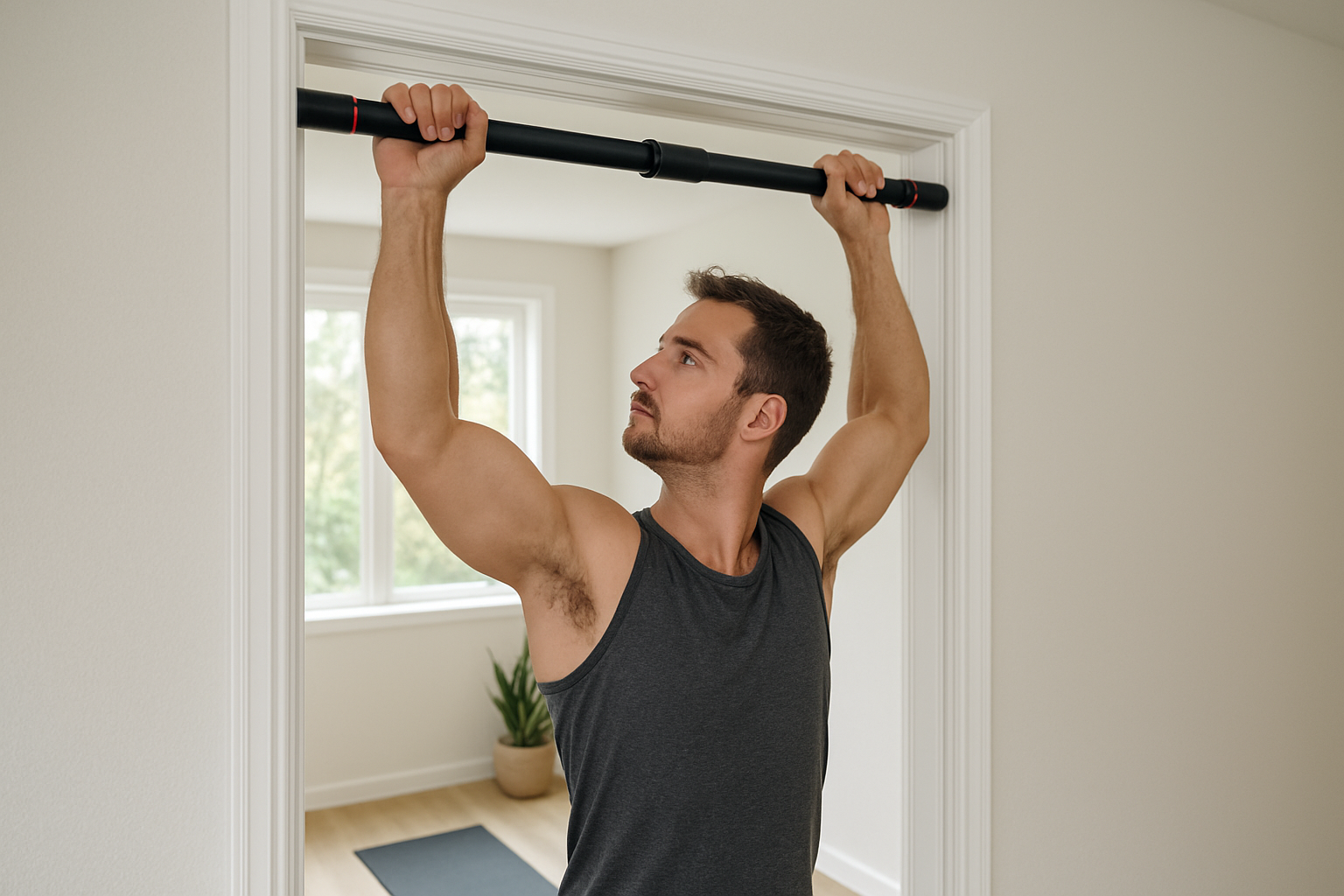
“Portable” can describe several different designs. A bar that hooks over a door frame is easy to move between rooms, but it depends heavily on the frame’s shape and strength. A telescoping bar that presses between side jambs is compact, although its security depends on correct installation and suitable wall surfaces. A freestanding station takes more floor space but avoids relying on a doorway altogether.
Start by identifying the location before comparing features. Measure the clear width of the opening, the depth and thickness of the trim, the ceiling height, and the unobstructed floor area below the bar.
- Doorway hook-on bars: best for renters and quick setup when the frame is compatible.
- Telescoping pressure bars: compact, but require careful attention to the supplied installation method.
- Wall- or ceiling-mounted bars: better for regular training when drilling into suitable structural material is acceptable.
- Freestanding stations: useful when door frames are unsuitable or you want more exercise clearance.
Do not assume that a product advertised as portable will fit every doorway. Some models need a raised door stop, solid trim, parallel surfaces, or a particular range of widths. The manufacturer’s manual is more important than a product title or marketplace photograph.
2. Compare stability before convenience
A pull-up bar supports your full bodyweight, and movement can add force beyond a static hang. Manufacturer safety guidance commonly warns that an incorrectly installed doorway bar can fall and cause serious injury. For that reason, advertised maximum load should be treated as one piece of information—not proof that a bar is suitable for swinging, kipping, weighted pull-ups, or repeated drops from the top position.
Look for a design that explains how force is transferred into the doorway, wall, or floor. Clear instructions should identify compatible surfaces, installation limits, inspection steps, and exercises that are not recommended.
The table below summarizes practical warning signs when comparing portable pull-up bars.
| What to look for | Why it matters | Warning sign |
|---|---|---|
| Specific doorway or wall measurements | Helps you confirm compatibility before purchase | The listing gives only a vague “fits most doors” statement |
| Defined mounting method | Shows how your bodyweight is supported | The product relies on friction but gives no surface requirements |
| Full-grip handles or textured padding | Can improve control and reduce slipping from sweaty hands | Thin foam that rotates, tears, or covers moving parts |
| Inspection and use instructions | Supports safer setup and repeat checks | No manual, safety warnings, or guidance for damaged components |
| Stable feet or a wide base on a freestanding unit | Reduces rocking during controlled repetitions | A narrow base paired with claims about explosive training |
3. Match the bar to your training style
For beginners and occasional pull-ups
A doorway bar can be useful for assisted pull-ups, controlled hangs, chin-ups, and slow negatives. If you are learning the movement, resistance bands, a step platform, or a spotter can help you build strength without forcing every repetition from a dead hang to the top.
Use a full grip with your thumb wrapped around the bar. ACE’s pull-up guidance emphasizes keeping the body aligned, avoiding excessive swinging, pulling the elbows down, and lowering under control. These cues are especially important on portable equipment because abrupt movement can challenge the mounting system as well as your joints. ACE’s pull-up exercise guide provides a useful reference for basic technique.
For frequent strength training
If pull-ups are a regular part of your program, prioritize a fixed wall-mounted bar, a robust ceiling installation, or a stable freestanding station. These options generally provide more consistent clearance and make it easier to use different grips, bands, and progression methods.
That does not mean a portable doorway bar cannot support progress. It means the equipment should be selected around your training demands. A model appropriate for three controlled sets of chin-ups may be a poor choice for weighted repetitions or high-volume sessions.
For advanced or explosive movements
Kipping pull-ups, toes-to-bar, muscle-up drills, and weighted work create more demanding loading patterns. Unless the manufacturer specifically approves the movement and the installation is structurally appropriate, choose a fixed or purpose-built station instead. A portable bar should not be treated as automatically safe for every exercise simply because it supports ordinary pull-ups.
4. Check comfort, grip options, and clearance
Multiple grip positions can make a bar more versatile, but more handles also increase its size and may reduce usable doorway clearance. Compare the width of the main grip with your shoulder position, the diameter of the handles, and whether your hands will contact the door trim or ceiling during a repetition.
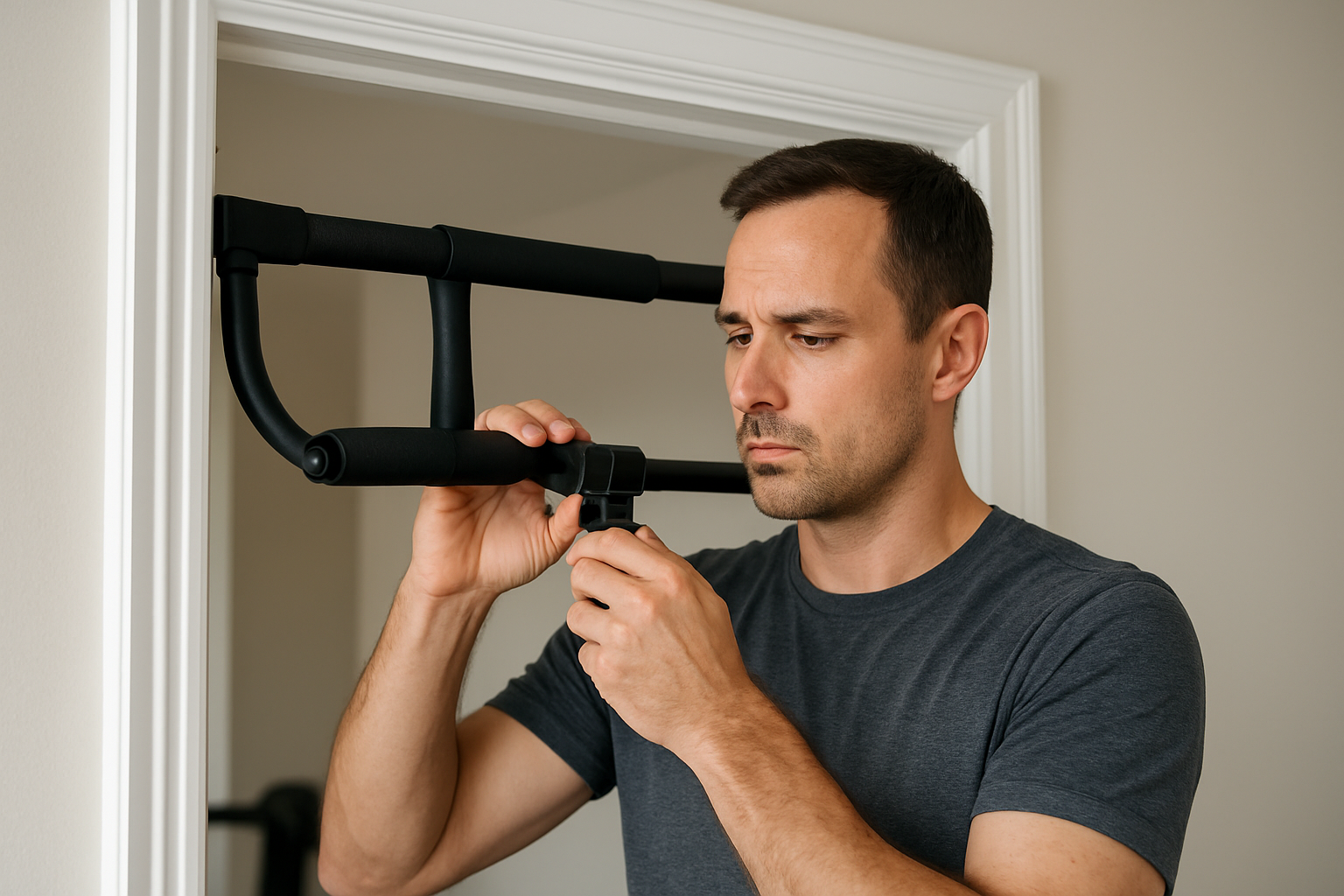
Padding may improve comfort, but it should not conceal looseness, sharp edges, or a mechanism that shifts under load. Knurled or textured metal can offer a more secure hold, although it may feel harsh during long hangs. Your choice depends on whether you value short strength sets, longer hangs, or frequent changes between overhand, underhand, and neutral grips.
Leave enough room for your head, knees, and feet. A low doorway can force you to bend your legs or tuck your hips, which may be manageable for strict repetitions but inconvenient for hanging core exercises.
5. Evaluate portability and storage honestly
Portability is useful only if the bar can be removed and reinstalled without damaging the home or losing confidence in the setup. Hook-on bars are often easier to store than fixed stations, but repeated removal can still cause scuffs or loosen trim if the contact points are poorly designed.
Consider the complete routine, not just the product’s folded size:
- Where will you store the bar between sessions?
- Will removing it block a door or require moving furniture?
- Can you inspect the pads, hooks, bolts, and welds before each use?
- Will other household members understand how it must be installed?
- Is there enough clearance to step down safely rather than jump from the bar?
If storage is difficult, you may use the equipment less often. In that case, a simpler fixed setup—or another form of pulling exercise—could be more practical even if it is less portable.
6. Consider alternatives before buying
A portable pull-up bar is not the only way to train the back and arms at home. Resistance bands can provide assisted pull-ups, rows, pulldowns, and face pulls with minimal storage needs. Dumbbells or adjustable weights offer rows and carries, while a suspension trainer can provide pulling movements if it can be anchored safely.
For broader home training, pair your choice with a stable exercise surface. Our guide to budget exercise mats for home workouts may help if floor comfort and grip are also concerns. You can also compare bodyweight work with other resistance methods in free weights versus machines for muscle building.
7. Avoid these common buying mistakes
- Buying before measuring: Doorway dimensions and trim profiles vary more than product photos suggest.
- Confusing a load rating with exercise approval: A stated capacity may not cover kipping, swinging, or added weight.
- Ignoring the surface: Drywall, hollow trim, damaged wood, and uneven walls may not provide a suitable anchor.
- Using an unlocked mechanism: Follow the exact tightening or locking procedure every time.
- Dropping from the bar: Dismount under control to reduce impact on both your body and the equipment.
- Skipping inspections: Check pads, welds, bolts, hooks, and visible cracks before use.
8. What if the bar moves, slips, or hurts your hands?
Stop using it immediately if the bar shifts, rotates, creaks unusually, damages the frame, or shows a cracked component. Remove it and review the manual rather than trying to compensate by tightening beyond the stated procedure. If the doorway or wall does not meet the requirements, choose another location or another mounting style.
If your hands hurt, first check grip diameter, session volume, and technique. Blisters, persistent wrist pain, shoulder pain, numbness, or loss of strength are reasons to reduce training and seek advice from a qualified healthcare professional. Equipment changes cannot correct every movement or medical problem.
Portable pull-up bar buying checklist
- Measure the doorway, wall, ceiling, and floor clearance.
- Read the installation manual before purchasing.
- Confirm the supported surface and stated user-weight limit.
- Decide whether you need strict pull-ups only or more demanding movements.
- Check grip diameter, handle positions, padding, and head clearance.
- Plan where the bar will be stored and how often it will be reinstalled.
- Inspect the equipment before every session.
- Use controlled repetitions and avoid unauthorized swinging or dropping.
Next steps before you choose
Measure your intended location first, then shortlist only products whose manuals match those measurements and surfaces. Next, decide whether your priority is occasional bodyweight training, regular strength work, or advanced movement practice. That decision will usually narrow the choice more effectively than comparing small differences in padding or finish.
For technique support, review the pull-up instructions from ACE Fitness. If your wider program includes pressing movements, our guide to improving bench press technique safely can help you balance pulling and pushing work.
Final verdict
In this portable pull up bars review for home use, the main verdict is conditional: choose a doorway model when convenience and controlled bodyweight training are your priorities, but choose a fixed or freestanding station when stability, frequent use, added resistance, or advanced movements matter more. The safest purchase is not necessarily the smallest or most heavily advertised one—it is the model whose installation requirements, exercise limits, and available space you can realistically follow.