Free weights and machines can both build substantial muscle, so neither is automatically better. Choose the option that lets you train the target muscles consistently, use good technique, progress over time, and recover well.
The best choice depends on your goal, experience, available equipment, and how much stability you need. This guide compares free weights vs machines for muscle building so you can build a practical routine instead of choosing based on gym preference alone.
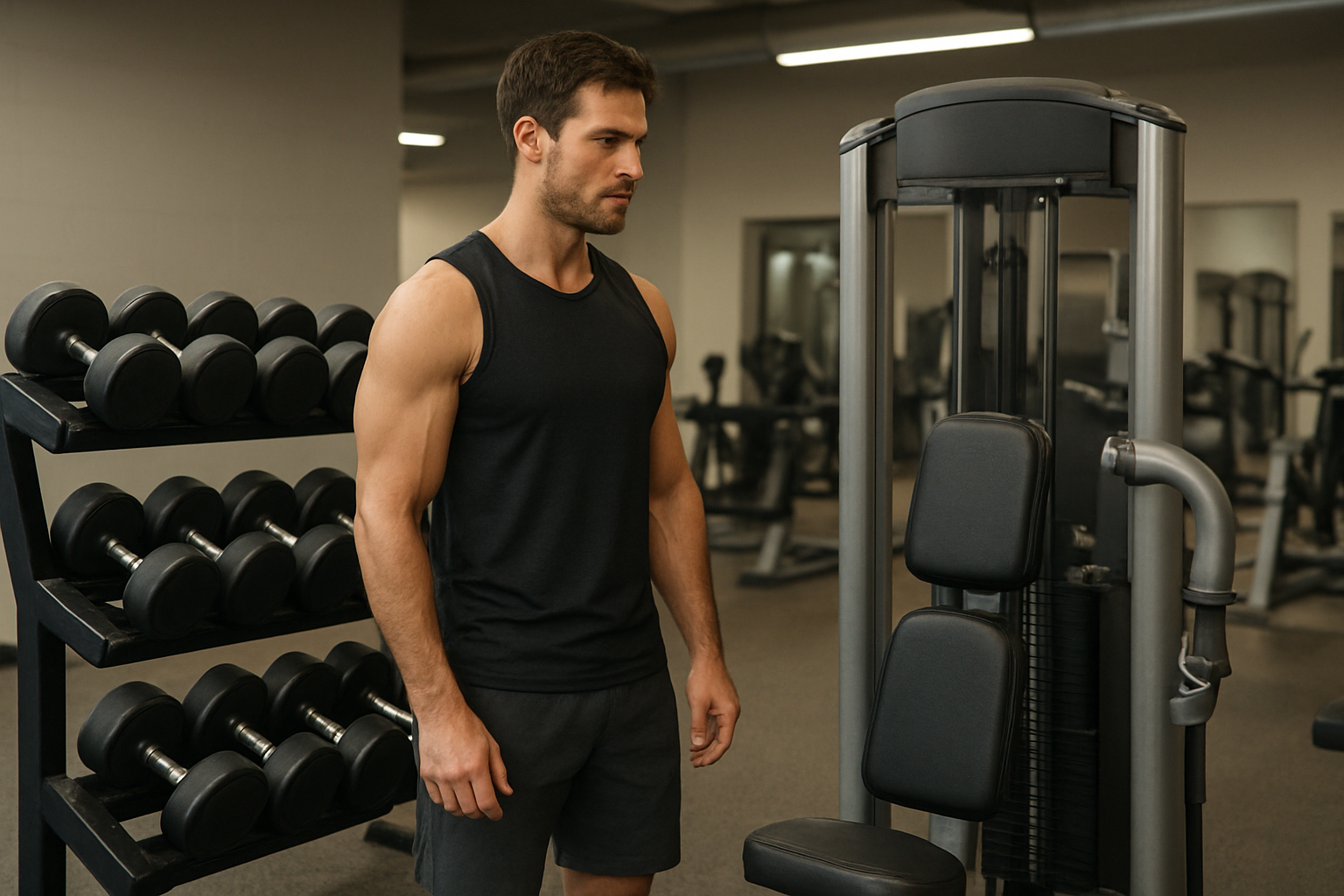
1. Start with the factors that actually affect muscle growth
Muscle growth is driven primarily by sufficient training stimulus, repeatable technique, adequate recovery, and progressive overload. The equipment matters, but it is only one part of the program.
Research comparing free-weight and machine training has generally found no meaningful difference in muscle hypertrophy when the overall training program is well designed. Strength improvements are more specific: you tend to improve most on the type of exercise and equipment you practice. See the 2023 systematic review and meta-analysis on free weights and machines for the evidence summary.
- Stimulus: Can you challenge the target muscle through a useful range of motion?
- Progression: Can you gradually add weight, repetitions, sets, or better control?
- Technique: Can you perform the exercise consistently without pain or major compensations?
- Recovery: Can you repeat the work often enough without excessive fatigue?
- Adherence: Will you actually use the equipment regularly?
If one option helps you train more consistently, it may be the better option for you even if another tool looks more advanced.
2. Compare free weights and machines by practical training criteria
The table below summarizes the main differences. These are general tendencies rather than rules for every exercise or every person.
| Training factor | Free weights | Machines | What to look for | Warning sign |
|---|---|---|---|---|
| Movement path | You control the path | The machine guides much of it | The setup fits your body and allows comfortable movement | You must twist, shorten the range, or force your joints into position |
| Stability demand | Usually higher | Usually lower | The target muscle, not balance, is the limiting factor when appropriate | Your form breaks down before the intended muscle is challenged |
| Exercise variety | Very high | Depends on the gym or machine | You can train muscles from several angles | Your routine depends on one awkward or unavailable station |
| Ease of learning | Often requires more coordination | Usually simpler to set up | You can learn the movement gradually | You increase load before you can control the exercise |
| Training close to fatigue | May require more attention to safety | Often easier to manage | You can stop safely and maintain technique | You need a spotter or complicated exit on every hard set |
| Home-gym practicality | Dumbbells are versatile but need storage | Machines can be large and expensive | The equipment fits your space and budget | The setup discourages regular training |
3. When free weights are the better choice
Free weights include barbells, dumbbells, and kettlebells. They are useful when you want flexible exercise selection, unilateral work, or practice with movements that require you to control the load in space.
Free weights work well for compound training
Exercises such as squats, presses, rows, deadlifts, and lunges can train several muscle groups at once. They may also help you develop coordination and bracing skills, although those benefits are not identical to muscle hypertrophy.
For example, a dumbbell press can allow each arm to move more independently than a fixed machine press. A barbell may make it easier to load a movement heavily, while dumbbells can be more convenient for a home gym. If you are new to deadlifting, review this step-by-step deadlift form guide before adding challenging loads.
Free weights are useful when equipment access is limited
A pair of adjustable dumbbells can support pressing, rowing, squatting, hinging, and carrying variations without requiring several machines. If you train at home, compare storage, adjustment speed, weight range, and durability before buying. Our guide to adjustable dumbbells for home strength training covers those practical checks.
The tradeoff is that free-weight exercises often require more setup and attention. Fatigue may affect balance or positioning before the target muscle reaches its limit, especially on technically demanding movements.
4. When machines are the better choice
Machines can be especially useful when you want stability, a simple learning curve, or a way to train a muscle hard without spending as much effort on balance and coordination.
Machines can make isolation work more straightforward
Leg curls, leg extensions, cable movements, chest-supported rows, and similar exercises can help you focus on a particular muscle. This can be useful after compound lifts, when your stabilizing muscles are already tired.
Machines may also make it easier to repeat the same setup from session to session. That consistency can help you track progress, provided the seat, pads, and range of motion are adjusted correctly.
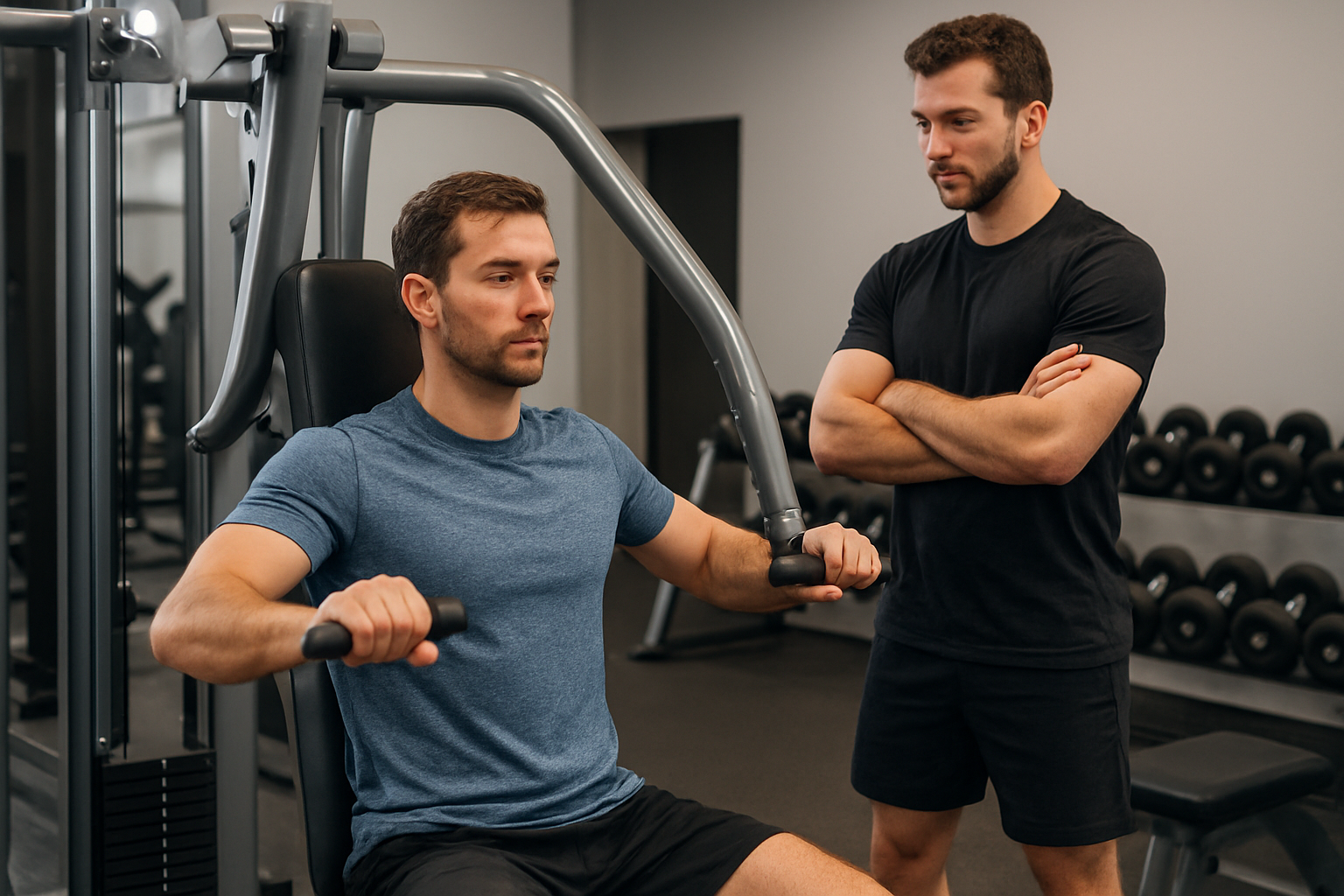
Machines can reduce some practical barriers
Beginners may find machines less intimidating because the movement path is more constrained. They can also be useful when you are returning from an injury, although exercise selection and loading should be guided by a qualified clinician when pain or medical limitations are involved.
Machines are not automatically safer. Poor adjustment, excessive load, restricted positioning, or ignoring pain can still create problems. Follow the equipment instructions and use a range of motion you can control.
5. Decide whether you should combine both
For many lifters, a mixed program offers the best balance. Free weights can provide versatile compound movements, while machines can add stable volume for muscles that need more direct work.
A simple session might include:
- One free-weight compound exercise, such as a squat, press, row, or deadlift variation.
- One additional free-weight or cable movement using a moderate load.
- One or two machine exercises for focused work near the end of the session.
- A progression method based on controlled repetitions and repeatable technique.
You do not need to use every equipment category. The goal is to select exercises that cover your main movement patterns and train your priority muscles without creating unnecessary fatigue.
6. Match the equipment to your situation
Choose free weights first if you want versatility
Free weights are a strong starting point when you train at home, enjoy learning compound movements, or need one tool to support many exercises. They are also helpful when you want to correct side-to-side differences with unilateral exercises.
Choose machines first if you are new or want simpler sessions
Machines may suit you if you are unfamiliar with resistance training, prefer guided movements, or want to focus on a muscle without making balance the main challenge. They can also be convenient when your gym has well-adjusted equipment and you value quick setup.
Use both if muscle building is your main priority
A combination is often practical for hypertrophy because it gives you multiple ways to train hard while managing fatigue. The updated ACSM resistance-training guidance also emphasizes that equipment type alone does not consistently determine outcomes for the average healthy adult.
7. Avoid these common decision mistakes
- Assuming free weights always build more muscle: Greater coordination demands do not automatically mean greater hypertrophy.
- Using machines with poor adjustments: Set the seat, pads, and handles so your joints and range of motion feel natural.
- Chasing load instead of progression: More weight is not useful if repetitions become shortened or uncontrolled.
- Changing exercises too often: Keep movements long enough to judge progress accurately.
- Ignoring nutrition and recovery: Training equipment cannot compensate for inadequate food, sleep, or total recovery.
- Copying another person’s routine: A machine that fits one person’s proportions may feel wrong for yours.
8. What if you are unsure which option to use?
Start with the version that lets you perform 2–4 controlled sets without pain, excessive technical breakdown, or confusion about how to progress. Keep the exercise for several weeks and record repetitions, load, and how consistently you complete the work.
If progress stalls, change one variable at a time. You might improve setup, reduce the load, add a repetition, switch from a free-weight variation to a machine, or use a machine after a demanding compound exercise. Persistent pain, numbness, unusual weakness, or a previous significant injury warrants assessment from a qualified healthcare professional rather than simply changing equipment.
9. A practical checklist before you choose
- Can you set up the exercise correctly every time?
- Does the movement feel comfortable through a controlled range?
- Can you add repetitions or load in small, trackable steps?
- Is the intended muscle limiting the set more than your grip or balance?
- Can you train hard without needing unsafe improvisation?
- Will the equipment remain available and convenient enough for regular use?
10. Your next action
Choose one free-weight movement and one machine or cable movement for each major muscle group you want to develop. Test both for several sessions, keep the version that gives you better control and repeatable progression, and use the other as a complementary option if it fills a different role.
For most people asking about free weights vs machines for muscle building, the conditional verdict is simple: use free weights when versatility and compound training matter most, use machines when stability and focused effort matter most, and combine them when you want the broadest set of practical options. The better tool is the one you can use consistently, progress safely, and recover from.
For further planning, see our guides to building a weekly muscle-gain meal plan and choosing useful home gym accessories for beginners.