For most beginners, the best squat shoes are stable, securely fitted, and moderately raised at the heel—not simply the most expensive pair. Choose dedicated lifting shoes if you want a firm platform for squats or Olympic lifts; choose flat shoes if you also need versatile footwear for deadlifts and general gym training.
This squat shoes review for beginners and lifters is based on published biomechanics research, manufacturer specifications, and practical buying criteria rather than personal testing. It will help you decide whether you need squat shoes, what features matter, and which compromises to expect before you buy.
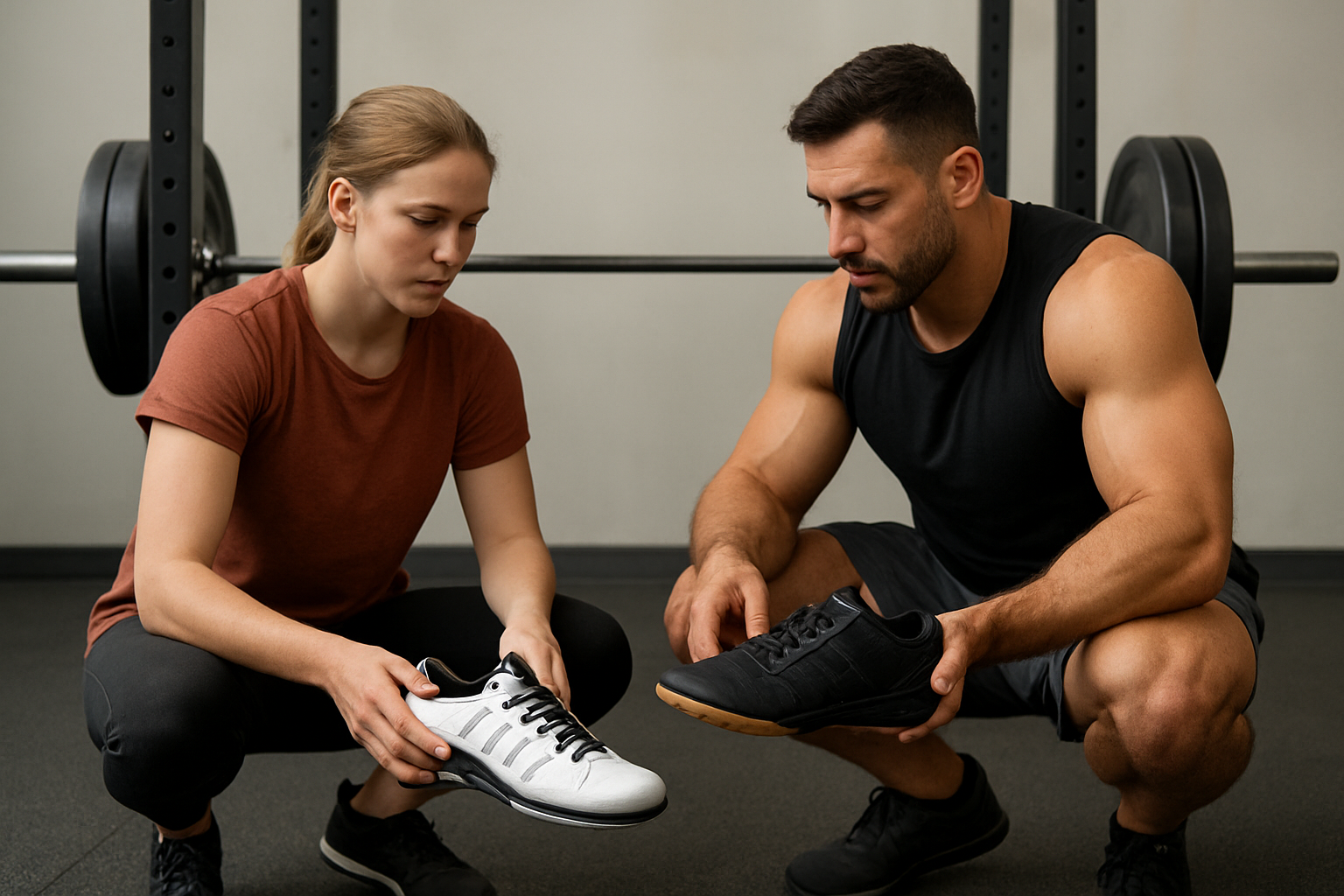
1. Decide whether squat shoes solve your actual problem
Squat shoes do not automatically make a squat stronger or safer. Their main purpose is to provide a firm base and change the ankle-to-floor relationship through a raised heel. That can make it easier for some lifters to reach depth while keeping the torso more upright.
A review of the available literature found that weightlifting shoes generally reduce trunk lean and increase plantarflexion compared with running shoes or barefoot lifting, although research is still limited for beginners and different lifting populations. A recent controlled study on heel elevation also examined how different heel heights affect loaded-squat mechanics in people with restricted ankle dorsiflexion. These findings support using heel elevation as a tool, not as a universal requirement.
Consider squat shoes if:
- Your heels lift during a properly controlled squat.
- You struggle to reach your target depth without excessive forward lean.
- You train Olympic lifts and need a firm, predictable platform.
- Soft running shoes make heavy squats feel unstable.
You may prefer flat, hard-soled shoes if you deadlift frequently, use a low-bar powerlifting stance, or want one pair for several strength exercises. For a deeper explanation of exercise selection, see our guide to free weights versus machines for muscle building.
2. Compare the features that affect squat performance
Heel height
Heel height is usually listed as effective heel height or heel-to-toe drop. Common lifting shoes fall roughly into the 15–22 mm range, while some models sit outside that range. A moderate heel is often the most adaptable starting point because it offers a noticeable change without placing you in an unusually high position.
A higher heel may help when ankle mobility limits depth, but it also changes knee travel, balance, and the feeling of the bottom position. Do not select the highest heel simply because it promises a more upright torso. Your proportions, stance, bar position, and mobility all influence the result.
Sole stiffness and platform width
A squat shoe should resist compression under load. Foam-heavy running shoes can feel comfortable for walking but may reduce your sense of contact with the floor during a heavy squat. Look for a rigid midsole or heel construction and an outsole with dependable traction.
A reasonably wide base can improve confidence, especially if you squat with a moderate-to-wide stance. The shoe should not force your toes inward or make the outer edge of your foot hang over the platform.
Closure and upper support
Laces adjust pressure across the foot, while a strap or dial closure can add midfoot security. A strap is useful when the shoe fits well but your foot still moves inside it. It cannot compensate for an incorrect size or a narrow toe box.
Check whether the upper bends enough for your preferred lifting style. Olympic lifters may want a secure shoe that still allows normal foot movement during the receiving position; general squatters can prioritize lockdown and comfort.
For examples of how current models list heel height, sole construction, and closure details, compare the specifications in Rogue’s weightlifting-shoe category rather than judging from product photos alone.
Use this comparison table before choosing a model:
| What to look for | Why it matters | Warning sign |
|---|---|---|
| Published heel height | Lets you compare models and match the shoe to your mobility and squat style | The brand gives no meaningful heel measurement |
| Rigid, non-compressible sole | Creates a predictable base for force transfer | The shoe feels soft or folds under pressure |
| Secure midfoot closure | Reduces foot movement inside the shoe | Your heel slips even when tightly laced |
| Enough forefoot width | Allows the toes to spread and maintain balance | Numbness, pressure, or curled toes |
| Traction on the outsole | Helps maintain contact with the platform | The outsole feels slippery on your gym floor |
| Clear return policy | Useful because fit varies by brand and foot shape | Returns are restricted after indoor fitting |
3. Choose heel height by movement, not by experience level
Beginners do not automatically need a lower heel, and advanced lifters do not automatically need a higher one. Experience changes your ability to evaluate a shoe, but it does not determine your anatomy.
- Moderate elevation, around 15–18 mm: A sensible starting point for general strength training, especially if you want some assistance without a dramatic change in position.
- Raised elevation, around 19–22 mm: Often worth considering for Olympic lifting, a very upright squat, or clearly restricted ankle dorsiflexion.
- Flat or minimal shoes: Better suited to lifters who prefer a grounded feel, deadlift often, or can reach depth with stable foot pressure.
Test the movement with light loads first. Record a side-view set in your normal stance, then compare heel-down control, depth, knee tracking, and torso position. A shoe is useful when it improves the position you can repeat—not merely when it makes the first rep feel different.
4. Get the fit right before judging the shoe
Measure your feet at the end of the day while wearing the socks you normally train in. Compare both length and width with the brand’s size chart, and prioritize the larger foot if there is a small difference.
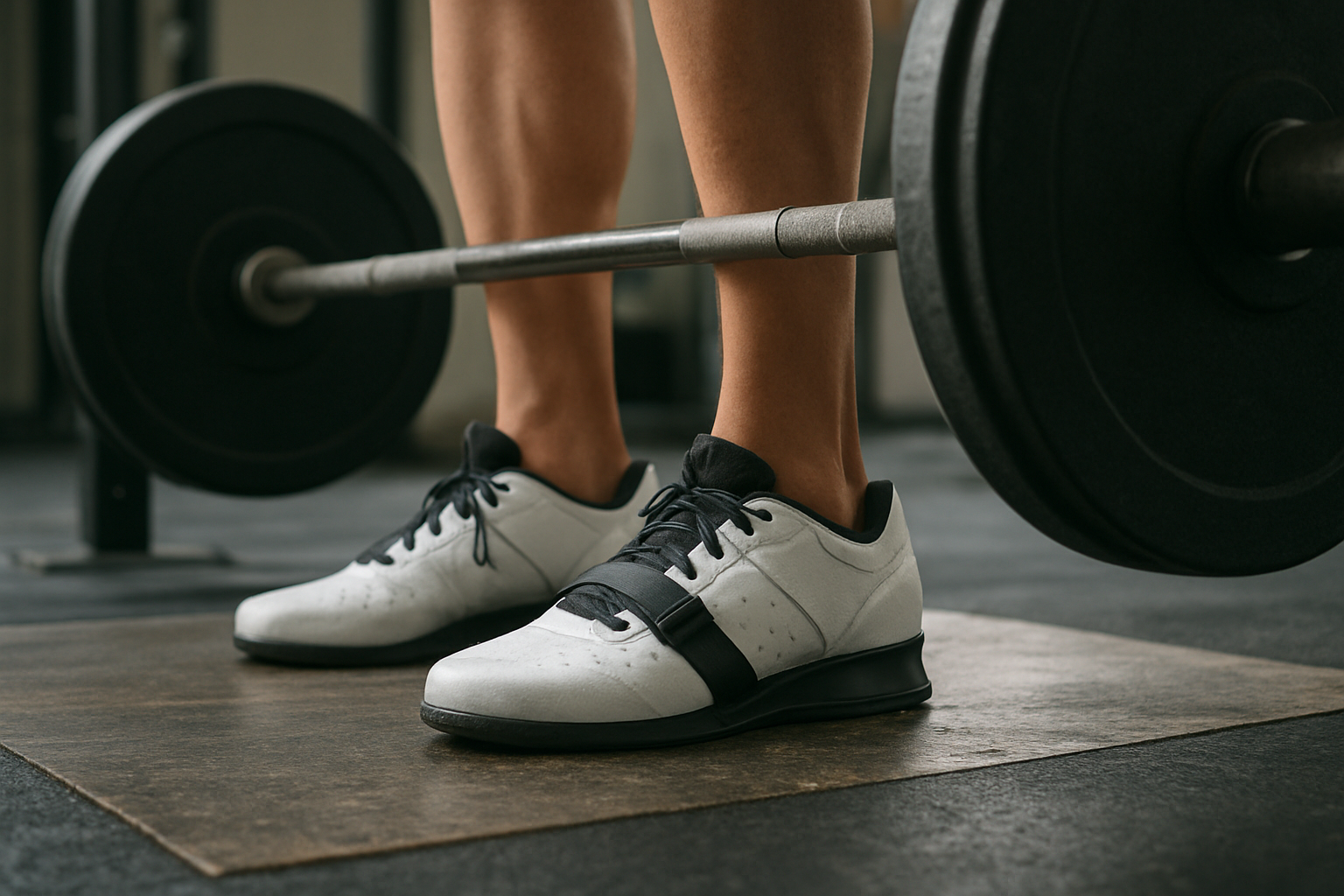
Your heel should remain planted during the descent and ascent. The midfoot should feel held without painful pressure, while the toes should have enough space to spread. Avoid sizing down for a “locked-in” feel; a cramped forefoot can distract you and make stable foot pressure harder.
If possible, try the shoes indoors on a hard surface. Perform an unloaded squat, a paused squat, and a few controlled warm-up sets. Check the return conditions before removing labels or training outdoors.
5. Understand the main strengths and limitations
Potential strengths
- More consistent contact with the floor than soft running shoes.
- A heel position that may make depth and an upright torso easier to achieve.
- Better support for Olympic lifting and front-squat positions.
- Less foot movement inside the shoe during heavy sets.
Important limitations
- They do not replace ankle, hip, or thoracic-mobility work.
- The raised heel may feel awkward for deadlifts or other pulling exercises.
- They are usually less versatile than stable cross-training or flat lifting shoes.
- A shoe can hide a technical issue without correcting its underlying cause.
Use professional coaching or a qualified physical therapist if you have persistent pain, repeated loss of balance, swelling, numbness, or a major side-to-side difference. Do not increase load simply because a new shoe makes the position feel easier.
6. Consider alternatives and total value
A dedicated pair is not the only way to experiment with heel elevation. Temporary squat wedges or firm inserts can help you assess whether a raised heel changes your movement, although they may not provide the same stability or fit as a purpose-built shoe.
Flat, hard-soled shoes are often the better value for lifters who split their training between squats, deadlifts, presses, and accessories. Cross-training shoes may work for lighter sessions, but inspect the sole for compression before using them for heavy barbell work.
Prices and availability change by brand, size, and region, so compare the current manufacturer or retailer price with the return policy, warranty terms, and expected use. A cheaper shoe that fits poorly is not a saving if you cannot train comfortably in it.
7. Avoid these common buying mistakes
- Buying the highest heel without checking your squat mechanics.
- Choosing a size based only on your everyday sneaker size.
- Using running shoes for heavy squats because they feel comfortable.
- Assuming a strap can fix heel slip or an overly narrow shoe.
- Expecting footwear to correct pain, poor bracing, or inconsistent technique.
- Ignoring whether you also need the shoes for deadlifts or general gym work.
8. What if the shoes do not feel better?
If you feel pushed onto your toes
Check your stance and foot pressure first. If the sensation remains, the heel may be too high for your preferred squat or current control. Try a lower-heel model or return to a stable flat shoe.
If your heels still rise
Confirm that the shoe is fully tightened and that your foot is not sliding forward. If the problem continues, assess ankle mobility and squat technique rather than automatically buying a taller shoe.
If your knees or hips hurt
Stop the set and reduce the load while you review technique, range of motion, and training volume. Persistent or worsening pain deserves assessment from an appropriately qualified healthcare professional.
9. Squat-shoe buying checklist and next actions
- Film a light squat set in your current shoes.
- Identify whether the main issue is heel lift, forward lean, foot movement, or discomfort.
- Choose a heel range based on that issue and your main lifts.
- Measure both feet and compare the manufacturer’s size chart.
- Confirm the return policy before ordering.
- Test the shoes indoors with unloaded and light barbell movements.
- Keep them for squats and Olympic lifts if they help; use flatter shoes for deadlifts when appropriate.
If you are building a broader home setup, our reviews of home gym accessories for beginners and adjustable dumbbells for strength training can help you prioritize equipment beyond footwear.
Final verdict: who should buy squat shoes?
Squat shoes are a worthwhile purchase when a firm platform and moderate heel elevation address a clearly observed limitation in your squat or Olympic-lifting position. They are less necessary when you already squat comfortably in stable flat shoes or need one versatile pair for every exercise.
The best choice in this squat shoes review for beginners and lifters is therefore conditional: begin with fit, sole stability, and a measured heel height, then judge the shoe by repeatable movement quality rather than appearance, price, or claims of automatic performance improvement.
Frequently asked questions
Can beginners wear squat shoes?
Yes. Beginners can use them if the fit is secure and the shoe supports the movement they are learning. Start with light loads so you can adapt to the altered balance and heel position.
Are squat shoes good for deadlifts?
Usually not ideal. The raised heel increases the distance and changes the starting position, so many lifters prefer flat, firm shoes for deadlifting.
Do squat shoes improve ankle mobility?
No. They reduce the ankle range needed to reach a particular squat position, but they do not permanently increase mobility. Continue addressing mobility and technique where appropriate.