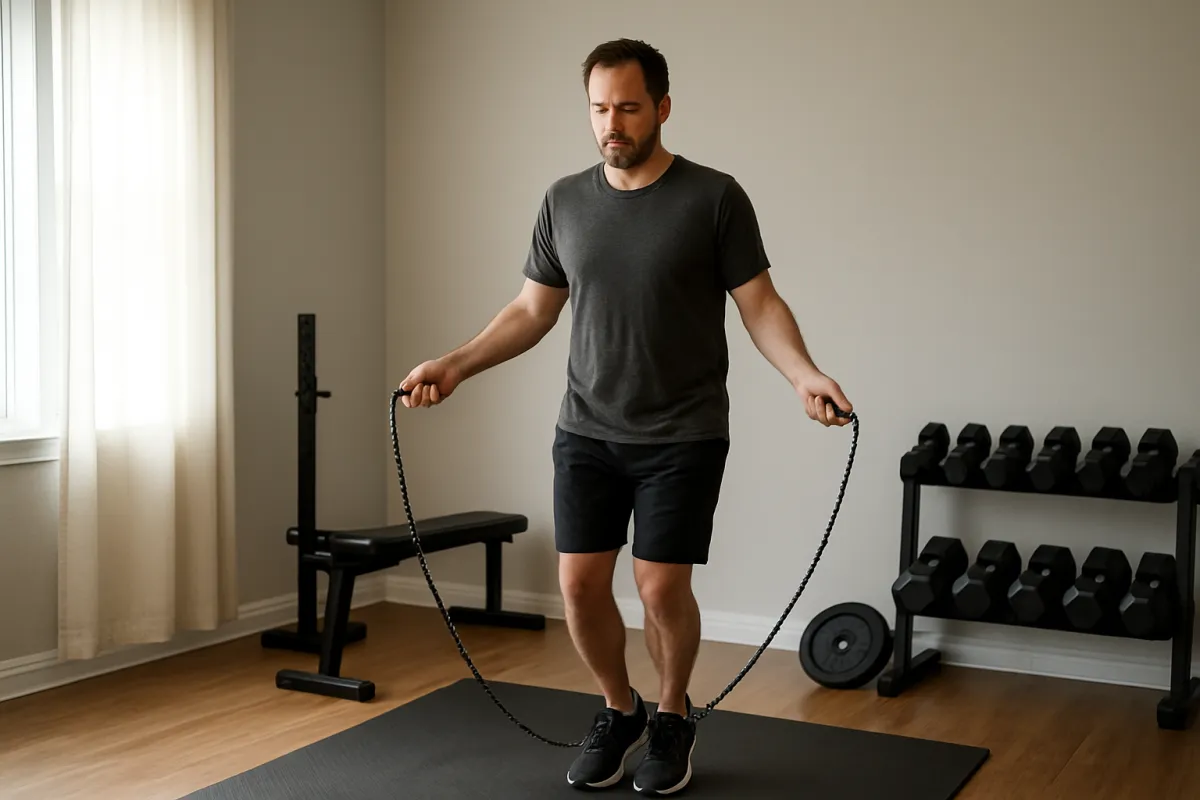
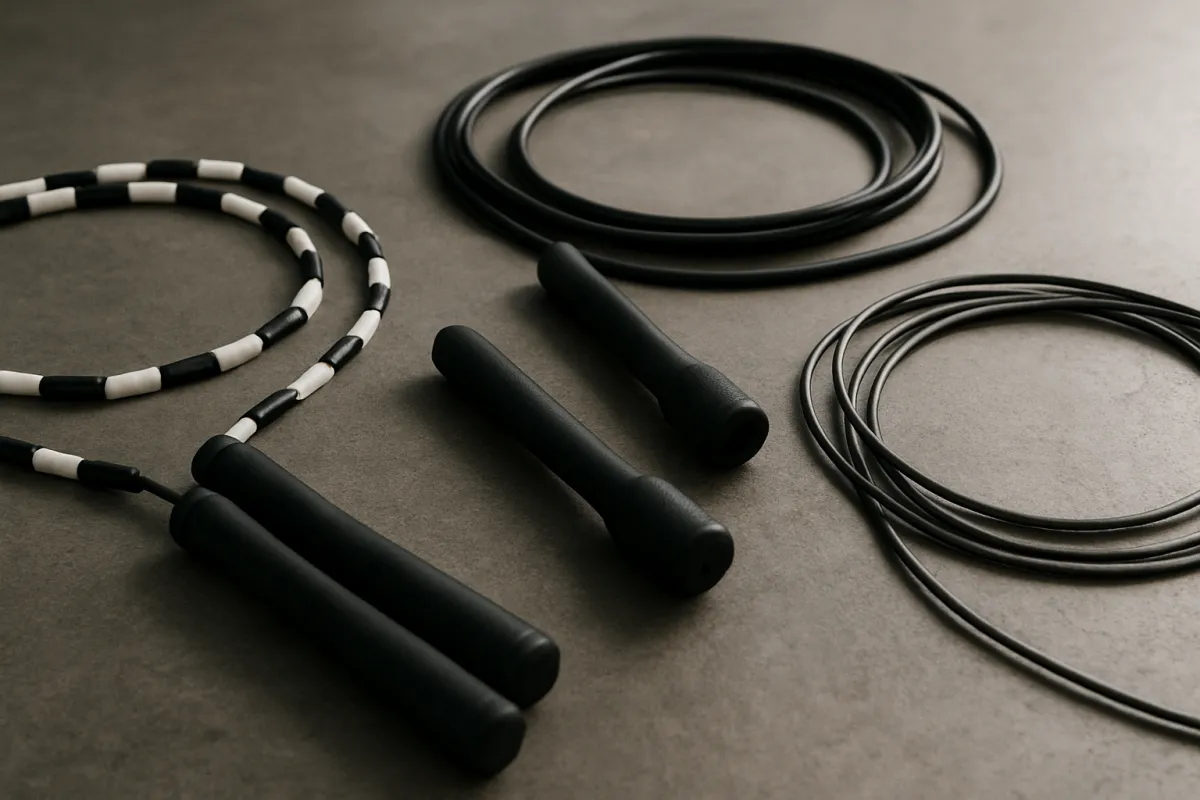
The best jump rope for beginners is usually an adjustable or correctly sized beaded rope that gives you enough feedback to learn timing. For most new users, the Rogue Beaded Jump Rope is the simplest starting point; choose the Crossrope Starter Set if you want a more substantial weighted rope and room to progress.
A jump rope can be inexpensive, portable, and effective, but the wrong length or rope style can make basic practice unnecessarily frustrating. This guide compares beginner-friendly options by rope feedback, sizing, handle comfort, surface compatibility, adjustability, and likely progression path.
1. Decide what you need from a beginner jump rope
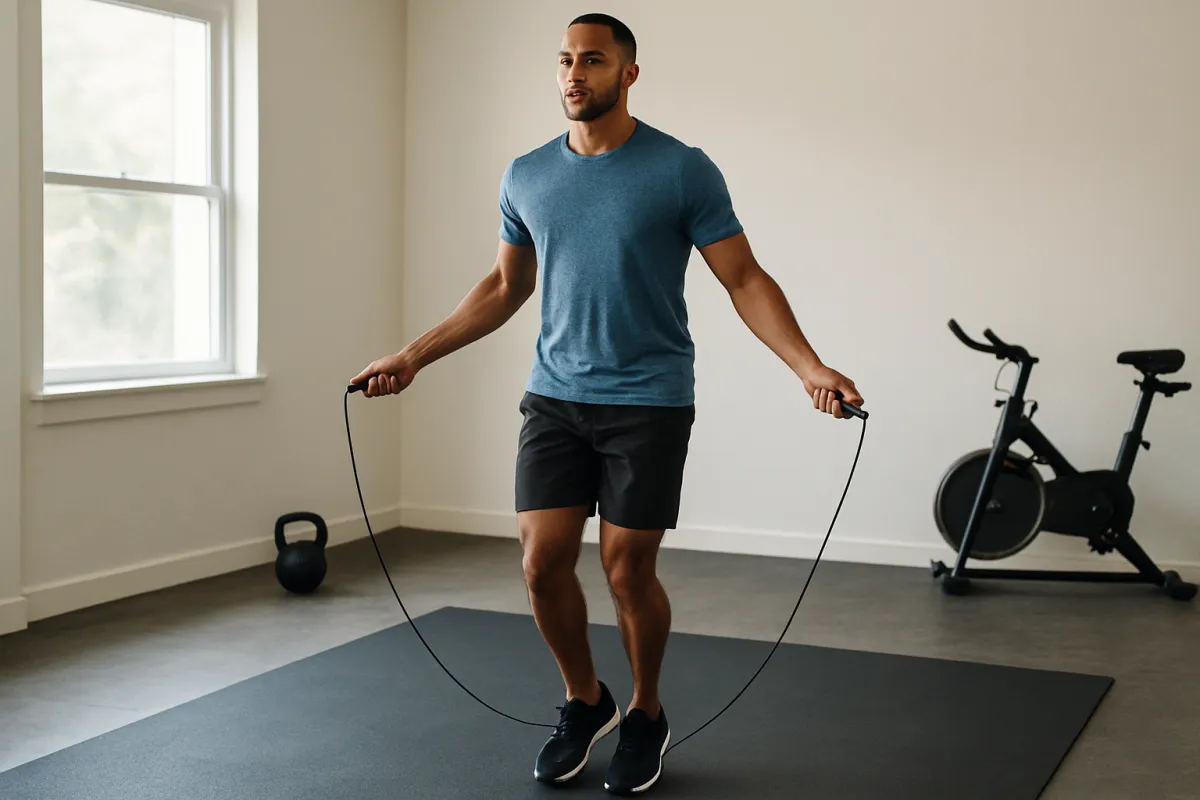
“Beginner” can mean several different things. You may be learning your first basic jumps, returning to exercise after a long break, trying short cardio intervals, or hoping to progress toward faster footwork and double-unders. Those goals do not require exactly the same rope.
- For first-time learning: prioritize visible rope feedback, moderate weight, and a forgiving length.
- For general cardio: look for comfortable handles, smooth rotation, and easy length adjustment.
- For outdoor use: choose a rope designed for tougher surfaces, but still use a mat when possible.
- For future speed work: consider a modular or replaceable-cable design rather than an ultra-cheap fixed rope.
- For joint-sensitive training: focus on flooring, shoes, gradual volume, and low jumps instead of buying the heaviest rope.
Rope construction matters because it changes how easily you can feel the rope turning. Beaded ropes tend to provide more audible and physical feedback, while thin speed cables rotate quickly but can be harder to control when you are still learning the rhythm.
2. How we selected the best jump ropes for beginners
This ranking emphasizes practical beginner criteria rather than maximum speed. Product specifications and manufacturer descriptions can change, so check the current size chart and included components before ordering.
| What to look for | Why it helps beginners | Warning sign |
|---|---|---|
| Correct or adjustable length | Reduces trips caused by a rope that is too short or excessively long | One fixed length with no usable size guidance |
| Moderate rope feedback | Helps you hear and feel the rotation | Very thin cable with little feedback during early practice |
| Comfortable, secure handles | Makes short sessions easier to repeat | Handles that spin in your hands or feel too bulky |
| Suitable surface guidance | Helps prevent premature rope and floor wear | Using a plastic or coated rope repeatedly on rough concrete |
| Simple setup | Lets you start training instead of troubleshooting hardware | Complicated adjustment with no clear instructions |
| Replaceable rope or cable | Can extend the useful life of the handles | A worn rope requires replacing the entire system |
For sizing, Nike gives a useful beginner rule of thumb: a rope about three feet taller than your height is a starting point, while a standing check should place the cable ends near the sternum or armpits. Crossrope also advises beginners who fall between sizes to select the larger option for more room to correct mistakes. See the Nike jump-rope sizing guide and the Crossrope size chart before trimming or ordering.
3. Best jump ropes for beginners: ranked picks
1. Rogue Beaded Jump Rope — Best overall for learning basic timing
Best for: first-time jumpers who want clear rhythm feedback and a straightforward design.
The Rogue Beaded Jump Rope is the strongest all-around starting point when your main challenge is learning when to jump. Its plastic beads add noticeable weight and sound as the rope travels, which can make the rotation easier to understand than an almost weightless speed cable. Rogue describes it as a warm-up and beginner rope, with lengths available for different user sizes. ([roguefitness.com](https://www.roguefitness.com/rogue-beaded-jump-ropes?utm_source=openai))
The design is also relatively easy to evaluate: you select the cable length, use the color-coded beads to identify sizes, and practice on a rubber or nonabrasive surface. That surface limitation is important. Repeated concrete use can wear the rope and may make the rope feel rougher during rotation.
- Strengths: clear feedback, simple learning curve, multiple length choices, modest equipment complexity.
- Limitations: not the best choice for high-speed work; beads may feel noisy indoors; length selection must still be accurate.
Choose it if: you want to learn basic jumps, boxer steps, and consistent rhythm before worrying about speed.
2. Crossrope Starter Jump Rope Set — Best for progression and weighted training
Best for: beginners who want a more substantial rope and expect to continue using jump rope for cardio or interval training.
The Crossrope Starter Set combines handles with a 1/4-pound rope and a connection system that allows compatible ropes to be changed. The company positions the starter rope for cardio and HIIT, and its weighted design is intended to make the rope easier to feel while learning. ([crossrope.com](https://www.crossrope.com/products/starter-jump-rope-set/?utm_source=openai))
This is a more expandable option than a basic playground-style rope. That can be useful if you want to begin with a manageable rope and later add resistance, but the extra cost and modular features may be unnecessary if you are unsure whether you will enjoy jumping.
Crossrope provides height-based sizing and recommends choosing the larger size when a beginner falls between two options. It also lists a 60-day return period and a lifetime handle warranty on the product page; verify the current terms before buying because policies can change. ([crossrope.com](https://www.crossrope.com/products/starter-jump-rope-set/?utm_source=openai))
- Strengths: noticeable rope feel, modular design, useful for cardio and interval workouts, clear sizing guidance.
- Limitations: higher upfront cost; a weighted rope is not automatically better for everyone; the system may be more equipment than a casual user needs.
Choose it if: you want one beginner system that can support regular home workouts and later progression.
3. Decathlon Jump Rope 100 — Best budget-friendly adjustable option
Best for: beginners who want basic adjustability and a low-commitment way to try jump-rope cardio.
Decathlon’s Jump Rope 100 is listed as a beginner model with adjustable length. That combination is useful when more than one person may use the rope or when you are not yet confident about sizing. ([decathlon.ca](https://www.decathlon.ca/en/p/jump-rope-100/309765/c1c1m8974822?utm_source=openai))
A budget rope can be a sensible first purchase if your main goal is short indoor sessions rather than advanced skill work. Check the adjustment mechanism carefully, secure excess rope as instructed, and avoid assuming that a lower price means the rope will tolerate every outdoor surface.
- Strengths: accessible starting point, adjustable length, suitable for testing whether jump rope fits your routine.
- Limitations: likely less specialized for speed progression than a modular training system; product availability and regional specifications may vary.
Choose it if: you want a simple, adjustable rope without making a large equipment investment.
4. Rogue Licorice Jump Rope — Best simple low-cost rope for casual use
Best for: users who already understand basic jumping and want a compact, uncomplicated rope.
The Rogue catalog lists the Licorice Jump Rope as a basic, low-cost rope. Its appeal is simplicity: there are fewer features to manage, and it can work well as a lightweight option for warm-ups or occasional cardio. ([roguefitness.com](https://www.roguefitness.com/conditioning/jump-ropes?utm_source=openai))
It ranks below the beaded rope for a complete beginner because lightweight ropes can provide less feedback. If you are still missing the rope frequently, the issue may be timing rather than fitness, and a rope with more visible rotation may be easier to learn with.
- Strengths: simple, portable, appropriate for basic warm-ups and casual sessions.
- Limitations: less forgiving for someone who has never jumped rope; confirm length options before ordering.
Choose it if: you prefer a minimal rope and are comfortable practicing without much tactile feedback.
5. A replaceable-cable speed rope — Best for beginners with a clear speed-training goal
Best for: new users who specifically want to learn faster rotations or eventually practice double-unders.
A speed rope is not my default recommendation for a first-ever jump rope, but it can make sense when your training goal is clearly speed-based. Rogue’s jump-rope range includes bearing and bushing speed ropes, replacement cables, and adjustable components. ([roguefitness.com](https://www.roguefitness.com/conditioning/jump-ropes?utm_source=openai))
Thin cables can rotate quickly, but they usually provide less feedback and punish poor spacing more quickly than a beaded rope. Start with basic single jumps and relaxed wrists; do not treat a speed rope as a shortcut to advanced technique.
- Strengths: supports future speed work, often offers replaceable cables, compact and quick to rotate.
- Limitations: steeper learning curve, less forgiving after a miss, poor choice for abrasive outdoor surfaces unless the product specifically supports them.
Choose it if: you have a specific double-under or fast-footwork goal and are prepared to spend time developing control.
4. Choose the right rope length before you start
Length is one of the most common reasons a new jumper struggles. Stand on the center of the rope with both feet, pull the handles upward while keeping the cable taut, and check where the cable ends reach. For a beginner, a position around the lower chest to armpit area is a practical starting point.
A rope that is too long may slap the floor far in front of you, slow the rotation, and encourage wide arm movements. A rope that is too short may pass behind your feet before you have enough time to jump. Neither problem is solved reliably by jumping higher.
Keep your hands slightly in front of your hips, turn the rope with your wrists, and use a small, quiet bounce. Nike also notes that thinner ropes favor speed while thicker ropes generally offer more durability, particularly when surface conditions are demanding. ([nike.com](https://www.nike.com/a/jump-rope-size-length?utm_source=openai))
5. Match the rope to your training surface
Indoor rubber flooring, gym mats, and smooth sealed surfaces are usually more appropriate than rough concrete. A mat can reduce impact and protect the rope, but it should not be so soft that your feet sink or your landing becomes unstable.
- Best starting surface: rubber gym flooring or a firm jump-rope mat.
- Acceptable with care: smooth wood or sealed indoor flooring, if permitted and not slippery.
- Use caution: asphalt and concrete, especially with thin plastic or coated cables.
- Avoid: wet, uneven, loose gravel, or highly abrasive surfaces.
Surface choice affects more than equipment life. If your landing surface is hard or unpredictable, reduce session length and focus on controlled technique. Stop if you develop sharp pain rather than normal exertion or mild muscle fatigue.
6. Start with a beginner practice plan
You do not need long continuous sessions at first. Begin with technique practice that lets you repeat good jumps without losing posture.
- Practice turning the rope beside your body without jumping.
- Perform small two-foot jumps with the rope, aiming for quiet landings.
- Use short intervals such as 10 to 20 seconds of jumping followed by rest.
- Progress to alternating-foot steps once basic timing feels consistent.
- Increase total time gradually rather than trying to jump continuously on day one.
Keep the jump low enough that the rope barely clears your feet. Excessive height increases fatigue and often makes timing less consistent. If you are also building general upper-body strength, you may find the progression ideas in this home push-up strength plan useful for balancing your routine.
7. Common mistakes when buying a beginner jump rope
- Buying the shortest rope immediately: advanced jumpers may prefer compact lengths, but beginners usually need more room for error.
- Choosing a speed rope because it looks advanced: faster rotation does not replace basic timing.
- Ignoring handle comfort: a rope that causes your grip to tense can make short sessions feel harder than necessary.
- Using any rope on concrete: check the manufacturer’s surface guidance and use a mat when possible.
- Assuming weighted means more effective: added resistance changes the feel and can increase fatigue; it is not automatically appropriate for every new jumper.
- Judging progress by uninterrupted minutes: consistent short intervals are often more useful than forcing a long set with repeated misses.
- Blaming the rope for every miss: check hand position, jump height, cadence, and flooring before replacing equipment.
8. What if the rope keeps hitting your feet?
First, check length. If the cable barely reaches the floor in front of you or consistently catches behind your heels, it may be too short. If it lands far ahead of your body, it may be too long or you may be holding your hands too wide.
Next, practice without trying to go fast. Turn the rope slowly, keep your elbows near your sides, and jump only slightly higher than the rope requires. A beaded or moderately weighted rope can help you feel the rotation, while a thin speed cable may be better saved for later.
If jumping causes persistent joint pain, swelling, chest symptoms, dizziness, or pain that changes your movement, stop and seek appropriate medical advice. People returning from injury or managing a condition that affects balance should ask a qualified clinician how to modify impact-based exercise.
9. Beginner jump-rope buying checklist
- Have you measured your height and checked the manufacturer’s size chart?
- Can the rope be adjusted, or is the selected fixed length appropriate?
- Will you mainly train indoors, outdoors, or in both locations?
- Do you need clear feedback for learning, or is speed your immediate goal?
- Are the handles comfortable enough for repeated short sessions?
- Can the cable or rope be replaced if it wears out?
- Do you have a firm, reasonably forgiving practice surface?
- Will the rope be used by one person or several people with different heights?
10. Final recommendation by scenario
For most complete beginners: start with the Rogue Beaded Jump Rope because its added rope feedback makes timing easier to understand.
For a beginner who wants long-term progression: choose the Crossrope Starter Set if its modular design and higher cost fit your budget.
For an inexpensive first attempt: choose an adjustable model such as the Decathlon Jump Rope 100, then reassess after you have completed several short sessions.
For casual warm-ups: a simple lightweight rope such as the Rogue Licorice Jump Rope may be enough.
For future double-unders or speed work: use a replaceable-cable speed rope, but expect to spend time learning basic rhythm first.
The best jump ropes for beginners are not necessarily the fastest or most expensive. Pick the rope that matches your immediate learning goal, size it carefully, use a suitable surface, and build practice volume gradually. For broader home-cardio ideas, compare it with exercise bikes for home workouts, rowing machines for a home gym, or the space-saving options in this small-space equipment guide.
Useful references: Review the Nike rope-sizing guidance, the Rogue beaded-rope specifications, the Crossrope beginner technique guide, and Decathlon’s rope-use guidance before training.