The best rowing machine for your home gym is the one that matches how you will train, where you will store it, and how much technology you actually need. For most buyers, a dependable air rower is the safest starting point; water, magnetic, and connected rowers make more sense in specific situations.
This guide is based on manufacturer specifications and support information, established exercise guidance, and practical comparison criteria rather than personal product testing. It will help you compare resistance types, monitor features, storage needs, comfort, maintenance, and long-term value before you buy.
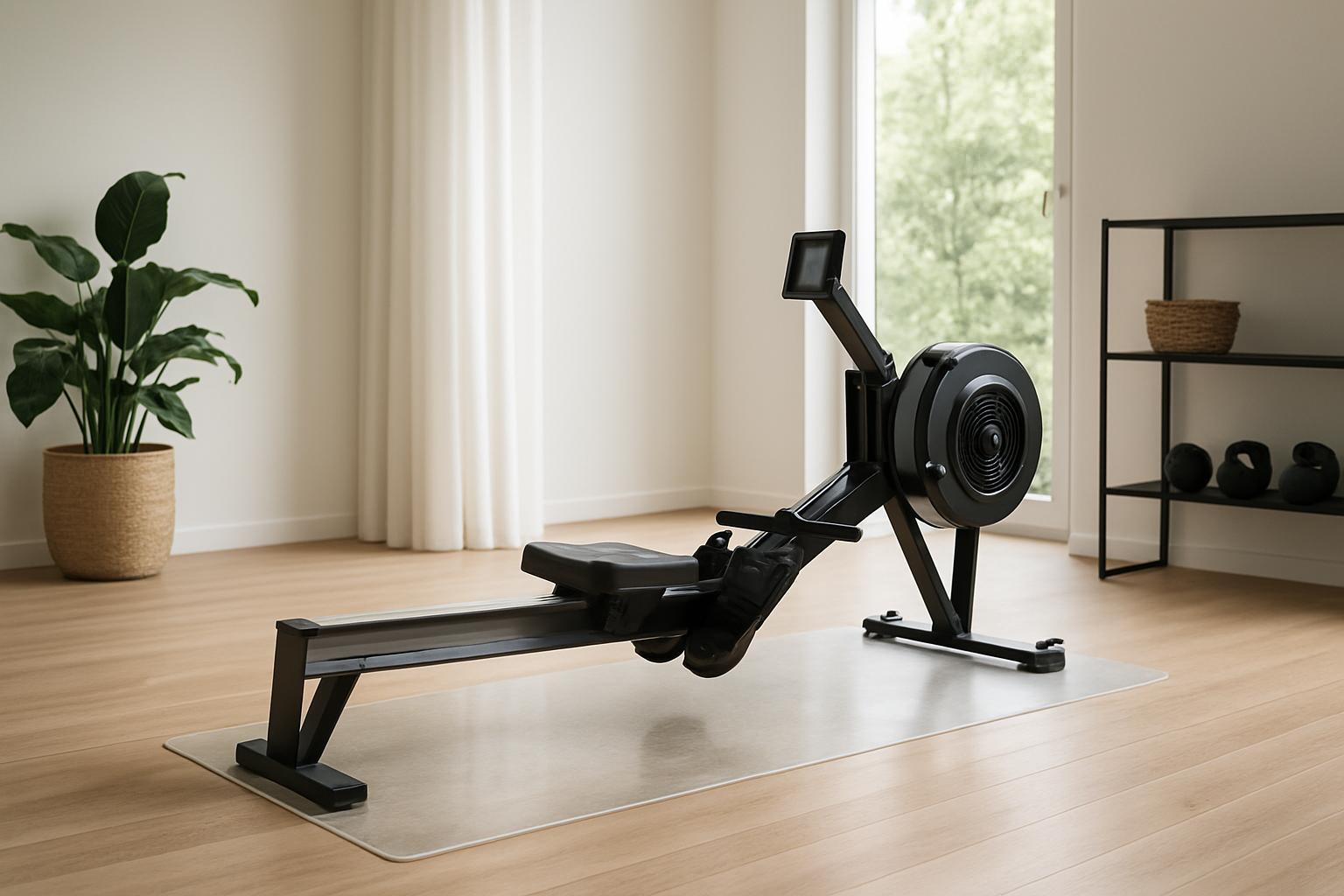
1. Define what you need from a home rowing machine
Before comparing models, decide what “best” means for you. A competitive rower may prioritize accurate performance data and a strong drive system, while a casual user may care more about quiet operation, simple storage, and a comfortable seat.
- Primary goal: general fitness, weight management, rowing performance, interval training, or low-impact cardio.
- Training style: structured workouts, live classes, occasional steady-state sessions, or shared family use.
- Available space: measure both the footprint in use and the height, length, and clearance required during storage.
- User fit: check the rail length, seat travel, handle position, footplate adjustment, and maximum user weight in the current specification sheet.
Rowing is a low-impact activity, but it is not automatically suitable for every back, hip, or knee problem. Consumer Reports notes that people with lower-back issues may find rowing uncomfortable, and beginners benefit from learning the stroke before training hard. If you have persistent pain, recent surgery, or a diagnosed condition, ask a qualified clinician whether rowing is appropriate.
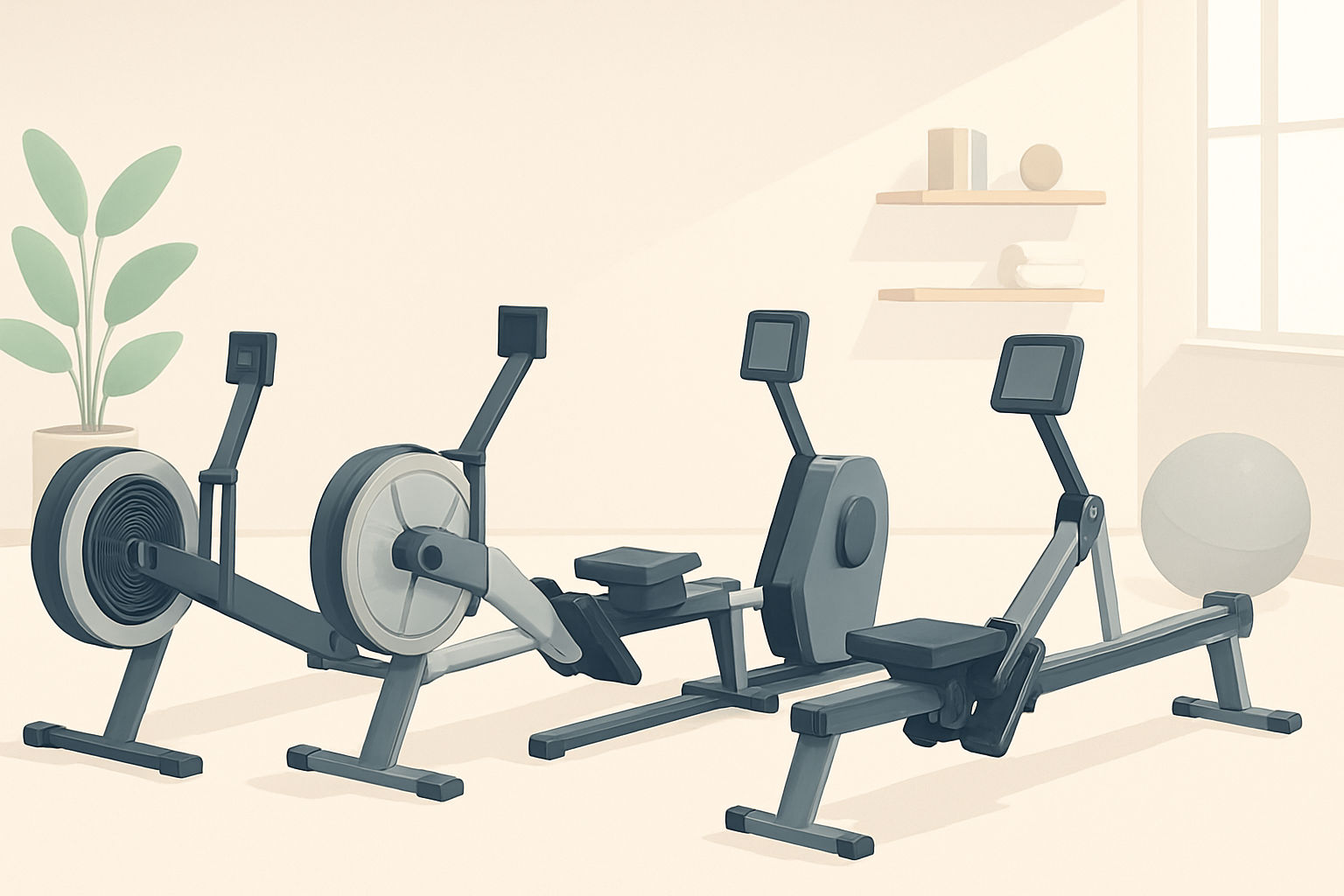
2. Compare resistance types before comparing brands
Resistance changes the feel, sound, maintenance, and training potential of a rower. No resistance type is universally superior; the right choice depends on your priorities.
| Resistance type | What to look for | Strengths | Warning sign |
|---|---|---|---|
| Air | Responsive flywheel, useful monitor, stable frame | Natural resistance that increases as you row harder; well suited to intervals and performance tracking | You may underestimate the noise and airflow in a small room |
| Water | Secure tank, smooth seat, clear maintenance instructions | Fluid stroke feel and often a quieter, visually appealing design | Tank care, water treatment, and upright storage may require extra attention |
| Magnetic | Wide resistance range, quiet rail, reliable electronics | Usually quieter and easier to use in apartments or shared spaces | Some inexpensive models feel short, light, or inconsistent at higher effort |
| Connected or hybrid | Screen quality, software compatibility, warranty, offline functionality | Coaching, demonstrations, saved workouts, and motivation features | Ongoing membership costs or limited functionality without an internet connection |
Air resistance is commonly preferred for measurable training because effort responds directly to stroke power. The Concept2 RowErg specifications and support materials are useful examples of the type of technical information to inspect, including monitor compatibility, frame options, and maintenance documentation.
3. Judge the frame, rail, and moving parts
Stability matters more than appearance
A rower should remain planted when you drive through the footplates. Look for a rigid frame, a wide enough base, secure footrests, and a seat that does not wobble or bind. A lightweight machine can be convenient to move, but an overly light frame may feel unstable during hard intervals.
Check the full stroke length
Short rails can restrict taller users and change the rowing motion. Do not rely only on a general height recommendation. Look for the seat-travel measurement, read the manufacturer’s user-fit guidance, and consider whether more than one person will use the machine.
Inspect comfort and adjustment points
- The seat should support you without forcing excessive pressure on the tailbone.
- Footplates should adjust securely and allow your feet to remain stable.
- The handle should be easy to grip without excessive wrist bending.
- The chain, strap, or cord should return smoothly without scraping or hesitation.
These details are easy to overlook in photographs. If possible, try a rower at a gym or showroom first, especially if you are unsure whether you enjoy the movement.
4. Evaluate the monitor and training data
A basic monitor may be enough if you only need elapsed time, strokes, and distance. Serious training benefits from clearer data such as pace, stroke rate, interval settings, and workout history.
Prioritize data that you will actually use. A simple display with reliable metrics can be more useful than a large touchscreen that adds cost but does not improve your consistency. Also check whether the monitor works without a subscription, supports external heart-rate equipment, and can export or sync workouts if that matters to you.
For technique guidance, the American Council on Exercise describes the stroke as four phases: catch, drive, finish, and recovery. Its rowing guidance emphasizes driving with the legs and maintaining the correct sequence rather than treating the exercise as an arm-pulling movement. That makes beginner instruction and form feedback valuable, regardless of the machine you choose.
5. Account for noise, storage, and maintenance
Noise is often the deciding factor in a shared home. Air rowers produce flywheel sound and airflow, water rowers create tank noise, and magnetic models are generally the quietest of the main categories. “Quiet” does not mean silent: the seat rollers, foot straps, and frame can still create sound.
Confirm how the machine stores before purchase. Some models separate into two pieces, while others stand upright or fold. Measure doorways, ceiling height, and the storage path—not just the location where you plan to exercise.
Maintenance usually includes wiping the rail, checking fasteners, inspecting the chain or strap, and keeping the seat rollers clean. Water models may require additional tank care. Use the manufacturer’s manual rather than assuming that all rowers need the same service schedule; the WaterRower support resources illustrate why maintenance and storage instructions should be reviewed before buying.
6. Decide whether connected training is worth it
Connected rowers can help if coaching, scheduled classes, and visual feedback make you more likely to train. They are less attractive if you prefer independent workouts or do not want recurring software costs.
Read the subscription terms carefully. Check what remains available after cancellation, whether the screen requires an account, whether basic rowing metrics work offline, and whether the service supports multiple household users. A connected platform should support a routine you can sustain, not replace one.
For example, the Hydrow platform information can help you identify the types of coached and app-based features offered by a connected rower. Treat those features as a separate value decision from the frame and resistance system.
7. Match the machine to your training scenario
- Best for structured performance training: a durable air rower with dependable pace and interval data.
- Best for a quieter apartment setup: a magnetic rower, provided the rail length and frame stability are adequate.
- Best for design-conscious spaces: a water rower, if you are comfortable with tank maintenance and storage requirements.
- Best for motivation through coaching: a connected rower with transparent membership terms.
- Best for occasional cardio: a simpler model with a comfortable seat, stable footplates, and a readable monitor.
If rowing is only one part of your home cardio plan, compare it with other equipment. Our guides to exercise bikes and treadmills versus ellipticals can help you decide which movement you are most likely to use regularly.
8. Avoid these common buying mistakes
- Choosing by discount price without checking warranty coverage and replacement-part availability.
- Buying a short or unstable machine because its folded dimensions look convenient.
- Assuming a higher resistance setting automatically produces a better workout.
- Ignoring noise until after delivery.
- Paying for a screen or membership that you are unlikely to use.
- Skipping technique instruction and then rowing hard with a rounded lower back.
Actionable buying checklist
- Measure the workout area, storage area, doorways, and ceiling clearance.
- Confirm rail length, user-weight limit, footplate range, and seat travel.
- Choose air, water, magnetic, or connected resistance based on your actual routine.
- Review monitor features, app requirements, subscription terms, and offline use.
- Read the warranty, return policy, assembly instructions, and maintenance schedule.
- Try a rowing machine if possible before making a large purchase.
What if the machine feels uncomfortable?
First reduce the pace and focus on the sequence: legs push, torso opens, then arms finish the stroke; on recovery, reverse that order. Check the footplate setting and avoid pulling the handle high toward your neck. If discomfort persists, stop and seek instruction from a qualified coach or healthcare professional rather than trying to row through pain.
Next actions before you buy
Write down your main goal, available floor space, noise limit, and maximum total budget—including possible subscriptions and accessories. Then shortlist one model from the resistance category that best fits those constraints and compare its current official specifications, warranty, return terms, and service documentation.
Bottom line: The best rowing machines for home gym reviews should help you identify a suitable design, not just a popular name. Choose the simplest rower that gives you a stable full stroke, usable performance data, manageable noise, and a training experience you will return to consistently.