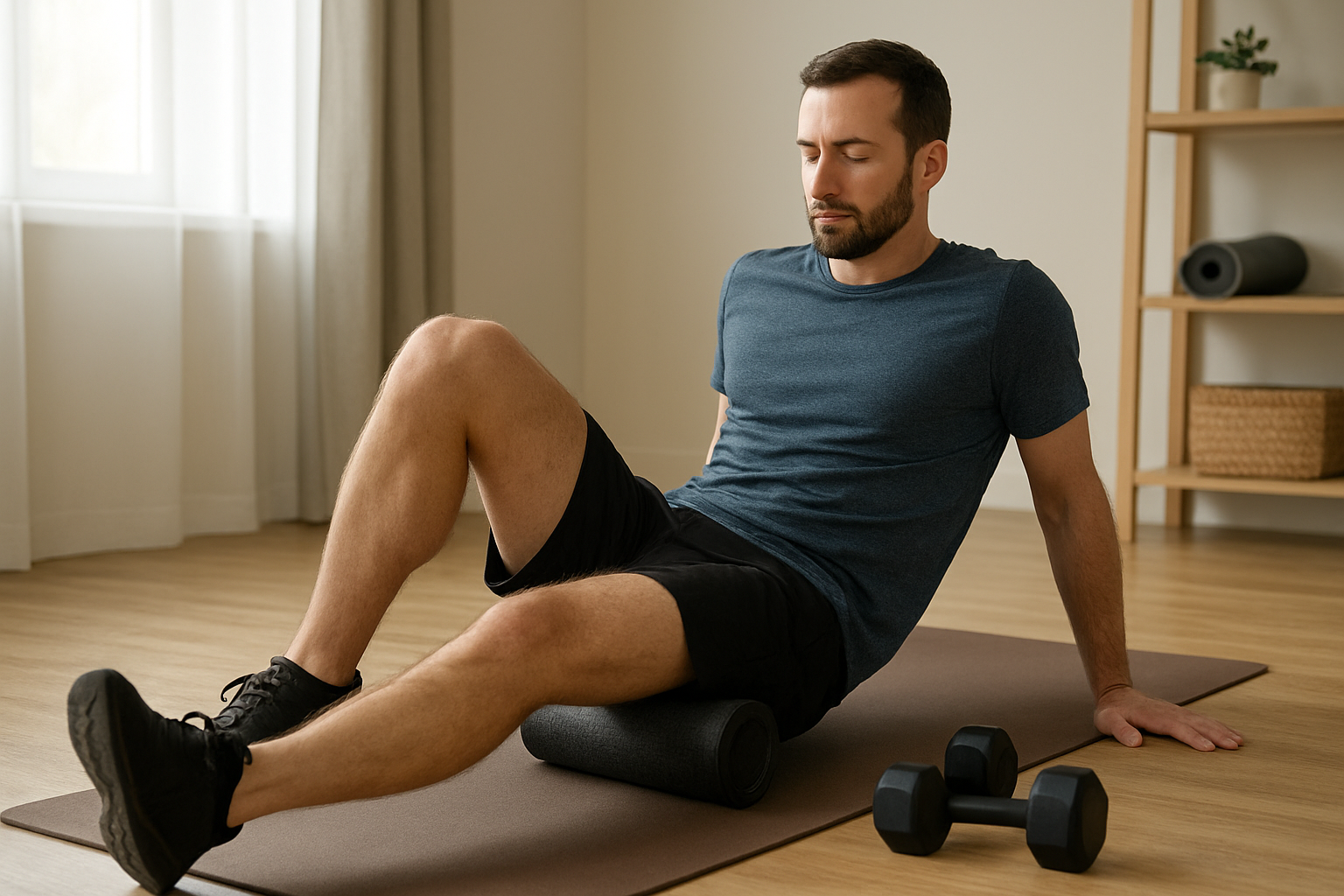
Foam rolling is usually the better choice for short-term soreness and feeling less stiff, while stretching is more useful when limited flexibility or joint range of motion is the main issue. For many people, the most practical answer is not either-or: use gentle movement, foam rolling, or stretching according to how your body feels and what you need to do next.
The phrase “muscle recovery” covers several different goals, including reducing soreness, restoring comfortable movement, preparing for another workout, and improving flexibility over time. This guide compares foam rolling vs stretching for muscle recovery using those separate goals rather than treating them as interchangeable techniques.
1. Define what “recovery” means for your workout
Before choosing a technique, identify the result you want. A method that makes your legs feel temporarily looser may not improve strength recovery, reduce tissue damage, or make you ready for hard training the next day.
- Less perceived soreness: Foam rolling may help you feel less uncomfortable after demanding exercise.
- More range of motion: Both foam rolling and stretching can temporarily improve movement.
- Better preparation: Dynamic stretching and a gradual warm-up are generally more appropriate before explosive or strength-focused work.
- Long-term flexibility: Consistent stretching has a clearer role when you are working on a specific mobility limitation.
- Faster performance recovery: Neither method should replace sleep, food, hydration, sensible programming, and rest days.
Research does not show that foam rolling is a complete recovery solution. A 2020 systematic review found that foam rolling can increase range of motion and may help recovery from exercise-induced muscle damage, but evidence for direct improvements in athletic performance remains limited. See the review in PubMed.
2. Understand the practical difference between the two methods
What foam rolling does
Foam rolling is a form of self-myofascial release. You use your body weight to apply pressure while moving over a muscle, usually for a short period. The immediate benefit may come from changes in pain sensitivity, tolerance to pressure, and how freely you move, rather than from physically “breaking up” scar tissue or removing knots.
Use a roller on broad muscle areas such as the quadriceps, hamstrings, glutes, calves, upper back, or lats. Move slowly and keep the pressure tolerable. Rolling directly over joints, the spine, the front of the neck, or an acutely injured area is not appropriate.
What stretching does
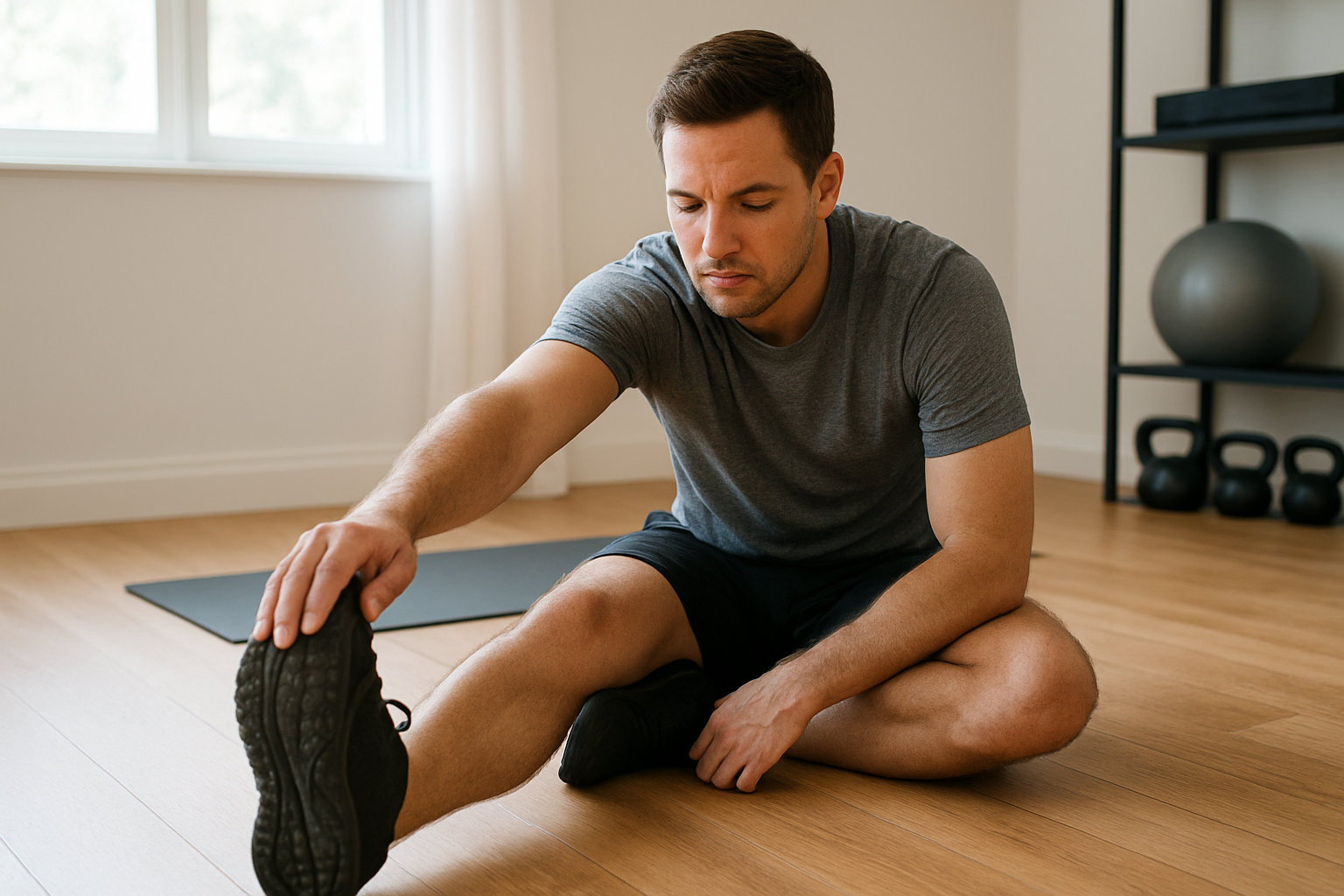
Stretching deliberately lengthens a muscle-tendon unit or places a joint through a controlled range of motion. Dynamic stretching uses repeated, smooth movements, while static stretching involves holding a position for a period of time.
Dynamic stretching is often easier to fit into a warm-up because it raises movement temperature without requiring you to hold a long, passive position. Static stretching can be useful after training or in a separate flexibility session, particularly when a specific range-of-motion limitation affects your technique.
3. Compare foam rolling and stretching side by side
| Decision factor | Foam rolling | Stretching |
|---|---|---|
| Main sensation | Pressure, massage-like tenderness, or temporary relief | Lengthening, tension, or controlled movement |
| Best immediate use | General post-workout stiffness and perceived soreness | Preparing movement or addressing a flexibility restriction |
| Range-of-motion effect | Often temporary and useful before movement | Can be temporary or improve with consistent practice |
| Equipment needed | Foam roller or roller alternative | Usually no equipment |
| Ease of targeting | Convenient for large muscle groups | Useful for specific positions and movement patterns |
| Common mistake | Using excessive pressure or rolling injured tissue | Forcing a stretch or holding intense static stretches before explosive work |
| Best long-term role | Optional mobility and recovery routine | Progressive flexibility and movement practice |
A systematic review comparing foam rolling and stretching found no meaningful overall winner for acute physical performance. Both methods can influence range of motion, and the result depends on the stretching style, muscle group, duration, and activity that follows. Read the foam rolling and stretching meta-analysis for the full findings.
4. Choose foam rolling when soreness or stiffness is the main problem
Foam rolling is a reasonable option after a leg workout, long run, cycling session, or unfamiliar training session when your muscles feel generally tight or tender. It may make movement feel more comfortable for a while, which can help you complete light activity the next day.
Keep the session simple. Spend about 30 to 90 seconds on a muscle area, using slow passes and moderate pressure. You do not need to search for the most painful point or continue until the tissue feels numb.
- Use a softer roller if you are new or unusually tender.
- Support more of your body weight with your hands or the opposite leg.
- Breathe normally instead of bracing against the pressure.
- Follow rolling with easy walking, cycling, or mobility drills.
Recent evidence suggests foam rolling can reduce perceived post-exercise soreness to some degree, but the effect should be viewed as supportive rather than curative. A 2024 systematic review and meta-analysis is summarized in PubMed.
5. Choose stretching when mobility or movement quality is the priority
Stretching is more directly connected to flexibility training. If you cannot reach a comfortable squat depth, overhead position, or stride length because a particular area consistently limits you, a structured stretching routine may be more useful than repeatedly rolling the same spot.
Before exercise
Use dynamic movements that resemble the activity you are about to perform. For example, try bodyweight squats, walking lunges, arm circles, controlled leg swings, or light exercise-specific repetitions. Start with a small range and gradually increase it.
After exercise or in a separate session
Static stretching can be appropriate when your body is warm and the goal is flexibility. Hold a mild-to-moderate stretch without bouncing, forcing the joint, or turning it into a pain test. Consistency matters more than extreme intensity.
A 2024 review comparing longer-term static stretching and foam rolling found that both can improve range of motion, with no clear overall difference between them. However, static stretching showed an advantage in some shorter-duration training comparisons, so it remains a practical first choice when flexibility is the specific target. See the systematic review on static stretching and foam rolling.
6. Use timing to avoid common performance tradeoffs
The same technique can feel helpful or unhelpful depending on when you use it. A short, comfortable bout of foam rolling or dynamic mobility before training may improve how you move, but a long, aggressive recovery session immediately before heavy lifting may leave you distracted, tender, or less prepared.
For most workouts, use this sequence:
- Begin with five to ten minutes of easy general movement.
- Add dynamic mobility for the joints and muscles involved.
- Perform gradual warm-up sets or practice repetitions.
- Save longer static stretching for after training or another session if flexibility is the priority.
If you prefer foam rolling before exercise, keep it brief and comfortable. A review published in Frontiers in Physiology found that acute foam rolling and stretching generally produced similar performance outcomes, although certain subgroups favored foam rolling over static stretching.
7. Build a recovery routine that matches your training load
Neither foam rolling nor stretching can compensate for doing too much too soon. If you are increasing training volume, use the same progression principles you would apply to any home workout. The guides on how to progress a home workout and common beginner workout mistakes can help you manage the larger picture.
A simple post-workout option
- Walk or cycle easily for five minutes.
- Foam roll two or three noticeably stiff muscle groups.
- Perform gentle dynamic movements through comfortable ranges.
- Add short static stretches only where flexibility is actually limited.
- Eat, hydrate, and prioritize sleep rather than extending the recovery routine indefinitely.
For a small-space home setup, a compact roller can complement other equipment without replacing it. If you are building a broader home training area, see home gym equipment for small spaces.
8. Avoid these common decision mistakes
Mistake 1: Treating soreness as proof of effectiveness
A painful roller session or intense stretch is not automatically better. Discomfort can make a technique feel substantial, but it does not prove that recovery is faster or that damaged tissue has been repaired.
Mistake 2: Stretching an acute injury
Sudden sharp pain, swelling, bruising, weakness, or loss of function requires more caution than ordinary post-workout soreness. Do not force a stretch through those symptoms. Consider medical or physical therapy advice, especially if symptoms persist or interfere with normal activity.
Mistake 3: Rolling directly over sensitive structures
Keep the roller on muscle rather than bone, joints, the lower back, or the front of the neck. A reputable sports medicine guide from Hospital for Special Surgery also advises avoiding bones and joints when foam rolling.
Mistake 4: Ignoring the training goal
If your issue is restricted ankle mobility, rolling your calves may offer temporary relief, but you may still need controlled ankle movements and progressive strength work. If your goal is simply to feel less sore after a hard session, an elaborate flexibility program may be unnecessary.
9. What if one method does not help?
If foam rolling makes you more sore: reduce pressure, shorten the duration, use a softer roller, or stop rolling that area. Persistent tenderness is a reason to reassess the exercise that caused it.
If stretching feels ineffective: warm up first, use a smaller range, and practice consistently for several weeks. Also check whether strength, joint structure, or technique—not muscle length alone—is limiting the movement.
If soreness is severe or unusual: avoid trying to “roll it out.” Severe pain, marked swelling, dark urine, significant weakness, numbness, or symptoms following trauma warrant prompt professional evaluation.
If you are unsure which to use: test one method at a time and record how you move and feel later that day and the next morning. Choose the method that improves comfort without reducing your training quality.
10. Your practical checklist
- Identify whether your main goal is soreness relief, mobility, warm-up, or flexibility.
- Use dynamic stretching and gradual movement before demanding exercise.
- Use foam rolling with moderate pressure, especially when muscles feel generally stiff.
- Use static stretching when a specific flexibility limitation is the priority.
- Do not roll over bones, joints, the spine, or acute injuries.
- Do not force either method through sharp pain, tingling, numbness, or weakness.
- Judge success by comfortable movement and training consistency, not by pain intensity.
- Support recovery with appropriate workload, sleep, nutrition, and rest.
Final verdict: foam rolling vs stretching for muscle recovery
For most recreational exercisers, foam rolling is the more convenient choice for short-term post-workout stiffness, while stretching is the better tool for developing flexibility and preparing specific movement patterns. Neither method consistently outperforms the other for every recovery goal.
Choose foam rolling if it helps you move comfortably after training. Choose stretching when you need more range of motion or want to work on a defined flexibility limitation. If both feel good, combine brief foam rolling with dynamic mobility—but keep the routine optional, controlled, and secondary to a well-planned training and recovery schedule.