Quick verdict: rowing is usually the better choice if you want a more complete full-body cardio session, while cycling is often easier to learn, sustain, and recover from. Neither machine is automatically superior. Your best option depends on whether you value upper-body involvement, low-impact endurance, simplicity, or long-duration comfort.
The difference matters because rowing and cycling may look similar on a gym schedule, yet they place different demands on your muscles and technique. This guide compares them using practical criteria so you can choose the workout that fits your goals, joints, available time, and preferred training style.
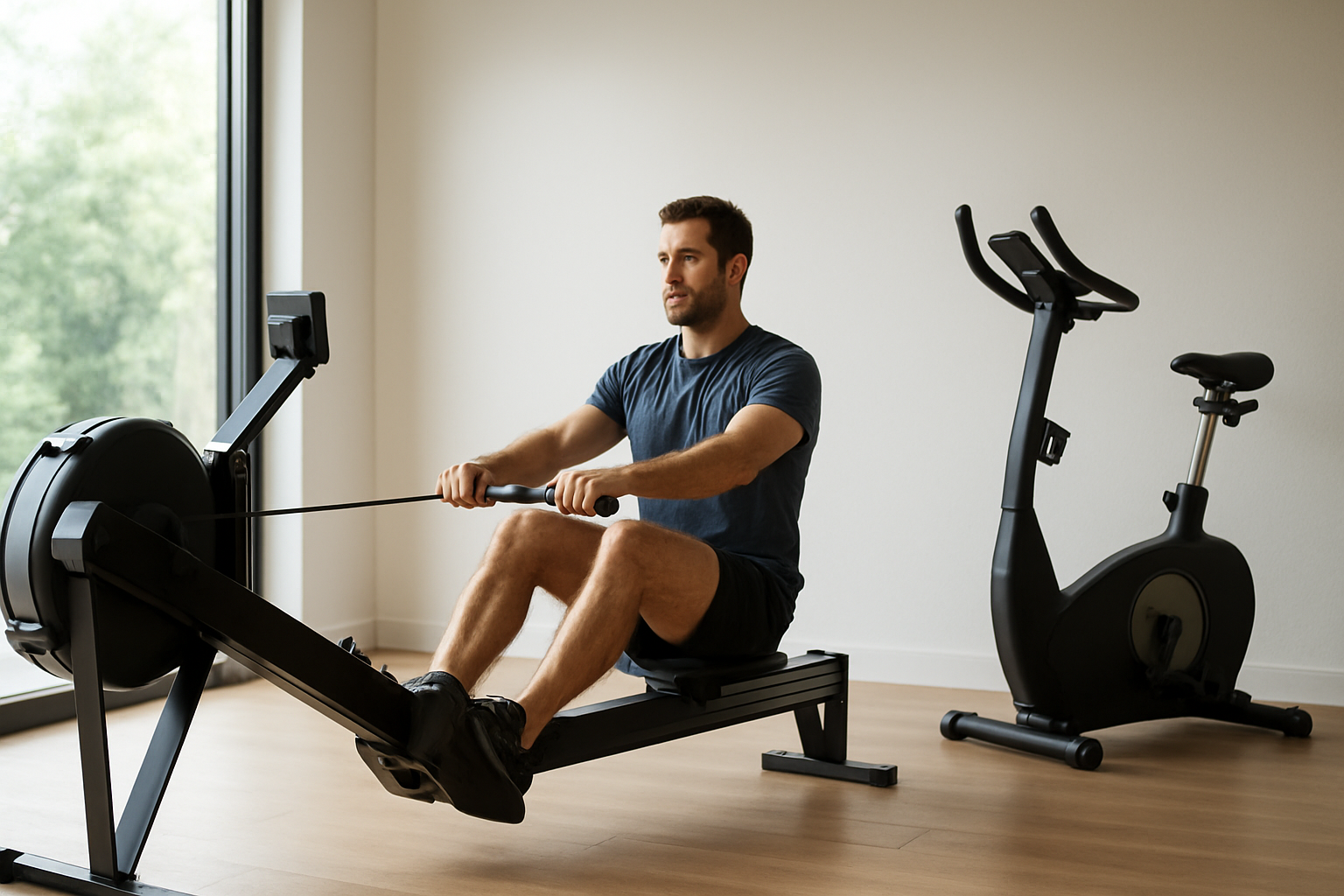
1. Start with the main difference between rowing and cycling
Indoor cycling is primarily a lower-body exercise. Your quadriceps, hamstrings, glutes, and calves produce most of the movement, while your trunk helps stabilize you on the bike. Your upper body remains relatively quiet, especially during seated riding.
Rowing combines a leg drive, trunk movement, and arm pull. The legs still contribute substantial force, but the back, shoulders, arms, and core must coordinate with them. That makes rowing feel more like a whole-body movement, although it also gives technique greater importance.
“Full body” does not mean either machine replaces strength training. Both are cardio tools, and the resistance is generally too light or repetitive to serve as a complete muscle-building program. For strength work, you may need separate exercises such as those discussed in cable machines versus free weights.
2. Compare rowing vs cycling for full body cardio
The table below separates observable features from warning signs. It can help you make a decision without relying on claims that one machine is best for everyone.
Key differences to check before choosing:
| Criterion | Rowing machine | Stationary bike | Warning sign |
|---|---|---|---|
| Muscle involvement | Legs, hips, trunk, back, and arms work in sequence | Mostly legs, with the trunk stabilizing | Choosing rowing but avoiding the leg drive or arm finish |
| Learning curve | Requires a repeatable catch, drive, finish, and recovery | Simple pedaling pattern with easy resistance changes | Rounded lower back or rushing the rowing recovery |
| Joint impact | Low-impact, but the deep knee and hip bend may feel demanding | Low-impact and often easy to control | Pain that changes your movement or remains after training |
| Cardio pacing | Works well for intervals and moderate steady efforts | Very easy to hold a steady pace for longer sessions | Starting every session too hard to maintain consistently |
| Upper-body demand | Meaningful pulling and trunk coordination | Limited during normal seated cycling | Expecting cycling alone to train the back and arms |
| Space and setup | Often requires room for a long rail and moving handle | Usually occupies a more predictable footprint | Buying equipment that blocks walkways or cannot be stored safely |
| Comfort for long sessions | Depends on tolerance for repeated sliding and bending | Often comfortable once the seat is adjusted correctly | Numbness, poor seat height, or repeated posture changes |
3. Choose rowing when whole-body involvement is the priority
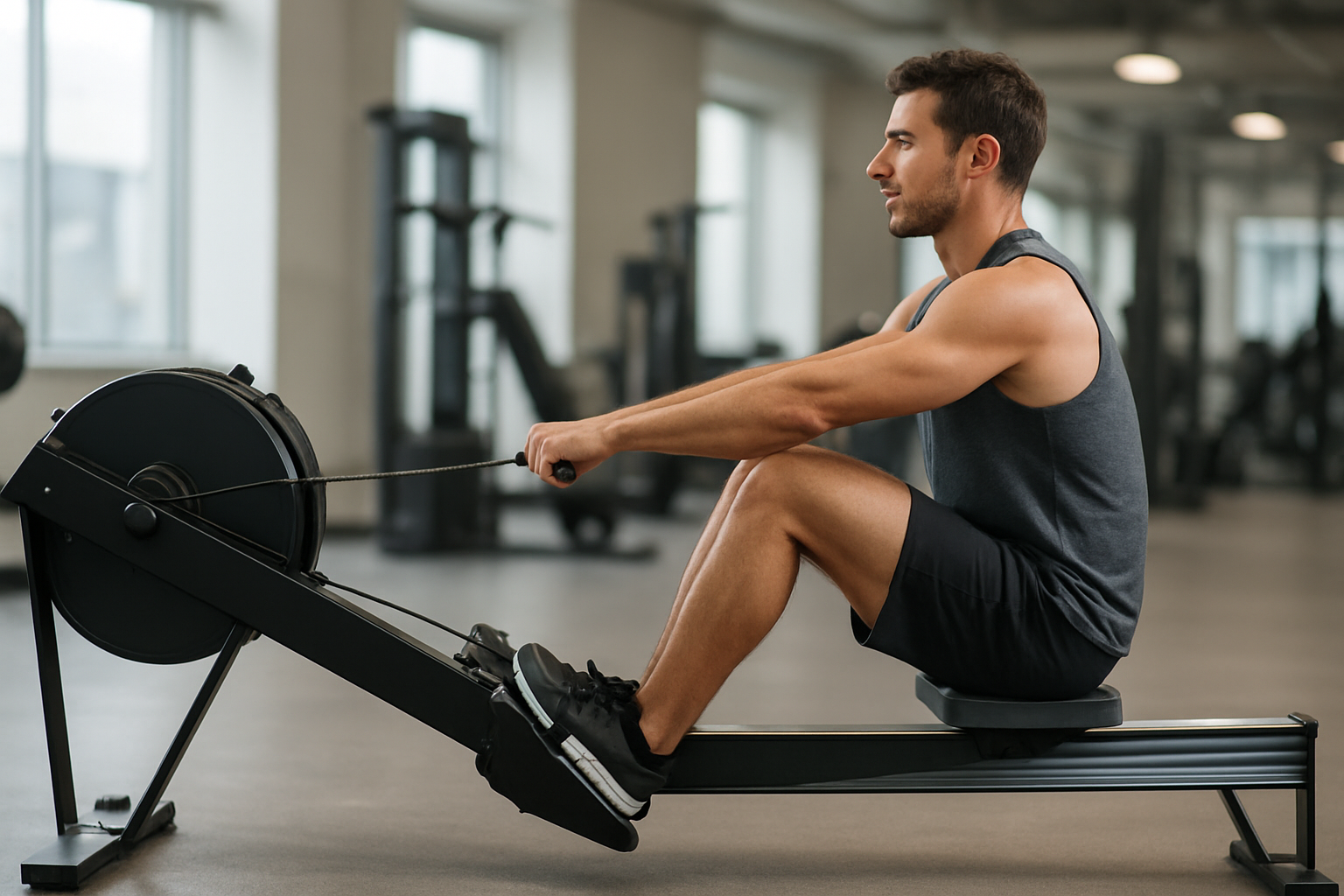
Rowing is the stronger candidate when your definition of full-body cardio includes the upper body. A technically sound stroke begins with the legs, then transfers force through the trunk before the arms complete the pull. The return phase reverses that order in a controlled way.
This sequence can make rowing efficient when your available workout time is limited. Intervals such as short hard efforts followed by easy recovery periods can raise breathing demand quickly, but the intensity should be appropriate for your current conditioning.
What rowing requires from you
- Keep the spine controlled rather than collapsing at the catch.
- Push through the legs before opening the hips and pulling with the arms.
- Return the hands first, then hinge the trunk, then bend the knees.
- Use resistance that allows consistent technique, not just a harder feeling.
Rowing may be a poor fit if you dislike coordinated movements, have difficulty maintaining a neutral trunk, or experience discomfort during repeated hip or knee flexion. Pain is not a useful measure of workout quality. Stop and seek qualified medical advice if pain is sharp, worsening, associated with swelling, or does not settle with rest.
4. Choose cycling when consistency and easy pacing matter most
Cycling is often the more practical choice for building a repeatable aerobic habit. Pedaling is easy to understand, resistance can usually be adjusted in small steps, and you can maintain a steady effort without coordinating several body segments at once.
That simplicity is useful for beginners, people returning after a break, and anyone who wants to read effort from breathing or heart-rate data without also concentrating heavily on movement technique. Cycling can also be a sensible option when the back or shoulders need a less demanding cardio session, provided the bike position is comfortable.
Cycling is not completely risk-free. A seat that is too low or too high can make the knees uncomfortable, while poor handlebar positioning can encourage excessive rounding or shoulder tension. Adjust the seat so your knee remains slightly bent at the bottom of the pedal stroke, then begin with a moderate resistance.
5. Match the machine to your training goal
For general cardiovascular fitness
Either machine can work. Select the one that lets you train regularly at an effort you can recover from. A workout you repeat three times per week is usually more useful than an idealized machine you avoid.
For short, demanding sessions
Rowing can provide a strong whole-body interval format, while cycling may let you push hard with less technical distraction. Beginners should first establish an easy-to-moderate base before adding repeated intense intervals.
For longer endurance sessions
Cycling commonly has the advantage in comfort and pacing, especially when you want to remain active for an extended period. Rowing can also support endurance, but the repeated trunk and upper-body involvement may become the limiting factor before your cardiovascular system does.
For lower-body emphasis
Choose cycling if you want cardio that mainly challenges the legs. It can complement a strength plan without adding as much upper-body fatigue as rowing. For an overall training schedule, see this guide to building a beginner gym workout schedule.
6. Use a simple decision process before you commit
Ask yourself four questions:
- Do I specifically want pulling and trunk work, or mainly leg-based cardio?
- Can I learn and repeat rowing technique without discomfort?
- Will I use the machine at least several times each month?
- Do I need quiet, compact equipment for a home environment?
If space or noise is a major concern, neither machine should be chosen without checking the equipment’s actual footprint and operating sound. You may also compare other quiet options in cardio workouts for small apartments.
7. Avoid common decision mistakes
- Calling rowing a strength workout: It trains muscles, but cardio rowing does not replace progressive resistance training.
- Ignoring technique: More resistance cannot correct a rushed recovery or rounded back.
- Choosing by calorie estimates alone: Machine displays use assumptions and can be inaccurate. Judge sessions by effort, duration, recovery, and consistency.
- Starting with advanced intervals: Hard efforts add fatigue quickly. Build volume gradually.
- Overlooking fit: Adjust the bike seat or rowing foot straps before increasing intensity.
- Assuming low-impact means no risk: Repetition can still irritate a joint or tendon when volume rises too quickly.
8. What if one machine does not feel right?
If rowing causes back discomfort, first reduce resistance and slow the stroke. Check whether you are beginning the pull with your arms, collapsing at the catch, or leaning too far backward at the finish. If correcting technique does not resolve the problem, switch to cycling or another activity and ask a qualified professional for an assessment.
If cycling causes knee discomfort, check seat height, resistance, and cadence. Avoid grinding slowly against heavy resistance while trying to maintain poor alignment. Persistent pain, swelling, instability, chest pain, unusual shortness of breath, dizziness, or fainting warrants medical attention rather than continued training.
9. Use this checklist for your next workout
- Choose rowing for coordinated full-body work; choose cycling for simpler sustained endurance.
- Warm up at an easy pace for several minutes.
- Keep the first session moderate enough to assess comfort and recovery.
- Adjust the equipment before adding resistance or speed.
- Record duration, perceived effort, and any discomfort.
- Increase only one training variable at a time.
For a balanced routine, you do not have to choose only one machine. Cycling can provide steady aerobic work on one day, while rowing can add shorter full-body sessions on another. Keep strength sessions separate enough that fatigue does not compromise technique; at-home lower-body training ideas are available in this guide to hip thrusts at home.
10. Final verdict: which is better for full-body cardio?
For rowing vs cycling for full body cardio, rowing wins when you want more upper-body involvement and are prepared to learn the movement. Cycling wins when your priority is easy pacing, lower technical demand, comfortable endurance, or frequent repeat sessions.
The conditional answer is straightforward: choose the machine you can use safely, consistently, and with controlled technique. If both are available, combine them—cycle for dependable aerobic volume and row when you want a more integrated full-body challenge.