For most beginner lifters, the best barbell weight set is not the heaviest or cheapest option; it is a stable, compatible set with enough adjustable weight for your first months of training. Check the bar’s specifications, plate fit, included collars, floor protection, and return policy before you buy.
A barbell set can make strength training convenient at home, but the wrong combination may be difficult to use or unsafe on an unsuitable surface. This barbell weight sets review for beginner lifters uses general equipment-selection principles rather than hands-on testing, current retailer listings, or independent laboratory measurements. The aim is to help you compare specifications and choose equipment that matches your space, routine, and progression plan.
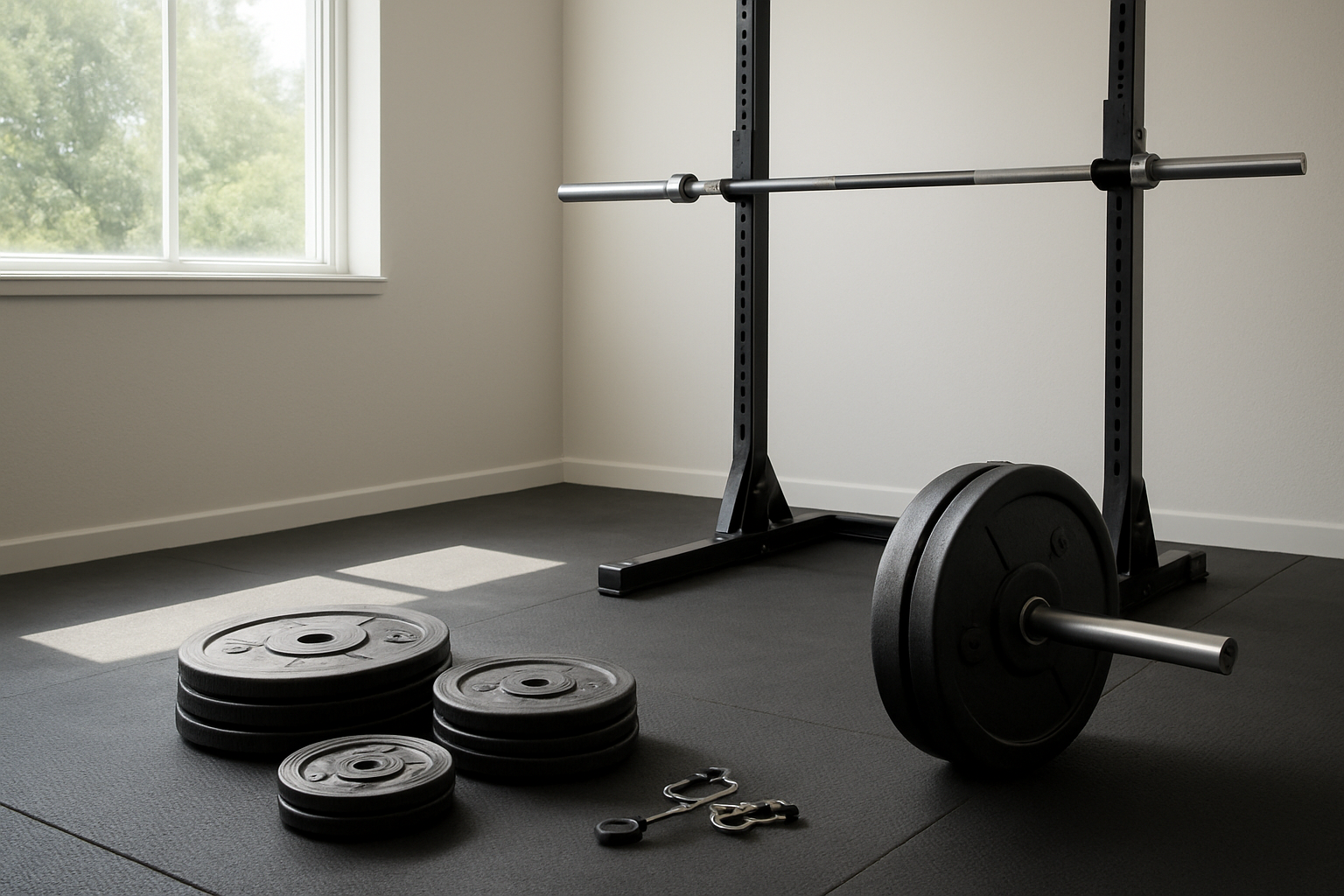
1. Define how and where you will train
Start with the exercises you expect to perform. A set used for deadlifts, squats, presses, and rows has different demands from a compact set intended mainly for curls and light conditioning. Your available floor area and ceiling height also affect whether a full-length bar is practical.
Match the set to your training space
- Measure the usable floor length, not just the room’s overall dimensions.
- Leave room to load plates from both sides of the bar.
- Use a firm, level surface with suitable rubber or lifting-platform protection.
- Keep the bar and plates away from walkways, doors, children, and pets.
- Check whether overhead pressing is possible without contacting lights or ceilings.
If you live in an apartment, dropping loaded weights may create noise, vibration, and floor damage. A barbell is not automatically the best first purchase if you cannot control the equipment safely. You may prefer adjustable dumbbells, resistance bands, or a gym membership until your training space is ready.
2. Compare bar types before comparing plate totals
The bar is the central component, and its dimensions determine which plates and accessories fit. Product descriptions may use terms such as standard, Olympic, women’s, training, or multipurpose bar inconsistently, so verify measurements rather than relying on the name alone.
A standard bar generally uses smaller-diameter sleeves, while an Olympic-style bar uses larger sleeves and typically requires plates with a larger center hole. These systems are not interchangeable without the correct adapters, and adapters do not necessarily solve differences in sleeve length, construction, or loading capacity.
Look for a clearly stated bar length, shaft diameter, sleeve diameter, construction material, stated load rating, and overall weight. The manufacturer’s load rating is not a guarantee of safe use in every situation; technique, impact, corrosion, and storage can all matter.
Knurling should provide a consistent grip without feeling excessively sharp for your intended exercises. Spin is more important for movements involving rotation, while a beginner focused on controlled squats, presses, rows, and deadlifts may place greater value on fit, stability, and a comfortable grip.
3. Evaluate plates, collars, and compatibility
Plates should support small, repeatable increases in resistance. A large set containing only heavy plates may look impressive but can make progression awkward. Ideally, the package includes lighter plates that let you add weight gradually, especially for upper-body exercises.
Check whether the plates are cast iron, coated metal, or another material, and examine the listed dimensions. Coated plates may reduce noise and protect surfaces, but the coating can wear with use. Bumper-style plates are designed for different handling conditions and may require more storage space; do not assume every thick rubber plate is suitable for dropping.
Collars keep plates from sliding during normal lifting. They should fit the bar securely and be simple to tighten and release. If the set includes very basic collars, budget for a reliable replacement rather than treating collars as an unimportant accessory.
The following checklist separates useful specifications from warning signs.
Barbell weight set comparison guide
| What to look for | Why it matters | Warning sign |
|---|---|---|
| Clearly stated bar diameter and sleeve size | Confirms that plates and accessories will fit | Only vague wording such as “fits most weights” |
| Manageable plate increments | Allows gradual progression for different exercises | Most of the total weight is concentrated in a few large plates |
| Stated bar weight and load rating | Helps you calculate training load accurately | Missing or contradictory specifications |
| Secure, compatible collars | Limits plate movement during controlled lifts | Collars that visibly loosen or do not match the sleeve |
| Durable surface and sensible storage plan | Reduces damage, clutter, and corrosion risk | Plates stored loose on damp or unstable flooring |
4. Choose a useful starting load, not a marketing number
Package weight includes the bar and every plate, but it does not tell you how useful the set will be. A beginner needs enough resistance for current exercises plus room to progress, not necessarily the maximum amount the seller advertises.
Think in terms of the smallest practical increase. If your press improves in small steps but the set jumps by large plate amounts, you may be forced to change technique or repetitions too quickly. Fractional plates can help, although they are often sold separately.
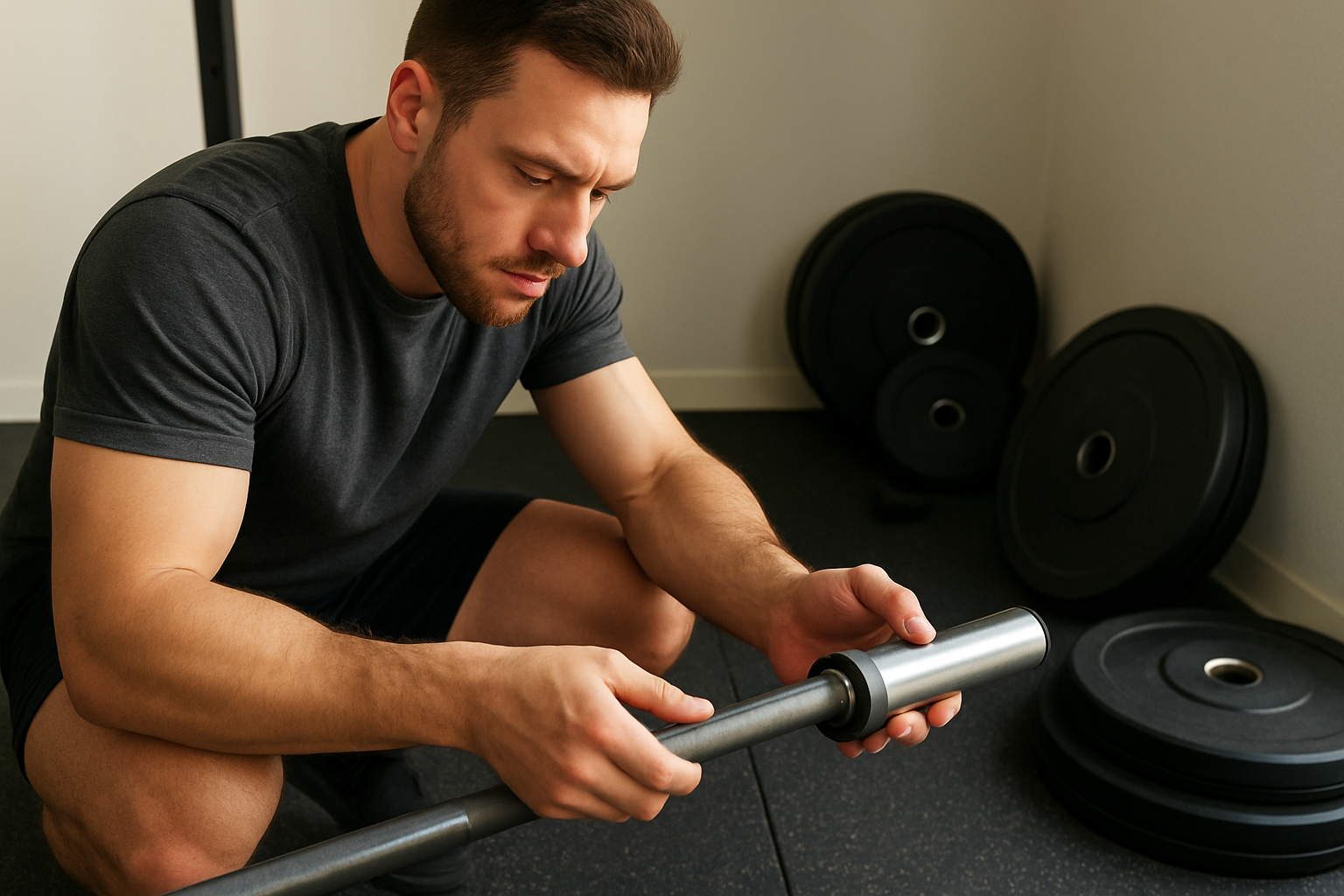
Do not choose a load based on a target you cannot yet lift safely. Your first sessions should establish movement control and repeatable form. For guidance on organizing sessions, see how to set up a beginner gym workout schedule.
5. Check safety, maintenance, and delivery details
Inspect the equipment when it arrives. Look for bent bars, damaged sleeves, cracked plates, loose end fittings, sharp edges, and packaging damage. Do not use a bar that appears structurally compromised; photograph the issue and contact the seller according to its return process.
Keep threaded or moving parts clean and follow the manufacturer’s maintenance instructions. Store plates flat or on a suitable rack, keep metal away from persistent moisture, and avoid leaning a loaded bar where it can roll or fall.
Use a rack, stands, or spotter arms that are rated and sized for your bar if your program includes barbell squats or bench pressing. Never improvise supports from unstable furniture. If you are unsure about exercise technique, a qualified coach can check setup and movement before you add substantial load.
6. Decide whether a barbell set is the right beginner purchase
A barbell set is most suitable when you want to train compound lifts, have enough room, and can protect the floor. It also works well if you prefer planned progression and are willing to store several heavy components.
Consider alternatives when your needs are narrower:
- Adjustable dumbbells: useful when storage is limited or you train one side at a time.
- Resistance bands: practical for quiet, portable training, though their resistance changes through the range of motion.
- Cable machines: helpful when you value adjustable angles and controlled resistance; compare the trade-offs in cable machines versus free weights.
- Gym equipment: sensible when home space, noise, or rack safety is a concern.
For conditioning rather than maximal strength, rowing and cycling may be more appropriate than buying a complete lifting setup. This comparison of rowing versus cycling for full-body cardio can help clarify that choice.
7. Use a pre-purchase checklist
- Confirm the bar’s exact sleeve and shaft dimensions.
- Confirm every included plate weight and the total package weight.
- Check whether the collars fit the selected bar.
- Measure your storage and lifting area.
- Plan for a rack, mat, or platform if your exercises require one.
- Review delivery, returns, replacement-part, and warranty terms where available.
- Decide whether you need fractional plates for gradual progression.
Common mistakes when buying a beginner barbell set
- Buying by total weight alone: a heavier package can be less useful if the increments are poorly distributed.
- Mixing incompatible systems: confirm hole and sleeve dimensions before adding plates.
- Ignoring the bar’s actual weight: include it when calculating the total load.
- Skipping floor protection: hard flooring can be damaged by repeated contact with metal.
- Assuming collars make every lift safe: collars do not replace proper setup, a stable rack, or a spotter when appropriate.
- Choosing equipment without a progression plan: decide how you will increase repetitions or load before purchasing.
What if the set does not work as expected?
What if plates do not fit?
Stop loading the bar and recheck the listed measurements. Do not force plates onto a sleeve or use improvised spacers. If the supplied components do not match the product description, document the mismatch and request a resolution.
What if the bar rolls or the floor moves?
Unload it, move the equipment to a level surface, and use an appropriate storage solution. A mat can reduce noise and protect the floor, but it will not correct an unstable rack or uneven foundation.
What if you are unsure about technique?
Reduce the load and practice the movement with a coach or another qualified professional. Pain that is sharp, persistent, or associated with weakness, numbness, or loss of control warrants stopping the exercise and seeking appropriate medical advice.
Next actions before you buy
Write down your first six to eight exercises, the space available, and the smallest load increases you expect to need. Then compare sets using the bar specifications, plate distribution, collars, storage requirements, and safety equipment rather than the headline weight.
Once your setup is ready, pair strength work with a sustainable overall routine. You may also find practical guidance on performing hip thrusts at home and choosing equipment for daily training on the LaokFitness homepage.
Conditional verdict: A barbell weight set can be an effective beginner investment when it fits your space, uses compatible components, and provides manageable progression. If the specifications are unclear, the floor or rack is unsuitable, or you mainly need quiet and compact workouts, choose a simpler alternative first. The best barbell weight sets review for beginner lifters should end with that practical test: buy only the set you can use safely and consistently.