To set up a beginner gym workout schedule, start with two or three full-body sessions per week, leave at least one rest day between hard sessions, and choose a small group of movements you can perform with controlled form. Keep each workout around 45–60 minutes, record what you do, and increase difficulty gradually.
A good schedule should fit your actual week rather than an idealized routine. This guide shows you how to choose training days, organize a session, select beginner-friendly exercises, manage recovery, and adjust the plan when life or soreness gets in the way.
1. Decide how many days you can train consistently
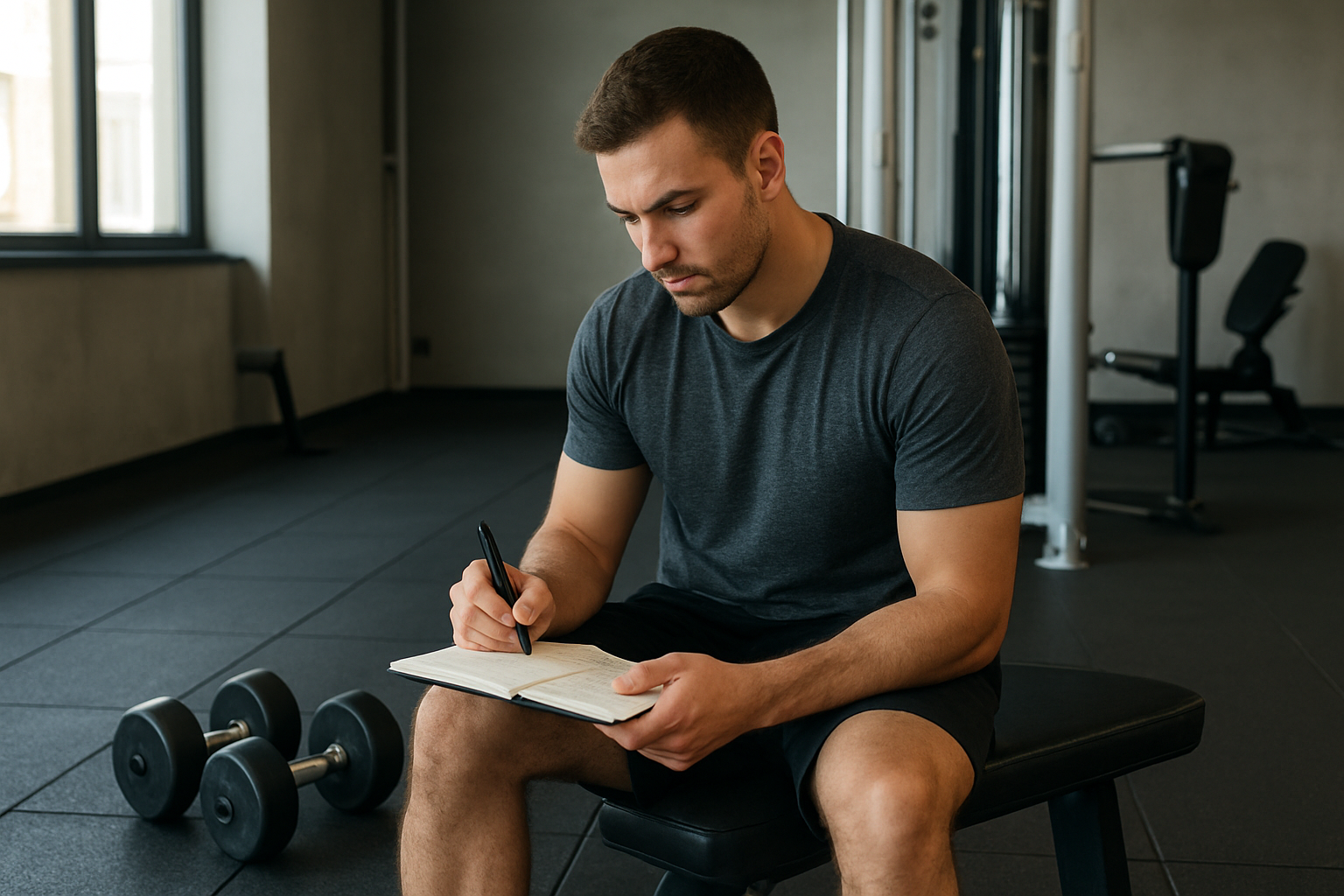
Your first decision is not the perfect split; it is the number of sessions you can repeat for several weeks. For most beginners, two or three gym visits provide enough practice and recovery without making the schedule difficult to maintain.
- Two days: Use full-body workouts on days such as Monday and Thursday.
- Three days: Use full-body workouts on Monday, Wednesday, and Friday, or any similar arrangement.
- Four or more days: Consider this only if your schedule is stable and recovery is good. A beginner usually does not need more training days to make useful progress.
Choose appointments that protect your available time. A shorter session completed regularly is more useful than a demanding plan that you repeatedly postpone.
Check your starting point
Before your first week, note your training history, sleep, work demands, and any injuries or medical conditions. If pain, a diagnosed condition, or uncertainty about exercise safety affects your plan, ask a qualified health professional for individual guidance.
2. Build each workout around the main movement patterns
A beginner gym workout schedule is easier to follow when each session covers the major ways your body moves. You do not need a long exercise list. Select one exercise from most of the categories below, then add a brief warm-up and optional conditioning.
Use this comparison when choosing exercises:
| Movement category | What to look for | Warning sign |
|---|---|---|
| Squat or knee-dominant | Stable stance, controlled lowering, comfortable depth | Knees or back shift because the load is too heavy |
| Hip hinge | Hips move back while your spine stays controlled | Rounding, pulling with the lower back, or losing balance |
| Push | Pressing motion with shoulders comfortable and ribs controlled | Shoulder pain or forced range of motion |
| Pull | Chest-supported, cable, or machine movement with steady shoulder blades | Jerking the weight or shrugging through every repetition |
| Core and carry | Resisting movement while breathing normally | Holding your breath or twisting to complete repetitions |
Machines, dumbbells, barbells, and cables can all work. Pick the option that feels stable, allows a clear range of motion, and is easy for you to set up safely. If you are comparing squat variations, you may find the guide to front squats versus back squats for quads useful, but a beginner can start with a simpler variation if needed.
3. Arrange exercises in a practical order
Perform technically demanding or larger movements before smaller isolation exercises. This helps you practice important skills while you are less fatigued and leaves simpler work for the end.
A basic session can follow this order:
- Warm-up: Spend five to ten minutes with easy cardio and several lighter practice sets.
- Main leg movement: Use a leg press, goblet squat, machine squat, or another suitable option.
- Hip-hinge movement: Choose a light Romanian deadlift, cable pull-through, or machine variation if your technique is still developing.
- Upper-body push: Use a chest press, incline dumbbell press, or controlled push-up variation.
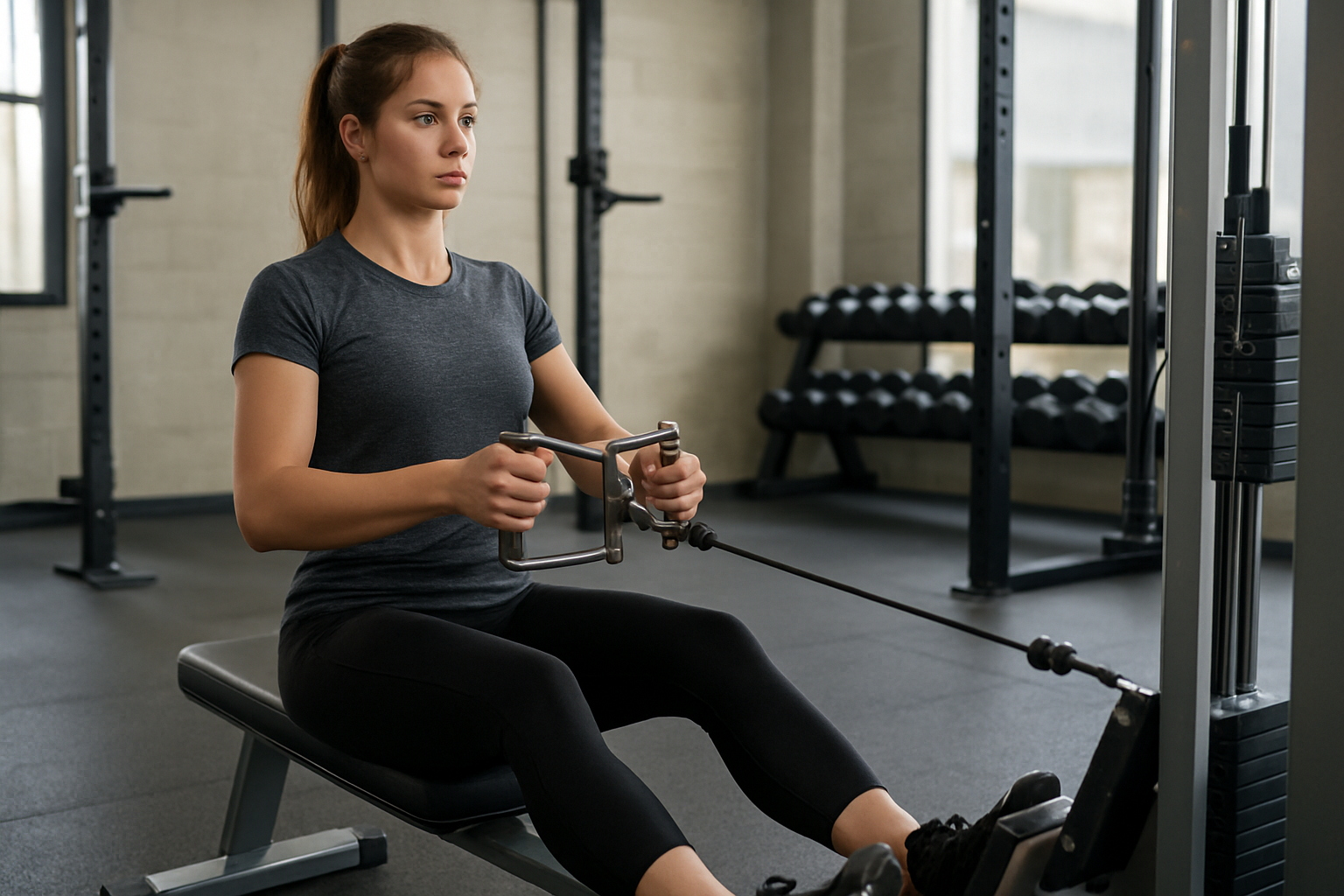
- Upper-body pull: Use a seated cable row, machine row, or assisted pulldown.
- Core or optional cardio: Finish with a plank variation, dead bug, loaded carry, easy cycling, or walking.
Start with one to three working sets per exercise. A common beginner-friendly range is about eight to twelve controlled repetitions for many strength exercises, although the correct range depends on the movement and your ability to maintain form.
4. Set effort, rest, and progression rules
Your first goal is repeatable technique, not exhaustion. Choose a weight that lets you finish the planned repetitions with steady movement and roughly two or three good repetitions left in reserve. If every set becomes a struggle, reduce the load or stop earlier.
- Rest about one to two minutes between easier sets and longer when breathing or technique has not recovered.
- Write down the exercise, weight, repetitions, and any notes about form or discomfort.
- When you reach the upper end of your repetition range on all sets with good control, increase the load by the smallest practical amount next time.
- If performance drops for several sessions, keep the weight steady, reduce a set, or take an additional rest day.
Progress can mean more repetitions, better control, a slightly heavier load, or a more consistent range of motion. It does not have to mean adding weight every workout.
5. Protect recovery between gym sessions
Muscles and connective tissues need time to adapt. Schedule rest or light activity between challenging full-body workouts, and treat sleep, food, hydration, and daily stress as part of the plan rather than separate concerns.
On non-gym days, easy walking or low-impact cardio can support general activity without turning recovery into another hard workout. For quiet home options, see these cardio workouts for small apartments. If your legs feel generally tight after training, a gentle approach to using a foam roller for sore legs may be reasonable, but do not use it to push through sharp pain.
Normal soreness versus a warning sign
Mild, even muscle soreness that develops later can occur after unfamiliar exercise. Stop an exercise and seek appropriate medical advice for sharp or worsening pain, swelling, numbness, unusual weakness, chest pain, faintness, or symptoms that do not improve.
6. Use a four-week review instead of changing the plan daily
Keep the main exercises stable for about four weeks when possible. Changing everything each session makes it difficult to tell whether your strength, control, or tolerance is improving.
At the end of each week, check whether you completed the planned sessions, maintained form, and recovered before the next workout. At the end of four weeks, decide whether to add a small amount of work, replace an uncomfortable exercise, or keep the same routine for another cycle.
If you enjoy bodyweight training, equipment such as rings can add variety later; the gymnastic rings buying guide explains what to check before choosing them. Equipment is optional, however, and should not distract from consistent training fundamentals.
Beginner gym schedule checklist
- Choose two or three realistic training days.
- Leave recovery time between demanding full-body sessions.
- Prepare a five- to ten-minute warm-up.
- Include a leg movement, hip hinge, push, pull, and optional core exercise.
- Use a load that allows controlled repetitions.
- Record each session in a notebook or phone app.
- Plan one or two easier days before repeating hard work for the same muscles.
- Review progress after four weeks rather than reacting to one difficult workout.
Common mistakes that make a schedule harder to follow
- Starting with too many days: More sessions can create unnecessary soreness and missed workouts.
- Using advanced exercise variations too early: A stable machine or supported movement may be a better learning tool.
- Training to failure constantly: Frequent all-out sets can reduce technique and recovery quality.
- Ignoring the lower body or pulling muscles: Build a balanced routine instead of repeating only familiar exercises.
- Changing the plan every visit: Keep enough consistency to measure progress.
- Confusing discomfort with productive effort: Muscle effort is not a reason to continue through sharp or unfamiliar pain.
What if your schedule or recovery changes?
If you miss a workout
Do not double the next session to compensate. Complete the next planned workout, or move it by one day if that preserves recovery and fits your week.
If you are very sore
Reduce the load, perform fewer sets, or choose easy movement until your technique returns. Persistent or severe symptoms deserve professional assessment rather than repeated self-treatment.
If you have only 20 minutes
Warm up briefly, then choose one leg movement, one push, and one pull for one or two controlled sets each. A shortened session can maintain the habit without pretending that every workout must be complete.
Next actions for your first week
- Put two or three gym sessions on your calendar.
- Write down one exercise option for each major movement category.
- Visit the gym once to learn where the equipment is and practice light sets.
- Record your starting weights, repetitions, and any movements that feel uncomfortable.
- Repeat the basic structure for four weeks before making major changes.
The best beginner gym workout schedule is the one that gives you regular practice, manageable fatigue, and enough recovery to return confidently. Start with two or three full-body sessions, progress in small steps, and adjust only when your notes show that your current plan no longer fits.