Gymnastic rings can be an excellent choice for bodyweight training when you have a secure overhead anchor, enough clearance, and the patience to build control gradually. The best setup is not necessarily the cheapest or the most heavily marketed one; it is the one with dependable straps, comfortable rings, clear adjustment points, and a suitable place to hang it.
This gymnastic rings review for bodyweight training focuses on the features you can inspect before buying. It also covers limitations, setup decisions, common mistakes, and the situations where rings are more useful than a fixed pull-up bar or other home-training equipment.
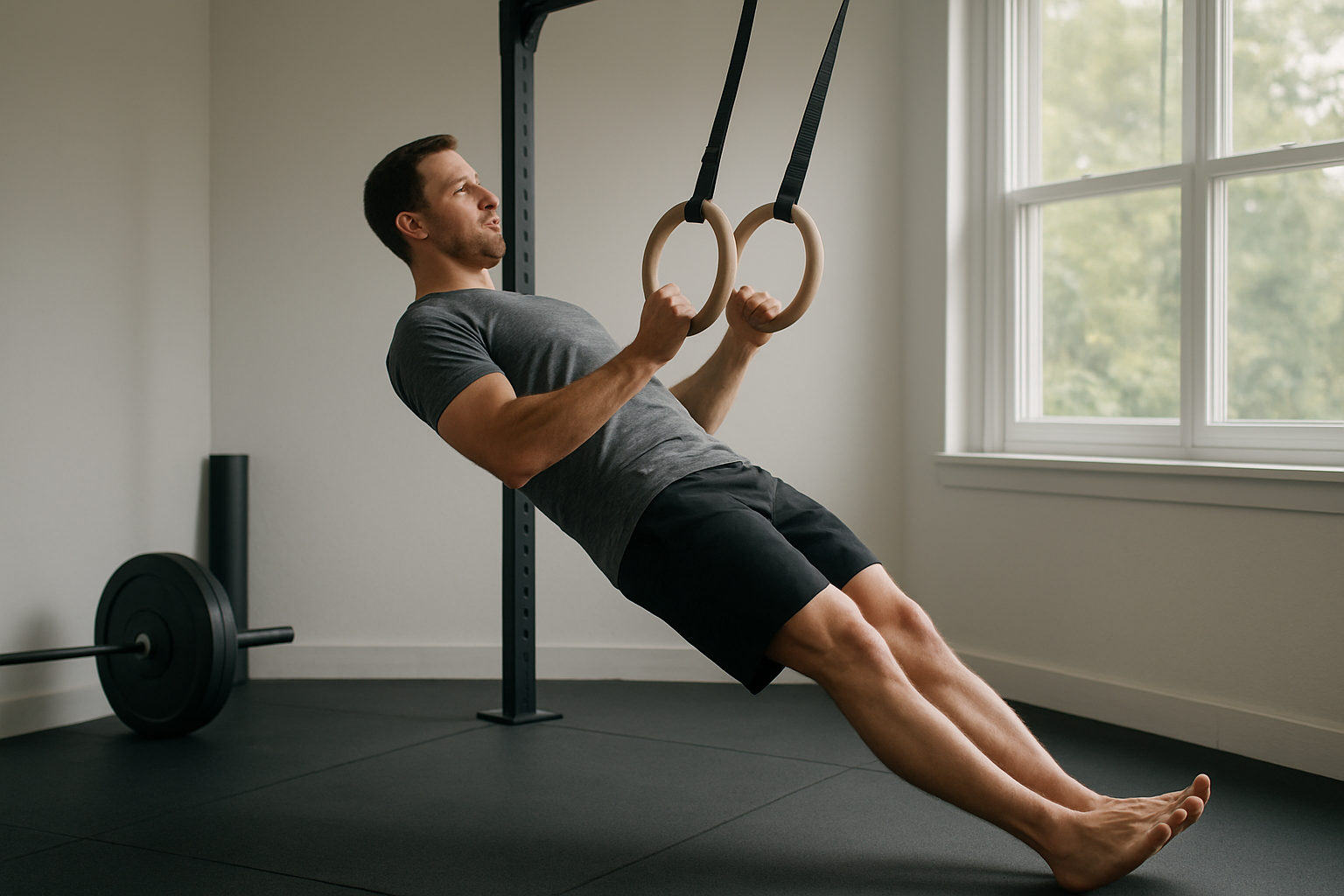
1. Decide whether rings suit your training space and goals
Gymnastic rings are portable suspension handles rather than a complete workout station. You still need a suitable beam, rack, pull-up bar, or other overhead structure capable of handling your body weight and the changing forces created during movement.
They can support pulling, pushing, core, and lower-body exercises. However, the instability that makes rings versatile also makes many exercises harder to control than their floor-based or fixed-bar versions.
Check these prerequisites first
- Anchor: Use a solid, purpose-suitable structure and follow its manufacturer’s limits where available.
- Clearance: Leave room for your hands, feet, and body to move without contacting walls, ceilings, furniture, or another person.
- Surface: Train over a firm, non-slip surface. Extra padding may be useful for some drills, but it should not make your footing unstable.
- Skill level: Plan beginner variations before attempting ring dips, muscle-ups, or other demanding movements.
If your main goal is heavy, stable vertical pulling, a fixed bar may be simpler. If you want one portable system that can be adjusted for rows, push-ups, assisted squats, and more advanced work, rings may offer better exercise variety.
2. Compare ring materials and handle comfort
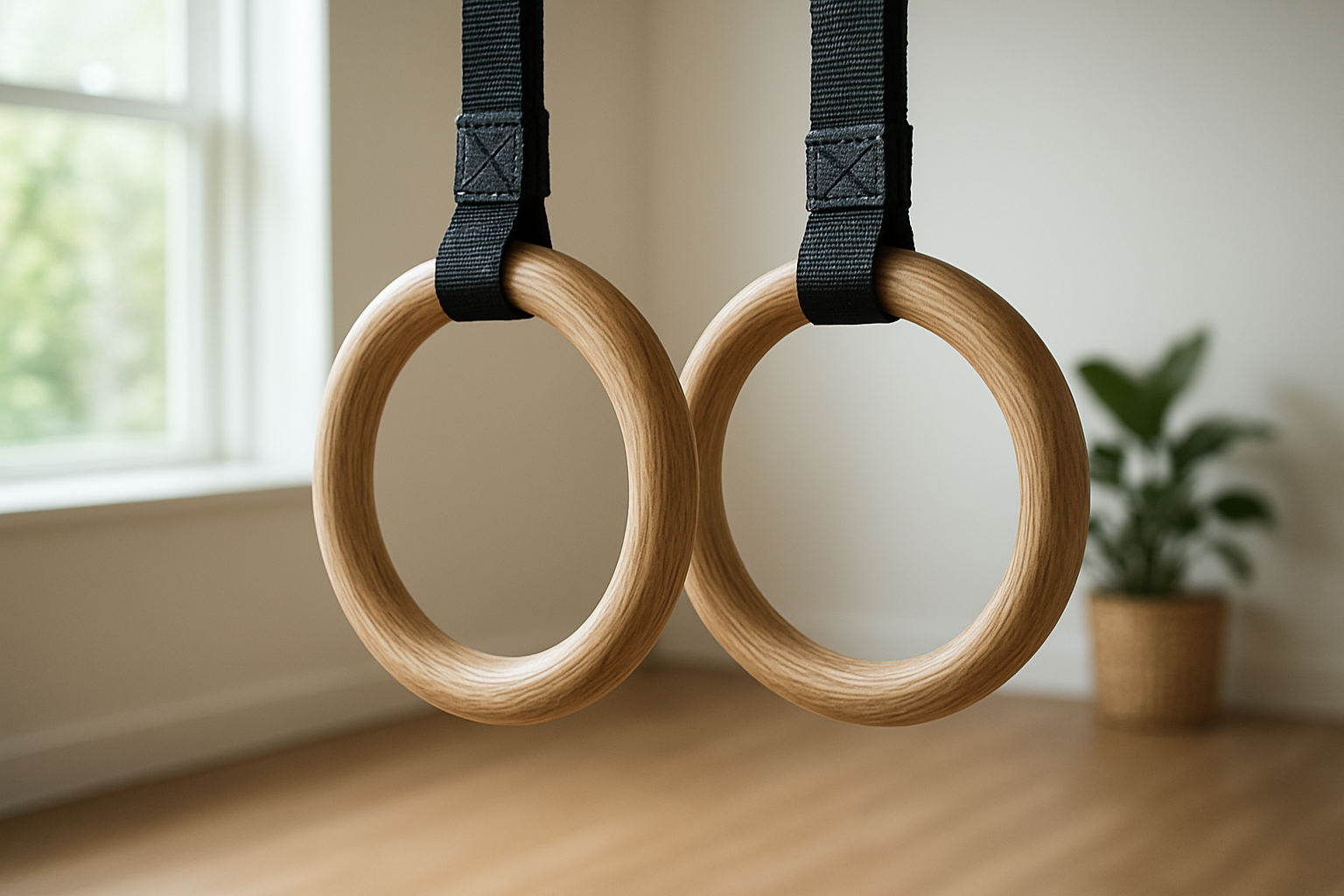
Most training rings are made from wood, plastic, or a similar synthetic material. Material alone does not determine quality, but it affects grip feel, maintenance, and how the rings behave in different environments.
Wooden rings are often chosen for their natural-feeling grip and ability to absorb some moisture. Plastic rings can be practical for outdoor or humid use, although surface texture and comfort vary. In either case, inspect the handle diameter, edges, finish, and consistency between the two rings.
A comfortable handle matters because prolonged gripping can become a limiting factor before the target muscles are adequately trained. Rings should not have sharp seams, rough molding marks, exposed hardware, or a finish that becomes unusually slippery when your hands sweat.
Grip comfort is related to, but not identical to, grip strength. If your hands fatigue early, use progressive exercise choices and consider the guidance in this practical guide to improving grip strength without equipment.
3. Inspect straps, buckles, and adjustment markings
The straps and buckles deserve at least as much attention as the rings. They control height, spacing, and much of the connection between your body and the anchor. A good design should let you make symmetrical adjustments without guesswork.
Look for wide, durable-looking straps with stitching that appears even and intact. Adjustment hardware should close securely and release in a controlled way. Clear length markings can make it easier to set both sides at the same height, particularly when switching between rows, dips, and suspension holds.
Do not rely only on a large stated load capacity. A rating may depend on correct installation, the anchor, the strap path, and the type of movement. If the product documentation does not clearly explain the rating or setup, treat that uncertainty as a reason to keep researching.
The following comparison can help you evaluate a listing or inspect a set before regular use.
| What to look for | Why it matters | Warning sign |
|---|---|---|
| Even strap stitching | Supports consistent inspection and confidence in the connection | Loose threads, damaged edges, or uneven seams |
| Secure, readable buckles | Makes height changes easier and reduces setup ambiguity | Hardware slips, jams, or closes unclearly |
| Comfortable, smooth handles | Helps you maintain a controlled grip during longer sets | Sharp edges, exposed seams, or an unpleasantly slick surface |
| Useful length markings | Helps keep the rings at similar heights | No practical way to reproduce settings |
| Clear instructions and limits | Supports safer installation and exercise selection | Vague claims without setup details |
4. Match ring instability to your current ability
Rings can move independently, rotate, and drift outward. That movement requires active control from your hands, shoulders, trunk, and hips. It can make a basic push-up or row feel substantially different from the same exercise on a stable surface.
Start with positions where your feet remain on the floor. Ring rows, assisted squats, supported split squats, and incline push-ups allow you to change the difficulty by adjusting body angle or foot position. Progress only when you can keep the straps controlled and your joints comfortable.
Ring dips and muscle-ups deserve particular caution. They combine instability with demanding shoulder and upper-body positions. If you experience persistent pain, unusual weakness, numbness, or a feeling that the shoulder is unstable, stop that exercise and seek advice from a qualified health professional rather than trying to push through it.
5. Consider the practical strengths and limitations
Where rings are strong
- They pack away more easily than many fixed training stations.
- One pair can support upper-body, core, and selected lower-body movements.
- Ring height can be changed for different exercises and ability levels.
- They encourage controlled movement rather than relying entirely on a fixed path.
- They can complement a broader home routine with bodyweight strength work.
Where rings are less convenient
- You need a reliable overhead anchor every time you train.
- Setup takes longer than simply stepping onto a floor mat.
- Uneven strap lengths can make exercises feel awkward or asymmetrical.
- Beginners may need regressions before they can use the most recognizable ring exercises.
- Outdoor use can expose straps and handles to moisture, dirt, and faster wear.
Rings also do not replace every form of resistance training. If your program depends on precise load increases, adjustable weights may be easier to measure. For leg hypertrophy comparisons, you may also find it useful to review the differences between front squats and back squats for quads.
6. Use a simple buying checklist
Before buying, write down your anchor, available space, storage plan, and first three exercises. Then check the product information against this list:
- Are the ring dimensions and handle material clearly stated?
- Do the straps appear long enough for your anchor and planned exercises?
- Can you identify how the buckles lock and how the straps are routed?
- Is the load guidance specific enough to assess responsibly?
- Are there clear care, inspection, and replacement instructions?
- Can you return the equipment if the handles or adjustment system do not suit you?
Pricing should be compared only after these basics are clear. A lower upfront cost may not be worthwhile if the straps are difficult to adjust, the documentation is incomplete, or replacement parts are unavailable. Conversely, paying more is not automatically evidence of better construction.
7. Avoid common setup and training mistakes
Common mistakes
- Using an unverified anchor: A strong-looking beam or door feature may not be designed for dynamic bodyweight loading.
- Starting with advanced exercises: Skill-based movements should follow controlled foundational work, not replace it.
- Ignoring equal strap length: Even small differences can alter body position and increase frustration.
- Training with worn equipment: Inspect stitching, buckles, and contact points before each session.
- Chasing instability: More movement is not automatically better. Choose a variation you can control through the full range.
What if the rings feel too difficult?
Raise the rings, shorten the movement, increase foot assistance, or use a more upright body angle. Reduce repetitions and focus on a steady tempo. If the challenge is mainly shoulder discomfort rather than muscular effort, stop and reassess your setup or exercise choice.
For recovery ideas after a demanding session, see these practical home recovery tools and the safe guidance on using a foam roller for sore legs.
8. Choose the best next action
If you already have a verified anchor and want portable bodyweight variety, compare two or three ring sets using the checklist above. If you lack a safe anchor, solve that problem first rather than buying rings and improvising an attachment point.
If your priority is stable strength progression, consider whether a pull-up bar, resistance bands, dumbbells, or a combination would be easier to use consistently. Rings are most valuable when their adjustability and movement freedom match your goals, space, and willingness to practice technique.
Final verdict: are gymnastic rings right for bodyweight training?
This gymnastic rings review for bodyweight training supports them as a flexible option for people who can provide a secure anchor and are prepared to progress gradually. Focus on strap construction, locking hardware, handle comfort, adjustment clarity, and safe exercise selection rather than appearance or headline load claims.
Choose rings when portability, exercise variety, and active control are priorities. Choose a more stable tool when simple setup, measurable loading, or fixed movement paths matter more. The right decision is conditional: dependable equipment and a suitable training environment matter just as much as the rings themselves.
For more home-training guidance, visit the LaokFitness homepage.