Quick verdict: choose yoga if flexibility, mobility, balance, and varied movement are your main priorities. Choose Pilates if you want more structured core training, posture work, and controlled strength. If you want both, combining them with progressive resistance training is usually the most complete approach.
Yoga and Pilates overlap, but they are not interchangeable. Yoga typically combines poses, breathing, balance, and mobility, while Pilates emphasizes controlled movement, trunk stability, alignment, and muscular endurance. The better choice depends on what you mean by “stronger” and which areas of flexibility you want to improve.
This guide compares yoga vs Pilates for flexibility and strength using practical criteria: movement range, resistance, core demand, balance, intensity, accessibility, and how easily each practice fits into a broader fitness plan.
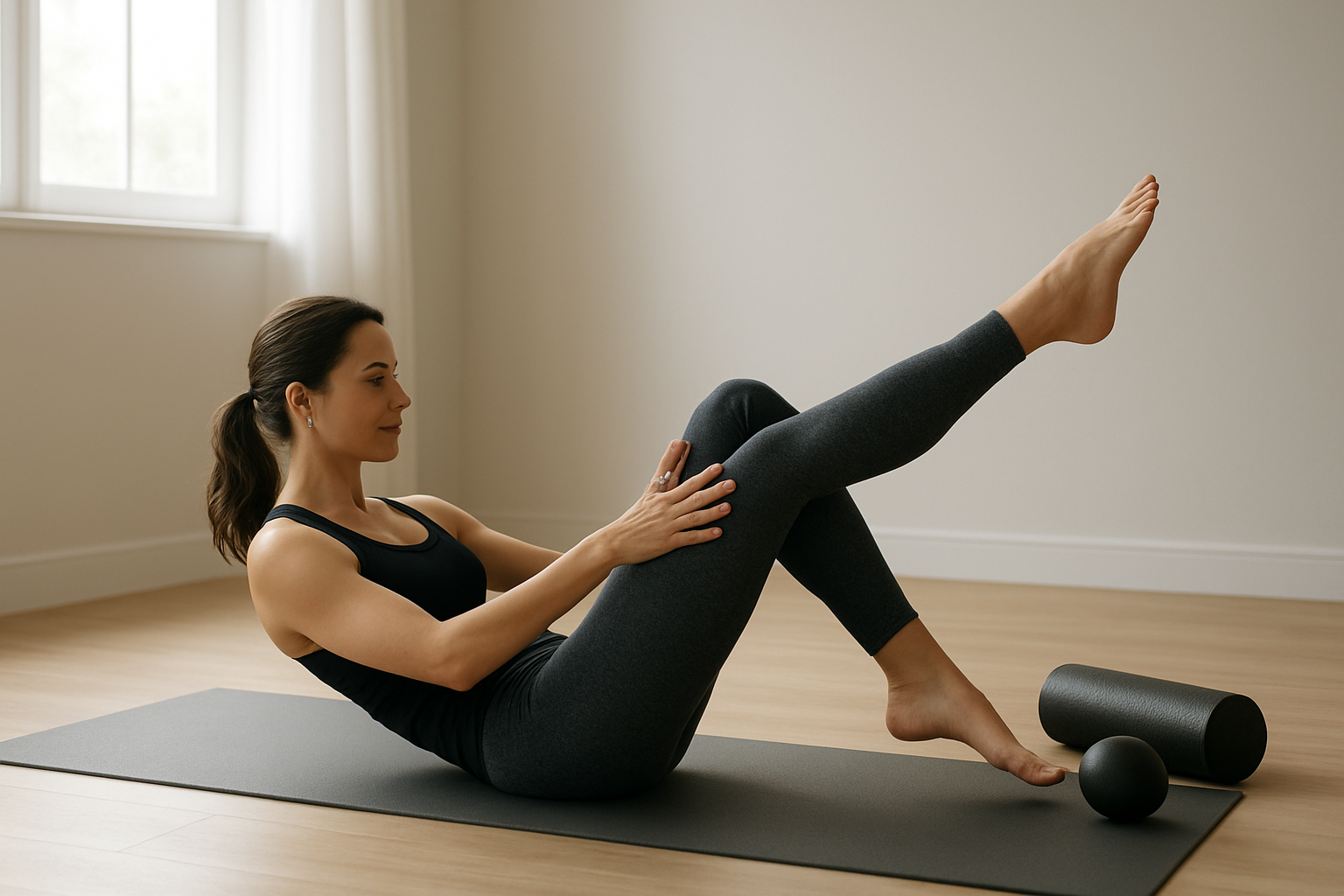
1. Define the result you actually want
Before choosing a class or video, identify the outcome you care about most. “Flexibility” may mean touching your toes, rotating your spine, opening your hips, or moving comfortably through daily tasks. “Strength” may mean better muscular endurance, stronger legs, improved trunk control, or building noticeable muscle.
Yoga and Pilates can contribute to several of these goals, but neither automatically excels at every type of fitness. The Physical Activity Guidelines for Americans recommend a combination of aerobic activity and muscle-strengthening work, so your choice should fit into a larger weekly routine.
- For general mobility: look for a practice that moves several joints through comfortable ranges.
- For core control: prioritize slow, precise exercises that challenge your trunk without sacrificing breathing or alignment.
- For muscle growth: plan to include progressively heavier resistance, since bodyweight classes may eventually become too easy.
- For balance: choose exercises that challenge single-leg control, coordination, and stable transitions.
2. Compare yoga and Pilates by training emphasis
Yoga is a broad category rather than one single workout. A gentle class may emphasize breathing and sustained stretches, while a faster vinyasa class can challenge the shoulders, legs, coordination, and cardiovascular system. Yoga can improve flexibility and strength, but the result depends heavily on the style, instructor, pace, and poses selected.
Pilates usually follows a more consistent movement system. Exercises often involve the abdominals, hips, back, shoulders, and muscles that help you maintain posture. The NHS describes Pilates as a form of exercise focused on balance, posture, strength, and flexibility.
The main practical difference is emphasis. Yoga gives you more variety in positions and movement patterns; Pilates gives you more repetition and control within a structured sequence.
Comparison table: yoga vs Pilates for flexibility and strength
| Category | Yoga | Pilates | What to look for | Warning sign |
|---|---|---|---|---|
| Flexibility | Often broad, with standing, seated, hip, shoulder, and spinal positions | Usually combines mobility with controlled strengthening | Gradual range of motion without forcing an end position | Pain, bouncing, or aggressive stretching |
| Strength | Uses bodyweight, holds, transitions, and balance | Uses controlled repetitions, leverage, and core-focused resistance | Muscles working while breathing remains controlled | Relying on momentum or losing alignment |
| Core training | Varies by style; stronger in flows, balances, and arm supports | Usually a central feature | Ribs, pelvis, and spine staying coordinated | Neck or lower back taking over |
| Balance | Often includes one-leg poses and unstable transitions | Challenges control through precise positioning | Stable setup and a safe option for support | Practicing near obstacles or rushing transitions |
| Intensity | Ranges from restorative to demanding | Ranges from gentle mat work to challenging classes | A level that permits consistent technique | Choosing advanced classes because they seem faster |
| Equipment | Usually a mat, with optional blocks or straps | Mat work may use small props; studio Pilates may use machines | Equipment that improves positioning or resistance | Using unstable or unsuitable equipment at home |
3. Which practice is better for flexibility?
Yoga is often the stronger choice when flexibility is your primary goal because it exposes you to a wide range of positions and sustained stretches. Different styles can target the hips, hamstrings, shoulders, ankles, and spine in the same week.
Pilates can also improve usable mobility, especially when stiffness is connected to poor control or weak supporting muscles. It may help you move through a range of motion with better awareness rather than simply pushing farther into a stretch.
For either practice, consistency matters more than forcing a deep position. The NHS guidance on strength and flexibility lists both yoga and Pilates among activities that can support flexibility. A useful approach is to practice two or three times per week and increase range gradually.
Choose yoga for flexibility when:
- You want more variety in stretching positions.
- You enjoy breathing, balance, and mindful movement.
- Your goals include hip, shoulder, or spinal mobility.
- You can select a class appropriate for your current range of motion.
Choose Pilates for flexibility when:
- You want mobility work tied closely to posture and trunk control.
- You prefer shorter, repetitive sequences with clear technique cues.
- You feel stiff because certain muscles are weak or poorly coordinated.
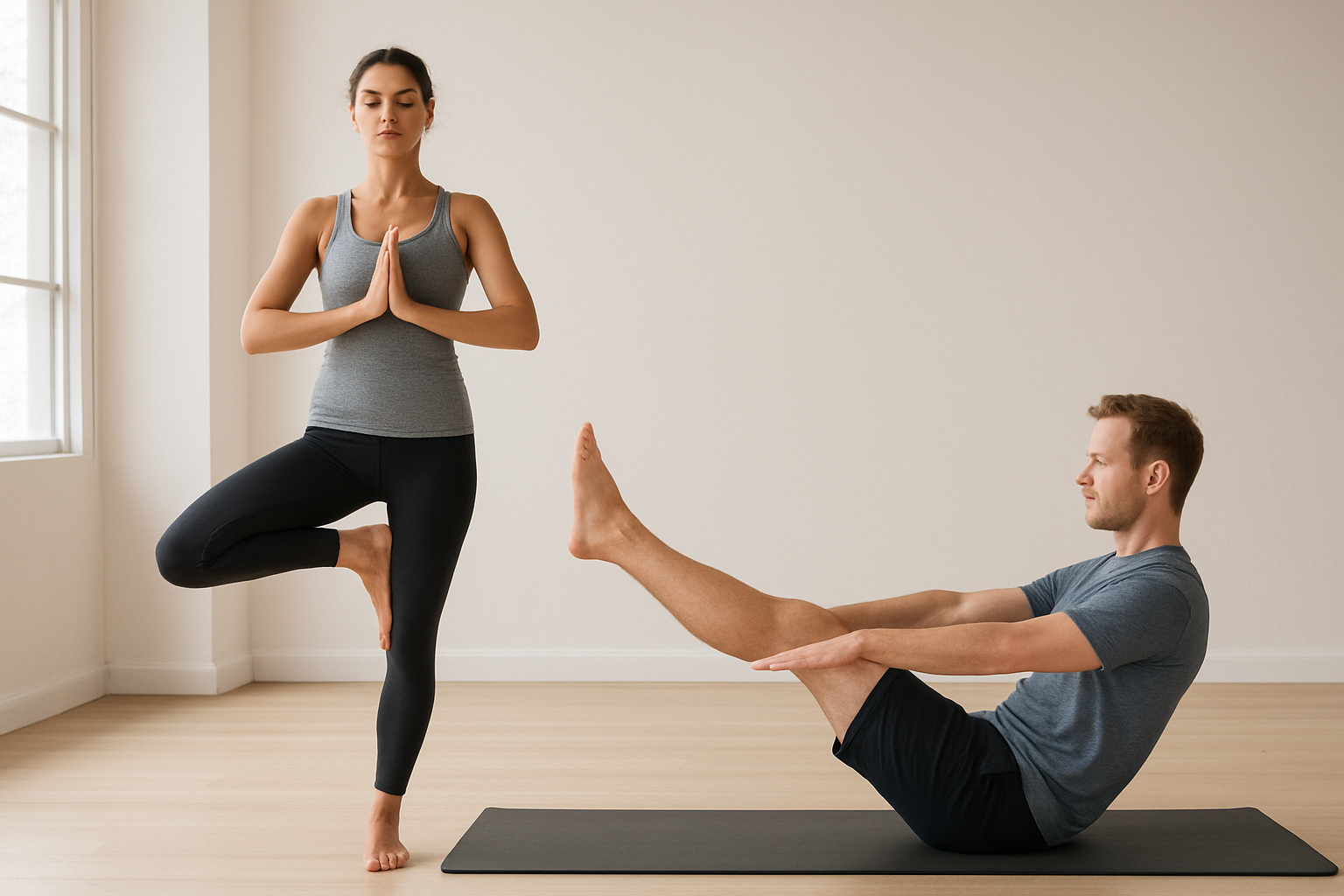
4. Which practice is better for strength?
Pilates usually has the clearer strength emphasis for beginners who want controlled core, hip, and postural work. Slow repetitions can make relatively simple movements challenging, particularly when you maintain alignment and avoid using momentum.
Yoga can build meaningful strength through planks, chair poses, lunges, balances, and repeated transitions. However, the strength stimulus varies widely. A restorative session may do little for strength, while a demanding flow or advanced bodyweight practice can be strenuous.
Neither method is automatically the best tool for maximum strength or muscle gain. If that is your main goal, add a progressive resistance routine. You can use the LaokFitness guide to choosing dumbbell weight to plan a more measurable strength component.
5. Match the choice to your situation
For beginners
Choose a beginner class in either discipline, but favor Pilates if you want more direct instruction on core control and alignment. Favor gentle or foundational yoga if you want to explore movement variety and flexibility without a fast pace.
For athletes and runners
Yoga may help you address mobility, breathing, balance, and recovery. Pilates can support trunk control and hip stability, which may complement running or strength training. Neither should replace the gradual workload progression required for sport-specific performance. If running is part of your plan, compare your weekly balance with the advice in our guide to sprints versus long-distance running.
For older adults or people returning to exercise
Both can be adapted, but stability and supervision matter. Use a wall, chair, or instructor-approved support when balance is uncertain. Avoid treating discomfort as proof that an exercise is effective; stop if you feel sharp pain, numbness, dizziness, or unusual shortness of breath.
For home workouts
Mat Pilates and gentle yoga require little equipment and can be practical in a small space. Make sure the floor is not slippery, remove trip hazards, and leave enough room to extend your arms and legs.
6. Build a balanced weekly plan
You do not have to choose only one. A simple schedule might include two Pilates sessions for controlled strength, two yoga sessions for mobility and balance, and separate aerobic or resistance training based on your goals.
- Flexibility priority: yoga two or three times weekly, plus strength training at least twice weekly.
- Core and posture priority: Pilates two or three times weekly, plus walking, cardio, or full-body resistance work.
- General fitness priority: alternate yoga and Pilates, then add aerobic exercise and progressive strength training.
- Limited time: choose the practice you will perform consistently and add short strength exercises such as squats, rows, presses, or carries.
Adults generally benefit from muscle-strengthening activity on at least two days per week, according to the federal activity guidelines. A yoga or Pilates session may count toward that goal when it challenges the major muscle groups sufficiently, but do not assume every gentle class provides the same stimulus.
7. Common mistakes when choosing yoga or Pilates
- Choosing by name alone: “Yoga” and “Pilates” each include easy and demanding formats. Read the class description.
- Confusing soreness with progress: soreness is not a reliable measure of flexibility or strength improvement.
- Forcing flexibility: stretching should be controlled and tolerable, not painful.
- Ignoring progressive overload: strength gains may stall if the exercises never become more challenging.
- Replacing all cardio or resistance work: use yoga or Pilates as part of a complete routine when broader fitness is the goal.
- Copying advanced videos: modify poses and exercises before technique breaks down.
8. Checklist before your first session
- Choose a beginner or appropriately labeled class.
- Check whether the session emphasizes mobility, strength, recovery, or a combination.
- Clear a safe exercise area and use a stable mat.
- Start with a shorter session if you are inactive or returning after a break.
- Keep movements slow enough to maintain breathing and alignment.
- Record how your joints feel during and after the session, not just how difficult it felt.
- Progress one variable at a time: duration, resistance, range, or exercise complexity.
9. What if you have pain, an injury, or a medical concern?
Modify or stop an exercise if it causes sharp pain, persistent joint pain, numbness, loss of strength, dizziness, or unusual breathing difficulty. If you have an injury, recent surgery, significant health condition, or are pregnant or recently postpartum, ask a qualified health professional whether the class is appropriate. The NHS exercise safety guidance also recommends seeking professional advice when you are unsure whether a workout suits your health status.
10. The practical final decision
For yoga vs Pilates for flexibility and strength, yoga is usually the better starting point for broader flexibility, balance, and movement variety. Pilates is usually the better fit for structured core work, posture, and controlled muscular endurance.
Choose the one that matches your immediate priority and that you can practice consistently. If your goal includes substantial strength, pair either practice with progressive resistance training; if your goal is comfortable movement, use gentle progression rather than chasing the deepest stretch.