The best home gym accessories for beginners are resistance bands, adjustable dumbbells, a stable exercise mat, and a simple way to track workouts. Start with equipment that supports several exercises rather than buying a large collection of specialized items.
A beginner-friendly home gym should make regular training easier, not create another storage problem. This guide ranks practical accessories by versatility, learning curve, space requirements, safety, and how well each item supports common strength and conditioning movements.
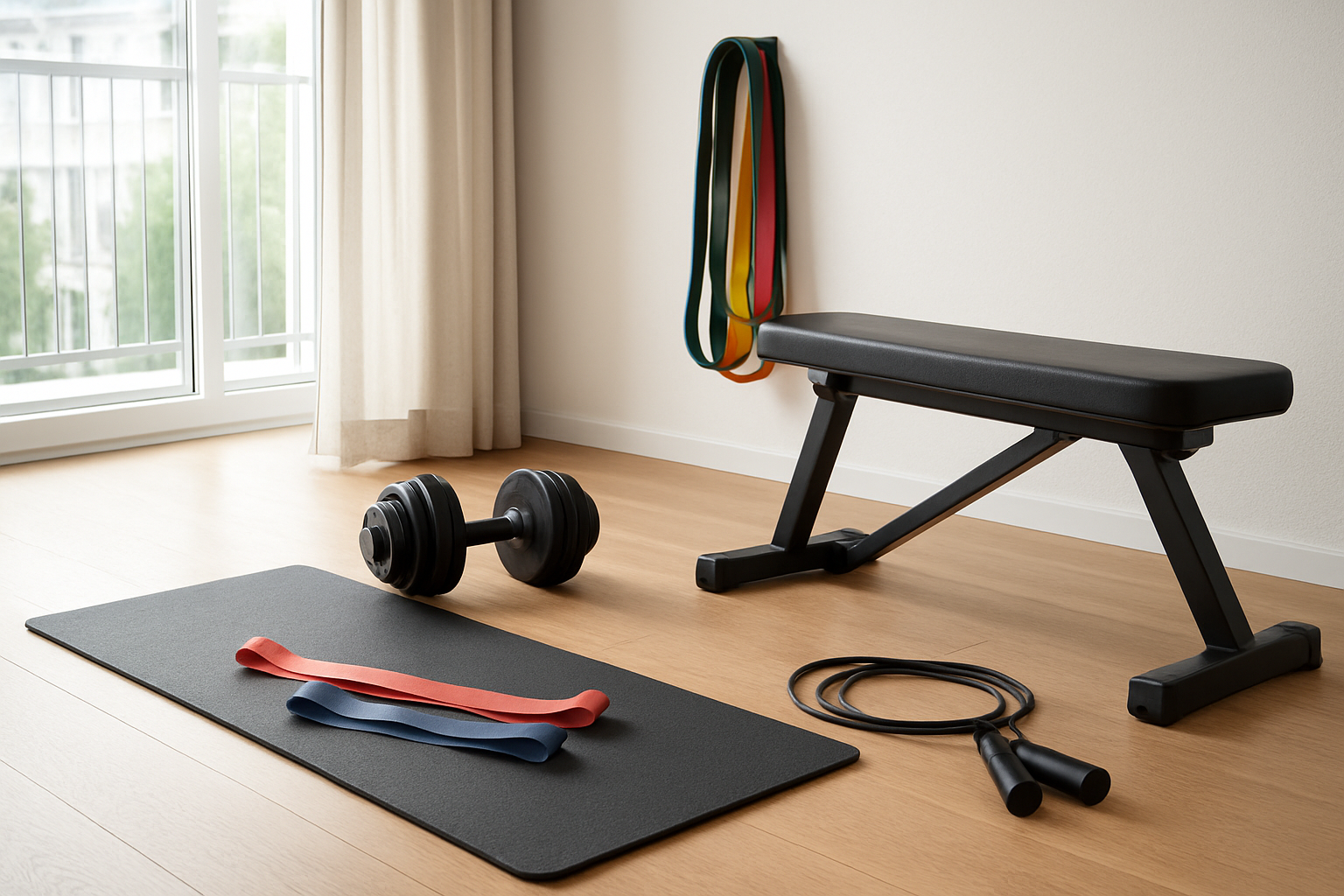
1. Choose equipment that matches your first training plan
Before shopping, decide what you expect to do two or three times per week. A simple beginner plan might include squats, hinges, presses, rows, lunges, loaded carries, core exercises, and short cardio sessions.
Adults are generally advised to include muscle-strengthening activity on at least two days each week, along with regular aerobic activity. Your home setup does not need to be elaborate to support that starting point. The CDC’s adult activity guidelines provide the broader weekly framework.
- For general strength: prioritize bands, dumbbells, and a stable surface.
- For mobility and floor work: choose a mat and possibly yoga blocks.
- For conditioning: consider a jump rope, step, or space for body-weight circuits.
- For limited space: choose equipment that stores in a drawer or closet.
2. The best home gym accessories for beginners, ranked
1. Resistance bands
Best for: the most versatile first purchase
A set of loop bands or tube bands can support rows, presses, squats, lateral walks, pulldowns, curls, triceps work, and mobility drills. Different resistance levels allow you to adjust an exercise without needing a full rack of weights.
Look for several resistance levels, durable handles if you prefer tube bands, and clear information about safe anchor use. A band set is especially useful for beginners who are still learning which movements they enjoy. ACE maintains a library of beginner band exercises that can help you choose movements and practice variations.
Limitations: Band tension changes throughout a movement, and the resistance may be difficult to measure precisely. Inspect bands regularly for cracks, cuts, or thinning, and do not anchor them to an unsuitable door or fixture.
2. Adjustable dumbbells
Best for: progressive full-body strength training
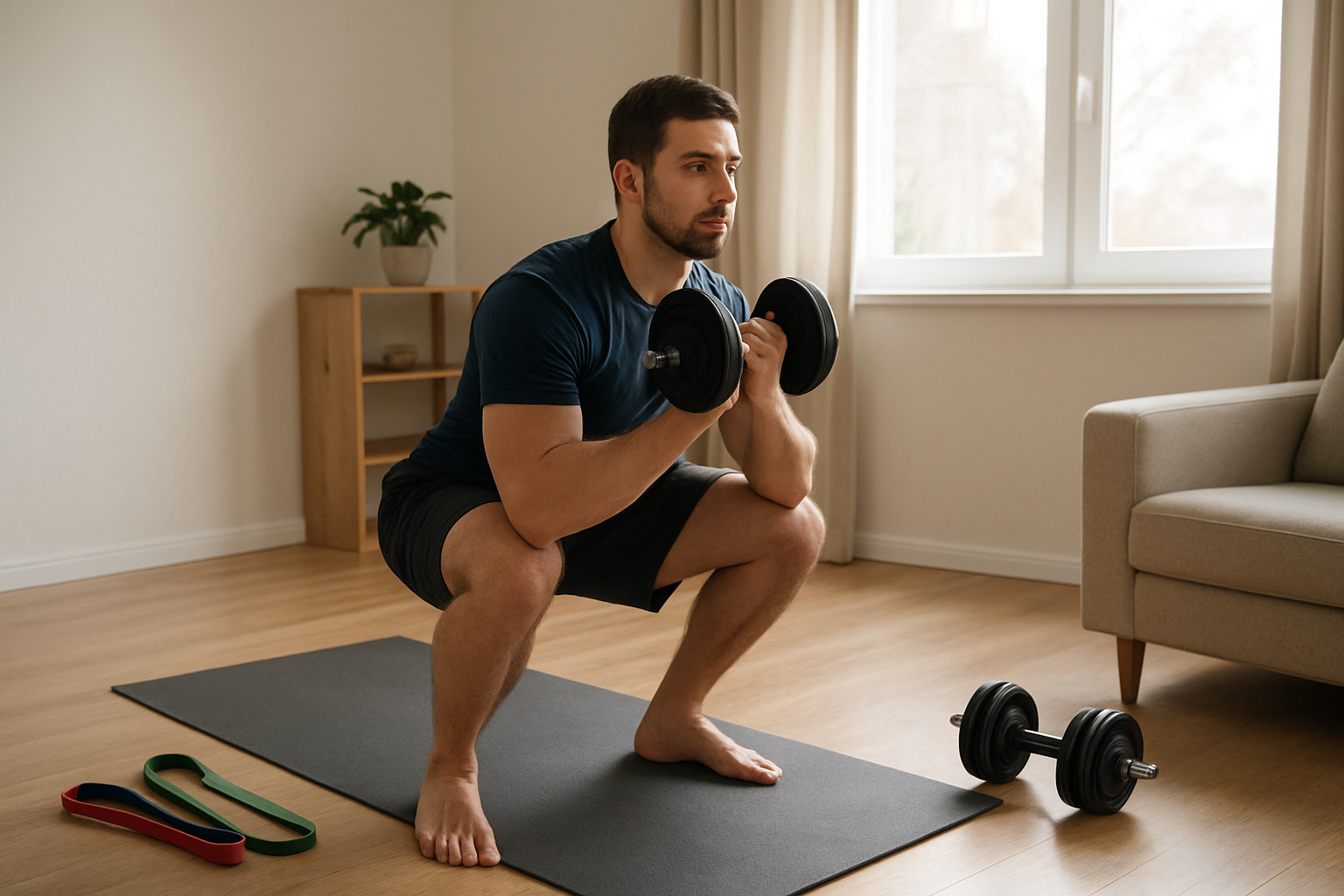
Adjustable dumbbells combine several weight options in a relatively compact format. They are useful for goblet squats, Romanian deadlifts, rows, overhead presses, floor presses, split squats, and carries.
Choose a design with a locking mechanism that feels secure and a weight range appropriate for your current ability and likely progression. Beginners should also check the length of the dumbbell at lighter settings, because an unusually long handle can affect pressing and rowing positions.
For buying considerations specific to this category, see our guide to adjustable dumbbells for home strength training.
Limitations: Some adjustment systems are slower between sets than fixed dumbbells. The mechanisms can also require more care than a simple solid weight, so follow the manufacturer’s instructions and avoid dropping them.
3. Exercise mat
Best for: floor exercises, comfort, and a defined workout area
A mat does not add resistance, but it makes kneeling, planks, mobility work, stretching, and floor presses more comfortable. It can also give you a consistent area for training and help protect the floor from sweat and minor contact.
Choose thickness according to your needs. A thinner mat may feel more stable for standing movements, while extra cushioning can be more comfortable for knees, hips, or spinal floor work. A textured underside is useful if your floor is smooth.
Limitations: Very soft mats may make balance exercises less stable. Clean the mat according to its material and allow it to dry fully before storage.
4. Adjustable workout bench
Best for: expanding dumbbell exercise options
A bench can support seated presses, supported rows, step-ups, split squats, and chest-supported movements. An adjustable backrest offers more options than a flat bench, but stability matters more than the number of positions.
Check the bench’s footprint, height, weight capacity, frame construction, and how firmly the adjustment mechanism locks. Place it on a level surface with enough clearance to lower dumbbells safely.
Limitations: A bench takes more space and adds cost. It is not essential for a complete beginner routine because many movements can be performed standing or from the floor.
5. Pull-up bar or doorway training bar
Best for: upper-body pulling and grip practice
A pull-up bar can add vertical pulling to a home routine, while assisted hangs, scapular pulls, and band-assisted pull-ups provide more approachable starting points. It can complement dumbbell rows and band rows, which train a different pulling pattern.
Check whether the bar is designed for your doorframe, whether it requires permanent installation, and whether the mounting surface is suitable. Follow the installation instructions carefully and test the setup gradually rather than loading it immediately with dynamic movements.
Limitations: Doorway compatibility varies, and an unstable setup can be hazardous. Renters or people with unusual doorframes may prefer bands instead.
6. Jump rope
Best for: compact cardio and coordination practice
A jump rope is inexpensive to store and can provide short intervals of moderate-to-vigorous activity. It is also easy to use outdoors or in a room with sufficient ceiling height and floor clearance.
Beginners can start with marching, low hops, or short timed intervals rather than trying to jump continuously. Choose a rope that can be adjusted to your height and use supportive shoes on an appropriate surface.
Limitations: Repeated jumping may aggravate existing foot, ankle, knee, or hip symptoms. If impact causes pain, choose walking, cycling, or low-impact intervals instead and seek professional advice when symptoms persist.
7. Small accessories: yoga blocks, sliders, and a timer
Best for: mobility, exercise variety, and better organization
Small accessories are useful after you know what your routine needs. Blocks can bring the floor closer during mobility work, sliders can add controlled core and lower-body variations, and a timer can make interval sessions easier to follow.
These items are inexpensive and easy to store, but they should not come before equipment that supports your main training movements. Treat them as problem-solvers rather than the foundation of your gym.
3. Compare the main options before buying
The table below summarizes what each accessory does well and the warning signs that should make you pause.
| Accessory | What to look for | Best use | Warning sign |
|---|---|---|---|
| Resistance bands | Several levels, intact material, secure handles or anchor design | Full-body strength, warm-ups, travel | Cracks, fraying, or unsafe anchoring |
| Adjustable dumbbells | Secure locking system, useful weight range, manageable length | Progressive strength training | Loose plates or unclear adjustment instructions |
| Exercise mat | Appropriate thickness, grip, easy cleaning | Floor work and mobility | Sliding or excessive softness |
| Workout bench | Stable frame, secure adjustment, suitable footprint | Presses, supported rows, step-ups | Rocking, weak hinges, or poor floor contact |
| Pull-up bar | Correct doorframe fit and reliable installation | Vertical pulling and hangs | Movement, slipping, or incompatible mounting |
| Jump rope | Correct length, comfortable handles, suitable floor | Short cardio intervals | Pain from impact or insufficient clearance |
4. Build a useful beginner setup in stages
Start with the smallest setup that supports your intended routine. A practical first stage is a resistance-band set, exercise mat, and a clear space where you can train without moving furniture each time.
Add adjustable dumbbells when body-weight and band exercises no longer provide enough challenge or when you want more predictable loading. A bench becomes worthwhile when it solves a specific limitation, such as needing supported rows or more comfortable pressing.
ACSM’s current resistance-training guidance emphasizes consistency and gradual progression rather than complicated equipment. In practice, that means increasing repetitions, resistance, control, or training volume over time while keeping technique repeatable. Review ACSM’s resistance-training principles before building a more advanced setup.
5. Common selection mistakes
- Buying for an imaginary routine: Choose accessories for exercises you can realistically perform at home.
- Ignoring storage: Measure your closet, floor area, and ceiling height before purchasing bulky equipment.
- Choosing maximum resistance too early: A beginner needs manageable progression and sound technique, not the heaviest option available.
- Overlooking stability: A bench, pull-up bar, or step must remain secure during the movements you plan to perform.
- Using accessories to avoid learning form: Equipment does not replace controlled technique. For deadlift practice, use our beginner deadlift form guide.
- Expecting one item to solve every goal: Strength, mobility, and cardio may require different tools or simply different ways to use the same tool.
6. Troubleshooting: what if your setup is not working?
What if you lose motivation?
Reduce friction. Keep the mat visible, store bands where you can reach them, and write down a short routine with a clear starting time. A simple program you repeat is more useful than a complicated plan you rarely begin.
What if an exercise causes pain?
Stop the movement and check whether the load, range of motion, surface, or technique is contributing. Persistent pain, swelling, numbness, dizziness, or symptoms after an injury warrant advice from a qualified healthcare professional.
What if you have very little space?
Use bands, one adjustable dumbbell pair, a foldable mat, and body-weight movements. You can still train major movement patterns without installing permanent equipment.
7. Final buying checklist and recommendations
- Measure your available floor, storage, and ceiling space.
- Write down the exercises your first month of training will include.
- Choose equipment that supports at least three or four useful movements.
- Check stability, adjustment locks, material condition, and care instructions.
- Leave room in your budget for safe footwear, comfortable clothing, or instruction if needed.
Best low-cost starting point: resistance bands plus an exercise mat.
Best strength-focused setup: adjustable dumbbells, then add a stable bench if your routine calls for it.
Best small-space setup: bands, a foldable mat, and a jump rope if impact is comfortable.
Best balanced beginner setup: bands, adjustable dumbbells, a mat, and a simple workout log.
The best home gym accessories for beginners are the ones that help you train consistently, progress gradually, and exercise safely in the space you actually have. Buy the foundation first, then add accessories only when your routine shows you what is missing.