The best hamstring exercises for strength and flexibility combine loaded hip hinges, knee-flexion work, eccentric training, and controlled stretching. For most people, a practical starting combination is the Romanian deadlift, sliding leg curl, Nordic hamstring progression, and a gentle post-workout stretch.
Your hamstrings help extend the hip, bend the knee, and control movement when you run, jump, squat, or change direction. Training them through more than one function can improve strength and movement quality, while flexibility work can help you reach comfortable range of motion. This guide compares useful options and shows how to combine them without making your program unnecessarily complicated.
1. Decide what your hamstrings need most
“Hamstring training” can mean several different goals. A runner may need eccentric strength and tolerance for long strides, while a beginner may primarily need basic strength and comfortable movement. Your exercise choices should reflect the result you want rather than simply copying the most difficult drill.
- For overall strength: prioritize Romanian deadlifts, good mornings, and loaded bridges.
- For knee-flexion strength: use machine, band, towel, or stability-ball leg curls.
- For eccentric control: use Nordic hamstring progressions and slow lowering phases.
- For flexibility: use dynamic movement before training and relaxed static stretching afterward.
- For running or field sports: combine strength work with gradual sprint exposure rather than relying on stretching alone.
Research reviews generally support eccentric training for improving hamstring strength and muscle characteristics, while stretching-based methods can improve flexibility. The most useful plan usually includes both rather than treating strength and flexibility as competing goals. See this systematic review of hamstring injury-prevention strategies and this review of eccentric training and flexibility for the evidence background.
2. Compare the best hamstring exercises
The following exercises cover the main functions of the hamstrings. Begin with the versions you can perform smoothly and keep one or two repetitions in reserve while learning the movement.
Use this comparison to match an exercise to your goal.
| Exercise | Best for | What to look for | Warning sign |
|---|---|---|---|
| Romanian deadlift | Overall posterior-chain strength | Hips move back, spine stays controlled, hamstrings lengthen under load | Rounding your back to reach lower |
| Nordic hamstring progression | Eccentric knee-flexion strength | Slow lowering with assistance as needed | Dropping suddenly or cramping severely |
| Sliding leg curl | Home training and knee-flexion strength | Hips remain lifted as the legs extend and return | Lower back taking over |
| Stability-ball leg curl | Beginner-friendly hamstring control | Steady tempo and level hips | Hips collapsing between repetitions |
| Single-leg Romanian deadlift | Balance and side-to-side control | Square hips and slow reach | Pelvis opening outward |
| Glute-ham raise | Advanced combined hip and knee strength | Controlled range with assistance if needed | Forcing the full range before earning it |
| Leg-curl machine | Simple progressive loading | Full comfortable range and stable hips | Using momentum or lifting the pelvis |
| Supine hamstring stretch | Post-workout flexibility | Gentle tension without forcing the knee straight | Numbness, tingling, or sharp pain |
1. Romanian deadlift
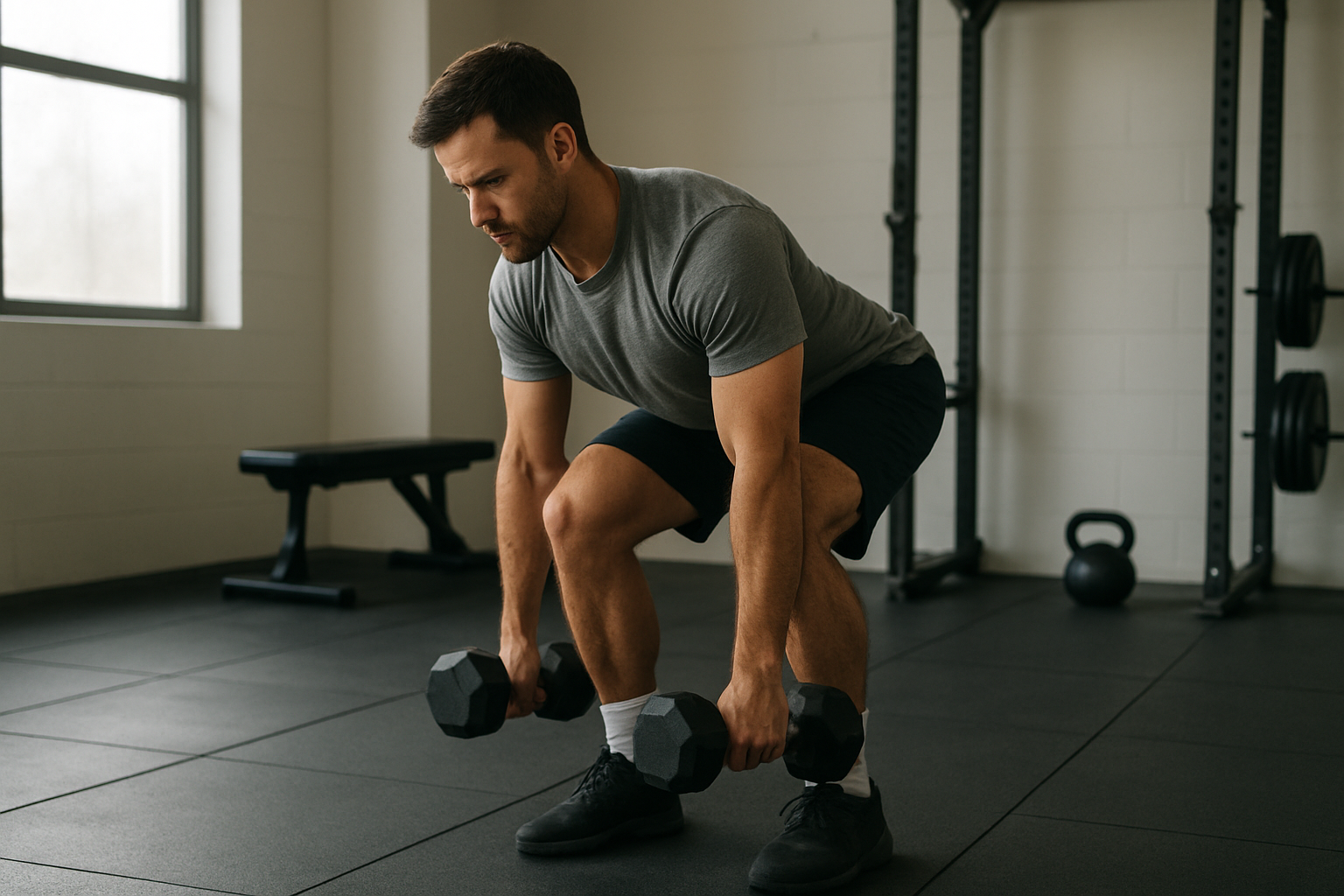
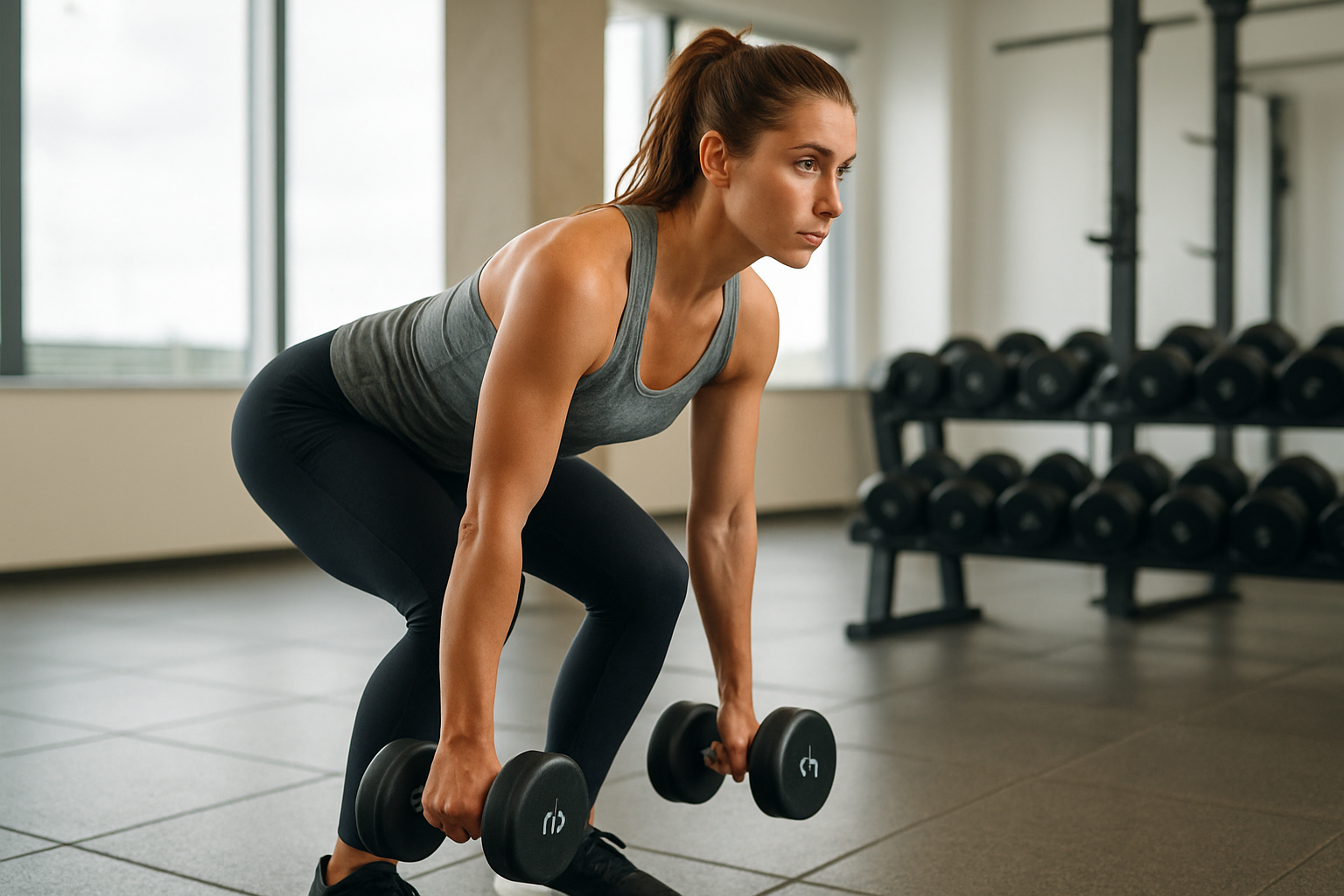
The Romanian deadlift is one of the most efficient choices for building strength while the hamstrings are lengthened. Hold dumbbells or a barbell, soften your knees, push your hips backward, and lower only as far as you can keep the load close and your torso controlled.
Use 2–4 sets of 6–10 repetitions. The limiting factor should usually be hamstring and hip strength, not the need to reach the floor.
2. Nordic hamstring progression
Nordic curls emphasize the hamstrings as they resist knee extension during the lowering phase. Anchor your ankles, keep your body aligned from knees through shoulders, and lower slowly. Use your hands to catch yourself and assist the return if the full movement is too demanding.
Start with 2–3 sets of 3–6 controlled repetitions once or twice per week. Lower volume is often more practical for beginners because this exercise can create substantial soreness. Evidence reviews have found positive effects on eccentric strength and hamstring muscle architecture, but the exercise should still be progressed gradually. A recent umbrella review of Nordic hamstring exercise provides additional context.
3. Sliding leg curl
Place your heels on furniture sliders or small towels. Lift your hips, slowly extend your legs, then draw your heels back toward your body. If the full version is difficult, lower your hips slightly or perform only the return phase.
This is a useful home alternative to a machine leg curl. Try 2–3 sets of 6–12 repetitions, keeping the movement slow enough that your hips do not sag.
4. Stability-ball leg curl
The stability-ball version is often easier to learn than a Nordic curl while still challenging knee flexion and hip control. Keep your ribs relaxed, press through your heels, and avoid turning the exercise into a fast rolling motion.
Use 2–3 sets of 8–15 repetitions. It can work well in a general fitness routine or as a bridge toward sliding curls.
5. Single-leg Romanian deadlift
This variation trains the hamstrings while asking you to control your pelvis and balance on one leg. Hold a light dumbbell in the opposite hand, reach the free leg backward, and keep your hips facing the floor.
Perform 2–3 sets of 6–10 repetitions per side. Reduce the load or lightly touch a wall if balance prevents you from feeling the hamstrings.
6. Hamstring stretching
Stretching can improve your available range of motion, but it should not be used to force a painful sensation or compensate for poor strength. A supine strap stretch is usually easier to control than an aggressive standing reach: lie on your back, raise one leg, and gently draw it toward you while keeping the knee slightly relaxed.
Hold a comfortable stretch for 20–40 seconds and repeat one or two times per side after training. Before exercise, choose dynamic leg swings or easy marching instead of long, intense static holds.
3. Build a balanced hamstring routine
You do not need all eight exercises in one session. A simple routine can include one hip-dominant movement, one knee-dominant movement, and one flexibility drill.
- Beginner routine: stability-ball leg curl, light Romanian deadlift, and supine stretch.
- Strength-focused routine: Romanian deadlift, leg-curl machine, and Nordic progression.
- Home routine: dumbbell Romanian deadlift, sliding curl, and single-leg Romanian deadlift.
- Runner-focused routine: Romanian deadlift, low-volume Nordic progression, calf work, and gradual running drills.
Train hamstrings two times per week with at least a day between demanding sessions. Add weight, repetitions, range of motion, or control—not all four at once. If you also train glutes, your programming may benefit from comparing movement patterns in deadlifts versus hip thrusts for glute growth.
4. Avoid common selection mistakes
- Choosing difficulty over fit: Nordic curls are useful, but they are not mandatory for everyone.
- Stretching only: flexibility work does not replace progressive strength training.
- Using the same rep range for everything: heavy hinges, bodyweight eccentrics, and stretches need different loading strategies.
- Chasing range of motion: a deeper position is not automatically better if control disappears.
- Ignoring recovery: sudden increases in sprinting, lifting, or eccentric work can leave the hamstrings unprepared.
- Training through warning pain: sharp pain, bruising, sudden weakness, or a snapping sensation needs more caution than ordinary soreness.
5. What if your hamstrings feel tight or painful?
A feeling of tightness can come from limited mobility, fatigue, unfamiliar loading, or sensitivity after a previous injury. Do not assume that stretching harder is the answer. Reduce intensity, use a comfortable range, and check whether symptoms change with a slower warm-up.
If you felt a sudden pull, developed bruising or swelling, cannot walk normally, or have persistent weakness, stop demanding hamstring exercises and seek assessment from a qualified healthcare professional. Previous injuries can leave strength deficits even after day-to-day movement feels normal, as discussed in this systematic review of hamstring recovery.
6. Practical checklist before you start
- Choose one exercise that loads the hamstrings through hip movement.
- Choose one exercise that challenges knee flexion.
- Use an easier variation if you cannot control the full range.
- Warm up with several minutes of easy movement and dynamic drills.
- Keep one or two repetitions in reserve during your first sessions.
- Track soreness, performance, and any side-to-side difference.
- Progress gradually over several weeks rather than testing your limit immediately.
Final recommendation by scenario
For general strength: make the Romanian deadlift your main lift and pair it with a leg curl. For flexibility: add controlled dynamic movement before training and relaxed static stretching afterward. For runners and field-sport athletes: include a modest Nordic progression, but also build sprint volume gradually. For beginners at home: start with a dumbbell Romanian deadlift, stability-ball or sliding curls, and a gentle supine stretch.
The best hamstring exercises for strength and flexibility are the ones you can perform consistently, progress without losing control, and recover from between sessions. Start with a manageable combination, observe how your body responds, and add complexity only when the basic movements feel steady.