For most beginners, bodybuilding is the easier starting point if your main goal is muscle size or general appearance. Choose powerlifting if you are more motivated by improving your squat, bench press, and deadlift numbers.
Both approaches can build muscle, strength, confidence, and useful training habits. The better choice depends less on which style is “best” and more on what you want to measure, how you enjoy training, and whether your schedule supports the practice involved.
1. Decide what you want your training to improve
Before choosing a program, identify the result you care about most. Your answer will influence exercise selection, repetition ranges, rest periods, and how you judge progress.
- Choose bodybuilding if you want to add muscle, improve body proportions, or train individual muscle groups more directly.
- Choose powerlifting if you want to develop maximum strength in the squat, bench press, and deadlift.
- Use a hybrid approach if you want to become stronger while also building a balanced physique.
The American College of Sports Medicine’s resistance-training guidance separates strength and hypertrophy as related but distinct goals. It also emphasizes consistency and gradual progression rather than unnecessary complexity.
For a beginner, the most important program is one you can perform regularly with controlled technique. A sophisticated plan will not compensate for missed sessions, poor recovery, or exercises you cannot perform safely.
2. Understand the main difference between bodybuilding and powerlifting
Bodybuilding is organized around muscle development. You usually train several movement patterns and use a mix of compound and isolation exercises to give different muscles enough work.
Powerlifting is organized around performance in three competition lifts: the squat, bench press, and deadlift. Training often includes variations of those lifts, supporting exercises, and planned practice of technique under gradually heavier loads. The USA Powerlifting coaching resources describe these three movements as the core disciplines of the sport.
Neither style owns strength or muscle growth. A powerlifter can develop a muscular physique, and a bodybuilder can become very strong. The difference is the primary outcome being practiced and measured.
Here is a practical comparison of the two approaches.
| Training factor | Bodybuilding | Powerlifting |
|---|---|---|
| Primary goal | Muscle size, shape, and balanced development | Maximum strength in squat, bench press, and deadlift |
| Exercise selection | Compound lifts plus many machine, cable, and isolation exercises | Main competition lifts plus variations and targeted assistance work |
| Typical emphasis | Moderate loads, controlled repetitions, and weekly muscle volume | Specific technique, heavier loading, and performance practice |
| Progress tracking | Measurements, photos, repetitions, load, and training volume | Estimated or tested one-repetition maximums and competition-style lifts |
| Technical demand | Varies by exercise; machines can simplify some movements | High for the main lifts because technique affects performance and safety |
| Best fit | People who want physique changes and exercise variety | People who enjoy structured strength goals and measurable lifts |
3. Compare the beginner learning curve
Why bodybuilding may feel more accessible
Bodybuilding programs usually give you more ways to train a muscle. If a barbell squat feels uncomfortable, you may be able to use a leg press, split squat, goblet squat, or another suitable variation while learning the basics.
This flexibility can make it easier to train around limited mobility, unfamiliar equipment, or a busy gym. It also lets you distribute effort across more exercises instead of relying heavily on one lift.
Why powerlifting demands more practice
Powerlifting gives you a clear target, but the main lifts require repeated practice. You need to learn setup, range of motion, bracing, bar path, and controlled execution before worrying about lifting near your maximum.
Beginners should not treat a one-repetition maximum as a routine test. Start with manageable loads, leave repetitions in reserve, and ask a qualified coach or experienced instructor to check your technique when possible.
The USA Powerlifting rulebook is useful for understanding competition standards, but competition rules are not the same as a complete beginner training plan.
4. Match the weekly workload to your recovery
Both styles can become demanding if you add too much volume or intensity too quickly. Beginners often make better progress by training the major muscle groups consistently, practicing good form, and increasing work gradually.
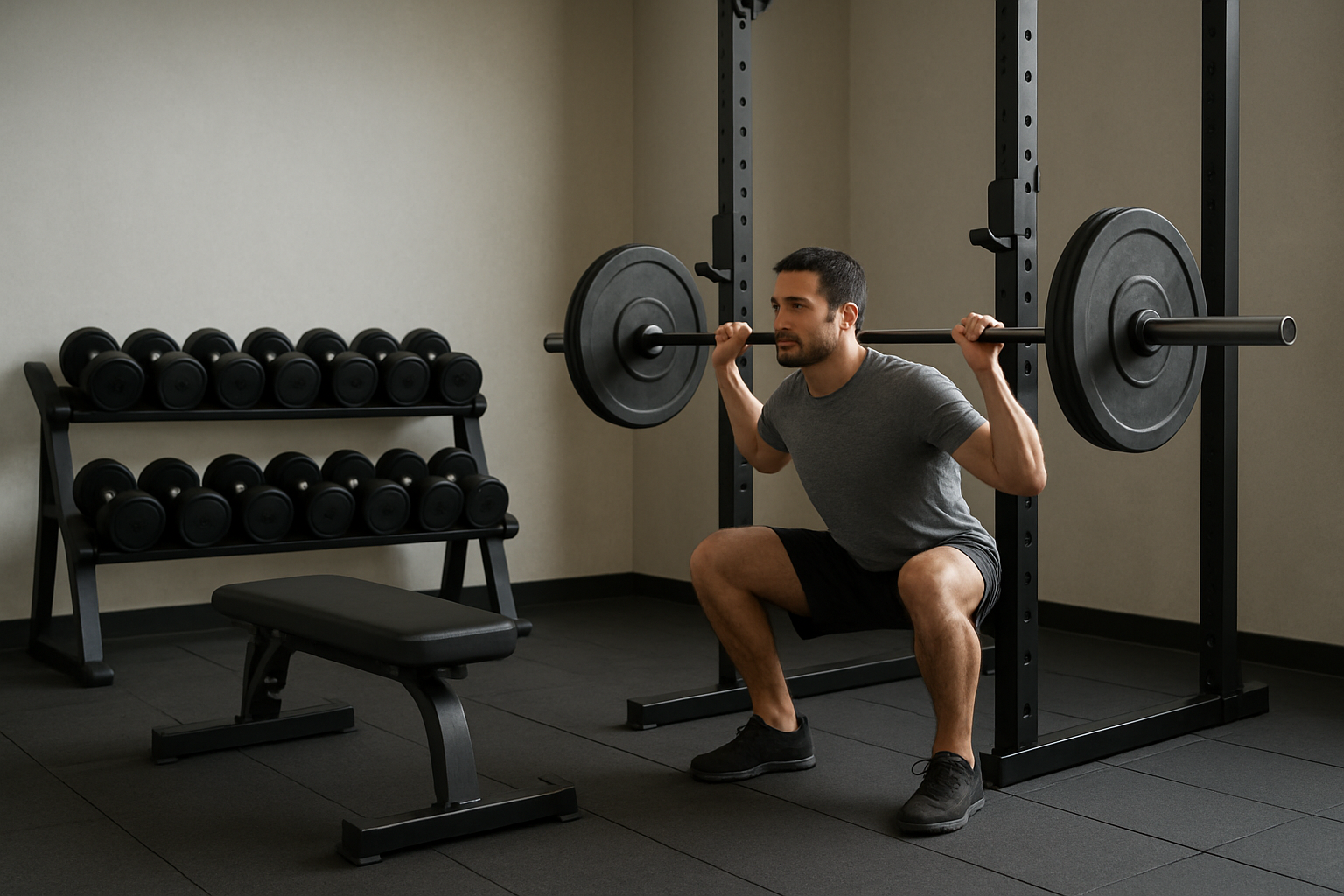
Bodybuilding may involve more total exercises and direct work for muscles such as the shoulders, arms, calves, or hamstrings. Powerlifting may involve fewer main movements but more fatigue from heavy compound lifting and repeated practice of similar patterns.
Your sleep, nutrition, job, age, injury history, and available training days all matter. If you are training two or three days per week, a full-body beginner program may be more practical than a highly specialized split or competition-focused schedule.
For nutrition support, see LaokFitness’s guide to calculating protein intake for muscle building. If you train early, the guide to practical pre-workout meals can help you plan around energy and digestion.
5. Choose the right style for your situation
Bodybuilding is usually the better choice if:
- Your main goal is gaining muscle or improving body proportions.
- You prefer variety and do not want every session centered on three lifts.
- You enjoy machines, cables, dumbbells, and isolation exercises.
- You want to work around a movement that currently feels uncomfortable.
- You are motivated by visual changes, measurements, and how clothes fit.
Powerlifting is usually the better choice if:
- You enjoy clear numerical goals and structured progression.
- You want to become technically skilled at the squat, bench press, and deadlift.
- You like repeating key lifts and comparing your performance over time.
- You may eventually want to enter a strength competition.
- You are willing to prioritize coaching, warm-ups, and recovery.
A hybrid plan may suit you if:
- You want strength on the main lifts but also care about balanced muscle development.
- You enjoy barbell training but do not want your entire routine built around competition rules.
- You can use a few compound lifts as anchors and add moderate accessory work afterward.
6. Avoid common beginner decision mistakes
Choosing based only on social media physiques
Photos rarely show the full training history, nutrition, recovery, genetics, or time commitment behind a result. Choose a method based on the process you can sustain, not only the appearance of advanced trainees.
Testing maximum strength too soon
Beginners can improve quickly without regularly attempting maximal lifts. Use controlled repetitions and gradual increases first. A heavy single should be occasional and planned, not an emotional test after every good workout.
Assuming bodybuilding means light weights
Bodybuilding still requires progressive resistance. You can build muscle with different loads and repetition ranges, provided the sets are challenging and your technique remains controlled.
Ignoring exercise balance
A powerlifting-focused routine should still include sensible upper-back, single-leg, trunk, and general conditioning work. A bodybuilding routine should still include basic strength movements rather than only small isolation exercises.
7. Use this beginner checklist before committing
- Write down your primary goal: muscle, strength, general fitness, or a combination.
- Choose two to four training days that fit your actual schedule.
- Learn the basic movement patterns with a manageable load.
- Keep a training log with exercises, sets, repetitions, and load.
- Increase weight or repetitions only when technique is consistent.
- Plan at least one easier day or rest day when fatigue accumulates.
- Review progress after 8–12 weeks instead of changing programs every few sessions.
8. What if you are still unsure?
Start with a mixed routine. Use a squat or leg-press pattern, a press, a pull, a hip-hinge movement, and a small amount of direct arm, shoulder, or calf work. This gives you exposure to strength practice while still supporting general muscle development.
If barbell technique is your main concern, consider beginning with lighter variations, machines, or dumbbells and progress toward barbells as your confidence improves. LaokFitness also has a guide comparing cable machines and free weights for strength, as well as advice on choosing a barbell weight set for beginner lifters.
Stop an exercise if you experience sharp pain, numbness, unusual weakness, chest pain, or symptoms that do not settle with rest. For an existing injury, medical condition, or persistent pain, seek guidance from an appropriately qualified healthcare professional before changing your training.
Final verdict: bodybuilding vs powerlifting for beginners
For most beginners who want a balanced physique and flexible gym routine, bodybuilding is the simpler default. For beginners who are excited by measurable barbell performance and enjoy practicing the same lifts, powerlifting can be the more motivating choice.
The conditional answer is straightforward: choose the style whose progress you will genuinely want to track. If you want both muscle and strength, combine a few well-practiced compound lifts with moderate accessory work, then adjust the balance as your priorities become clearer.