For overall strength, free weights usually offer the more transferable challenge, while cable machines can make it easier to control resistance and train specific movements safely. The best choice depends on your experience, exercise selection, available equipment, and whether you prioritize whole-body stability or consistent tension.
This comparison of cable machines vs free weights for strength explains how each option works, where each has an advantage, and how to combine them in a sensible program. The goal is not to declare one tool universally superior, but to help you choose the option you can use consistently with good technique.
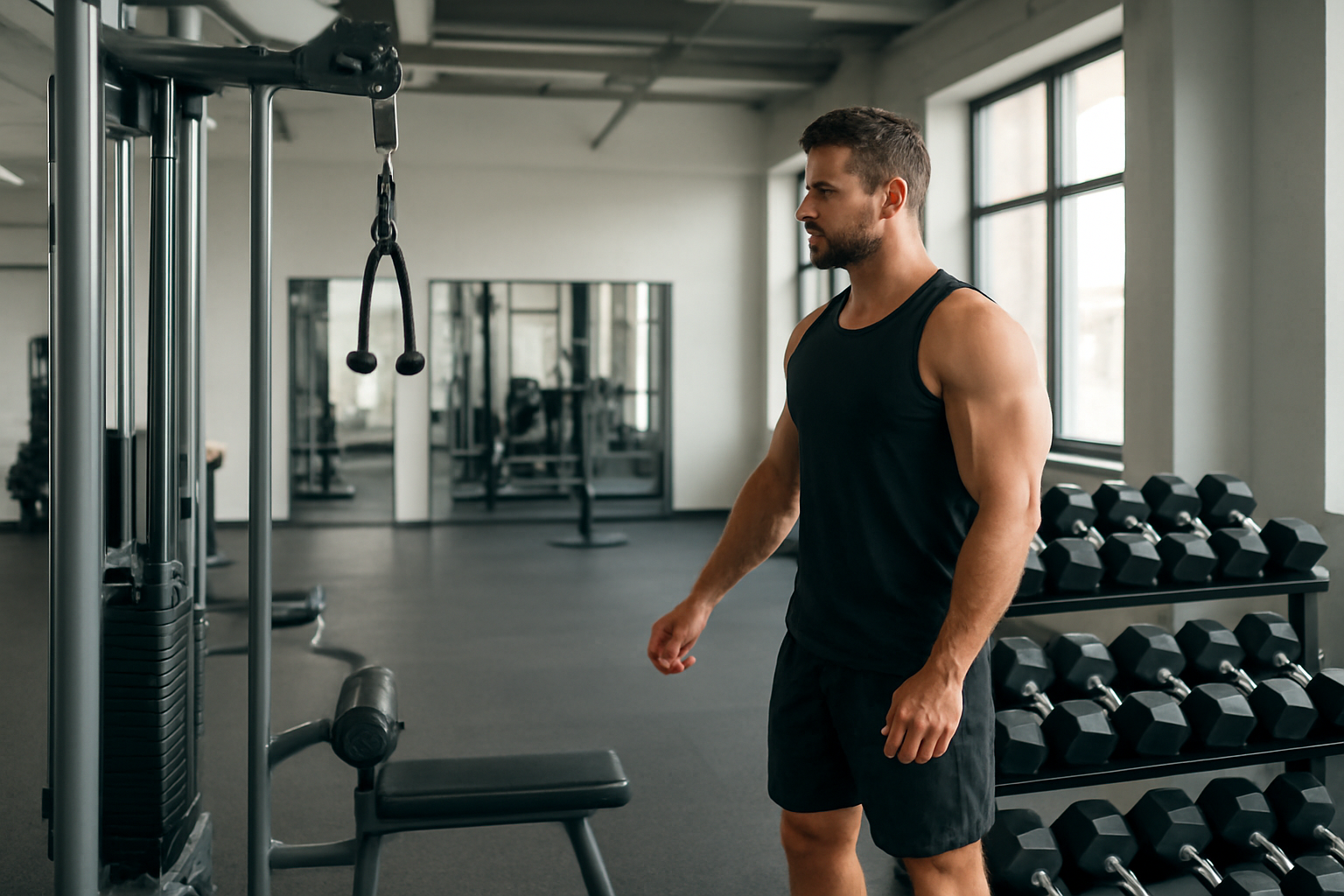
1. Decide what “strength” means for your training
Strength can refer to more than lifting the heaviest possible load. You may want to improve performance in squats and presses, build muscle, feel stronger in daily activities, or train around a limitation. Those goals affect which equipment is most useful.
Free weights require you to guide the load through space. Dumbbells and barbells therefore challenge your muscles to produce force while also managing balance and positioning. Cable machines use a pulley and adjustable attachment, so the resistance path is often easier to control.
Neither description makes one category automatically better. A well-designed program can use both, provided you can progress gradually and maintain repeatable technique.
Use these criteria before choosing
- Progression: Can you increase load, repetitions, range of motion, or control in small steps?
- Stability demand: Does the exercise need balance and coordination, or would extra stability help you focus on a target muscle?
- Range of motion: Can you move comfortably without forcing a joint position?
- Setup: Is the equipment available, adjustable, and quick enough to use consistently?
- Technique: Can you repeat the movement without pain or compensating with other body parts?
2. Compare cable machines and free weights side by side
The practical differences become clearer when you compare how each tool affects common training decisions.
Use this table as a starting point rather than a ranking. An exercise can be effective with either tool, but the setup may change the challenge.
| Factor | Free weights | Cable machines | What to look for | Warning sign |
|---|---|---|---|---|
| Stability | Usually requires more balance and control | Often provides a more predictable resistance path | You can keep your torso and joints aligned | You lose position before the target muscles are challenged |
| Progression | Simple to track with plates or dumbbells | Usually adjustable in small or moderate increments | Record load, repetitions, and technique | You increase weight by sacrificing range or control |
| Range of motion | Often allows a natural path chosen by you | Can offer useful angles and continuous tension | The full movement feels comfortable and controlled | A fixed setup pulls you into an awkward position |
| Exercise variety | Strong for squats, presses, rows, and carries | Strong for pulls, raises, presses, rotations, and accessories | The tool matches the movement goal | You choose an exercise only because the attachment is available |
| Space and setup | May require a rack, bench, plates, or lifting area | Needs a cable station and clear adjustment points | You can set up without rushing | Equipment is crowded, unstable, or poorly adjusted |
| Learning curve | May demand more coordination and bracing | Can feel easier to control, but still requires positioning | You can learn the movement with a manageable load | The machine creates false confidence and hides poor posture |
3. When free weights are the better choice
Free weights are often the better foundation when you want to develop whole-body strength. A squat, deadlift variation, press, row, or loaded carry can involve several muscle groups while asking you to brace and coordinate your body.
They are also useful when you want to practice moving an external load through space rather than following a preset line. That can make free weights a practical choice for athletes and people who want strength that supports lifting, carrying, and changing position in everyday life.
However, free weights are not automatically more functional or more advanced. A heavy load, poor setup, or rushed progression can create unnecessary technique problems. Beginners should start with an appropriate variation, learn the movement, and add resistance only when the current workload is repeatable.
Free weights may suit you if you:
- Want a compact set of exercises that trains many muscle groups.
- Enjoy barbell or dumbbell strength training and can practice technique consistently.
- Need to improve bracing, balance, and coordination.
- Have access to a rack, bench, dumbbells, or other stable equipment.
If you are building your first routine, the guide to setting up a beginner gym workout schedule can help you organize training days without adding too much volume too soon.
4. When cable machines are the better choice
Cables are particularly useful for accessory exercises and movements where a controlled line of pull helps you focus. Rows, pulldowns, face pulls, triceps extensions, cable curls, lateral raises, and resisted rotations are common examples.
A cable station can also make it easier to train at different angles. Changing the height of the pulley or your body position may alter the direction of resistance without requiring a completely different piece of equipment.
That convenience has limits. A cable stack does not remove the need to brace, control the eccentric phase, or position your joints well. Use a load that allows a smooth start and finish rather than leaning, swinging, or shortening every repetition.
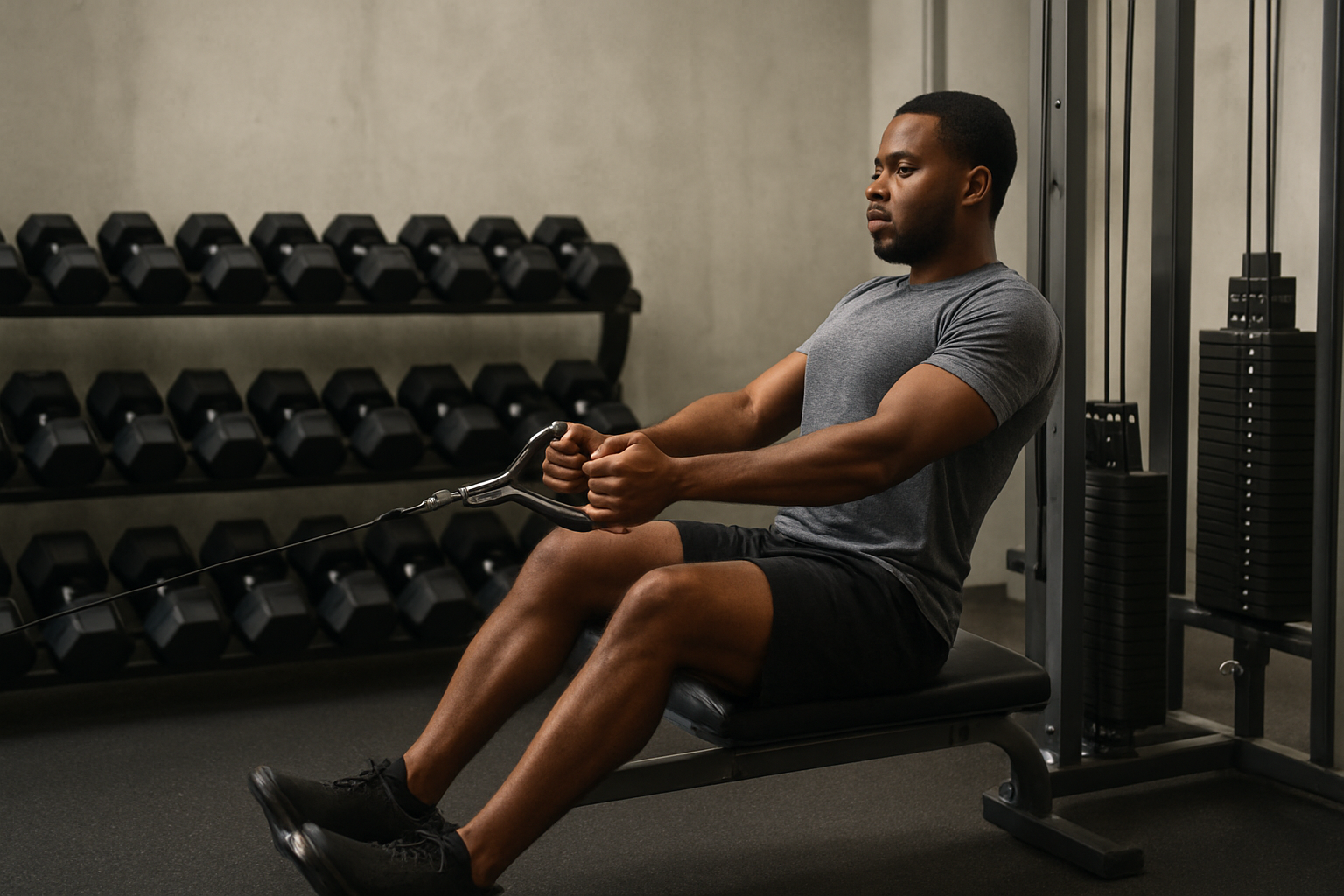
Cables may suit you if you:
- Want controlled accessory work after compound exercises.
- Prefer adjustable resistance and a stable starting position.
- Are returning to training and want to manage balance demands carefully.
- Need exercise angles that are difficult to reproduce with dumbbells.
- Train in a busy gym where changing plates is inconvenient.
5. Build a program that uses both tools
For many people, the most useful answer to cable machines vs free weights for strength is a combination. Start the session with one or two movements that match your main goal, then use the other tool for assistance work.
For example, a lower-body session might include a squat or leg press variation followed by cable pull-throughs or controlled hip work. An upper-body session might begin with a dumbbell press or barbell row, then use cable flyes, pulldowns, or triceps work.
Keep the structure simple:
- Choose one main movement that you can progress and perform consistently.
- Add one complementary movement for a different pattern or muscle group.
- Use cables or free weights for accessories that address your specific goal.
- Leave enough recovery between hard sessions to repeat good technique.
Exercise comparisons can also help you choose variations. For example, the guide to front squats versus back squats for quads shows why the movement pattern and setup matter as much as the equipment label.
6. Choose by scenario, not by gym preference
For a beginner
Begin with the variation that lets you learn the movement without losing control. That may be a cable, machine, dumbbell, or lightly loaded barbell exercise. Coaching, clear instructions, and a manageable workload matter more than choosing the equipment that appears most demanding.
For maximum strength practice
Free weights are often the more direct option for practicing heavy compound lifts, provided you have suitable equipment and understand the technique. A cable machine can still support the program with rows, pulldowns, and targeted work.
For muscle-building accessories
Cables can be convenient because they maintain resistance through much of the movement and allow quick changes in angle. Free-weight accessories remain useful when you prefer a simpler setup or need to train away from a cable station.
For training around discomfort
Do not assume either category is automatically joint-friendly. Try a lighter load, adjust the range of motion, and stop if pain worsens or changes your movement. Persistent pain, swelling, numbness, weakness, or pain after an injury warrants assessment by a qualified healthcare professional.
7. Avoid common equipment-selection mistakes
- Chasing the heaviest number: A larger load is not useful if your range of motion and positioning deteriorate.
- Calling cables “easy” and free weights “hard”: Difficulty depends on the exercise, load, tempo, and your technique.
- Changing exercises too often: Keep a movement long enough to observe whether strength and control improve.
- Ignoring setup: Adjust the seat, pulley height, handles, stance, and starting position before adding weight.
- Copying another person’s load: Equipment numbers are not always directly comparable between gyms or machines.
- Using instability for its own sake: If balance limits the target exercise, choose a more stable setup first.
8. Troubleshoot your choice before abandoning it
What if free weights feel unstable?
Reduce the load and use a simpler variation, such as a supported dumbbell row or goblet squat. Practice a controlled tempo and stop each set before your posture breaks down.
What if cables do not feel challenging?
Check the pulley height, body position, attachment, and range of motion. Increase resistance gradually only after you can control both the lifting and lowering phases.
What if the gym is crowded?
Have a substitution ready. A dumbbell row can replace a cable row, while a band or dumbbell accessory may replace some cable exercises if the setup remains safe and the resistance is appropriate.
9. Use this final checklist
- Define whether your priority is maximum strength, general strength, muscle growth, or comfort.
- Pick exercises you can perform through a controlled, comfortable range.
- Choose a load that leaves technique repeatable from the first repetition to the last.
- Track your exercises, load, repetitions, and any changes in form.
- Use free weights for foundational patterns and cables where their adjustability adds value.
- Review your plan after several consistent sessions instead of judging one workout.
Final verdict: which is better for strength?
Free weights are usually the stronger starting point if your priority is whole-body strength, coordination, and compound-lift practice. Cable machines are often the better choice for controlled accessories, adjustable angles, and training situations where a predictable setup helps you maintain technique.
In practical terms, choose the tool that lets you train consistently, progress without rushing, and perform the intended movement well. For most lifters, the conditional answer is not cable machines or free weights, but free weights for the foundation and cables for useful, targeted support.