Quick verdict: If your main goal is quad development, front squats often make it easier to use a more upright torso and deeper knee bend. Back squats can still build the quads extremely well, usually allow more load, and may be the better all-around choice for strength and lower-body mass.
The best option depends less on which squat is supposedly superior and more on which movement you can perform consistently, safely, and through a useful range of motion. This guide compares front squats vs back squats for quads using practical criteria: knee and hip demands, loading potential, technique, comfort, and how each lift fits your program.
1. Start with the movement demands, not the label
A squat variation does not isolate one muscle. Both front and back squats train the quadriceps, glutes, adductors, spinal erectors, and trunk muscles. The amount of work each muscle contributes changes with bar position, torso angle, stance, depth, limb proportions, and technique.
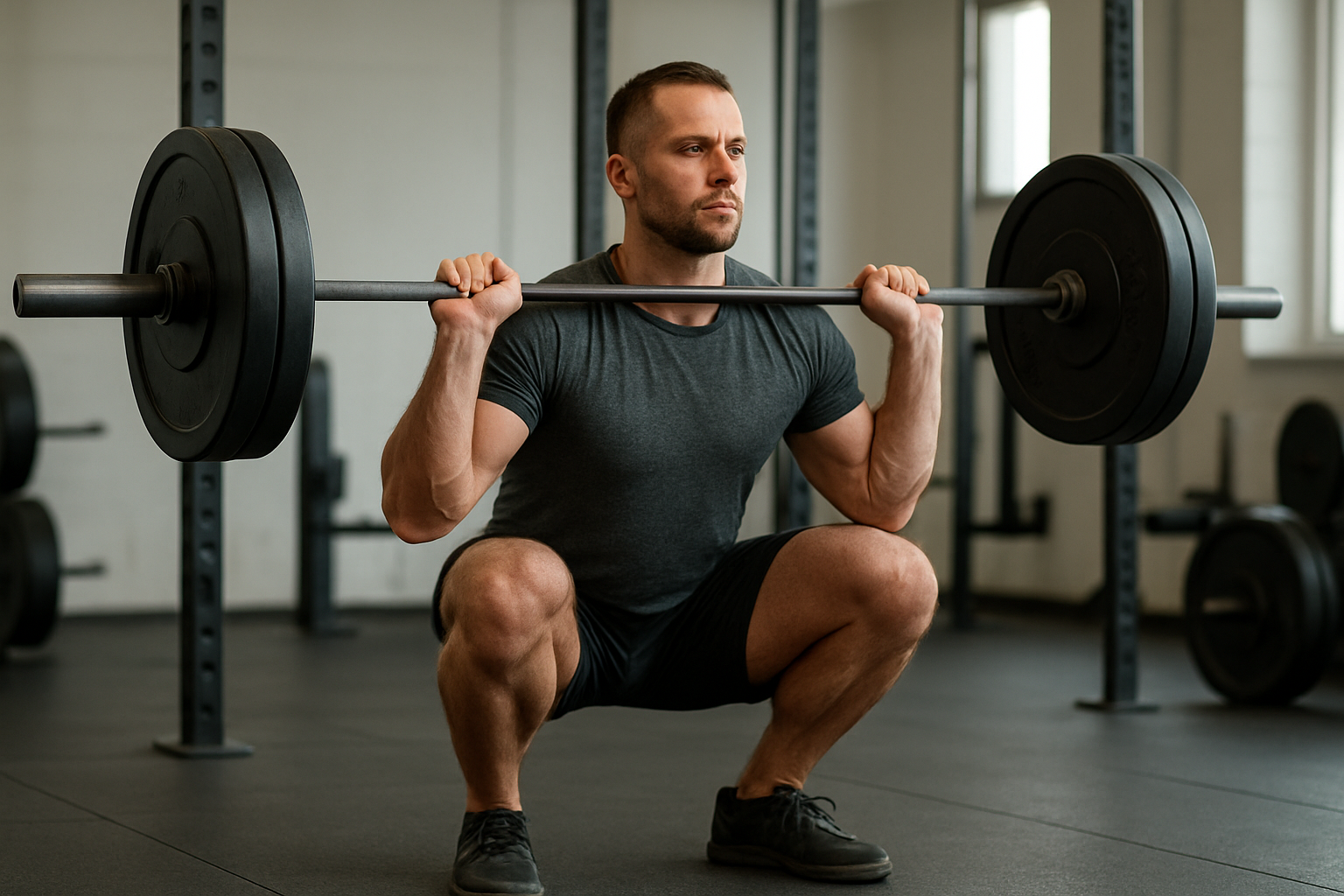
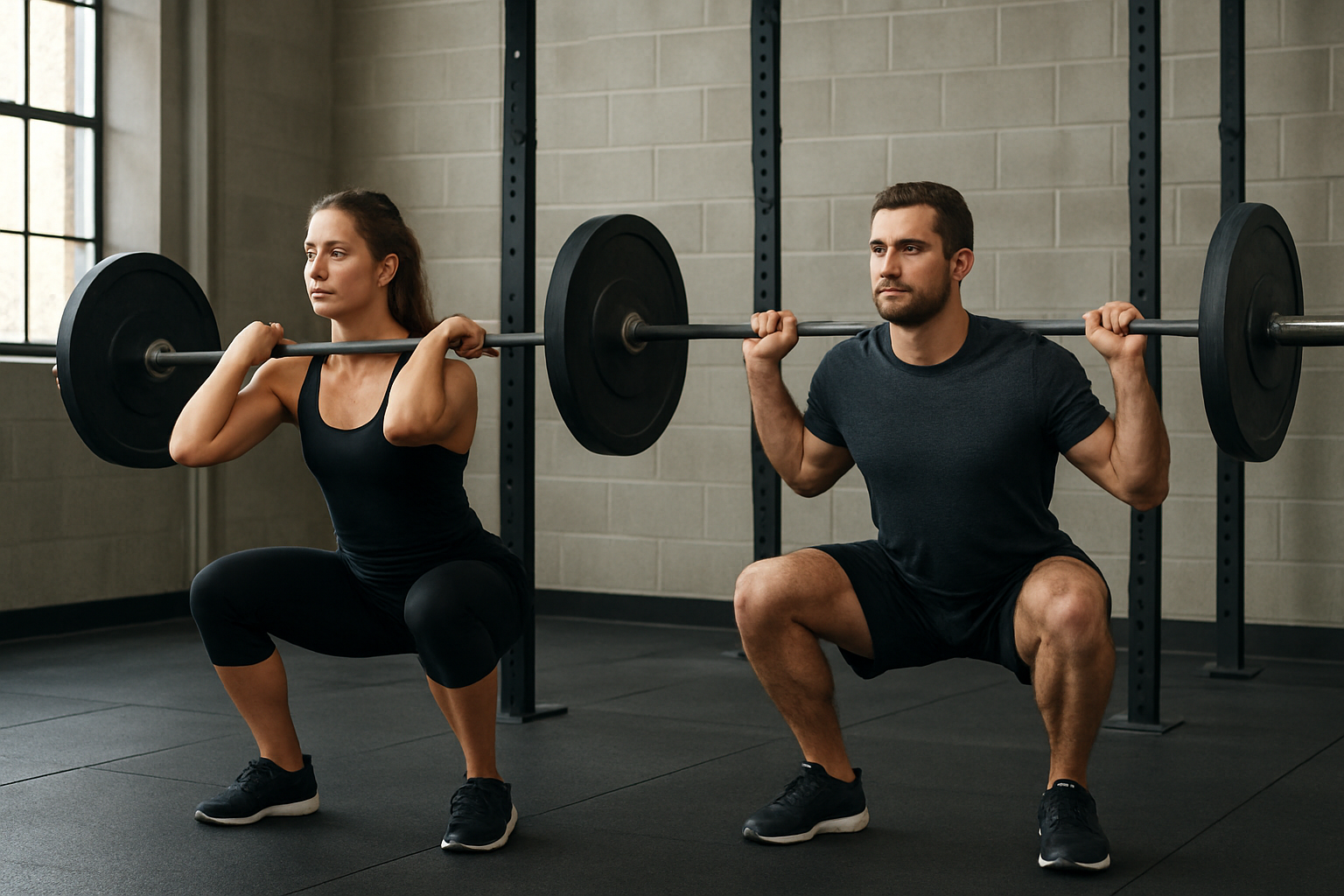
In a front squat, the bar rests across the front of your shoulders. This position usually encourages a taller torso and requires your knees to travel forward enough to keep your balance over the middle of your foot. Those mechanics often increase the relative demand on the quads.
In a back squat, the bar sits across the upper back. Depending on whether you use a high-bar or low-bar position, you may lean forward more and shift some work toward the hips and posterior chain. A high-bar back squat can still be highly quad-dominant, especially with adequate depth and an upright stance.
2. Compare front squats and back squats for quad training
The table below focuses on observable training differences rather than absolute claims. Individual anatomy and skill can change how each lift feels and where you experience fatigue.
Use these criteria when deciding which squat should lead your workout.
| Criteria | Front squat | Back squat |
|---|---|---|
| Typical torso position | More upright to keep the bar over the midfoot | Ranges from fairly upright to more forward-leaning |
| Quad emphasis | Often high because of greater knee bend and torso demands | High with a high-bar stance, depth, and forward knee travel |
| Loading potential | Usually limited by upper-back, wrist, shoulder, or trunk fatigue | Usually allows heavier external loading |
| Upper-body requirement | Requires a secure front-rack position or a suitable grip alternative | Requires comfortable bar placement and shoulder mobility |
| Common technical limitation | Elbows drop, chest collapses, or the bar rolls forward | Hips rise quickly, knees cave, or the torso folds under load |
| Best practical use | Quad-focused work, lighter secondary squatting, or upright squat practice | Primary strength and mass movement for the lower body |
3. Check whether your technique supports quad growth
Front squat technique checkpoints
- Keep the bar supported by your shoulders rather than gripping it tightly with your hands.
- Raise your elbows and keep your upper back active so the bar does not roll forward.
- Allow your knees to move naturally over your toes if your feet remain stable and your joints feel comfortable.
- Descend only as far as you can maintain control, then stand without letting your hips shoot up first.
A front squat that becomes a shallow good morning is no longer giving you the intended stimulus. Reduce the load, improve your front-rack mobility, or use straps around the bar as handles if a qualified coach has shown you how to do so safely.
Back squat technique checkpoints
- Place the bar consistently and brace before beginning each repetition.
- Keep the whole foot connected to the floor rather than shifting onto the toes or outer edge.
- Choose a depth you can repeat without losing pelvic and spinal control.
- Use a stance that permits the knee and hip positions you can control, rather than copying someone else’s width.
If your goal is more quad involvement, a high-bar position, moderate stance, and controlled depth may be useful. However, do not force an upright position that your ankle mobility or structure cannot support. Small heel elevation from weightlifting shoes or stable plates may help some lifters, but it is not a substitute for sound technique.
4. Match the squat to your training goal
For maximum quad focus
Front squats are a practical choice when you want the quads to be a clear priority and you can maintain an upright torso. They can also work well after a heavier lower-body lift, because the load is often limited before the total weight becomes excessive.
A high-bar back squat with full, controlled depth can produce a similar training purpose. The deciding factor is whether the variation lets you accumulate challenging repetitions without pain or repeated technical breakdown.
For overall lower-body strength
Back squats generally offer more loading potential, which can make them efficient for building general squatting strength and lower-body mass. Heavier does not automatically mean better for the quads, though. If the load causes you to shorten the range of motion or lose control, a lighter variation may provide a better stimulus.
For athletes and mixed programs
Front squats can reinforce bracing and an upright receiving position that may transfer well to activities requiring trunk control. Back squats can provide a straightforward way to train strength when your program already includes sprinting, jumping, or other demanding lower-body work. Manage total fatigue instead of adding both variations heavily without a clear reason.
5. Decide based on comfort, mobility, and recovery
The front rack can be the main obstacle in front squats. Limited wrist, elbow, shoulder, or upper-back mobility may make the position uncomfortable. You can try a crossed-arm grip or straps, but pain, numbness, or persistent restriction deserves attention from a qualified clinician or coach.
Back squats may feel better for the arms but more demanding for the hips, lower back, or shoulders. A bar position that causes sharp pain is not something to simply train through. Adjust the setup, reduce the load, or choose another squat pattern while you identify the problem.
Recovery also matters. If heavy back squats leave your hips and back exhausted, front squats may be useful as a lower-load quad movement. If front squats fatigue your trunk before your legs, place them earlier in the session or use them for moderate sets rather than chasing maximal weight.
6. Choose the best option for your situation
- Choose front squats first if your priority is quad-focused training, your front rack is comfortable, and you can stay upright through the full set.
- Choose high-bar back squats if you want strong quad involvement but need a more familiar bar position or more loading flexibility.
- Choose low-bar back squats if overall strength and posterior-chain contribution matter more than maximizing the relative quad demand.
- Use both if you can recover from them and they serve different roles—for example, back squats as the main strength lift and front squats for controlled secondary volume.
- Use a different squat pattern temporarily if either barbell position causes pain, loss of balance, or repeated technical failure.
7. Avoid common squat-selection mistakes
- Chasing the heaviest weight: A heavier back squat is not automatically better quad work if your hips take over and your range becomes inconsistent.
- Assuming front squats are automatically safer: They may reduce some loading, but poor bracing or a collapsed torso can still create problems.
- Copying another lifter’s stance: Foot position should reflect your mobility, proportions, and control.
- Changing variations too often: Keep one main squat pattern long enough to judge progress in load, repetitions, depth, and technique.
- Ignoring fatigue: Persistent soreness, declining performance, or joint irritation may mean your volume, intensity, or frequency needs adjustment.
8. What if the chosen squat is not working?
If your quads are not feeling challenged
First check depth, knee movement, tempo, and range-of-motion consistency. Then reduce the load enough to keep the intended position. Quad stimulus is not judged only by sensation, but a movement that repeatedly shifts into a hip-dominant pattern may not match your current goal.
If your knees hurt
Do not assume that knee travel alone explains the pain. Review your warm-up, stance, load, depth, and recent training increase. Stop if pain is sharp, worsening, associated with swelling or instability, or still present during normal activity, and seek professional assessment.
If your front rack is uncomfortable
Try a gradual mobility routine and a grip variation that keeps the bar secure without forcing your wrists. A safety bar squat, goblet squat, split squat, or leg press can provide quad training while you address the limitation.
9. A simple checklist before you choose
- Can you keep your whole foot stable throughout the repetition?
- Can you reach your planned depth without losing control?
- Does the bar position remain comfortable and secure?
- Can you add repetitions or load without repeated form breakdown?
- Does the exercise fit your recovery, schedule, and other lower-body work?
- Are you comparing variations over several consistent sessions rather than one workout?
For general training ideas, you can also browse the LaokFitness homepage. If soreness affects your next session, the guide on how to use a foam roller for sore legs offers a cautious recovery routine, while the roundup of recovery tools for sore muscles covers other home options.
Frequently asked questions
Are front squats better than back squats for quads?
Not in every case. Front squats often create a more quad-oriented position, but a well-performed high-bar back squat can be equally useful for many lifters. The better exercise is the one you can load and repeat with stable technique and no concerning pain.
Can I build quads with back squats alone?
Yes. Back squats can build the quads when your depth, knee bend, volume, and progression are appropriate. Additional movements such as split squats, step-ups, or leg presses may help if back squats alone do not provide enough quad-focused work.
Should I do front squats before back squats?
Put the variation requiring the most skill or the one most important to your goal first. If back-squat strength is the priority, start there. If front-squat quality or quad emphasis is the priority, perform front squats while you are fresh.
Take the next step
Choose one primary squat variation, record your sets, repetitions, depth, and technique, then review your progress after several weeks. Keep the load challenging but controlled, and change the exercise only when comfort, recovery, or your training goal genuinely calls for it.
So, for front squats vs back squats for quads, the conditional answer is simple: front squats are often the more direct choice for an upright, quad-focused stimulus, while back squats are usually more versatile for heavier strength and total lower-body development. Select the variation that lets you train the target muscle consistently, then progress it patiently.