The best massage gun for athletes is not necessarily the most powerful model. Choose one that is comfortable to hold, offers useful speed control, has suitable attachments, and fits the way you train. Current research suggests percussive therapy may provide short-term improvements in flexibility and perceived muscle soreness, but it should support—not replace—sleep, progressive training, mobility work, and medical care when needed.
This massage guns for athletes review and comparison explains what the evidence can and cannot support, how popular feature categories differ, and which type of device makes sense for runners, lifters, field-sport athletes, and recreational gym users.
1. Start with the right expectations
The evidence basis for this comparison is a combination of systematic reviews, controlled research, and current manufacturer specifications. A 2023 systematic review in PubMed’s research database found promising effects for flexibility, perceived pain, and some performance measures, while also noting that the research base remains limited and varied.
A separate review in the International Journal of Sports Physical Therapy similarly suggests that percussive therapy can influence short-term range of motion and pain experiences. That does not establish that a massage gun speeds healing, prevents injury, removes delayed-onset muscle soreness, or improves long-term athletic performance.
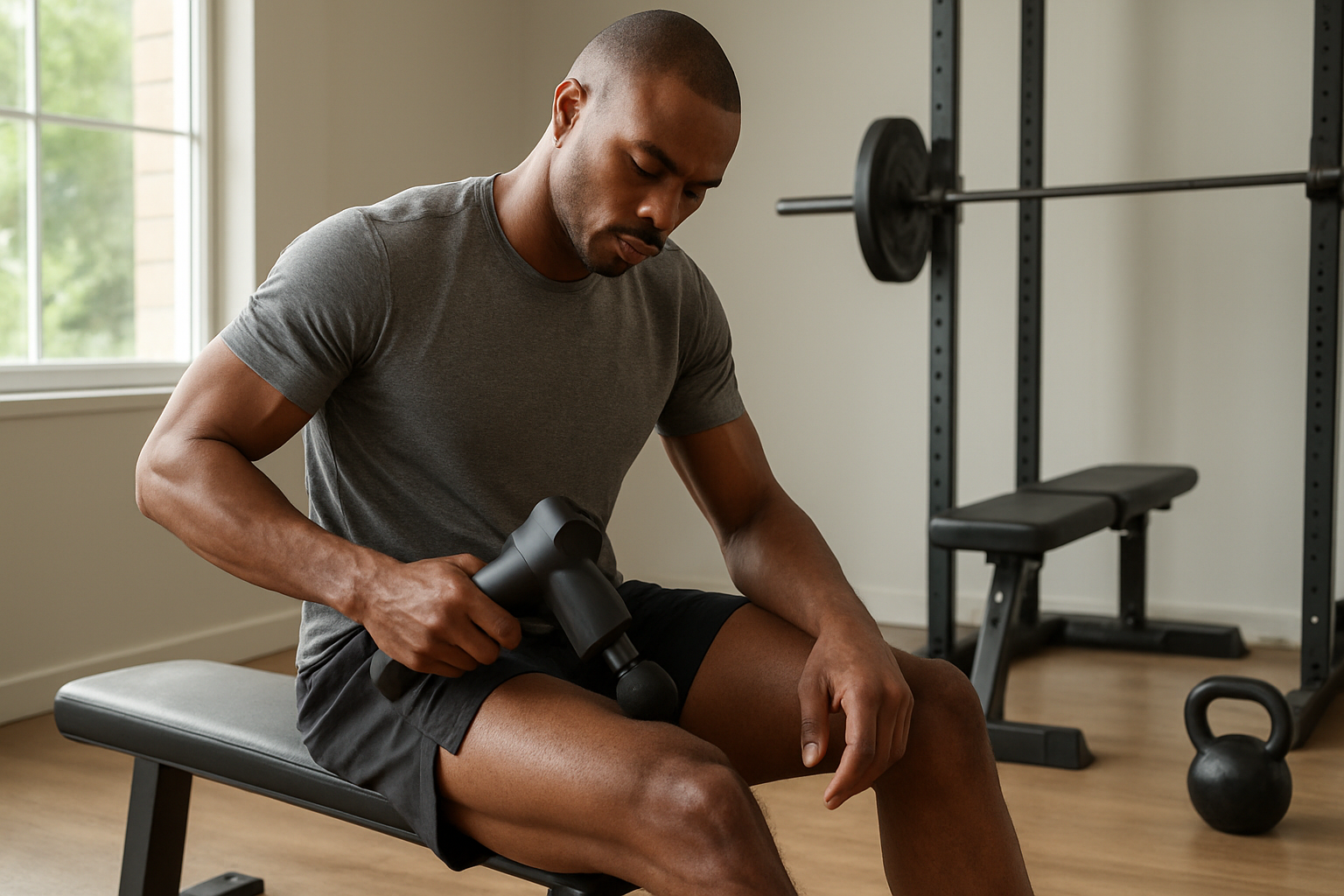
Think of the device as a convenient self-massage tool. It may help you feel looser before activity or more comfortable after training, but feeling temporarily better is not the same as correcting a movement problem or treating an injury.
2. Compare the features that affect daily use
Intensity and speed control
Several speed settings are more useful than one extremely aggressive setting. Lower speeds can suit warm-ups, sensitive areas, or first-time users; higher speeds may feel preferable on large muscle groups after demanding training. More intensity is not automatically better, and pressing hard can make a session unnecessarily uncomfortable.
Amplitude and motor strength
Amplitude describes how far the attachment travels into the tissue, while stall force describes how much pressure the motor can tolerate before slowing. These specifications can help describe a device, but they do not predict comfort or effectiveness for every user.
A deeper-feeling gun may appeal to strength athletes with substantial muscle mass, yet it can also be heavier, louder, and more tiring to control. If you cannot comfortably reach the target area or keep the device moving, the specification has limited practical value.
Weight, grip, and reach
Ergonomics are especially important because athletes often use massage guns on their own hamstrings, calves, glutes, shoulders, and back. A multi-grip design may make awkward angles easier, while a lighter compact device may be better for travel or frequent use.
Check whether the handle allows a relaxed grip. If you must squeeze tightly to control the gun, hand and forearm fatigue may become the main limitation.
Attachments
Accessory counts can be misleading. A small set of well-chosen heads is usually enough:
- Soft or dampening head: useful for tender areas and lighter pressure.
- Round head: a general option for glutes, thighs, and larger muscle groups.
- Flat head: suitable for broad muscle surfaces when you want more even contact.
- Bullet head: intended for focused pressure, but it requires more caution and control.
- Fork head: commonly used around—but not directly on—the muscles beside the spine or Achilles area.
Use this table to match specifications with realistic buying priorities.
| What to look for | Why it matters | Warning sign |
|---|---|---|
| Three or more usable intensity levels | Allows gentler warm-ups and more controlled recovery sessions | Only one harsh setting or controls that are difficult to adjust |
| Comfortable weight and balanced handle | Makes self-treatment easier on legs, shoulders, and back | Heavy front end or grip that causes hand fatigue |
| Soft, round, and flat attachments | Covers common athletic recovery needs without excessive accessories | Many specialized heads with no clear instructions |
| Replaceable or clearly rated battery | Improves long-term ownership and travel convenience | Unclear charging information or no support documentation |
| Clear safety guidance and warranty terms | Helps you use the device responsibly and resolve faults | Promises to diagnose, heal, or prevent injuries |
3. Understand the main massage-gun categories
Compact travel models
Small devices are often the sensible choice for runners, cyclists, and athletes who carry equipment to work, races, or training sessions. Their advantages are portability and easier handling. The trade-offs may include less motor power, fewer controls, and a smaller grip.
Choose this category when convenience determines whether you will use the device at all.
Mid-range everyday models
This is the broadest category and usually offers the best balance for recreational athletes. You may get several speeds, common attachments, and enough power for calves, quads, glutes, and upper-body muscles without paying for professional-oriented extras.
For most people, this is the most practical starting point if the device will be used several times a week.
Premium and high-power models
Premium devices may provide deeper travel, stronger motors, more refined ergonomics, app guidance, pressure feedback, or longer battery life. For example, the official Therabody Theragun Prime page emphasizes guided routines and percussive therapy, while Hyperice’s Hypervolt 3 information lists five speeds, pressure-sensor guidance, app connectivity, and extended battery life.
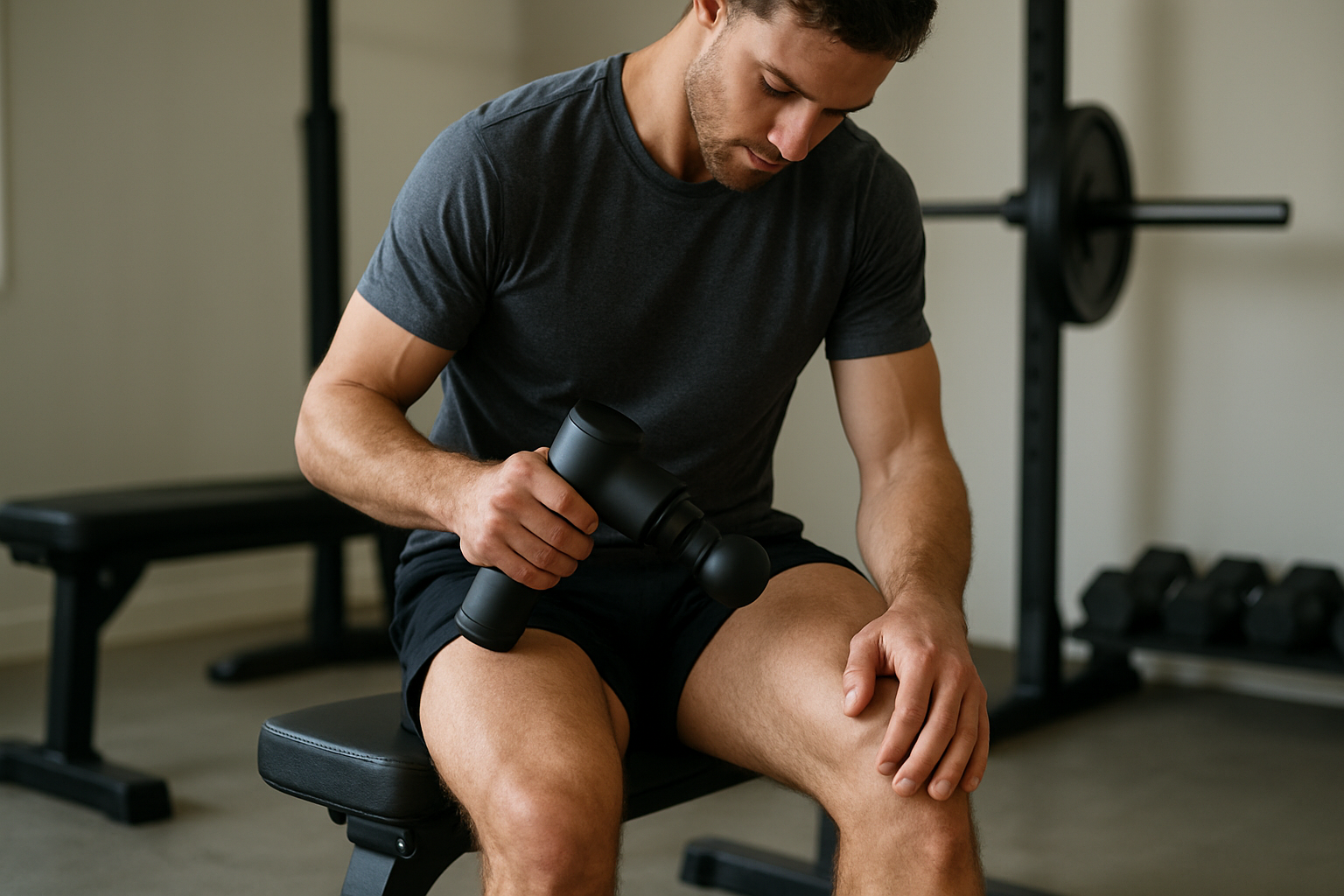
These features can be useful, but they do not prove superior recovery outcomes. Consider premium models when build quality, service, app guidance, or frequent professional use matters—not simply because the device advertises more force.
4. Use a massage gun more safely
Keep the attachment moving slowly over the muscle instead of holding it forcefully on one spot. Begin with low intensity, use a soft head when unsure, and stop if you experience sharp pain, numbness, tingling, unusual swelling, or worsening symptoms.
- Use it on muscle tissue rather than directly over bones, joints, the front of the neck, or the spine.
- Avoid open wounds, bruises, active skin irritation, and areas with reduced sensation.
- Do not use it to push through acute injury pain or to mask symptoms before competition.
- Ask a qualified clinician before use if you have a bleeding disorder, take blood-thinning medication, have a recent surgery, or have a diagnosed vascular or nerve condition.
Seek professional assessment for severe pain, inability to bear weight, major swelling, deformity, progressive weakness, or symptoms that do not improve with sensible rest. A massage gun is not a substitute for diagnosis or rehabilitation.
5. Match the device to your training
For runners and cyclists
Prioritize portability, quiet operation, and a soft or round attachment for calves, thighs, and glutes. A compact model is often more useful than a heavy high-power unit that stays at home.
For strength athletes
A stable grip, good control under pressure, and a flat or round head may matter more than a large accessory kit. If you train heavily, a stronger mid-range or premium model may be reasonable, but use it as comfort care rather than a way to compensate for insufficient recovery.
For field and court sports
Look for quick controls and a battery that can handle repeated sessions. Pressure feedback or guided routines may help athletes who struggle to judge intensity, although these conveniences are not essential.
For beginners and general gym users
Choose simplicity. Three to five speed levels, a comfortable body, basic attachments, clear instructions, and a reliable return policy are usually enough.
6. Avoid common buying mistakes
- Buying by power alone: More force can reduce control and comfort.
- Confusing temporary relief with treatment: A looser feeling does not confirm that an injury is healed.
- Ignoring weight: A device that is difficult to hold will probably be used less often.
- Paying for unused smart features: App routines and Bluetooth can help, but only if you will use them.
- Using the hardest head everywhere: Focused attachments are not appropriate for every muscle or body area.
- Skipping warranty details: Confirm what is covered, how batteries are handled, and whether replacement attachments are available.
7. Troubleshoot before replacing the device
What if it feels too painful?
Lower the speed, switch to a softer head, reduce pressure, and spend less time on the area. If pain remains sharp or unusual, stop rather than trying to “break up” the discomfort.
What if it does not seem to help?
Check whether your goal is realistic. Massage guns may offer short-term comfort or range-of-motion changes, but they cannot replace adequate warm-up, strength progression, sleep, nutrition, or a rehabilitation plan.
What if the battery or motor performance changes?
Use the supplied charger or the manufacturer’s approved charging guidance, clean the attachment connection, and consult the warranty documentation. Avoid continuing to use a device that becomes unusually hot, emits a burning smell, or shows physical damage.
8. A practical buying checklist
- Define whether your main goal is warm-up, post-workout comfort, portability, or shared household use.
- Compare weight and handle design before comparing maximum power.
- Confirm the available speed range and whether the controls are easy to operate mid-session.
- Look for at least one soft attachment and one general-purpose attachment.
- Review battery, charging, warranty, and return information from the manufacturer.
- Check safety guidance and avoid unsupported medical promises.
- Choose the least expensive category that meets your actual requirements.
9. Next actions and final verdict
Before buying, write down the three muscle groups you are most likely to treat, how often you travel with your equipment, and whether you can comfortably hold a heavier device. Then compare only models that meet those practical requirements.
For most athletes, a well-built mid-range massage gun is the conditional best fit: it can provide useful short-term comfort without unnecessary complexity. Choose a compact model if portability drives use, or consider a premium model when ergonomics, pressure guidance, battery life, and support justify the added cost. The best massage guns for athletes are therefore the ones you can control safely and use consistently—not automatically the deepest, strongest, or most expensive option.
Frequently asked questions
Can a massage gun replace stretching?
No. It may temporarily change how a muscle feels or how much range of motion you can access, but stretching, mobility work, strength training, and warm-up drills serve different purposes.
Should you use a massage gun before or after training?
Either can be reasonable. Before training, use a lower intensity briefly as part of a dynamic warm-up. After training, use comfortable pressure for relaxation. Avoid treating it as a guarantee of better performance or faster healing.
Is a more expensive massage gun better?
Not automatically. Premium pricing may reflect quieter operation, better ergonomics, app features, stronger construction, or service. Compare those benefits with your habits instead of assuming they produce better athletic results.