For overall strength, neither the deadlift nor the squat is universally better. The squat usually offers broader lower-body training, while the deadlift is especially valuable for pulling strength, posterior-chain development, and lifting objects from the floor.
The better choice depends on what you mean by “overall strength,” how you move, and how much recovery your program allows. This guide compares the two lifts using practical criteria so you can decide which to prioritize, how to combine them, and when a variation may be a better starting point.
1. Define what “overall strength” means for you
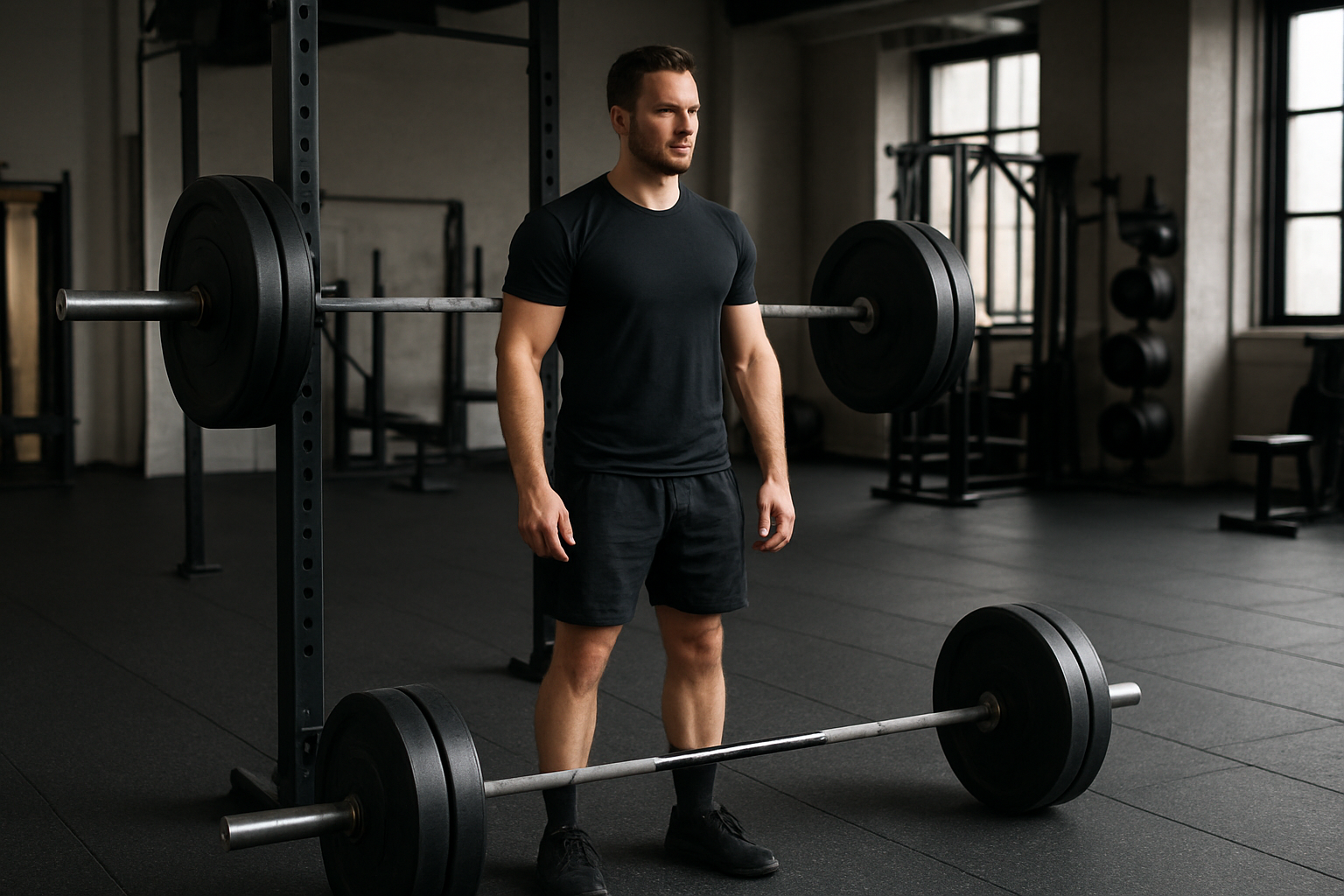
“Overall strength” can refer to several different abilities. A person training for powerlifting may care about competition performance, while someone training for general fitness may want stronger legs, better lifting capacity, and useful strength with manageable fatigue.
The squat and deadlift overlap, but they do not create the same challenge. Both train the hips and knees, yet the squat begins with the load supported on the body and requires more controlled descent and bottom-position strength. The deadlift begins with the weight on the floor and places greater emphasis on producing force from a static start.
Resistance-training guidance generally supports tailoring load, volume, and exercise selection to the individual goal rather than treating one exercise as best for everyone. For strength-focused work, heavier loads and lower repetitions can be useful, but technique and recoverability still determine whether a plan works in practice. The American College of Sports Medicine’s resistance-training guidance provides a useful evidence-based overview.
2. Compare the movement demands
The squat is primarily a squat-pattern exercise: you lower your body under control, maintain a braced torso, and stand by extending the knees and hips. The deadlift is primarily a hinge-pattern exercise: you brace, push through the floor, and extend the hips while keeping the bar close to your body.
These descriptions are simplified because stance, bar position, limb proportions, range of motion, and exercise variation all change the precise demands. Still, the distinction helps explain why one lift may feel natural to you while the other exposes a technical limitation.
A comparative study of squat-only and deadlift-only lower-body programs found similar improvements in lower-body power, although the exercises produced different movement demands and loading patterns. That finding supports a practical conclusion: either lift can improve strength, but the adaptation is not identical. Read the published squat-versus-deadlift comparison for the study details.
The main differences are summarized below.
| Criteria | Squat | Deadlift | Warning sign |
|---|---|---|---|
| Primary pattern | Knee- and hip-dominant squat | Hip-dominant hinge | You cannot maintain a stable position as the load increases |
| Main emphasis | Quadriceps, glutes, adductors, trunk control | Glutes, hamstrings, spinal erectors, grip, upper back | You feel the movement only in the lower back or joints |
| Starting position | Load is supported on the shoulders or held in front | Bar begins on the floor or blocks | You start with a rounded back or lose bar contact |
| Strength quality | Leg strength, bracing, control through depth | Starting strength, pulling strength, hip extension | You chase heavier numbers before consistent repetitions |
| Fatigue profile | Often demanding for legs and whole-body bracing | Often demanding for posterior chain, grip, and recovery | Performance drops sharply in later sessions |
| Useful beginner variations | Goblet squat, box squat, front squat | Rack pull, elevated deadlift, Romanian deadlift | The chosen variation is too difficult to perform cleanly |
3. Decide which lift better matches your goal
Choose the squat first for balanced leg strength
The squat is often the better first priority if your goals include stronger thighs, improved lower-body work capacity, and a more complete leg-strength base. It trains force production while the body supports and controls an external load through a relatively large range of motion.
A squat-centered approach may suit you if you:
- want to improve general lower-body strength rather than pulling strength alone;
- need more quadriceps and leg training in your program;
- participate in sports or activities that involve repeated bending, bracing, and forceful leg extension;
- prefer moderate loads and more total repetitions instead of frequent near-maximal pulls.
Your squat does not need to be a barbell back squat. A goblet squat or front squat may provide a better starting point if shoulder mobility, balance, or rack setup is limiting you. If ankle movement restricts your depth or stability, review this step-by-step ankle mobility guide for squats.
Choose the deadlift first for pulling and posterior-chain strength
The deadlift is usually the stronger choice when your main goal is to lift heavy objects from the floor, develop hip-extension strength, improve grip, or strengthen the muscles that help control the trunk during a hinge.
Prioritize the deadlift if you:
- want to develop maximal pulling strength;
- need stronger glutes, hamstrings, spinal erectors, and grip;
- are preparing for powerlifting or another activity involving heavy pulls;
- already squat comfortably but lack confidence or strength from the floor.
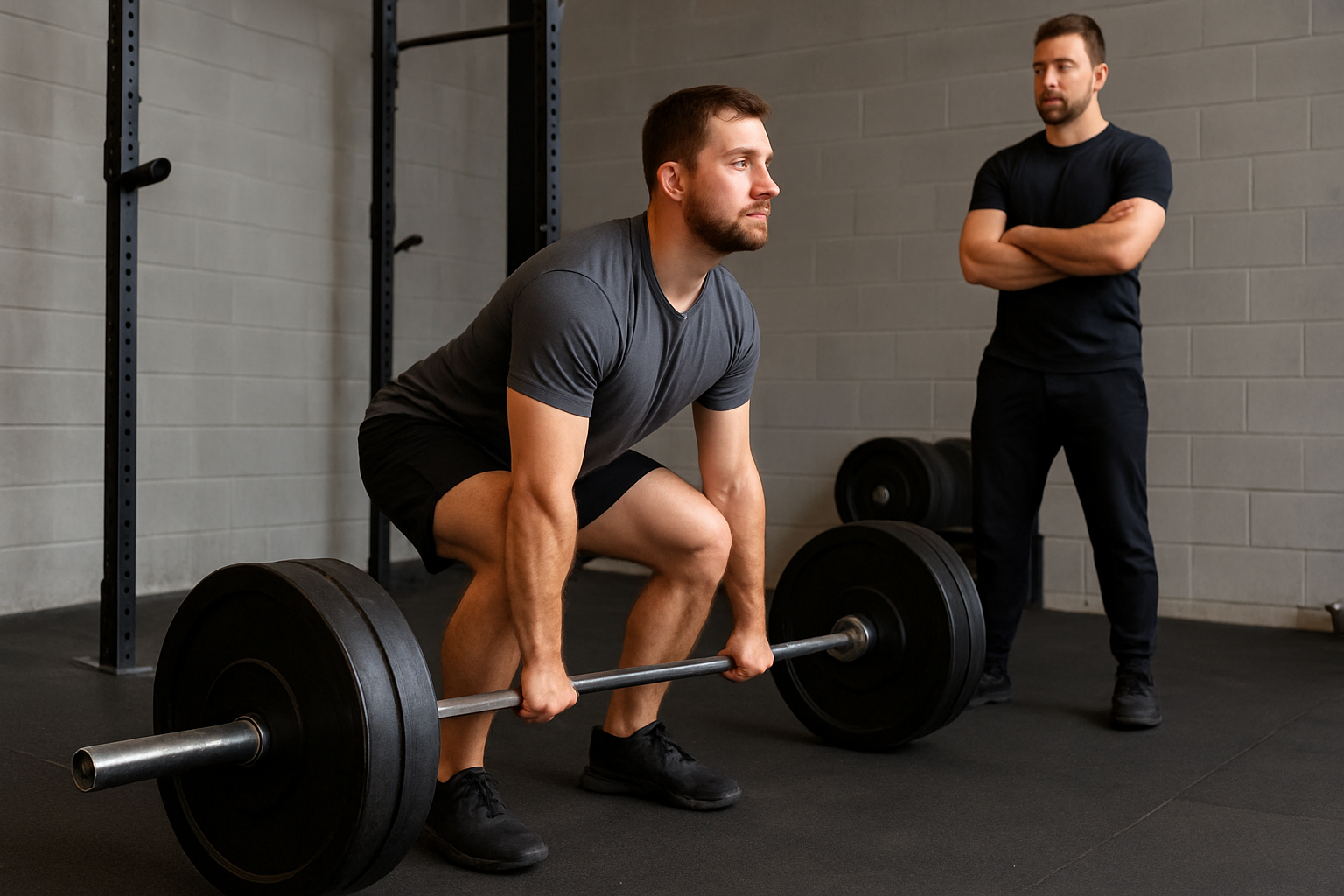
Do not assume that a heavier deadlift automatically means superior total-body strength. Deadlift numbers are affected by range of motion, bar height, body proportions, grip, and technique. Compare your progress within the same variation rather than using someone else’s ratio as a required standard.
4. Consider technique, fatigue, and recovery
The best lift is partly the one you can perform consistently without accumulating excessive fatigue. Heavy squats can be very demanding for the legs and trunk. Heavy deadlifts can be especially taxing for the posterior chain, grip, and lower-back recovery, particularly when repetitions become slow or technique changes.
That does not mean either exercise is inherently unsafe. It means load selection and execution matter. A systematic review of squat, bench press, and deadlift research notes that intensity and fatigue influence movement mechanics, so a repetition performed near failure may not look like a fresh, submaximal repetition. See the review of intensity, fatigue, and lifting mechanics.
Use these practical safeguards:
- Begin with a load that allows repeatable technique and controlled tempo.
- Stop or reduce the load if your back position, balance, or bar path changes substantially.
- Use warm-up sets to rehearse the movement rather than treating them as a test.
- Leave enough recovery between hard lower-body sessions.
- Ask a qualified coach or clinician for individual guidance if pain, injury history, or unusual symptoms affect your lifting.
5. Use both lifts without letting them compete
For many lifters, the most effective answer to deadlift vs squat for overall strength is to include both while giving them different roles. You might squat heavier and deadlift with fewer weekly sets, or alternate which lift receives priority across training blocks.
A simple weekly structure could look like this:
- Day 1: Squat as the primary lift, followed by a single-leg exercise and upper-body work.
- Day 2: Deadlift as the primary lift, followed by a row, hamstring exercise, and trunk work.
- Optional lighter session: Use a squat or hinge variation with moderate effort and controlled repetitions.
Another option is to use a heavy squat with a lighter Romanian deadlift, then a moderate squat variation with a heavier conventional deadlift later in the week. The exact arrangement should account for your schedule, training age, sleep, and other demanding activities. You can also place these lifts within a broader push-pull-legs workout routine.
6. Match the lift to common scenarios
- General fitness beginner: Start with a goblet squat and a light hinge or elevated deadlift. Learn the patterns before testing heavy loads.
- Leg strength priority: Make the squat your main lift and use a moderate deadlift variation for posterior-chain work.
- Grip and pulling priority: Make the deadlift primary, then add squats at a volume you can recover from.
- Limited equipment: Use dumbbell squats, split squats, Romanian deadlifts, and loaded carries. A commercial gym is not required for useful strength training.
- Back-sensitive lifter: Do not self-diagnose the cause of discomfort. Reduce load, choose a tolerable variation, and seek qualified assessment when symptoms persist or worsen.
- Powerlifting goal: Train both competition lifts specifically, while treating technique, fatigue management, and meet rules as separate considerations.
7. Common mistakes when choosing between squat and deadlift
- Choosing by the biggest number: A deadlift is often loaded more heavily, but that does not make it automatically better for every goal.
- Comparing unrelated variations: A high-bar squat, low-bar squat, sumo deadlift, and conventional deadlift do not have identical demands.
- Ignoring recovery: Adding both lifts at high intensity can reduce progress if your weekly workload is already demanding.
- Testing too soon: A one-repetition maximum is not necessary to prove that you are getting stronger.
- Using discomfort as a technique cue: Muscle effort can be normal; sharp, radiating, or worsening pain is a reason to stop and seek appropriate professional advice.
8. A practical decision checklist
Before choosing your priority lift, answer these questions:
- Do you want stronger legs, stronger pulling, or both?
- Which movement can you perform with stable technique today?
- Which lift fits your equipment and training schedule?
- How much lower-body fatigue can you recover from each week?
- Would a variation make the movement easier to learn or control?
- Can you progress gradually without needing to test maximum loads?
Track repetitions, load, range of motion, and perceived effort. If performance improves while technique remains consistent, your program is probably moving in the right direction even when the scale does not increase every session.
9. Final verdict: deadlift or squat for overall strength?
If you must choose one, choose the squat for a broad lower-body strength foundation and the deadlift for maximal pulling, grip, and posterior-chain strength. Neither exercise covers every strength quality by itself.
For most people, the conditional answer is to train both: prioritize the lift that best matches your current goal, use the other as supporting work, and adjust volume when recovery suffers. In other words, the best answer to deadlift vs squat for overall strength is not the exercise with the larger number—it is the combination you can perform well, recover from, and progress over time.