To train for a half marathon from scratch, begin with short run-walk sessions, build gradually over 16 weeks, keep most runs easy, and protect regular rest days. Your first goal is to finish 13.1 miles comfortably—not to chase a fast time before your body is ready.
A half marathon places repeated stress on your feet, calves, knees, hips, and connective tissue. A patient plan gives your aerobic fitness time to improve while allowing your muscles and joints to adapt. This guide shows you how to choose a realistic starting point, organize each week, progress safely, and adjust the plan when life or soreness gets in the way.

1. Check that you are ready to begin
“From scratch” can mean different things. If you currently do no structured exercise, begin with walking and short run-walk intervals. If you can already walk briskly for 30 minutes without pain, you may be ready to start the first week below. If even that is difficult, spend two to four weeks building general activity first.
Speak with a healthcare professional before starting if you have a known heart, lung, joint, or metabolic condition, or if you are returning after a significant injury. Stop exercise and seek medical advice for chest pain, faintness, unusual shortness of breath, or sharp pain that changes your stride.
Helpful preparation includes:
- Comfortable running shoes that fit securely and do not cause numbness or rubbing.
- A route with safe footing, access to water, and options to shorten the session.
- A calendar with three running or run-walk slots and at least two lighter days.
- A simple way to record time, distance, effort, and any symptoms.
2. Choose a realistic timeline and training target
Sixteen weeks is a useful starting framework for a complete beginner, but it is not a deadline. Add extra weeks if you need to repeat a phase, miss training because of illness, or cannot complete the current sessions without excessive fatigue.
Your first target should be completion. A run-walk strategy is a valid way to finish a half marathon, and it may be the most sensible choice for a new runner. Beginner plans commonly use a gradual build toward a long run of around 10 miles before race day rather than requiring you to cover the full race distance in training. Compare this approach with the Hal Higdon novice half-marathon plan, then adjust it to your current ability.
Use the table below as a decision guide rather than a rigid prescription.
Use these signs to decide how to progress
| What to look for | Progress when | Warning sign |
|---|---|---|
| Easy-run effort | You can speak in short sentences and finish feeling controlled | You are gasping, sprinting, or exhausted for the rest of the day |
| Next-day response | Normal mild tiredness settles with ordinary recovery | Pain changes your walking or remains worse the next morning |
| Long run | You complete it steadily, including planned walk breaks | You increase distance while struggling through every mile |
| Weekly routine | You can repeat the schedule for two or three weeks | You keep missing sessions because the plan is too demanding |
3. Build your first four weeks with run-walk training
Start with three sessions per week, such as Tuesday, Thursday, and Saturday. Keep at least one rest or low-impact day between running days. Rest days are part of the training process; the NHS also recommends recovery days between beginner running sessions because they help the body adapt.
Begin every session with five minutes of brisk walking. Then use a gentle run-walk pattern:
- Week 1: 1 minute easy running followed by 2 minutes walking, repeated 8 to 10 times.
- Week 2: 2 minutes running followed by 2 minutes walking, repeated 8 to 10 times.
- Week 3: 3 minutes running followed by 2 minutes walking, repeated 7 to 9 times.
- Week 4: 5 minutes running followed by 2 minutes walking, repeated 5 to 7 times.
Keep the pace deliberately easy. If you cannot maintain relaxed breathing, slow down or add a walking interval. Your checkpoint is not speed; it is finishing the session with controlled effort and no worsening pain.
4. Progress toward three weekly runs
After the first month, keep three weekly sessions but give each one a different purpose. This prevents every workout from becoming a test.
- Easy run: A relaxed effort lasting 20 to 40 minutes.
- Short steady session: Easy running with a few brief periods at a slightly stronger but controlled effort.
- Long run: The slowest session of the week, extended gradually with walk breaks as needed.
Increase the long run in small steps, then use an easier week every three or four weeks. For example, you might progress from 4 miles to 5, then 6, followed by a lighter week of 4 to 5 miles. The exact numbers matter less than avoiding sudden jumps.
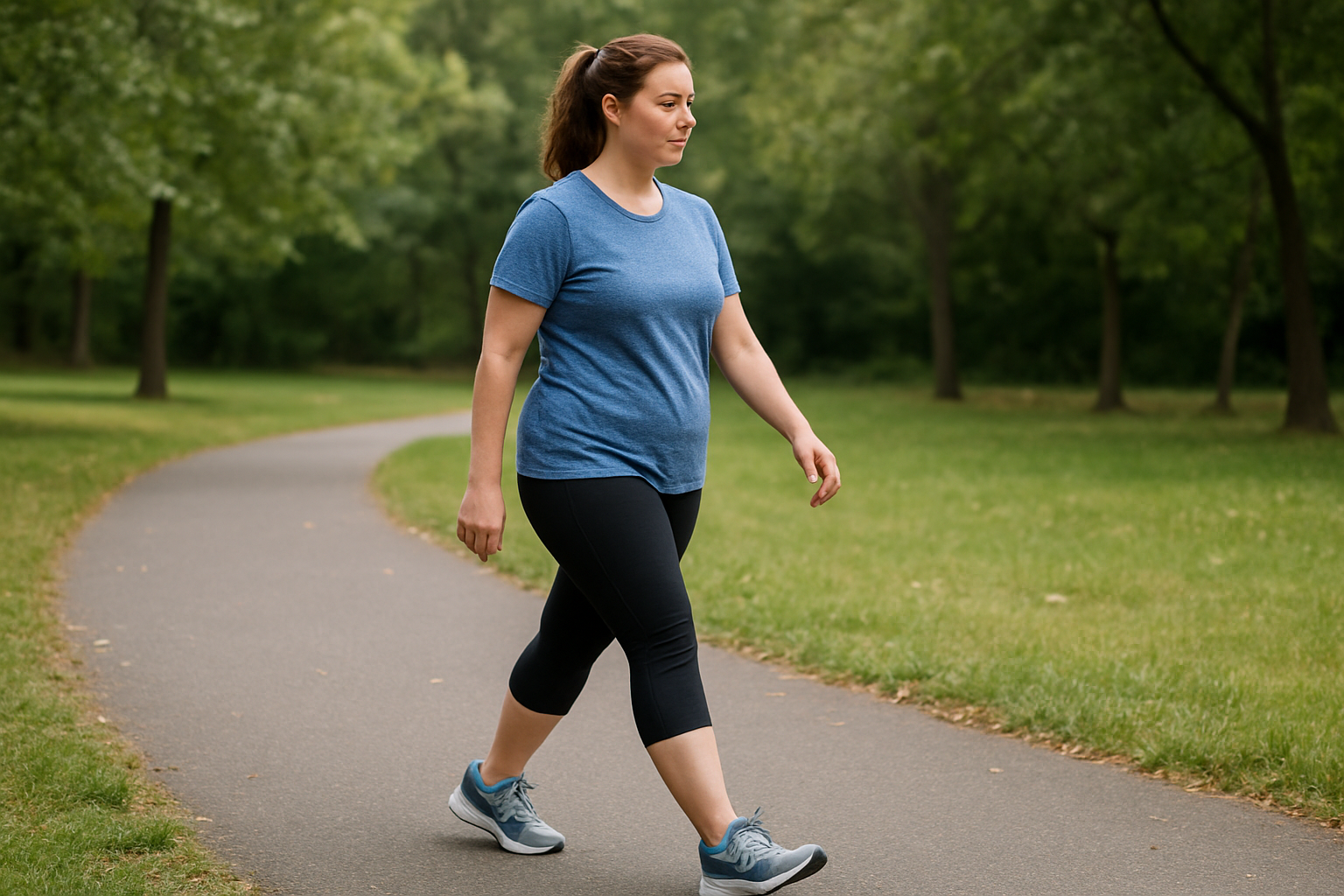
If you miss one week, resume at the last level you completed comfortably. Do not try to “make up” every missed mile in a single weekend.
5. Add strength training and low-impact cardio
Two short strength sessions per week can support the muscles used in running. Keep the exercises controlled and stop several repetitions before failure, especially after a long run.
- Bodyweight squats or sit-to-stands
- Step-ups on a stable platform
- Glute bridges
- Calf raises
- Side-lying leg raises or band walks
- Planks or dead bugs for trunk control
Begin with one or two sets of 8 to 12 repetitions. You can also use cycling, swimming, or elliptical training for cardiovascular work without adding more impact. Keep demanding leg strength work away from your longest run when possible.
For simple balance and lower-body ideas, see this guide to safe balance exercises. The exercises are not a substitute for running practice, but several can fit into a general conditioning routine.
6. Practice fueling, hydration, and recovery
For shorter sessions, normal meals and water are often sufficient. As your long runs approach about 60 to 75 minutes, practice taking fluids and a small amount of carbohydrate so race day does not introduce something unfamiliar.
Use training runs to test options such as a sports drink, gel, chews, or ordinary food that you can tolerate. Do not wait until race morning to try a new product. Follow the event’s instructions for aid stations, and consider carrying fluids if the route is hot, remote, or poorly supplied.
Recovery also includes sleep, regular meals, and enough protein and carbohydrate to support training. Practical snack ideas are available in this guide to protein-rich snacks for muscle recovery.
7. Taper and prepare for race day
In the final two weeks, reduce total training rather than trying to gain last-minute fitness. Keep some short, easy runs so your legs stay familiar with movement, but avoid a long run that leaves you sore.
Before race day, decide:
- Where you will start and finish your warm-up.
- What shoes, socks, clothing, and fuel you will use.
- Which pace or run-walk pattern you will follow.
- How you will respond if the weather is warmer, colder, or windier than expected.
Start slower than your excitement suggests. A conservative first 3 miles gives you more options later. Walk through aid stations if that helps you drink without rushing.
Common mistakes that derail beginner training
- Running every day: More sessions are not automatically better. Keep recovery days.
- Chasing pace too early: Build consistency before adding speed.
- Increasing distance and intensity together: Change one major training demand at a time.
- Ignoring small pain: Mild muscle fatigue is different from sharp, localized, or worsening pain.
- Using race day as your first long run: Practice distance, clothing, hydration, and fueling in advance.
What if something goes wrong?
If you feel pain during a run
Stop or switch to walking if pain becomes sharp, changes your form, causes limping, or increases as you continue. If symptoms do not settle with rest or keep returning, consult a qualified clinician such as a physical therapist or sports-medicine professional.
If you cannot run continuously
Return to run-walk intervals. Completing the distance with planned walking is better than forcing continuous running and losing several weeks to soreness.
If you are behind schedule
Move the race goal rather than compressing the plan. A later half marathon is usually a better choice than stacking long runs together to catch up.
Your half-marathon training checklist
- Choose a race at least 16 weeks away, or allow more time if needed.
- Schedule three weekly run-walk or running sessions.
- Keep one session as a slow, gradually longer effort.
- Add one or two brief strength sessions.
- Plan at least one complete rest day each week.
- Practice shoes, clothing, hydration, and fueling before race day.
- Record symptoms and repeat a week whenever your body needs more time.
Next actions for this week
First, choose three nonconsecutive days and complete 20 to 30 minutes of easy walk-run training. Next, add two short strength sessions and write down how your legs feel the following morning. If the response is comfortable, repeat the same week before progressing; if not, shorten the intervals and build more gradually.
Learning how to train for a half marathon from scratch is mainly a lesson in controlled consistency. Start with manageable run-walk work, keep the long run easy, respect recovery, and let your race-day goal match the fitness you have built—not the fitness you hope to have.