Quick verdict: The elliptical is usually the better starting point for weight loss because it is lower impact and easier to use for longer sessions. The stair climber may provide a harder lower-body workout in less time, but it is more demanding and may be difficult to sustain.
When comparing the elliptical vs stair climber for weight loss, the machine that burns the most calories on paper is not automatically the best choice. Your results depend on workout intensity, session length, recovery, eating habits, and whether you can use the equipment consistently without pain or excessive fatigue.
This guide compares both machines using practical criteria: calorie demand, joint comfort, muscle involvement, progression, convenience, and suitability for different goals.
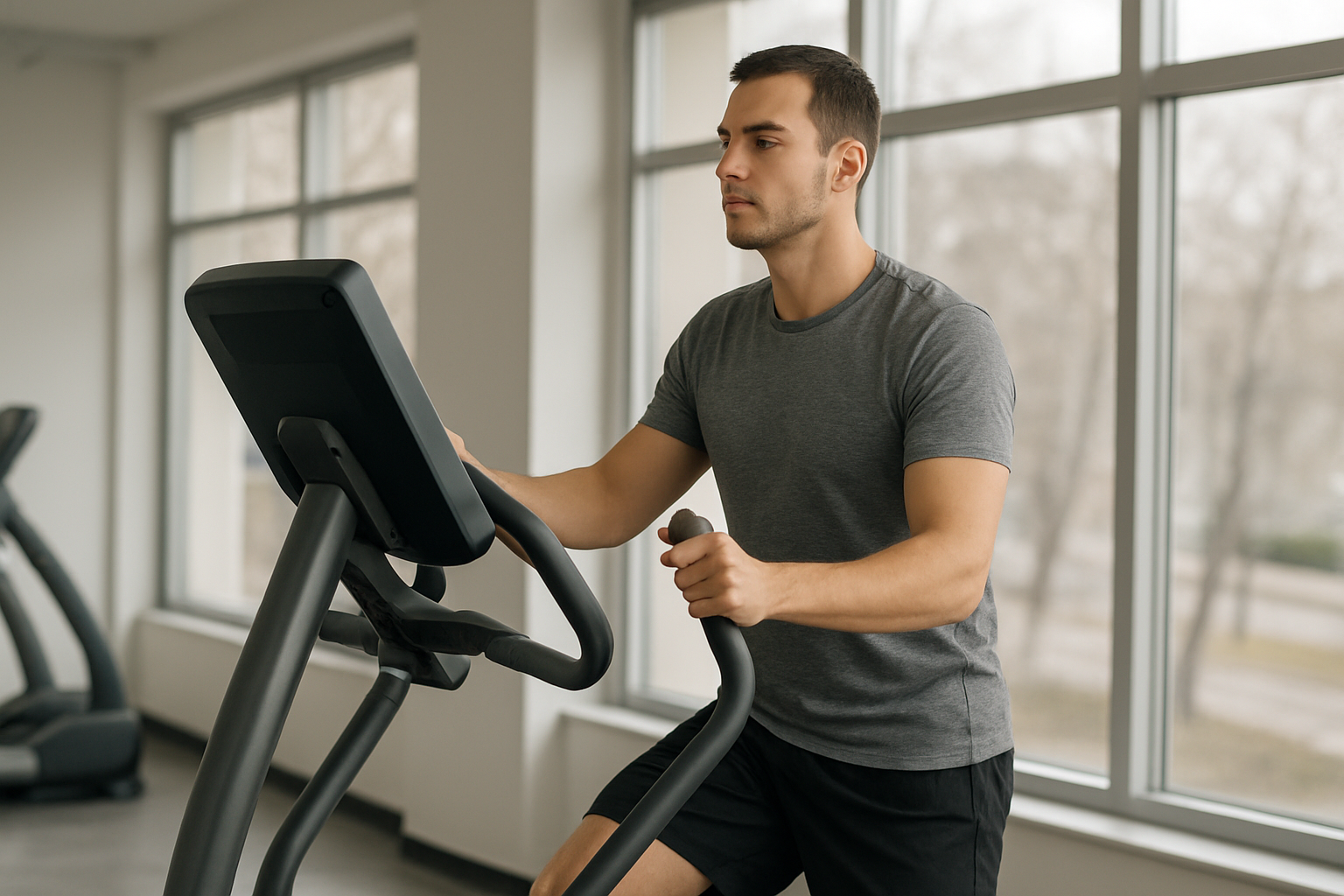
1. Start with the factor that matters most: consistency
Weight loss requires a calorie deficit over time. Physical activity can increase energy expenditure, but the CDC explains that weight management also depends on eating patterns and regular activity. No cardio machine can compensate reliably for an eating routine that consistently exceeds your energy needs.
That makes adherence a central part of the comparison. A moderately challenging workout you can repeat three or four times per week may be more useful than a very hard session that leaves you too sore or tired to train again.
- Choose the machine you are willing to use regularly.
- Start at an intensity you can recover from.
- Increase time, resistance, or pace gradually rather than changing everything at once.
- Keep strength training in your weekly routine to support overall fitness and muscle retention.
2. Compare the elliptical and stair climber by practical criteria
The following table gives a starting framework. Your actual effort will vary with body size, resistance, pace, fitness level, technique, and how much you use the handles.
Elliptical vs stair climber for weight loss: practical comparison
| Criterion | Elliptical | Stair climber |
|---|---|---|
| Impact | Usually low impact because your feet stay on the pedals | Low impact compared with running, but each step repeatedly loads the legs |
| Typical effort | Easy to moderate at first, with room for longer sessions | Often feels vigorous quickly, especially at higher step rates |
| Main muscles involved | Legs and glutes; moving handles can add upper-body involvement | Quadriceps, glutes, calves, and hamstrings during repeated stepping |
| Best workout style | Steady cardio, intervals, warm-ups, and longer sessions | Short intervals, hill-style conditioning, and lower-body endurance |
| Balance demand | Generally easier to stabilize | Requires more control, especially when fatigued |
| Common limitation | People may reduce effort by leaning heavily on the handles | Leg fatigue can end the workout before cardiovascular effort is fully developed |
| Good starting choice for | Beginners, deconditioned users, and people seeking smoother movement | Experienced exercisers who enjoy demanding step-based training |
3. Understand calorie burn without overvaluing machine displays
Both machines can support weight loss because both can raise your heart rate and increase energy expenditure. However, cardio-machine calorie estimates are not precise enough to treat as a guaranteed result or as permission to eat back every displayed calorie.
The stair climber often feels harder because it asks you to repeatedly lift your body against gravity. That can create a high effort level in a relatively short period. The elliptical may feel easier at the same perceived intensity, but its lower-impact movement can make it easier to continue for 30, 45, or 60 minutes.
For a fair comparison, judge workouts by more than the display:
- How long can you maintain the pace with controlled form?
- Can you repeat the workout later in the week?
- Are you using the handles for balance or supporting much of your body weight?
- Does the effort leave you recovered enough for strength training and daily activity?
The Physical Activity Guidelines for Americans recommend 150 to 300 minutes of moderate aerobic activity weekly, or an equivalent amount of vigorous activity, along with muscle-strengthening work on at least two days. You can build toward those targets with either machine.
4. Choose based on joint comfort and movement tolerance
The elliptical is often the more forgiving option for people who find walking, jogging, or repeated stepping uncomfortable. Its pedals guide the feet through a smooth path, and there is no repeated impact from landing on the floor.
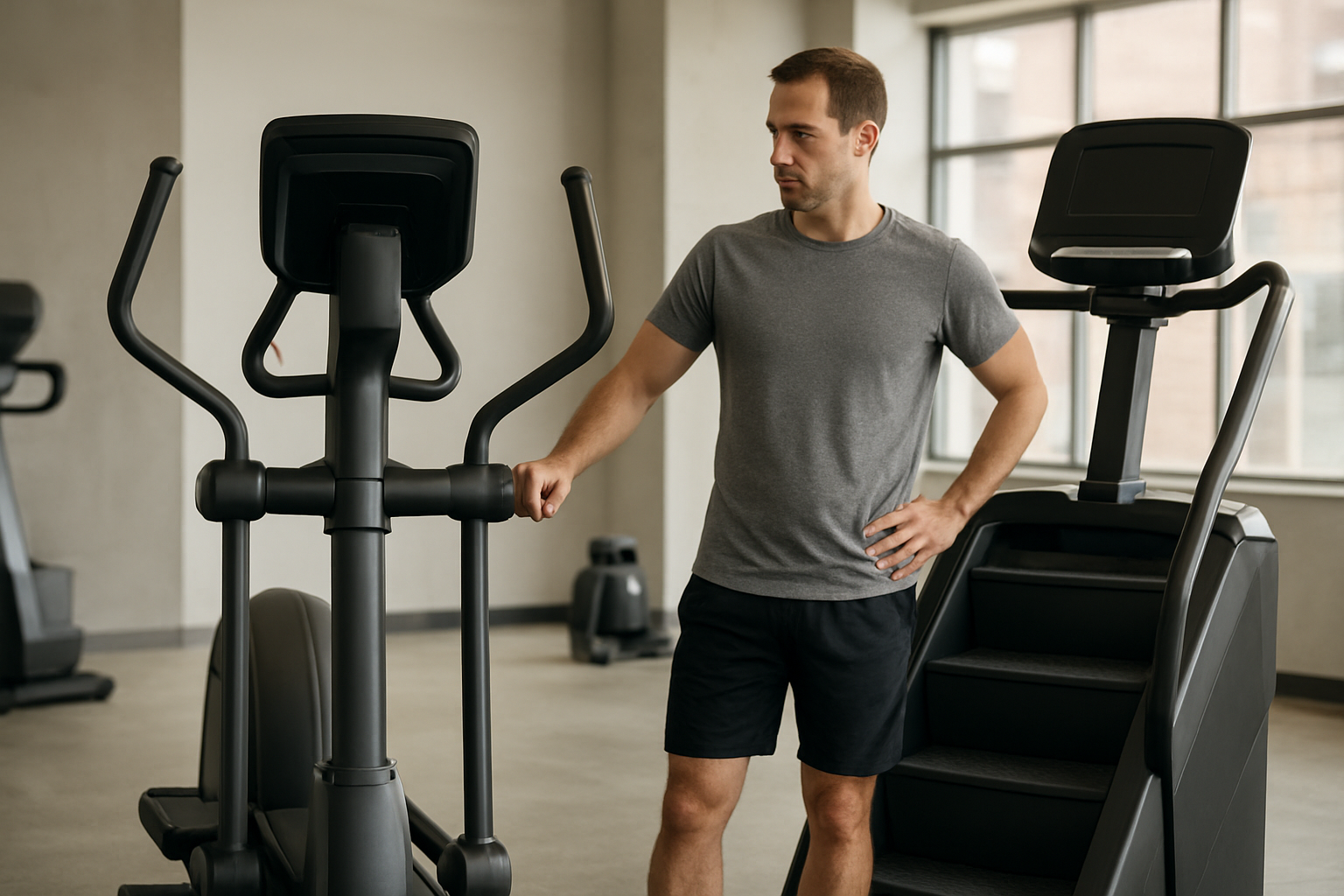
That does not mean the elliptical is automatically pain-free. Poor stride mechanics, excessive resistance, a cramped machine, or leaning heavily on the handles can still create discomfort. Keep your posture tall, use a manageable resistance, and stop if pain becomes sharp, worsening, or different from normal muscle fatigue.
The stair climber may be appropriate if your knees, hips, ankles, and lower back tolerate repeated flexion and stepping. If you have a joint condition, recent injury, chest symptoms, dizziness, or significant exercise limitations, ask a qualified healthcare professional how to begin safely.
5. Match the machine to your preferred workout format
Choose the elliptical for longer steady sessions
The elliptical works well when you want to build a reliable aerobic base. You can begin with 15 to 20 minutes at a conversational effort, then add a few minutes as your fitness improves. It also works well for gentle intervals, such as alternating two minutes at an easy pace with one minute at a moderately harder pace.
If you are also following a running plan, the elliptical can provide additional aerobic work with less repetitive impact. Our guide to improving running endurance for beginners explains why gradual progression matters when increasing training volume.
Choose the stair climber for demanding lower-body intervals
The stair climber is useful when you prefer a compact, challenging workout. Try short blocks, such as five minutes at an easy pace followed by several one-minute harder efforts with easy recovery between them.
Keep your hands lightly on the rails rather than hanging your body from them. If you need to pull yourself upward, the resistance or speed is probably too high for your current level.
6. Consider muscle involvement and what cardio cannot replace
The stair climber places a stronger emphasis on repeated lower-body pushing and may challenge the glutes, quadriceps, and calves noticeably. The elliptical can also train the legs and glutes, particularly with higher resistance or an incline setting, while moving handles may add some upper-body work.
Neither machine replaces progressive resistance training. If your goal includes preserving or building muscle while losing fat, combine cardio with a strength plan. You can use practical hamstring exercises or review deadlifts vs hip thrusts for glute growth when planning lower-body training.
7. Best choice by scenario
- For beginners: Start with the elliptical unless you specifically enjoy stepping and can maintain good posture.
- For sensitive joints: Try the elliptical first, using low to moderate resistance and a controlled stride.
- For short, intense workouts: The stair climber may be the better fit if your lower body tolerates it.
- For longer calorie-burning sessions: Choose the machine that lets you maintain a steady effort without excessive discomfort.
- For improving lower-body endurance: The stair climber offers a direct stepping challenge, while the elliptical may allow more total training volume.
- For home use: Consider available space, noise, maintenance, and whether the machine is comfortable enough to use frequently.
8. Common mistakes that reduce results
- Chasing the highest display number: Calories shown by machines are estimates, not guarantees.
- Holding the rails too tightly: This can reduce the work your legs and cardiovascular system perform.
- Starting with maximum resistance: Excessive difficulty can shorten sessions and interfere with recovery.
- Ignoring strength training: Cardio supports energy expenditure, but it is only one part of a balanced plan.
- Changing workouts too often: Keep a basic routine long enough to evaluate whether you are progressing.
- Expecting exercise alone to control weight: The CDC recommends combining physical activity with healthy eating, sleep, and stress-management habits.
9. A simple checklist before you decide
- Can you use the machine without sharp or worsening pain?
- Can you maintain upright posture without leaning heavily on the handles?
- Can you complete at least 15 to 20 minutes at a controlled effort?
- Can you recover well enough to train again within a day or two?
- Does the machine fit your schedule, space, and budget?
- Will you realistically use it several times per week?
10. What if one machine feels much harder?
Feeling more exhausted does not automatically mean you completed a better fat-loss workout. The harder machine may simply be stressing a limiting muscle group, such as the quadriceps or calves, before your cardiovascular system is fully challenged.
If the stair climber causes early leg fatigue, reduce the step rate and use shorter intervals. If the elliptical feels too easy, increase resistance slightly, use the moving handles actively, or add brief faster intervals while keeping your form controlled.
Next actions and final verdict
Try each machine for two or three sessions at a similar perceived effort. Record the duration, resistance or speed, how difficult the workout felt, and how recovered you were the next day. Then choose the option that gives you a repeatable challenge without creating pain or excessive fatigue.
So, which is better in the elliptical vs stair climber for weight loss comparison? The elliptical is the better default for most beginners and for anyone prioritizing low-impact, sustainable training. The stair climber can be the stronger choice for experienced exercisers who enjoy intense lower-body work and can recover from it. In either case, the best machine is the one you can use consistently as part of a complete plan involving nutrition, aerobic activity, and strength training.