For glute growth, hip thrusts are usually the more direct choice, while deadlifts offer broader posterior-chain development and greater carryover to full-body strength. You do not necessarily need to choose only one: the better option depends on your training experience, recovery, equipment, and whether you also want stronger hamstrings, back, and grip.
This comparison explains how deadlifts and hip thrusts differ, what the available evidence can and cannot tell us, and how to choose or combine them without turning your lower-body training into an unnecessarily fatiguing routine.
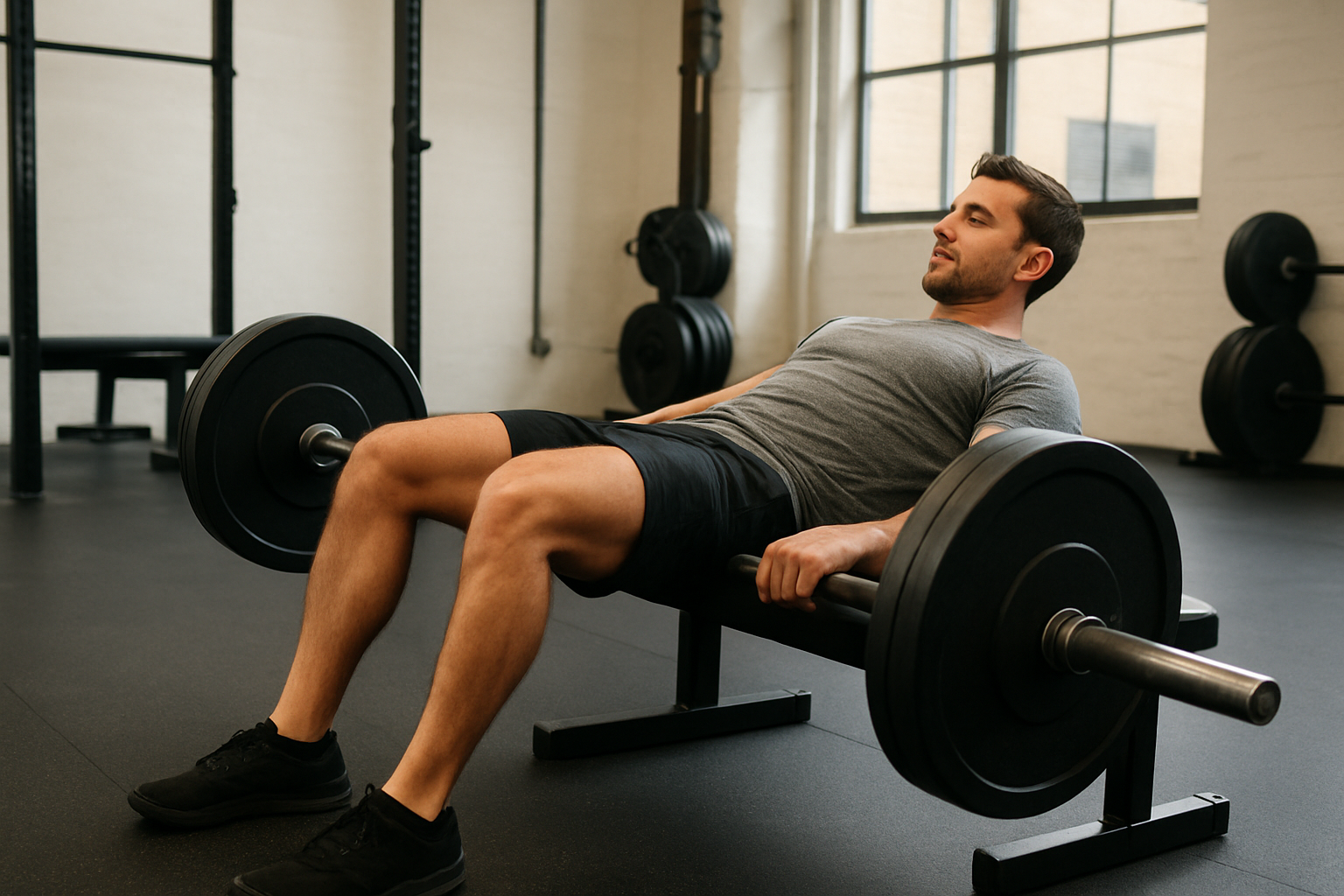
1. Start with the outcome you actually want
“Glute growth” can mean several things. You may want more gluteus maximus size, stronger hip extension, better athletic performance, or a complete lower-body program. Deadlifts and hip thrusts overlap, but they do not place the same demands on the rest of your body.
A recent systematic review found that resistance training can produce meaningful gluteus maximus hypertrophy, and that both single-joint and multi-joint hip-extension exercises can contribute. The authors also noted that combined exercise selection may be useful when the goal is comprehensive glute development. Read the systematic review on gluteus maximus hypertrophy for the full scope and limitations.
- Primary glute size: favor movements you can perform consistently, progressively, and with good range of motion.
- Whole-body strength: deadlifts usually have the broader training effect.
- High glute stimulus with less systemic fatigue: hip thrusts are often easier to place later in a workout.
- Sport or lifting performance: select the variation that resembles the strength demand you need to improve.
2. Compare the movement demands
A conventional deadlift starts with the weight on the floor. You must brace, create tension through the trunk, push against the ground, and extend the hips while keeping the bar close. The glutes work strongly during hip extension, but the hamstrings, spinal erectors, upper back, forearms, and trunk also contribute.
A hip thrust starts with your upper back supported on a bench or pad. The knees bend as the hips extend, and the movement is concentrated around the hip joint. This can make it easier to feel and load the glutes directly, although setup quality and pelvic control still matter.
Muscle activation is not the same as muscle growth. In one nine-week study, hip-thrust and squat training produced similar gluteal hypertrophy, even though hip thrusts showed higher glute electromyography during the initial testing session. That result is a useful reminder not to select exercises from activation readings alone. See the peer-reviewed comparison of hip thrust and squat training for the study details.
Here is the practical distinction:
Deadlifts generally challenge more muscles and create more total fatigue per hard set. Hip thrusts generally make it easier to focus on hip extension without asking the grip, upper back, or lower back to limit the set first.
Comparison table: deadlifts and hip thrusts for glute-focused training
| Criterion | Deadlifts | Hip thrusts |
|---|---|---|
| Main training effect | Glutes, hamstrings, back, grip, and trunk | More concentrated hip-extension and glute work |
| Fatigue profile | Often high systemic and lower-back fatigue | Usually easier to recover from at a similar effort |
| Loading position | Weight begins on the floor | Weight rests across the hips |
| Technique priority | Brace, hinge, bar path, and starting position | Bench height, rib position, pelvic control, and full lockout |
| Best strength carryover | Pulling strength and posterior-chain coordination | Hip-extension strength in a supported position |
| Common limitation | Back, grip, or hamstrings may fail before the glutes | Setup discomfort or excessive lumbar arching |
3. Choose the better exercise for your situation
Choose hip thrusts when glutes are the main priority
Hip thrusts are a sensible choice if your lower-body session already contains squats, lunges, or leg presses and you want a more direct hip-extension exercise afterward. They can also be useful when your grip or upper back is already fatigued from pulling exercises.
Use a controlled lowering phase, keep the ribs from flaring, and finish with the hips fully extended rather than pushing into an exaggerated back arch. If you cannot maintain a stable pelvis, reduce the load and improve the setup before adding weight.
Choose deadlifts when you want more than glute isolation
Deadlifts make more sense when you want to build a strong hinge, improve posterior-chain strength, or train several major muscle groups with one exercise. Romanian deadlifts can be particularly useful when you want more hamstring lengthening and controlled eccentric work, while conventional deadlifts usually emphasize lifting strength from the floor.
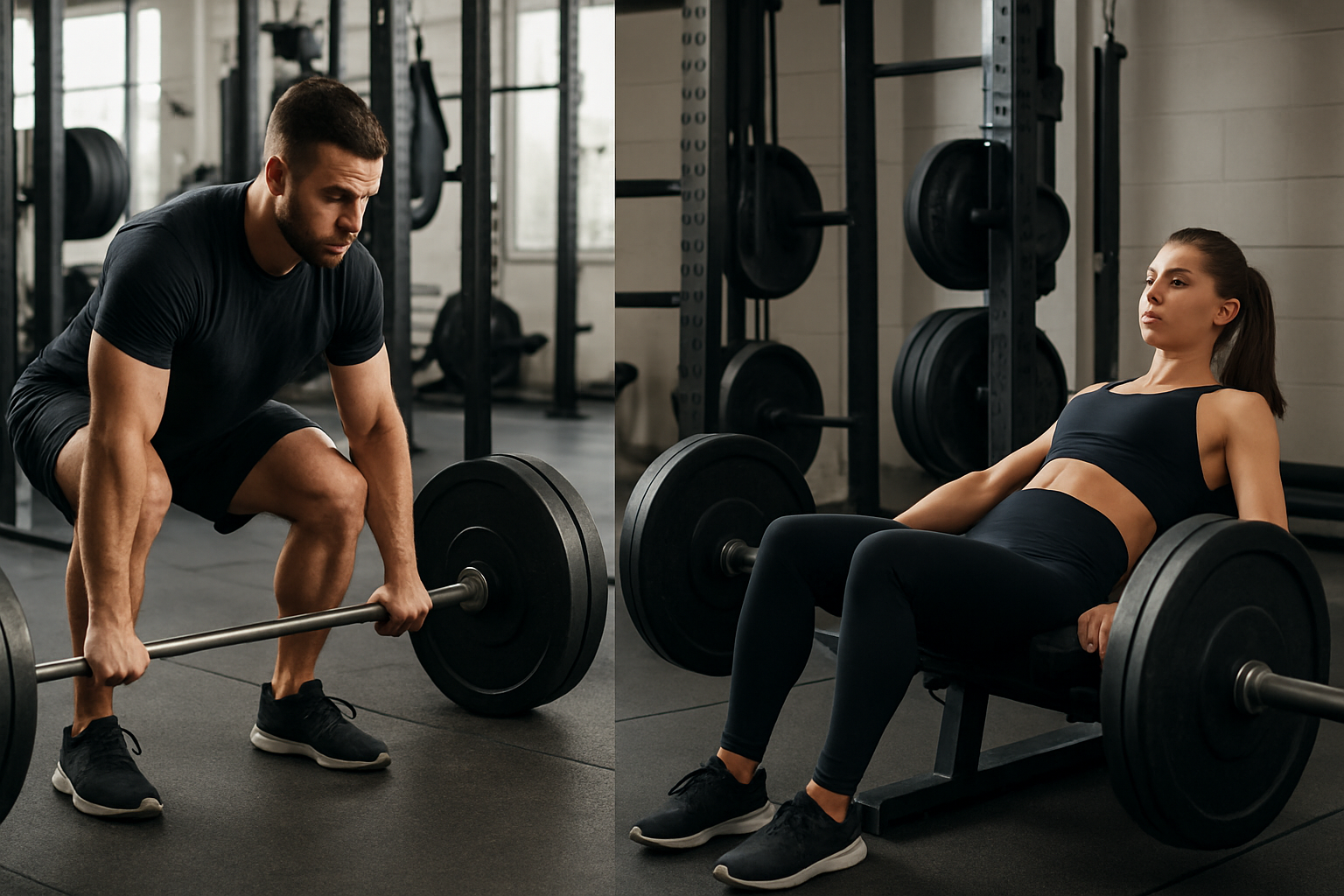
Because deadlifts are demanding, they often work best early in the session. Avoid turning every set into a maximal effort. Leave enough repetitions in reserve to keep the bar close, maintain your brace, and finish without losing position.
Choose both when your weekly recovery supports it
Combining the exercises can work well, but you should count their total fatigue rather than treating them as unrelated movements. For example, a deadlift variation can provide heavy posterior-chain work, while hip thrusts can add glute-focused volume with less demand on the upper back and grip.
The American College of Sports Medicine’s current resistance-training guidance emphasizes consistency, individualized programming, gradual progression, and sufficient weekly volume rather than complicated exercise methods. That principle matters more than finding a universally superior glute exercise.
4. Build a practical glute-growth plan
Start with one primary movement and progress it for several weeks before adding more complexity. A simple lower-body session might look like this:
- Deadlift or Romanian deadlift: 2–4 challenging sets with controlled technique.
- Squat, split squat, or leg press: 2–4 sets for additional leg and glute work.
- Hip thrust: 2–4 sets using a load that allows a stable lockout.
- Optional abduction or single-leg work: 2–3 sets if it supports your goals and recovery.
You do not need to use every movement in every workout. If deadlifts are performed heavily, place hip thrusts later and use a moderate load. If hip thrusts are your main lift, deadlifts can be lighter, less frequent, or replaced with a Romanian deadlift depending on your priorities.
Track at least one measurable progression method: more repetitions at the same load, slightly more weight with the same technique, an additional set, or a larger range of motion. Also monitor whether your performance, soreness, and motivation remain stable across the week.
5. Avoid the mistakes that slow progress
Common mistakes
- Chasing the biggest load: A heavier weight is not useful if it changes the movement or shortens the range of motion.
- Using activation as proof: Feeling a muscle work can guide technique, but it does not guarantee more growth.
- Ignoring fatigue: Hard deadlifts may affect your next workout more than you expect.
- Arching the back during hip thrusts: Finish by extending the hips, not by forcing the lumbar spine into extension.
- Changing exercises too often: Keep a movement long enough to evaluate performance and technique.
- Neglecting nutrition and sleep: Training is only one part of the muscle-building process. For protein planning, see how to calculate protein intake for muscle building.
What if your lower back gets tired first?
Check your hinge technique, reduce the load, and consider a less demanding variation such as a hip thrust or machine-based hip extension. Persistent pain, radiating symptoms, numbness, or weakness is not normal training fatigue; stop the aggravating exercise and seek assessment from a qualified healthcare professional.
What if you cannot feel your glutes?
Do not immediately assume the exercise is ineffective. Check your range of motion, tempo, bracing, and load. A short warm-up set with a lighter resistance can help you rehearse the movement, but the most useful long-term measure is progressive performance with sound technique.
6. Use this decision checklist
- Are glutes your only priority, or do you also want hamstring, back, grip, and hinge strength?
- Can you perform the movement without pain and with repeatable technique?
- Which exercise can you progressively overload without disrupting the rest of your week?
- Does your current program already include heavy squats, rows, or other posterior-chain work?
- Can you recover before your next lower-body or pulling session?
If most answers point toward direct glute work and manageable fatigue, start with hip thrusts. If they point toward overall pulling strength and posterior-chain development, start with deadlifts. If both fit, use each for a different role instead of forcing them to compete.
Final verdict: deadlifts vs hip thrusts for glute growth
For deadlifts vs hip thrusts for glute growth, hip thrusts are usually the more convenient glute-focused option, while deadlifts are the more comprehensive strength exercise. Current evidence does not justify claiming that one movement always produces superior glute growth for every lifter.
Choose the exercise you can perform safely, progress steadily, and recover from. For many people, deadlifts or Romanian deadlifts provide the main hinge stimulus, and hip thrusts add focused glute volume. That conditional approach is more reliable than treating either exercise as a universal answer.