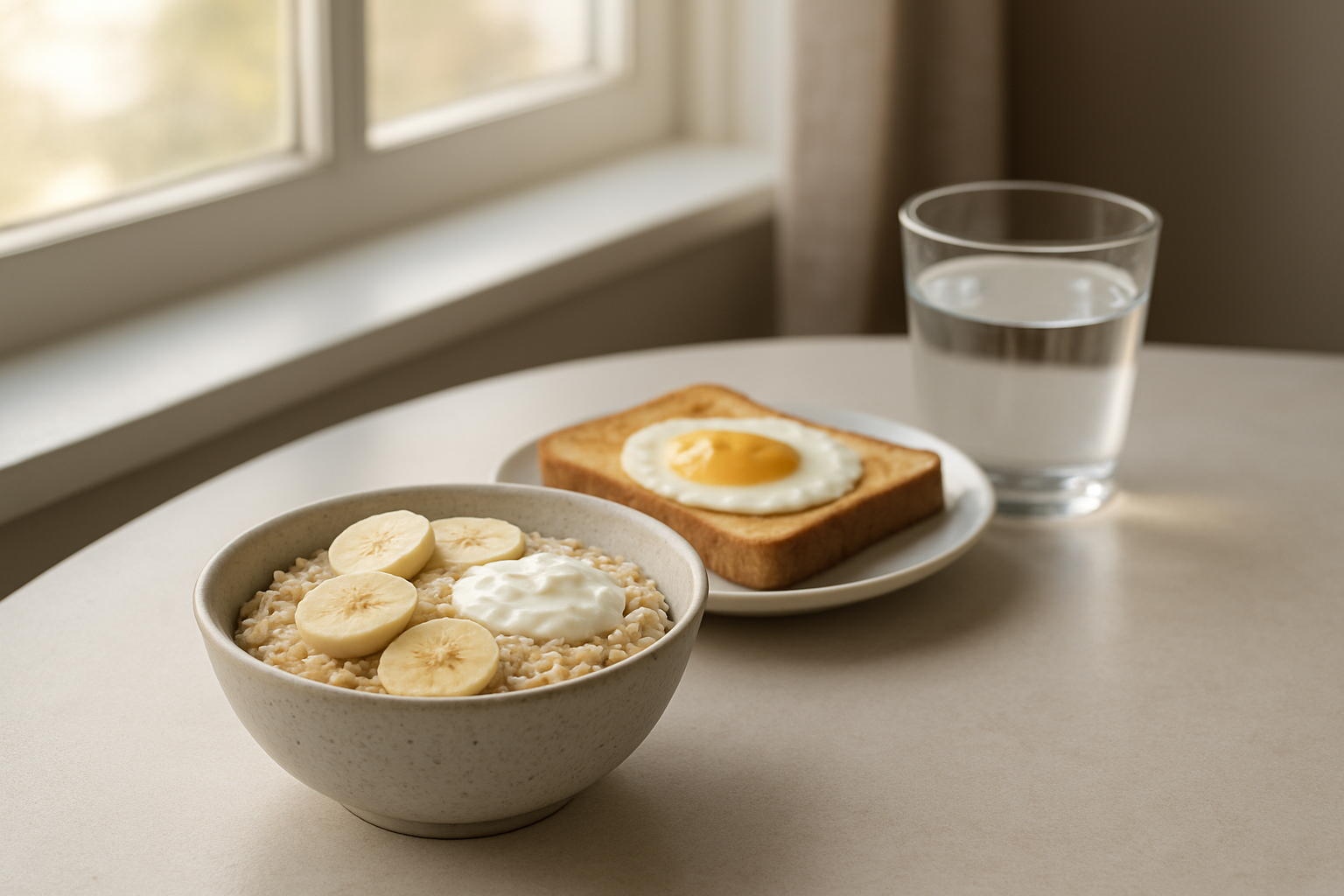
The best pre-workout meal for early morning training is usually small, familiar, and mostly carbohydrate-based, with a modest amount of protein if you have enough time to digest it. A banana with yogurt, toast with eggs, or a simple oats bowl can provide useful fuel without making an early session feel heavy.
Morning nutrition is a matter of timing, tolerance, and workout demands rather than one perfect recipe. This guide ranks practical options, explains when to eat them, highlights their limitations, and helps you choose what fits your schedule.
1. Match the meal to your training window
Start with the time between eating and your warm-up. The shorter the window, the smaller and simpler the meal should be. Large portions, high-fat foods, and unusually high-fiber ingredients often take longer to digest and may be uncomfortable during movement.
- 15–30 minutes: Choose an easy-to-eat carbohydrate such as a banana, applesauce, or a small piece of toast.
- 45–75 minutes: Add a modest protein source, such as yogurt, milk, or an egg, if you tolerate it.
- 90 minutes or more: You can usually manage a more complete meal with carbohydrates, protein, and some fat.
You do not necessarily need a full meal before every workout. If the session is easy, short, or follows a substantial evening meal, water and a small snack may be enough. For demanding strength or endurance training, eating some carbohydrate beforehand may make the session easier to complete.
2. Compare the best pre-workout meals for early morning training
The table below ranks options by practicality for most early exercisers. The ranking is a starting point, not a rule: your digestion, food preferences, and workout intensity should determine the final choice.
| Rank | Meal | Best timing | Best for | Watch for |
|---|---|---|---|---|
| 1 | Oats with banana and yogurt | 60–90 minutes | Strength or longer sessions | Too much fiber or dairy for some people |
| 2 | Toast with egg and fruit | 60–90 minutes | A balanced, familiar breakfast | Egg and whole-grain toast may digest slowly |
| 3 | Banana with Greek yogurt | 30–60 minutes | A quick meal with some protein | Dairy intolerance or insufficient energy for long sessions |
| 4 | Rice cakes with nut butter and banana | 30–60 minutes | People who prefer light, low-volume food | Nut butter can feel heavy if the portion is large |
| 5 | Applesauce and toast | 15–30 minutes | Very early workouts or sensitive stomachs | Low in protein and may not sustain long training |
3. Ranked meal assessments and best-for labels
1. Oats with banana and yogurt
Best for: strength training, longer sessions, and people who have at least an hour before exercise. A small bowl of cooked oats with sliced banana and plain yogurt combines carbohydrate with a moderate amount of protein. It is adjustable: reduce the portion when training early, or add more oats and fruit when the workout is longer.
Keep the meal straightforward. A very large bowl, lots of seeds, or a heavy serving of nut butter can increase fat and fiber and may slow digestion. If dairy causes symptoms, use a tolerated alternative or leave the yogurt out and eat protein later.
2. Toast with egg and fruit
Best for: a familiar breakfast before a moderate or demanding gym session. Toast supplies carbohydrate, while an egg adds protein and makes the meal more substantial. A piece of fruit can provide additional carbohydrate without adding much preparation time.
This is a good choice when you are not training immediately after waking. However, whole-grain toast and eggs may feel too dense for some people within an hour of exercise. Start with a smaller serving and test it on a normal training day rather than before an important event.
3. Banana with Greek yogurt
Best for: a compact meal when you have 30–60 minutes. This combination is quick to assemble and offers carbohydrate plus protein in a relatively small volume. It also works well for people who do not want to cook before an early workout.
The main limitation is that it may not provide enough energy for a long run, high-volume lifting session, or demanding interval workout. Add a little toast, cereal, or another tolerated carbohydrate if you regularly feel hungry before finishing your session.
4. Rice cakes with nut butter and banana
Best for: athletes who prefer low-volume food and need a flexible portion. Rice cakes are light, while banana supplies carbohydrate and nut butter adds flavor and some fat. Use a thin layer of nut butter if you are eating close to training.
This option is not automatically better than toast. Rice cakes can be less filling, and a large amount of nut butter may sit heavily. Choose it because the texture and portion work for you, not because it is inherently more effective.
5. Applesauce and toast
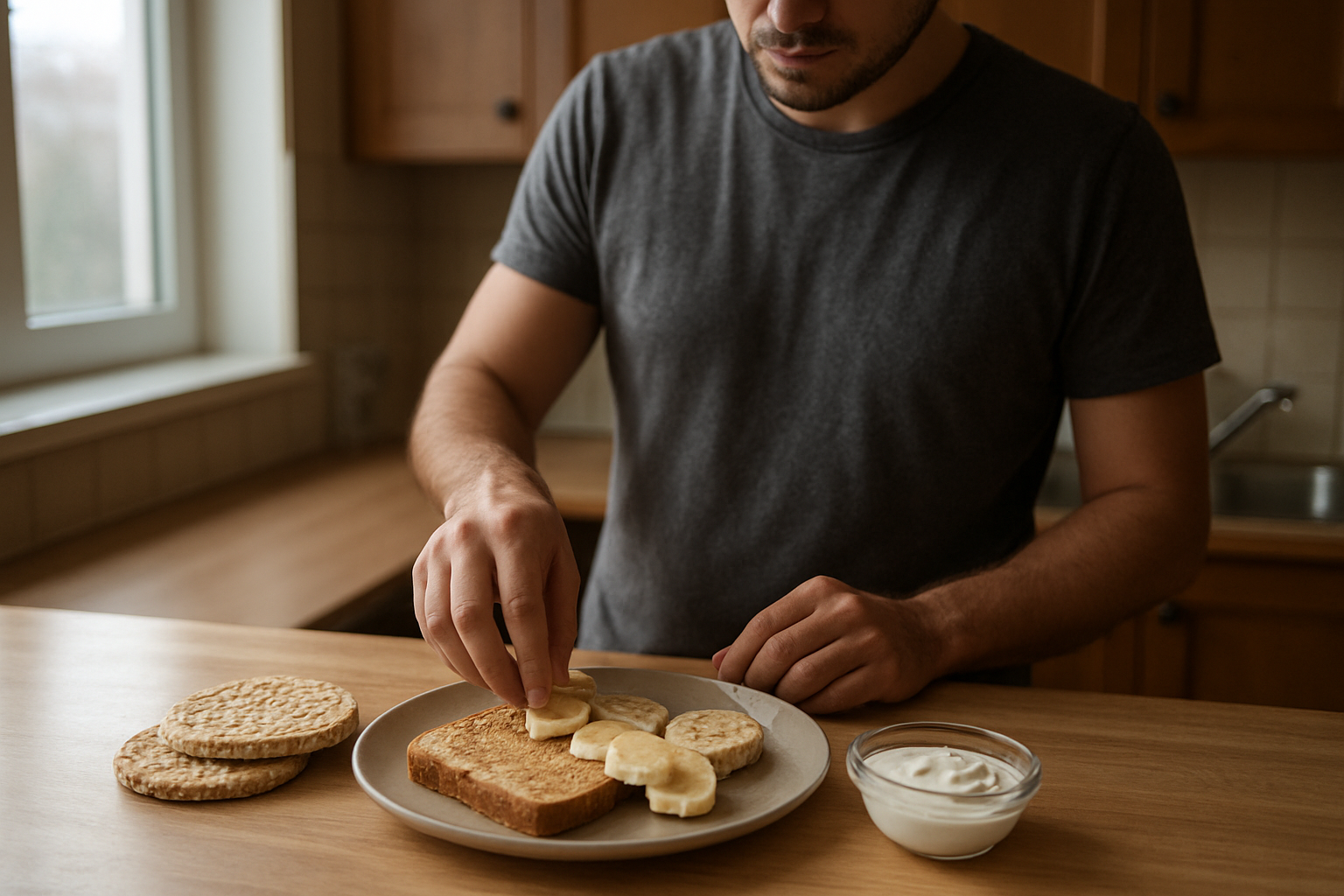
Best for: workouts that begin soon after waking or people with easily unsettled stomachs. Applesauce and plain toast are simple, low-preparation choices that provide carbohydrate without a large meal. They can be useful before an easy cardio session or a short gym workout.
The trade-off is limited protein and staying power. If you become hungry during longer training, eat a fuller breakfast afterward and consider a slightly larger pre-workout snack next time.
4. Build your own early-morning pre-workout meal
Use three questions to adjust any option:
- How long until training? Shorter timing calls for less food and fewer ingredients.
- What will you do? Strength, intervals, and endurance work generally demand more fuel than a gentle mobility session.
- What does your stomach tolerate? Your usual foods are safer than experimenting with a rich or unfamiliar breakfast.
A practical template is one easy carbohydrate source, followed by a moderate protein source when time allows. Examples include fruit plus yogurt, toast plus egg, or oats plus milk. Keep fat and fiber modest when you are close to the session, then eat a more complete meal after training.
Hydration also matters. Drink water when you wake, but avoid forcing a large volume immediately before exercise. If you train for a long duration or sweat heavily, your hydration and electrolyte needs may require more individualized advice.
5. Common selection mistakes
- Eating too much because the workout is hard: Increase portions gradually; a heavy stomach can undermine a well-planned session.
- Choosing only protein: A protein shake or eggs alone may not provide the carbohydrate many people find useful for demanding training.
- Trying a new meal on a key day: Rehearse breakfast timing during ordinary sessions first.
- Assuming “healthy” always means “pre-workout friendly”: Large amounts of bran, raw vegetables, legumes, or fatty spreads may be nutritious but uncomfortable immediately before exercise.
- Ignoring the post-workout meal: A small pre-workout snack can be appropriate when you plan a balanced breakfast afterward.
6. What if your usual breakfast does not work?
If you feel nauseated
Reduce the portion, move the meal earlier, and choose simpler foods. Try toast, banana, or applesauce instead of a large bowl containing substantial fat and fiber. Persistent nausea, vomiting, dizziness, or pain is not a normal nutrition problem to push through; stop exercising and seek medical advice when symptoms are severe or recurring.
If you feel weak or unusually hungry
Track whether the issue occurs after poor sleep, inadequate overall food intake, or a very long gap since dinner. Add a small carbohydrate serving or allow more time for breakfast, then reassess across several sessions. Recurrent shakiness, faintness, or confusion warrants medical guidance, particularly if you have diabetes or take medication affecting blood glucose.
If dairy causes discomfort
Use a lactose-free or non-dairy option you already tolerate, or choose toast, fruit, and another simple food. Do not force a food simply because it is commonly recommended.
7. A simple checklist before you choose
- Check how many minutes remain before your warm-up.
- Pick a familiar carbohydrate source.
- Add a moderate protein serving when you have enough digestion time.
- Keep portions smaller when training starts soon.
- Prepare the food the night before when possible.
- Record how your energy and stomach feel, then adjust one variable at a time.
8. Final recommendations by scenario
For a workout in 15–30 minutes: Choose applesauce and toast, or a banana if you need something even simpler. For a 60–90 minute strength session: Oats with banana and yogurt or toast with egg and fruit are the strongest starting points.
For a sensitive stomach: Start with a small portion of toast, banana, or applesauce and avoid testing high-fiber or high-fat combinations. For longer or higher-volume training: Use the oats meal or increase the carbohydrate portion gradually, while planning a balanced meal after exercise.
The best pre-workout meals for early morning training are the ones that fit your timing, provide enough usable fuel, and remain comfortable during movement. Begin with one simple option, test it on ordinary workouts, and adjust portion size before changing the entire meal.
For broader training planning, see the beginner gym workout schedule guide and explore the LaokFitness homepage for more practical fitness advice.